Source: FlowGeniQ Digest
Considering rhinoplasty recovery? You’re not alone—many people want a clear, realistic roadmap for healing after a “nose job,” whether the goal is refined aesthetics, improved nasal function, or both. While every patient heals differently, the phases of recovery follow recognizable patterns. Knowing what to expect can reduce anxiety, help you protect your results, and make it easier to plan work, social events, and exercise.
In this guide, you’ll find an evidence-informed rhinoplasty recovery timeline, practical tips for comfort and swelling control, and red flags that should prompt a call to your surgeon. We’ll also discuss how functional nasal surgery approaches—like Rhinoplasty or procedures addressing obstruction—can influence early breathing and recovery.
Rhinoplasty Recovery at a Glance: The Big Picture
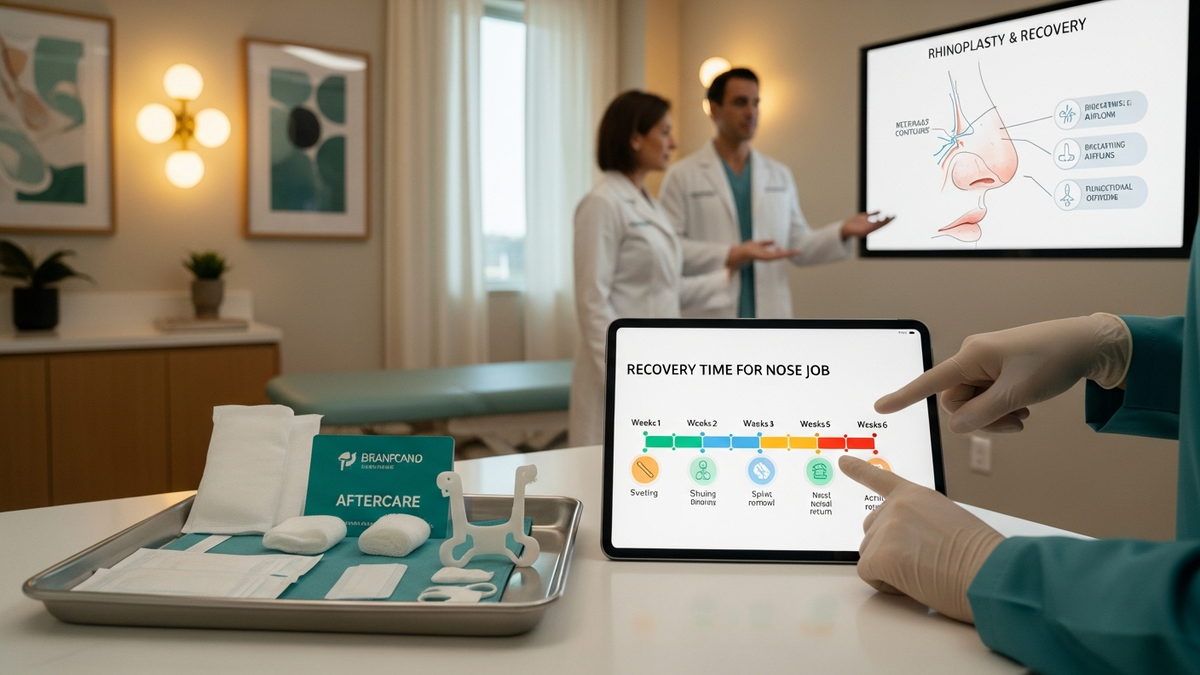
Rhinoplasty recovery generally progresses in stages: the first week focuses on managing swelling and protecting the surgical site; weeks 2–6 emphasize gradual return to normal activities; months 2–12 involve ongoing refinement as tissues remodel. Most patients can recognize meaningful changes early, but the final shape and texture typically continue to mature for up to a year.
Why recovery varies from person to person
Healing depends on multiple factors, including:
- Surgical technique (open vs. closed approach, cartilage work, grafting)
- Extent of structural changes (tip refinement, dorsal hump reduction, septal cartilage adjustments)
- Whether functional nasal changes were addressed (e.g., nasal valve support, septal correction)
- Skin characteristics (thickness, oiliness, tendency to bruise/swelling)
- Post-op habits (sleep position, medication adherence, activity restrictions)
- Individual physiology (inflammation response, circulation, and overall health)
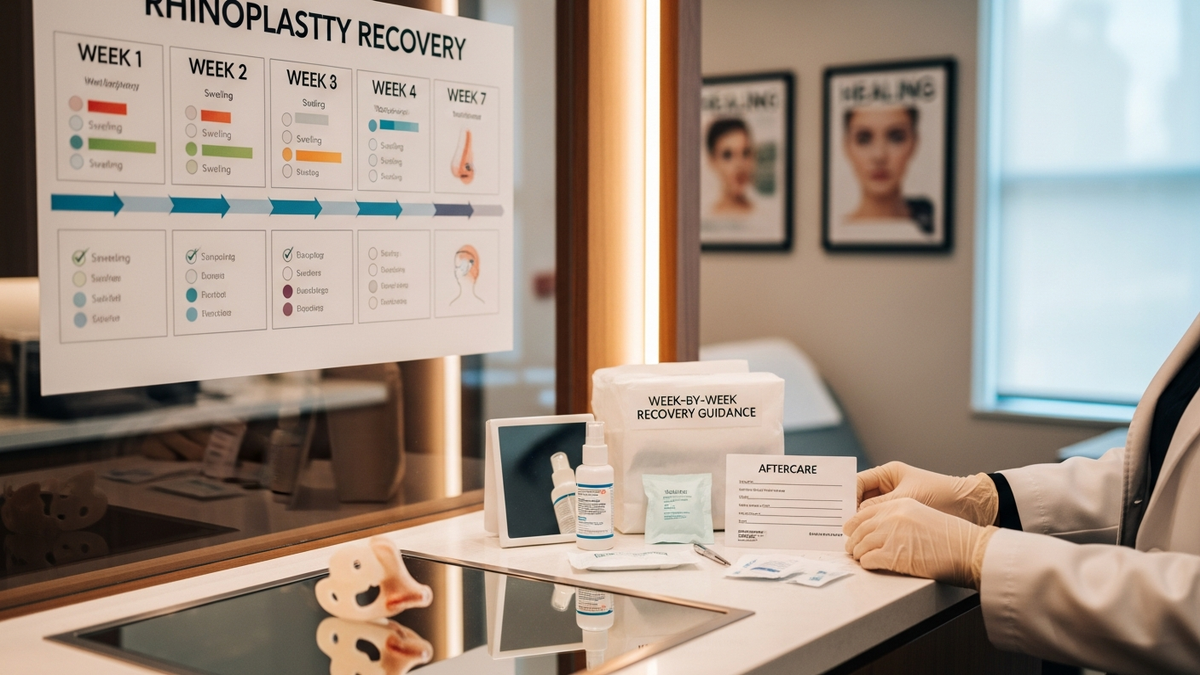
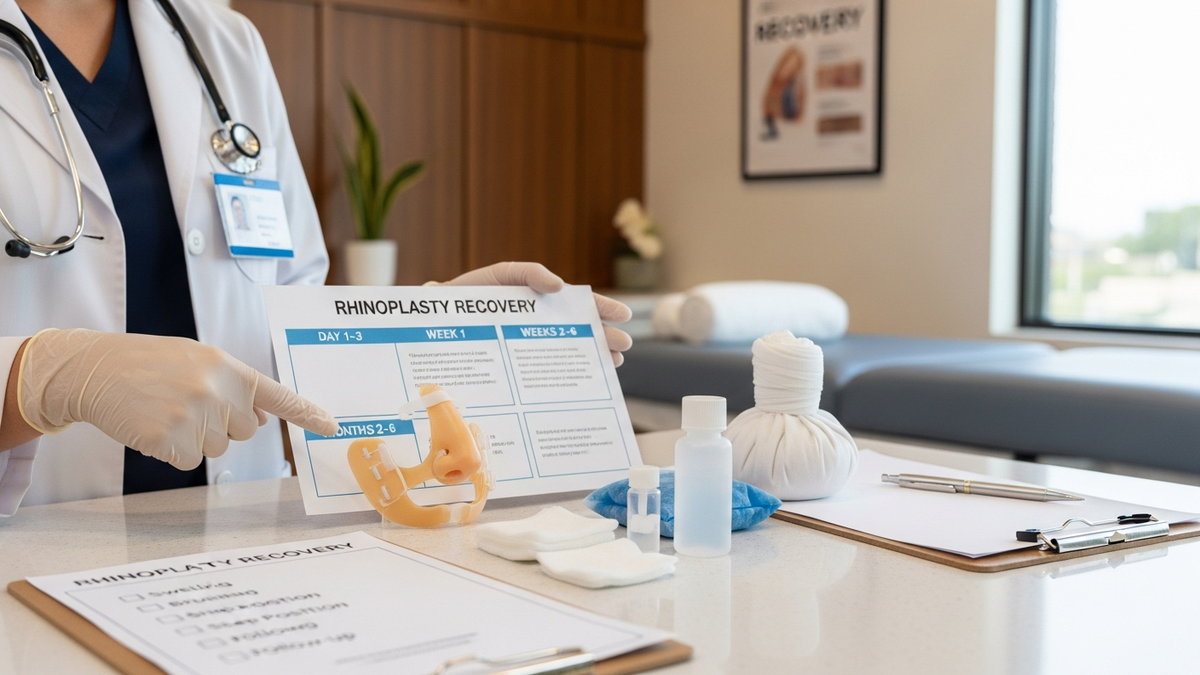
Rhinoplasty Recovery Timeline (Week by Week)
This timeline is a practical framework for planning. Your surgeon’s instructions always take priority.
Days 0–3: The immediate post-op phase
In the first days, most patients experience swelling and tenderness. Bruising around the eyes can appear quickly (or become more noticeable after a couple of days). Nasal breathing may feel blocked due to swelling, splints, or packing (if used).
- Common experiences: nasal congestion, pressure sensation, watery eyes, mild nausea from anesthesia, dry mouth
- What helps: keep your head elevated, use cold compresses as directed, take prescribed pain medication on schedule
- What to avoid: strenuous activity, bending at the waist, heavy lifting, and any pressure on the nose
Days 4–7: Splint/suture check and early visible changes
Many patients have postoperative visits around this time. Splints and/or external dressings may be removed depending on your plan. Swelling often looks dramatic, but it typically begins to shift and soften.
- Common experiences: increased visibility of bruising, tightness, dryness inside the nostrils
- What to focus on: gentle nasal care as instructed (e.g., saline, ointment, or humidification)
- Expectations: you may still look “more swollen than you feel”
Weeks 2–3: The “middle phase” (often when patience matters most)
During weeks 2–3, many people start to feel more like themselves. Swelling may reduce, but it can also appear uneven—especially around the tip and sidewalls. This is often normal tissue settling.
- Common experiences: fluctuating swelling, mild numbness, occasional itching
- Activity: many patients return to desk work if permitted; avoid sports and impact
- Tip: protect your nose in public (e.g., avoid glasses that press on the bridge unless cleared)
Weeks 4–6: Gradual return to normal routines
By this stage, a large portion of visible swelling and bruising has often improved. However, internal healing continues, and the nose can still be sensitive.
- Common experiences: improved appearance, persistent mild swelling, occasional congestion
- Exercise: light cardio is sometimes allowed; follow your surgeon’s timeline for running/weight training
- Skin care: keep sun exposure minimal—UV can worsen discoloration
Months 2–3: Refinement begins
This is when many patients notice that the nose looks more proportionate and “settled.” Tip definition may continue to sharpen as edema resolves.
- What’s typical: ongoing soft-tissue remodeling
- What to avoid: smoking/vaping if applicable, which can impair circulation and healing
Months 6–12: The final result matures
Final rhinoplasty results are often assessed around this period. Even after one year, subtle changes can still occur, but the overall shape becomes much more predictable.
- Common experiences: stable appearance, improved confidence
- Long-term care: continue protecting your nose from trauma
What’s Normal During Rhinoplasty Recovery?
Understanding normal symptoms can help you distinguish routine healing from complications.
Swelling and bruising
Swelling is expected and can be uneven. Bruising may shift down the face over several days. Cold compresses (when approved) and head elevation are common recommendations to support comfort.
Nasal congestion and breathing changes
It’s common to feel congested early on. If your surgery included functional nasal work—such as addressing internal valves, turbinate size, or septal alignment—breathing may improve gradually. Some patients notice better airflow sooner, while others experience a “trade-off” where swelling temporarily worsens breathing before it improves.
If your goal includes breathing optimization, it can be helpful to understand related procedures. For example, a Septoplasty may be recommended in cases involving a Deviated Septum—a structural issue that can contribute to obstruction. In certain circumstances, functional nasal surgery options may be less invasive than rhinoplasty for symptom relief.
Dryness, crusting, and gentle cleaning
Inside the nose, dryness and crusting can occur as healing progresses. Your surgeon may recommend saline sprays, gentle irrigation, ointment, or humidification. Avoid forceful nose blowing early unless specifically instructed.
Numbness, tingling, and itching
Nerve recovery can cause temporary numbness or tingling. Itching often increases as healing progresses. Resist the urge to rub or scratch the nose.
Rhinoplasty Recovery Tips That Actually Help
Small, consistent habits can make a meaningful difference in comfort and outcome protection.
1) Sleep in the right position
Most surgeons recommend sleeping with your head elevated for at least the first week (and often longer). This can reduce swelling and improve comfort. Consider using extra pillows or a wedge pillow.
2) Follow medication instructions closely
Take prescribed pain medications as directed. If antibiotics or anti-inflammatory medications are part of your plan, adhere to timing and dosing. Avoid adding over-the-counter medications unless your surgeon approves—some can increase bleeding risk.
3) Protect your nose from accidental pressure
During early recovery, even minor trauma can affect healing. Avoid:
- Glasses resting on the bridge (ask about protective methods)
- Sports, contact activities, and any risk of impact
- Heavy lifting and straining
4) Manage swelling with approved techniques
Cold compresses and elevation are common. However, always follow your surgeon’s specific guidance—timing and duration matter.
5) Keep your nasal passages comfortable
If your post-op plan includes saline or humidification, use it as directed. Gentle care can reduce crusting and discomfort.
6) Be strategic about returning to work and social life
Many patients plan for visible bruising/swelling in the first 7–14 days. If you have a client-facing job or public role, consider scheduling time off accordingly.
Activity and Exercise: When Can You Resume?
Exercise timelines vary, but a common pattern is:
- First week: rest, short gentle walks, no bending/straining
- Weeks 2–3: light cardio if approved; avoid impact
- Weeks 4–6: gradual return to workouts; clear for weights only when safe
- After 6 weeks: many patients can return to more normal activities, depending on healing
Always get clearance before resuming high-impact sports. If your job involves physical labor, plan for a longer recovery window.
Diet and Hydration During Rhinoplasty Recovery
Nutrition supports tissue repair. Focus on:
- Hydration: water helps overall recovery and comfort
- Protein: supports healing
- Fiber: to prevent constipation if you’re using pain medication
- Limit alcohol: can worsen swelling and interfere with healing
If you have dietary restrictions, ask your care team about safe options.
Scarring and Appearance: Will the Nose Look “Done” Right Away?
Most rhinoplasty incisions are internal (closed approach) or hidden within natural contours (open approach). Visible scarring is typically minimal. However, the nose’s external appearance changes as swelling resolves and cartilage-tissue relationships stabilize.
What you see early is not what you’ll see at 6–12 months. Patience is part of a successful rhinoplasty recovery.
Breathing After Rhinoplasty: What to Expect
Breathing outcomes depend on your anatomy and what was corrected. Some patients experience improved airflow once swelling decreases, while others notice that congestion fluctuates during healing.
Functional nasal surgery vs. cosmetic rhinoplasty
Not every nose issue is purely aesthetic. Structural factors—like a deviated septum, enlarged turbinates, or nasal valve weakness—can contribute to chronic congestion or sinus symptoms. In such cases, functional procedures may be considered in addition to or sometimes instead of rhinoplasty.
For instance, a Septoplasty can address a Deviated Septum, while Inferior Turbinate Reduction can help reduce long-term “stuffy nose” symptoms. Depending on your situation, nasal valve collapse repair may involve options such as Latera or Vivair implants.
For patients with chronic sinusitis, minimally invasive options like balloon sinuplasty or endoscopic sinus surgery may restore normal sinus function and support smell recovery. If your rhinoplasty plan includes septal or airway work, your surgeon should explain how breathing might change during each stage of healing.
Common Rhinoplasty Recovery Concerns (and Practical Answers)
“Why is my nose still swollen after weeks?”
Swelling can be persistent and uneven. Tip swelling may linger longer than other areas. This doesn’t automatically mean something went wrong—follow-up visits and your surgeon’s assessment are key.
“Is it normal for one side to look different?”
Yes, asymmetry can be normal during recovery due to uneven edema and healing dynamics. Final symmetry is often clearer after months as tissue settles.
“When will I be able to breathe normally?”
Many patients notice gradual improvement as swelling decreases. However, congestion can fluctuate. If you have severe or worsening symptoms, contact your surgeon promptly.
Red Flags: When to Call Your Surgeon
While complications are uncommon, you should seek medical guidance if you experience:
- Severe or worsening pain not managed by prescribed medication
- Excessive bleeding or blood that soaks dressings repeatedly
- Fever or chills
- Increasing redness, warmth, or foul-smelling discharge
- Sudden changes in breathing that are significantly worse rather than better
When in doubt, it’s better to call. Your surgeon can evaluate whether symptoms are part of normal healing or require intervention.
How Your Surgeon’s Approach Can Influence Rhinoplasty Recovery
Rhinoplasty recovery is not only about time—it’s also about surgical planning, technique, and postoperative guidance.
Natural-looking results with careful tissue handling
A board-certified facial plastic and reconstructive surgeon typically emphasizes both form and function. In the Los Angeles area, patients often seek outcomes that look balanced and feel harmonious with their facial proportions.
Functional nasal expertise matters
Dr. Hootan Zandifar is known for functional nasal surgery—focused on relieving chronic symptoms of nasal congestion and sinusitis when structural defects contribute to breathing difficulties. In the right circumstances, functional procedures can be less invasive than rhinoplasty for permanently alleviating symptoms that make it hard to breathe and reducing impacts on quality of life.
That means your recovery experience may be shaped by the exact work performed. If your plan includes functional elements, your surgeon should discuss how swelling might affect breathing and what milestones to expect.
Personalized education and realistic expectations
Dr. Zandifar’s commitment to patient education helps ensure you understand what’s normal, how to protect your healing tissues, and when to follow up. This kind of clear guidance is an underrated factor in smoother rhinoplasty recovery.
Related Facial Procedures (If You’re Considering a Broader Refresh)
Some patients plan multiple facial rejuvenation procedures. If you’re exploring additional options, it’s important to coordinate timing to support healing and avoid unnecessary strain.
- Blepharoplasty: For excess eyelid skin or under-eye puffiness, Blepharoplasty may complement facial rejuvenation plans.
- Facelift: For sagging skin on the face and neck, a Facelift can address mid-to-lower facial aging.
- Hair restoration: If hair loss is part of your overall aesthetic goals, a hair transplant may be considered. (Recovery planning should be coordinated with your surgeon.)
- Brow and eyebrow refinement: For eyebrow thinning or loss, an eyebrow transplant can restore a key facial feature.
If you’re planning more than one procedure, ask your medical team about scheduling so you can recover comfortably and safely.
Frequently Asked Questions About Rhinoplasty Recovery
How long does rhinoplasty recovery take?
Most patients see significant improvement within the first 2–6 weeks, but healing continues for months. Final results often mature around 6–12 months, depending on technique and individual factors.
When can I return to work after rhinoplasty?
Many people return to desk work within 7–14 days if they feel comfortable and bruising/swelling are manageable. Jobs involving physical labor may require a longer timeframe—follow your surgeon’s guidance.
Will I have bruising and swelling the whole time?
Swelling and bruising are most prominent early (first week or two) and gradually improve. Some swelling—especially around the tip—can persist longer and may fluctuate during the first few months.
When will I be able to breathe normally?
Nasal breathing can feel blocked at first due to swelling, splints, or internal healing. If functional nasal structures were addressed, breathing often improves as swelling decreases, but the timing varies by patient.
What should I do if I’m worried about my recovery?
Contact your surgeon’s office. It’s always appropriate to ask questions, especially if you notice severe pain, fever, excessive bleeding, or symptoms that worsen instead of gradually improving.
CTA: Plan Your Rhinoplasty Recovery With Confidence
If you’re preparing for rhinoplasty or exploring options that support both appearance and breathing, a personalized consultation can help you understand your unique recovery timeline and what to expect at each stage.
To learn more about surgical planning and functional nasal options—especially if congestion or sinus symptoms are part of your story—consider scheduling an appointment with Dr. Hootan Zandifar, a board-certified facial plastic and reconstructive surgeon in Beverly Hills. Your recovery plan should be tailored, realistic, and grounded in your goals.
Next step: Review your post-op instructions carefully, plan support for the first week, and prepare questions for your follow-up visits. A well-informed recovery is a confident recovery.
Professional Disclaimer
This content is provided for general educational purposes only by FlowGeniQ Digest. It is not a substitute for professional advice, diagnosis, or treatment. Readers are advised to consult qualified professionals for personalized recommendations.
Medical Information Disclaimer
This content is provided for general educational purposes only by FlowGeniQ Digest. It is not a substitute for professional advice, diagnosis, or treatment. Readers are advised to consult qualified professionals for personalized recommendations.