At FlowGeniQ Digest, we often hear the same question from patients in Los Angeles and beyond: “Can I get rhinoplasty results without surgery?” That’s where the search term rhinoplasty non surgical comes in. The promise is appealing—subtle refinement, quicker recovery, and a more comfortable path toward a nose that better fits your goals.
But the nose is more than a cosmetic feature. It’s also an airway. In many people, the desire for a “better-looking nose” overlaps with chronic congestion, sinus symptoms, or difficulty breathing caused by anatomic issues. The best plan depends on whether you’re mainly seeking surface-level aesthetic change, airflow improvement, or both.
This premium guide explains what non-surgical options can do, where their limits are, and which functional alternatives may deliver longer-lasting relief—especially when structural problems are involved.
What “Rhinoplasty Non Surgical” Usually Means
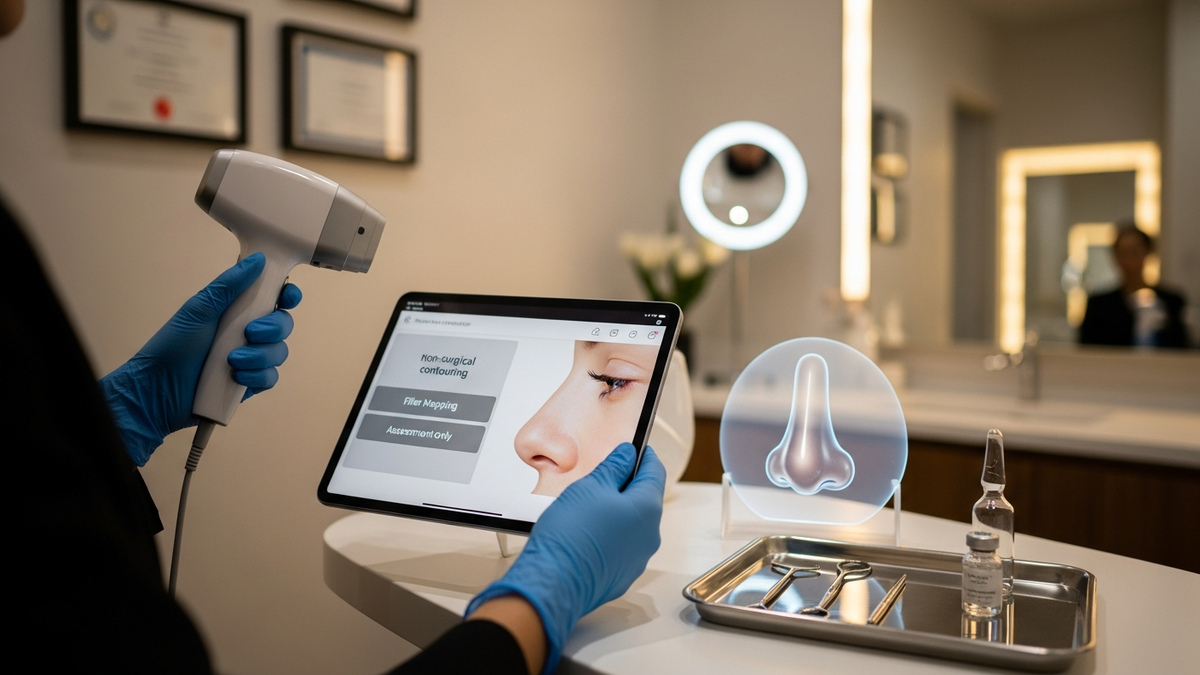
When people search rhinoplasty non surgical, they’re typically referring to non-surgical techniques that can temporarily or semi-permanently alter the appearance of the nose without traditional incisions. The most common non-surgical approaches include:
- Dermal fillers (to add volume, smooth contours, or camouflage minor irregularities)
- Topical or medical therapies (to address skin texture, inflammation, or swelling—though these are not true “nose reshaping”)
- Non-surgical airway treatments (to improve nasal breathing, which may indirectly improve the way the nose “functions” and how you feel daily)
It’s important to set expectations early: non-surgical methods generally cannot permanently change the internal framework of the nose the way surgical rhinoplasty can. They may refine appearance and comfort, but they don’t replace structural correction when cartilage or bone alignment is the root cause.
Non-Surgical Rhinoplasty: What It Can Improve
Non-surgical nose refinement is best suited for specific aesthetic concerns and for people who want subtle changes with minimal downtime. Depending on your anatomy and goals, a qualified clinician may discuss:
1) Mild asymmetry and contour smoothing
Fillers can help balance minor unevenness and soften visible transitions—such as smoothing a slight bump, refining the bridge, or evening out the nasal tip’s shape.
2) Nasal tip definition
For some patients, non-surgical techniques can enhance tip projection or define a more polished tip contour. The results are typically incremental and depend on skin thickness and underlying support.
3) Camouflaging depressions or irregularities
If you have small dents or contour irregularities, filler-based approaches may provide a way to “fill in” and create a more harmonious profile.
4) Temporary swelling reduction with medical management
Some people feel their nose looks different during allergy flares or chronic inflammation. While this isn’t true reshaping, treating contributing factors (like allergies or sinus inflammation) can sometimes improve overall nasal appearance and comfort.
Non-Surgical Rhinoplasty: What It Typically Cannot Do
To make rhinoplasty non surgical searches genuinely useful, it helps to understand the boundaries of non-surgical care.
1) Permanent structural changes to cartilage and bone
Non-surgical methods generally cannot permanently alter the underlying nasal framework—meaning they can’t reliably correct major deviations or significant structural deformities.
2) Correct airflow obstruction in structural cases
If your congestion is driven by anatomic factors like a crooked septum, enlarged turbinates, or nasal valve collapse, non-surgical aesthetic approaches won’t solve the root cause. In those situations, functional nasal procedures may be the more effective path.
3) Achieve dramatic “nose size reduction” safely in every case
Some patients want a smaller nose. Fillers can add volume, but reducing the appearance of size typically requires careful strategy—and not all goals are achievable without surgical reshaping.
When Breathing Problems Are Part of the Picture
Many patients don’t just want a nose that looks better—they want to breathe better. Chronic congestion and sinus symptoms can be caused by structural defects that narrow the nasal airway.
For example, a deviated septum can obstruct airflow, while enlarged nasal turbinates can contribute to a long-term “stuffy nose.” In some cases, nasal valve collapse plays a major role.
Dr. Hootan Zandifar specializes in functional nasal surgery designed to treat chronic symptoms of nasal congestion and sinusitis using minimally invasive procedures. When symptoms stem from structural anatomy—such as a deviated septum or enlarged turbinates—surgical intervention can be the best course of action.
Functional Alternatives That May Outperform “Rhinoplasty Non Surgical” for Airflow
If your primary goal is easier breathing (and you’re also considering cosmetic refinement), it may help to explore functional options. These treatments can permanently improve symptoms that affect quality of life.
Septoplasty for a deviated septum
A septoplasty straightens the nasal cartilage and corrects a crooked septum that obstructs one or both nostrils. If your congestion is linked to septal deviation, this can be a more direct solution than cosmetic-only approaches.
Learn more about Deviated Septum and Septoplasty.
Inferior turbinate reduction for chronic stuffiness
Enlarged turbinates can keep the nasal passages chronically narrowed, contributing to ongoing congestion and difficulty breathing. Inferior turbinate reduction is often recommended for patients with long-term “stuffy nose” symptoms and can be beneficial for those with sleep-disordered breathing.
Repair of nasal valve collapse
Some patients have nasal valve collapse that makes breathing feel restricted—especially during exercise, at night, or when lying down. Non-surgical management may include steroid and non-steroid allergy medications and other non-invasive treatments aimed at improving airway patency. However, severe obstruction may require procedural repair. Options may include implants or other targeted approaches depending on severity.
Balloon sinuplasty and endoscopic sinus surgery for sinusitis
If sinus blockage drives recurrent infections and inflammation, minimally invasive procedures like balloon sinuplasty or endoscopic sinus surgery may restore normal sinus function. These approaches can help eliminate trapped mucus, reduce recurring infections, and support smell recovery.
Allergy treatment (including SLIT)
Allergies can worsen nasal inflammation and breathing efficiency. Sublingual immunotherapy (SLIT)—a “no-shot” method—may be an option for certain patients seeking longer-term allergy management.
Rhinoplasty vs. Rhinoplasty Non Surgical: How to Choose
Choosing between surgical and non-surgical options is less about trends and more about your anatomy, your goals, and your medical needs. A careful evaluation can clarify which approach is likely to deliver the result you want.
Consider non-surgical options if…
- You want subtle refinement rather than major reshaping
- Your concerns are mainly contour smoothing, minor asymmetry, or temporary correction
- You prefer minimal downtime and accept that results may be temporary
- You have no major airway obstruction requiring structural correction
Consider surgical rhinoplasty if…
- You want more predictable, long-term structural changes
- Your aesthetic concerns involve cartilage/bone alignment, significant deviation, or tip support
- You want to address both appearance and function in a unified plan
- You have symptoms consistent with structural nasal obstruction
If you’re exploring traditional surgical options, review Rhinoplasty to understand how functional considerations can be integrated into aesthetic goals.
How Long Do Non-Surgical Results Last?
Because rhinoplasty non surgical typically involves fillers or medical management, longevity varies based on the product used, the amount, the treatment plan, and your unique biology. In general:
- Fillers often provide temporary improvement, with duration that can range widely between individuals.
- Inflammation control (through allergy or sinus care) can change how your nose looks and feels over time, especially during flares.
- Non-surgical approaches may require maintenance to preserve results.
Instead of focusing only on “how long,” focus on how well the plan matches your anatomy and priorities. A well-designed treatment approach can be more satisfying than chasing maximum longevity with the wrong method.
Safety Considerations for Non-Surgical Nose Refinement
Non-surgical does not mean risk-free. When fillers are involved, safety depends heavily on the clinician’s training, anatomy knowledge, and technique. Before any treatment, ask about:
- Experience with nasal anatomy, including vascular and structural considerations
- Product selection and why a particular filler is appropriate for your tissue type and goals
- Risk mitigation (assessment, imaging when relevant, and management of complications)
- Realistic outcomes based on your skin thickness, support, and nasal shape
- Follow-up plan for touch-ups or adjustments
If you have ongoing congestion, sinusitis, or breathing difficulty, a cosmetic-only appointment may miss critical functional issues. In these cases, a combined evaluation can help you choose a plan that improves both appearance and daily comfort.
What a Consultation Should Include
A premium, patient-centered consultation should feel educational—not rushed. For rhinoplasty non surgical and related options, ask your provider to walk you through:
- Your goals (e.g., bridge smoothness, tip refinement, symmetry, breathing)
- Airway assessment if you have congestion, sleep issues, or sinus symptoms
- 3D or standardized imaging when available to compare pre- and post-treatment possibilities
- Non-surgical vs. surgical options with clear pros/cons
- Timeline expectations (when changes are visible and whether maintenance is needed)
- Complication prevention and aftercare guidance
Dr. Hootan Zandifar is known for an honest, trustworthy, and compassionate approach with an emphasis on patient education. That means you should leave with enough information to make a well-informed decision—whether the best path is functional care, cosmetic surgery, or a carefully selected non-surgical strategy.
Actionable Next Steps If You’re Considering Rhinoplasty Non Surgical
If you’re actively exploring rhinoplasty non surgical options, here are practical steps you can take now:
- Write down your top 3 concerns (appearance and breathing). Prioritize them—this guides whether non-surgical refinement is appropriate.
- Track symptoms for 2–4 weeks: congestion severity, nighttime breathing, sinus pressure, and allergy triggers.
- Bring prior records (if you’ve had imaging, allergy testing, or previous treatments).
- Ask direct questions: “Am I a candidate for non-surgical refinement?” and “If my congestion is structural, what functional options would help?”
- Choose a provider who treats both function and aesthetics when needed. If you have chronic nasal symptoms, functional expertise can be a deciding factor.
For patients also considering broader facial rejuvenation, many people pursue a coordinated plan. Depending on your goals, that might include procedures such as Facelift for overall skin and tissue aging, or Blepharoplasty for eyelid rejuvenation. The key is sequencing treatments thoughtfully so each step supports your desired outcome.
How Functional Nasal Care Can Change Your “Look” Without Cosmetic Reshaping
One of the most overlooked aspects of rhinoplasty non surgical conversations is that breathing improvements can affect your day-to-day appearance and well-being. When congestion and sinus inflammation lessen, many patients report:
- More restful sleep and less morning fatigue
- Reduced facial pressure or discomfort
- Improved sense of smell (in some cases)
- Better overall facial energy that can make you look and feel more vibrant
Functional nasal procedures can permanently alleviate symptoms that make it hard to breathe. For the right circumstances, this can be life-changing—and it may be the most “worth it” path even if your initial search was purely cosmetic.
Related Facial Rejuvenation Options (If You’re Building a Broader Plan)
While this article focuses on rhinoplasty non surgical, many patients view nasal refinement as one piece of a broader aesthetic journey. If you’re exploring other areas, consider these examples:
- Blepharoplasty for upper eyelid heaviness or under-eye puffiness: Blepharoplasty
- Facelift for sagging skin and tissue aging: Facelift
- Eyebrow restoration where thinning affects facial balance: eyebrow transplant
- Hair transplantation for hair loss patterns: hair transplant
Not every patient needs these. But if you’re building a plan, coordination can help you prioritize what will deliver the most meaningful changes for your face and quality of life.
FAQ: Rhinoplasty Non Surgical
Is rhinoplasty non surgical actually real?
Yes—non-surgical options like dermal fillers and medical therapies can refine the nose’s appearance in certain cases. However, they typically cannot permanently change the nasal bone/cartilage framework the way surgical rhinoplasty can, and they usually can’t correct structural breathing obstruction on their own.
How do I know if I’m a candidate for non-surgical nose refinement?
Candidacy depends on your anatomy and goals. Non-surgical approaches are often best for mild contour smoothing, minor asymmetry, or subtle tip refinement. If you have significant deviation, nasal valve issues, or chronic congestion driven by anatomy, functional evaluation may be more important.
Will non-surgical rhinoplasty fix my deviated septum or sinusitis?
Usually, no. A deviated septum and certain sinus conditions may require functional procedures such as septoplasty or sinus-targeted care. If you’re dealing with chronic congestion, ask specifically about Septoplasty and related airway-focused options.
What are the risks of fillers used for rhinoplasty-like results?
Risks vary by product and technique, but can include bruising, swelling, asymmetry, and—rarely—more serious complications. Choosing a clinician with deep nasal anatomy expertise and a clear safety protocol is essential.
How long do results last?
Non-surgical results commonly require maintenance and can vary widely. Your provider should discuss expected duration and a realistic plan for follow-up adjustments.
CTA: Schedule a Consultation With a Nose-First, Function-Aware Specialist
If you’re searching rhinoplasty non surgical because you want a refreshed look with less downtime, you deserve an evaluation that also considers how your nose works. For some patients, non-surgical refinement is a great fit; for others, functional nasal care may deliver the more meaningful transformation—especially when chronic congestion or sinus symptoms are involved.
Dr. Hootan Zandifar specializes in functional nasal surgery for patients with structural causes of congestion and sinusitis, using minimally invasive approaches designed to improve breathing and quality of life. If you’re ready to explore your options, consider scheduling a consultation to discuss what’s possible for your appearance, your symptoms, and your long-term comfort.
Book your visit and take the next step toward a nose that aligns with both how you look and how you breathe.
Professional Disclaimer
This content is provided for general educational purposes only by FlowGeniQ Digest. It is not a substitute for professional advice, diagnosis, or treatment. Readers are advised to consult qualified professionals for personalized recommendations.
Medical Information Disclaimer
This content is provided for general educational purposes only by FlowGeniQ Digest. It is not a substitute for professional advice, diagnosis, or treatment. Readers are advised to consult qualified professionals for personalized recommendations.