FlowGeniQ Digest explores the question, is eyebrow transplant safe, with a practical, safety-first lens—covering candidacy, risks, recovery, and how to evaluate a clinic before you book.
Eyebrows frame the eyes and strongly influence facial expression. When eyebrow hair thins or disappears—because of genetics, over-plucking, scarring, medical conditions, or traction—many people consider an eyebrow transplant to restore a fuller, more balanced look. But safety is the deciding factor. The good news: for appropriately selected patients treated by experienced surgeons, eyebrow transplantation is generally considered a safe cosmetic procedure. The key word is appropriately.
Is eyebrow transplant safe? The short answer
In most cases, is eyebrow transplant safe depends on three variables: (1) your medical suitability, (2) the technique used (FUE-style grafting vs. other approaches), and (3) the surgeon’s skill in graft harvesting, placement, and aesthetic planning.
When performed using standard surgical protocols—sterile technique, careful anesthesia management, and precise graft placement—complications are typically manageable. However, like any procedure involving incisions and grafts, it carries potential risks and requires a thoughtful recovery plan.
How eyebrow transplants work (and why technique matters for safety)
An eyebrow transplant typically involves moving hair follicles/grafts from a donor area (often the scalp or another dense hair-bearing region) and placing them into the eyebrow area in a pattern that matches your natural brow direction, density, and shape.
Graft planning: the safety foundation
Safety starts before the first incision. A skilled surgeon evaluates:
- Eyebrow cause of loss (over-plucking, alopecia, scarring, chemotherapy, burns, etc.)
- Skin quality and scar tissue (scarring can affect graft take)
- Hair characteristics (thickness, curl/wave, growth cycle)
- Face proportions and eyebrow placement relative to eye anatomy
- Medical history (autoimmune disease, bleeding disorders, uncontrolled diabetes, smoking, medications)
This planning reduces avoidable complications and improves the likelihood of natural results.
Donor management and graft survival
Safety is also tied to donor handling. If too many grafts are taken or if the donor area is not managed properly, patients may experience unwanted thinning or prolonged healing at the donor site. Clinics that use advanced systems and experienced teams tend to have more consistent outcomes.
Common risks and side effects of eyebrow transplant safety
When people ask is eyebrow transplant safe, they often mean: “What could go wrong?” Below are the most commonly discussed risks. Not everyone experiences them, and serious complications are uncommon in reputable practices.
1) Swelling, bruising, and discomfort
Temporary swelling around the forehead/eyelids and mild bruising can occur, especially in the first few days. Discomfort is usually managed with prescribed medications and cold compresses (as directed by your surgeon).
2) Infection (rare with proper sterile technique)
Infection is uncommon when sterile technique and post-op wound care are followed. Warning signs include increasing redness, warmth, pus, fever, or worsening pain after initial improvement.
3) Bleeding or delayed healing
Bleeding risk can be influenced by medications (e.g., blood thinners), smoking, and underlying health conditions. Your surgeon should review your medication list and provide specific guidance on what to stop or continue.
4) Scarring or uneven texture
Some degree of redness and small healing marks may occur. Visible scarring is less likely when careful technique is used, but it can be more likely in patients prone to keloids or with certain skin conditions.
5) Folliculitis (inflamed hair follicles)
Folliculitis—small inflamed bumps—can happen during early graft healing. Clinics often prescribe topical or oral treatments if needed.
6) Temporary shedding and growth timeline variability
After transplanting, many patients experience early shedding of transplanted hairs. This can look alarming, but it’s usually part of the hair cycle. True growth typically becomes more visible over several months, with fuller results developing later.
7) Asymmetry or unnatural direction
Eyebrows are highly visible. If grafts are placed without careful attention to brow architecture, patients may experience uneven density, incorrect hair direction, or a “drawn on” look. Choosing an experienced facial plastic or hair restoration surgeon is crucial for safety and aesthetics.
Who is a good candidate for an eyebrow transplant?
Safety is highest when candidates are selected thoughtfully. You may be a good candidate if you:
- Have stable eyebrow loss (not rapidly progressing)
- Have adequate donor hair density
- Do not have uncontrolled medical conditions that impair healing
- Understand realistic outcomes and timelines
- Are willing to follow post-op care instructions closely
Situations that require extra caution
Some conditions don’t necessarily rule out treatment, but they increase the importance of individualized planning:
- Scarring from burns, trauma, or prior procedures
- Autoimmune conditions affecting hair growth
- Active skin infections or untreated dermatitis
- Uncontrolled diabetes or immune suppression
- Smoking/vaping (can impair healing)
At a premium clinic, your surgeon should discuss how these factors may affect graft survival, infection risk, and the look of final results.
Technique options: FUE-style eyebrow transplants and what to ask
Many eyebrow transplants are performed using follicular unit extraction (FUE) style methods, where individual follicular units are harvested and transplanted. At TestBiz Hair Clinic, the focus is on advanced hair restoration approaches such as FUE and FUT for hair loss—experience that can translate into careful graft handling and donor management. (Your eyebrow procedure should be planned specifically for brow hair characteristics.)
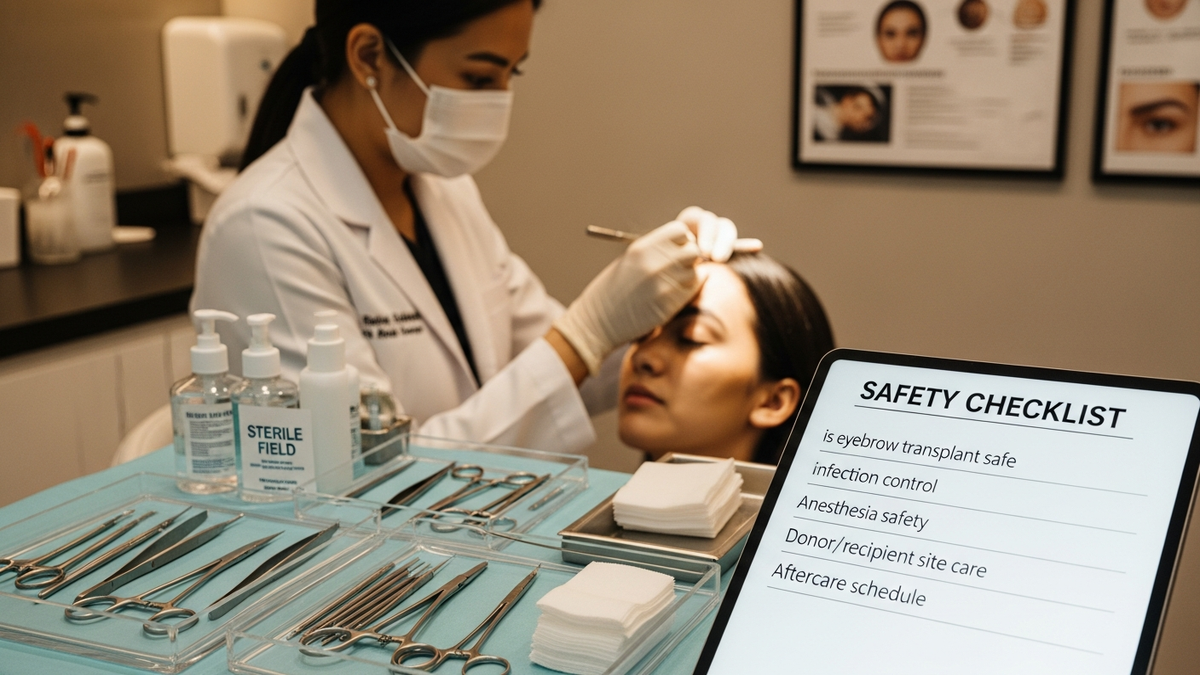
Questions to ask your surgeon (safety checklist)
Use this as a practical pre-consultation checklist:
- What technique will you use for eyebrow transplant? (and why it fits my anatomy)
- Who will be performing the key steps? (graft harvesting, site creation, placement)
- How do you map the eyebrow? (growth direction, density plan, symmetry goals)
- What is your infection prevention protocol? (sterile setup, antibiotics if indicated)
- What anesthesia plan is used? (local anesthesia, sedation, monitoring)
- What are your typical downtime and aftercare instructions?
- What complications have occurred in your practice? (and how you manage them)
- Can I see before/after results? specifically for eyebrow cases, not only scalp hair?
The clinic should answer these clearly. If you feel pressured or vague responses are common, that’s a safety signal.
Recovery timeline: what “safe healing” usually looks like
Recovery varies by individual and technique, but most eyebrow transplant patients can expect a structured healing process. Knowing what’s normal helps you recognize what isn’t.
First 72 hours
- Swelling and mild bruising may appear
- Graft sites may feel tight or tender
- Dressings or ointments may be used as instructed
Days 4–14
- Crusting and scabbing at graft sites may occur
- Redness typically fades gradually
- Most patients can return to non-strenuous routines with restrictions
Weeks 3–8: shedding phase
Some transplanted hairs shed during this period. This can be distressing, but it’s often part of the cycle. Do not panic—follow your surgeon’s guidance.
Months 3–6: early growth
New hairs may start to emerge. Texture and thickness can evolve as the follicles mature.
Months 9–12+: fuller results
Many patients see the most meaningful improvement within 12 months, though subtle maturation can continue beyond that.
How to minimize risk after your eyebrow transplant
Even the safest procedure requires responsible aftercare. Here are actionable steps that often reduce complications:
- Follow wound care instructions exactly (washing, ointments, and timing)
- Avoid rubbing or scratching the graft area
- Skip strenuous exercise during the early healing window
- Protect from sun exposure (use guidance on hats/sunscreen later)
- Avoid smoking/vaping as recommended, since it can impair healing
- Take medications as prescribed (including antibiotics if indicated)
- Attend follow-up visits so your surgeon can monitor healing
If you ever notice worsening pain, spreading redness, fever, or discharge, contact your clinic promptly.
Eyebrow transplant vs. other facial procedures: what to know
Some patients consider multiple facial aesthetic treatments around the same time. It’s important to coordinate safely—especially because eyebrow placement interacts with eyelids and forehead dynamics.
Eyebrow transplant and eyelid surgery (Blepharoplasty)
If you’re considering Blepharoplasty for excess eyelid skin or under-eye puffiness, your surgeon may want to sequence procedures carefully to optimize results and reduce swelling-related complications. Learn more about eyelid surgery here: Blepharoplasty.
Eyebrow transplant and nose surgery (Rhinoplasty)
Although a nose procedure doesn’t directly affect brow grafts, overall facial planning matters. If you’re also considering Rhinoplasty, discuss timing and recovery with your surgical team. Reference: Rhinoplasty.
Eyebrow transplant and other head/neck cosmetic surgery
For example, some patients explore a Facelift or brow lift to address aging. If that’s you, ask how your eyebrow graft healing schedule fits with any additional procedures.
How to choose a safe clinic and surgeon
When evaluating is eyebrow transplant safe, don’t rely on marketing claims. Look for evidence of competence, transparent protocols, and patient education.
Red flags to avoid
- Pressure to decide quickly without a thorough consultation
- Unclear who performs the procedure steps
- Inconsistent or unrelated before/after results
- Refusal to discuss complications or realistic outcomes
- No standardized aftercare plan
What “good” looks like
- A structured evaluation of your medical history and eyebrow loss cause
- Customized brow mapping for symmetry and natural hair direction
- Clear explanation of timelines and the shedding/growth cycle
- Follow-up schedule and easy communication for concerns
- A surgeon who prioritizes natural aesthetics and safety
At TestBiz Hair Clinic, the emphasis is on premium hair restoration services with advanced technology and experienced surgeons offering FUE and FUT approaches for hair loss. For brow-specific care, the same level of graft handling precision and patient education should be applied to eyebrow restoration as well.
Additionally, for head-and-neck-focused cosmetic and reconstructive expertise, Dr. Hootan Zandifar is known for an honest, trustworthy, and compassionate approach and for prioritizing education so patients can make well-informed choices. If you want to learn more about the eyebrow procedure itself, see: eyebrow transplant.
Frequently expected outcomes: what you can realistically achieve
Safety also includes setting the right expectations. A safe procedure aims for natural-looking density and direction—not perfection overnight.
Natural density and shape
Most successful results focus on:
- Matching your natural brow start, arch, and tail
- Replicating hair direction so brows look “grown,” not “placed”
- Building density gradually where appropriate
Texture differences can happen
Depending on donor hair characteristics, transplanted hairs may initially feel different. Over time, many patients notice improved blending, but it’s important to discuss realistic texture expectations during your consult.
Results vary by individual biology
Growth is influenced by your healing response and hair cycle. Even with excellent technique, some patients may require additional sessions for optimal density.
FAQ: Is eyebrow transplant safe?
1) Is eyebrow transplant safe for most people?
For many patients, an eyebrow transplant is considered safe when performed by an experienced surgeon with proper sterile technique and when you’re a good candidate medically. Your risk profile depends on your health, skin condition, and the cause of eyebrow loss.
2) What are the most common risks after an eyebrow transplant?
Common risks include temporary swelling, bruising, redness, discomfort, and occasional folliculitis. Rare complications can include infection or scarring. Choosing a reputable clinic and following aftercare reduces risk.
3) How long does it take to see results?
Many patients experience early shedding within the first couple of months. Noticeable growth often begins around 3–6 months, with more complete results typically developing by 9–12 months.
4) Can eyebrow transplants work if I have scars or patchy loss?
They can sometimes help, but scar tissue changes healing and graft take. A thorough assessment is essential to determine whether you can achieve natural density and how graft placement should be planned.
5) How do I know if a clinic is trustworthy?
Look for transparent protocols, clear answers about technique and complication management, evidence of eyebrow-specific results, and a surgeon who provides education and realistic expectations. If possible, ask how follow-up care is handled.
When to seek urgent medical attention
Most side effects are temporary, but safety requires knowing when to contact your provider. Seek prompt medical guidance if you develop:
- Fever or chills
- Rapidly increasing redness, warmth, or swelling
- Pus or foul-smelling drainage
- Severe or worsening pain after the initial recovery period
- Vision changes or severe eye discomfort
CTA: Ready to talk about eyebrow transplant safety?
If you’re weighing is eyebrow transplant safe for your specific situation, the next best step is a personalized consultation. A qualified surgeon can review your medical history, examine your eyebrow loss pattern, and map a plan that prioritizes both safety and natural aesthetics.
Schedule a consultation with a reputable facial plastic or hair restoration team to discuss candidacy, technique, timeline, and aftercare. If you’re exploring brow restoration at TestBiz Hair Clinic, confirm that the team will tailor graft planning specifically for eyebrow hair characteristics and your facial anatomy.
Professional Disclaimer
This content is provided for general educational purposes only by FlowGeniQ Digest. It is not a substitute for professional advice, diagnosis, or treatment. Readers are advised to consult qualified professionals for personalized recommendations.
Medical Information Disclaimer
This content is provided for general educational purposes only by FlowGeniQ Digest. It is not a substitute for professional advice, diagnosis, or treatment. Readers are advised to consult qualified professionals for personalized recommendations.