In a city where appearance and confidence often go hand-in-hand, it’s no surprise that many people search for eyebrow transplant Los Angeles cost when they’re exploring options for restoring fuller, more balanced brows. Whether your eyebrow thinning is related to aging, genetics, over-plucking, medical conditions, or prior cosmetic procedures, modern eyebrow restoration can help you achieve a natural-looking frame for your face.
In this FlowGeniQ Digest guide, we’ll break down the real-world factors that influence pricing in Los Angeles, what’s typically included in the quote, and—just as importantly—how to evaluate a provider beyond the sticker price.
Eyebrow Transplant Los Angeles Cost: The Quick Answer
Because eyebrow restoration is highly individualized, there isn’t one universal price. In Los Angeles, the eyebrow transplant cost commonly varies based on graft needs, technique, surgeon expertise, and whether additional services (like sedation, imaging, or post-op care) are included.
What you can do now: Plan for a consultation, request a written estimate, and ask your provider to explain how they arrived at your graft number (or “density plan”). That transparency usually correlates with better outcomes.
Why Eyebrow Transplant Pricing Varies in Los Angeles
When people compare eyebrow transplant Los Angeles cost, they often compare apples to oranges. The biggest drivers of price are listed below.
1) Number of grafts and density goals
Eyebrows are small, but they require precision. A quote may be based on:
- How much eyebrow hair is missing (tail, arch, head, or full coverage)
- Desired density (natural enhancement vs. fuller reconstruction)
- Existing hair quality (thicker hairs may require fewer grafts)
More grafts generally mean more time, more follicular harvesting, and more meticulous implantation—each of which can affect cost.
2) Technique: FUE vs. FUT (and how it’s applied to brows)
In general hair restoration, clinics often offer FUE (follicular unit extraction) and FUT (follicular unit transplantation). For eyebrows, however, the technique must be adapted to the eyebrow’s unique anatomy, angle, and growth direction.
Some centers may use FUE-style harvesting for eyebrow work because it can be well-suited to small graft counts and discreet donor management. If you’re also exploring other restoration options, you may see related services under a hair transplant umbrella.
Tip: Ask whether your plan uses FUE, FUT, or a hybrid approach—and how the surgeon ensures correct eyebrow hair direction for a natural look.
3) Donor source and availability
Eyebrow hair can be sourced from areas like the scalp or other body regions, depending on the patient’s situation and hair characteristics. Donor availability influences both planning and cost.
If donor hair is limited, the surgeon may recommend a conservative density plan or a staged approach, which can change the overall price.
4) Surgeon expertise and facial plastic specialization
Eyebrows are a focal point of facial expression. Small changes in shape, angle, and spacing can look unnatural if the plan is overly standardized.
That’s why many patients in Los Angeles seek surgeons with deep experience in head and neck aesthetics and reconstructive nuance. For example, Dr. Hootan Zandifar focuses on cosmetic and reconstructive surgery of the head and neck, helping patients achieve natural-looking results through meticulous planning and artistry.
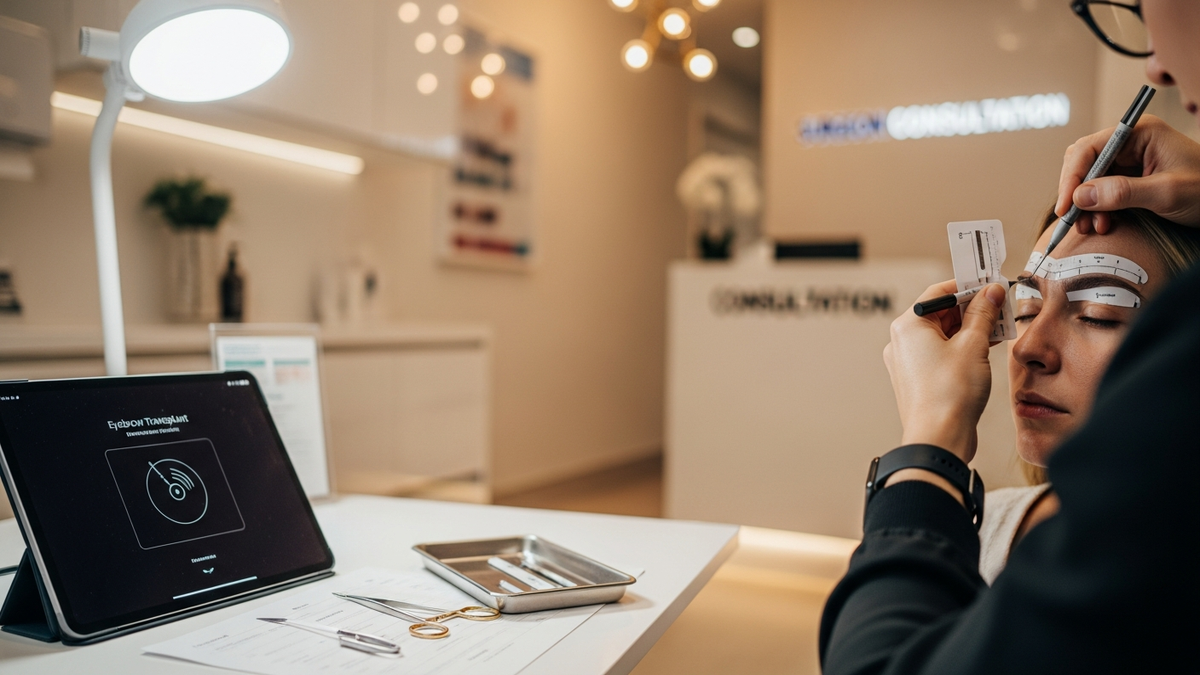
5) Pre-op assessment, design time, and mapping
A high-quality eyebrow transplant involves more than harvesting and placing grafts. Expect elements like:
- Eyebrow mapping (head–arch–tail proportions)
- Angle and direction planning to mimic natural growth
- Harvest site evaluation and donor management
- Photos and follow-up planning
Clinics may price these differently—some include them in the base fee, while others separate them as add-ons.
6) Anesthesia, sedation, and facility fees
Some eyebrow procedures are performed with local anesthesia alone; others may include sedation depending on complexity and patient needs. Facility fees and anesthesia time can influence the final eyebrow transplant Los Angeles cost.
7) Post-op medications and follow-up visits
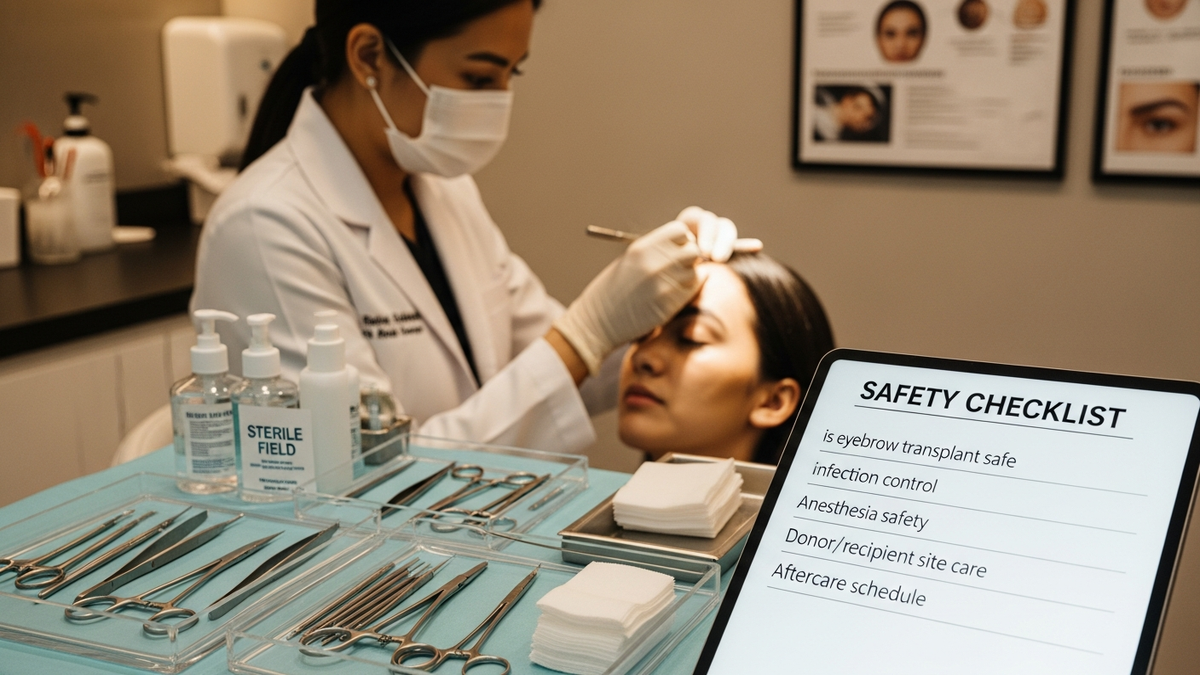
Reliable providers typically include:
- Post-op care instructions
- Follow-up appointments
- Medication guidance (as clinically appropriate)
- Monitoring for healing and graft survival
When comparing quotes, verify what’s included so you’re not surprised by extra charges later.
Typical Eyebrow Transplant Cost Ranges (What to Expect)
Because each case differs, you should treat any online number as a broad estimate—not a promise. In Los Angeles, quotes may range widely based on graft count and whether the goal is enhancement versus full reconstruction.
How to interpret estimates: If one clinic quotes significantly lower than others, ask whether they’re using fewer grafts, a different technique, or a different definition of what “included” means (e.g., follow-up visits, aftercare, or sedation).
In many cases, the most meaningful comparison is not just cost—it’s the plan:
- How your surgeon designs your brow shape
- How they determine graft number and distribution
- What timeline they explain for shedding and regrowth
What’s Included in a Real Eyebrow Transplant Quote?
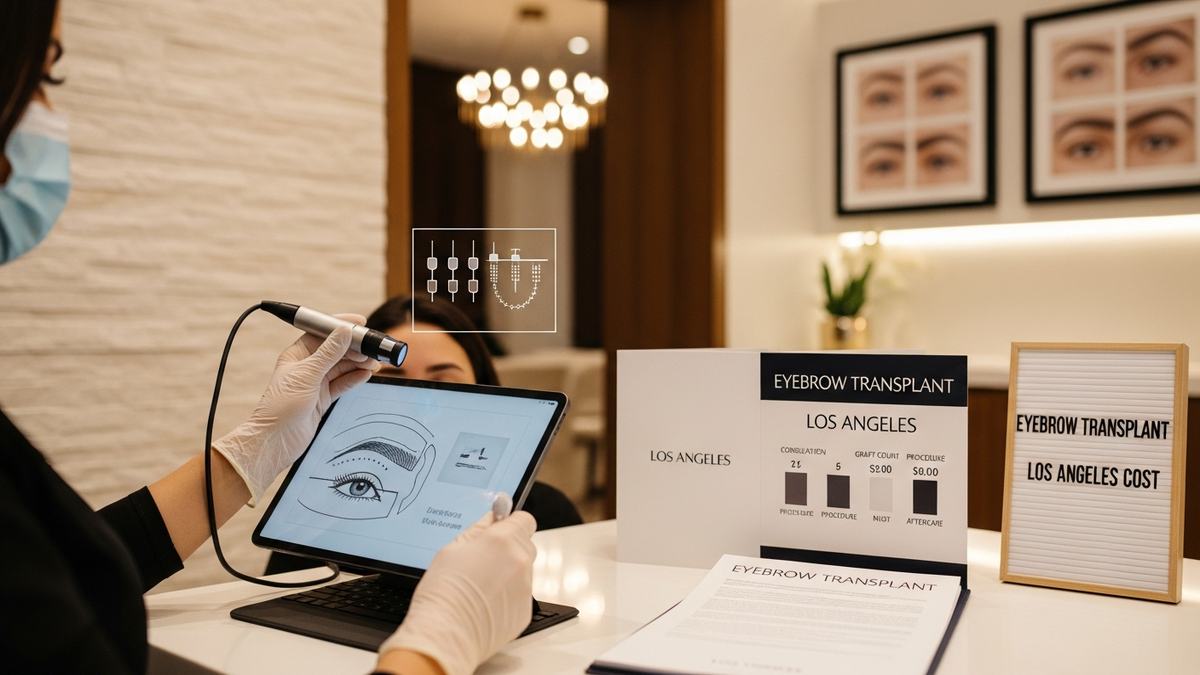
If you want a quote you can trust, ask the clinic to provide an itemized estimate. A thorough eyebrow transplant plan may include:
- Initial consultation and eyebrow evaluation
- Digital or photo-based planning (mapping and shape selection)
- Harvesting and implantation fees
- Anesthesia/sedation (if applicable)
- Medications and post-op instructions
- Follow-up visits (healing and progress checks)
Ask for clarity: If the quote doesn’t mention follow-ups or aftercare, request a written list of included services.
Eyebrow Transplant Results: What “Natural” Really Means
Natural-looking eyebrow restoration is the goal, but it’s helpful to define what that looks like. A successful transplant typically achieves:
- Balanced symmetry with your existing facial features
- Correct hair direction (growth angle and swirl patterns)
- Appropriate spacing between hairs to avoid an “overplanted” look
- Gradual density improvement during regrowth
Timeline: When you’ll see changes
Eyebrow hair typically follows a regrowth cycle similar to other hair transplant procedures:
- Immediate period: tiny scabs or redness may occur; the area heals
- Weeks 2–6: transplanted hairs may shed (this can be normal)
- Months 3–4: early regrowth becomes noticeable
- Months 6–9: density and thickness continue improving
- Months 9–12+: final maturation for many patients
Your surgeon should explain what’s typical for your case and when to schedule check-ins.
How to Choose a Provider Beyond Eyebrow Transplant Los Angeles Cost
Price matters, but the most cost-effective outcome is often the one that looks right the first time. Here’s how to evaluate a clinic responsibly.
Ask these 8 questions during your consultation
- How many grafts do I need, and how did you calculate it?
- What density plan are you recommending—enhancement or reconstruction?
- What technique will you use for eyebrow placement, and why?
- How will you ensure natural hair direction and spacing?
- What donor source will you use, and is it sufficient for my goals?
- What does recovery look like, and what restrictions should I expect?
- What are the potential risks and how are they managed?
- Can I see before-and-after photos of similar cases?
Look for evidence of individualized planning
Be cautious of clinics that offer a one-size-fits-all brow package. Eyebrows vary in shape, thickness, and expression. A surgeon should tailor your design to your anatomy, not just your budget.
Confirm who performs the procedure
When possible, ask whether the surgeon or a team member performs each step. You want expertise in both harvesting and precise implantation.
Financing, Packages, and “Hidden” Costs
Some clinics offer financing options. If you’re considering a payment plan, confirm:
- Whether interest applies
- Any administrative fees
- Whether a deposit is refundable
- What happens if you need a revision due to healing or density concerns
Also ask whether your eyebrow transplant Los Angeles cost includes:
- Post-op follow-ups
- Any scar care or additional visits
- Medication management
Recovery and Aftercare: Protect Your Investment
Since eyebrow transplants rely on graft survival, aftercare isn’t optional—it’s part of the outcome.
Common recovery expectations
- Swelling or redness for a short period
- Scabbing that should not be picked
- Gentle cleansing per your surgeon’s instructions
- Temporary sensitivity in donor and recipient areas
Practical tips to support healing
- Avoid rubbing the brow area while healing
- Follow hair-washing guidance carefully
- Protect from sun exposure as advised
- Take medications only as directed
- Attend all scheduled follow-ups
Important: Your surgeon may tailor restrictions based on your medical history, skin type, and healing patterns.
Eyebrow Transplant vs. Alternatives
Depending on the cause of eyebrow loss, you may have non-surgical options or hybrid approaches.
Microblading and cosmetic camouflage
For some patients, tattooing or microblading can help fill gaps temporarily. However, it may not address true hair loss and can complicate surgical outcomes depending on timing and technique. Always discuss your plan with a surgeon before committing to cosmetic camouflage.
Topicals and medical management
If eyebrow loss is related to inflammation, hormonal changes, or dermatologic conditions, medical management may be appropriate before—or alongside—surgery.
Staged restoration
Some patients choose staged procedures to manage donor availability and gradually build density. This can affect the overall budget but may improve the final aesthetic.
Related Facial Procedures (If You’re Considering a Broader Facial Refresh)
Many patients exploring eyebrow restoration are also interested in other facial rejuvenation procedures. If you’re planning a full head-and-neck aesthetic approach, it’s helpful to discuss timing and sequencing with your surgeon.
For example:
- If you’re considering nasal refinement, you may explore options like Rhinoplasty.
- If you’re dealing with nasal breathing issues, ask your surgeon whether a Septoplasty or addressing a Deviated Septum is relevant.
- If you’re focused on eyelid aging, you might research Blepharoplasty.
- For broader facial rejuvenation, patients sometimes consider a Facelift alongside other refinements.
While these aren’t eyebrow procedures, they can influence your overall appearance and may affect scheduling if you’re undergoing multiple treatments.
Why Eyebrow Transplant Planning Should Be Done by a Skilled Specialist
Eyebrow restoration is both reconstructive and aesthetic. Because eyebrows strongly influence facial emotion and expression, the “art” of brow design is as important as the technical aspects of graft placement.
Dr. Hootan Zandifar, a board-certified facial plastic and reconstructive surgeon, emphasizes natural-looking results and patient education. His focus on head and neck procedures supports a careful approach to facial harmony—an essential factor when restoring eyebrow shape.
If you’re specifically looking for information about the surgical approach, you may also review eyebrow transplant options and how they’re planned for individual anatomy and goals.
Frequently Asked Questions About Eyebrow Transplant Los Angeles Cost
1) How much does an eyebrow transplant cost in Los Angeles?
Costs vary widely based on graft number, technique, anesthesia/sedation, and how individualized the brow design plan is. The best way to get an accurate estimate is to schedule a consultation and request a written breakdown of what’s included.
2) Is eyebrow transplant pricing based on grafts or a flat fee?
Many clinics base pricing on graft count and density goals. Others may offer package pricing. Either way, ask how the estimate was calculated and what outcomes the plan is designed to achieve.
3) Does insurance cover eyebrow transplant?
In most cosmetic cases, eyebrow transplants are not covered by insurance. However, if eyebrow loss is related to medically documented conditions, coverage may differ. A clinic can help you understand typical pathways, but coverage decisions depend on your insurer and documentation.
4) Are cheaper eyebrow transplant quotes worth it?
Sometimes—but not always. A lower price can reflect fewer grafts, a different technique, or limited inclusion of follow-up care. Focus on the quality of planning, surgeon expertise, and the specific design approach for your facial features.
5) When will I know if the transplant is successful?
You’ll see early signs of healing right away, but true density and final maturation usually take months. Many patients begin noticing meaningful regrowth around 3–4 months, with continued improvement through 9–12 months or longer depending on individual factors.
How to Prepare for Your Eyebrow Transplant Consultation
If you want to make the process efficient and informative, come prepared. Consider bringing:
- Photos of your brows in different lighting/angles
- A list of medical conditions and medications
- Details about the cause of eyebrow loss (if known)
- Any prior treatments (tattooing, microblading, lasers, or surgeries)
- Your aesthetic goals (e.g., natural enhancement vs. fuller reconstruction)
Then use the consultation to confirm your plan, timeline, and total cost—including what’s included and what could be added.
CTA: Get a Personalized Eyebrow Transplant Cost Estimate in Los Angeles
If you’re researching eyebrow transplant Los Angeles cost, the most valuable next step is a consultation where your brow pattern, donor resources, and aesthetic goals are evaluated in detail. At FlowGeniQ Digest, we emphasize informed decision-making—so you can compare options with confidence.
Next step: Schedule an in-person or virtual consult with a qualified facial plastic and reconstructive surgeon to receive a plan tailored to your anatomy and a clear, written estimate.
Want a more holistic facial approach? If you’re also considering other head-and-neck cosmetic procedures, discuss timing and sequencing so your results look cohesive.
Professional Disclaimer
This content is provided for general educational purposes only by FlowGeniQ Digest. It is not a substitute for professional advice, diagnosis, or treatment. Readers are advised to consult qualified professionals for personalized recommendations.
Medical Information Disclaimer
This content is provided for general educational purposes only by FlowGeniQ Digest. It is not a substitute for professional advice, diagnosis, or treatment. Readers are advised to consult qualified professionals for personalized recommendations.