Source: FlowGeniQ Digest
When people search for eyebrow transplant maryland, they’re usually looking for one outcome: brows that look like they were always there. Eyebrows are a high-impact facial feature—framing the eyes, influencing perceived expression, and contributing to overall symmetry. If you’ve experienced eyebrow thinning or loss due to genetics, aging, over-plucking, scarring, alopecia, chemotherapy, or other medical factors, a transplant may offer a more permanent solution than temporary cosmetic options.
This comprehensive guide—built for readers in Maryland and nearby areas—walks you through how eyebrow transplantation works, who may be a good candidate, what results to realistically expect, and how to prepare for recovery. You’ll also learn how to evaluate a surgeon’s experience and technique so your results are natural, dense where you need them, and harmonious with your facial structure.
What Is an Eyebrow Transplant (and Why Maryland Patients Seek It)?
An eyebrow transplant is a specialized hair restoration procedure that moves hair follicles to the eyebrow area. The goal is not to “add hair” in a generic way—it’s to recreate an eyebrow pattern that matches your natural brow architecture (head, body, arch, and tail), while respecting growth direction, density, and skin characteristics.
Patients in Maryland pursue eyebrow transplantation for many reasons, including:
- Genetic thinning or age-related brow loss
- Trauma or scarring (accidents, burns, surgical scars)
- Alopecia (including areata)
- Over-plucking or harsh cosmetic practices
- Medication- or treatment-related hair loss (e.g., chemotherapy)
- Uneven brows after partial loss on one side
Eyebrow Transplant Maryland: What Makes Eyebrow Work Different From Scalp Hair?
Scalp hair restoration and eyebrow transplantation share the same foundational principle—moving follicles—but eyebrows require a different level of precision. Eyebrow hairs are typically shorter, finer, and placed in a distinctive growth pattern. Even small errors in angle, spacing, or hair direction can make brows look artificial.
Key technical differences
- Hair direction and angle: Eyebrows don’t grow in the same uniform pattern as scalp hair. Surgeons must replicate natural whorl and sweep.
- Density planning: Overcrowding can look heavy; under-filling can look sparse. The “right” density depends on your baseline and skin tone.
- Design and proportion: A well-designed brow considers facial shape, eye spacing, and forehead proportions.
- Skin sensitivity: Eyebrow skin can be more reactive. Gentle handling and careful post-op care are essential.
Who Is a Good Candidate for Eyebrow Transplantation?
Not everyone with brow thinning needs a transplant. The best candidates typically have stable hair loss, enough donor hair, and realistic expectations about coverage and timeline.
Common good-candidate profiles
- Patchy or generalized eyebrow thinning that has stabilized
- Partial eyebrow loss where one area (arch or tail) needs targeted restoration
- Scarring-related loss where transplant may complement scar management (case-dependent)
- Asymmetry that can be improved with careful design
- Patients who want long-term results rather than ongoing cosmetic camouflage
Situations that may require caution or alternative planning
- Active, rapidly progressing hair loss (particularly inflammatory alopecias)
- Uncontrolled skin conditions in the eyebrow region
- Unrealistic expectations (e.g., wanting extremely dramatic density when baseline is very limited)
- Insufficient donor supply or hair characteristics that don’t match eyebrow needs
During your consultation, your provider should evaluate eyebrow pattern, skin quality, donor hair characteristics, and any underlying conditions that could affect long-term results.
Eyebrow Transplant Techniques: What to Ask About in Maryland
Most eyebrow transplants use follicular unit extraction/transfer concepts (commonly aligned with graft-based approaches). The exact method varies by clinic, but the guiding principle remains the same: place individual follicles to recreate natural eyebrow growth.
Questions that help you compare clinics
- How do you design the brow? Ask whether they map your eyebrow shape before harvesting and placement.
- How do you determine density? Look for a personalized plan based on your facial proportions and existing brow hair.
- What is the approach to hair direction? The best results depend on growth-axis accuracy.
- How do you manage scarring? If you have scars, ask what they can realistically achieve and how they plan around scar tissue.
- What does the timeline look like? Eyebrow grafts typically shed before regrowth—your clinic should explain the process clearly.
- Do you offer follow-up visits? Quality care includes monitoring healing, addressing concerns, and guiding aftercare.
If you’re also considering broader facial procedures, it’s important to coordinate timing and goals. Facial plastic and reconstructive specialists often emphasize that eyebrow restoration should harmonize with the rest of the face—especially if you’re also evaluating options such as Rhinoplasty or brow/eyelid rejuvenation.
Designing Natural-Looking Eyebrows: The Blueprint Matters
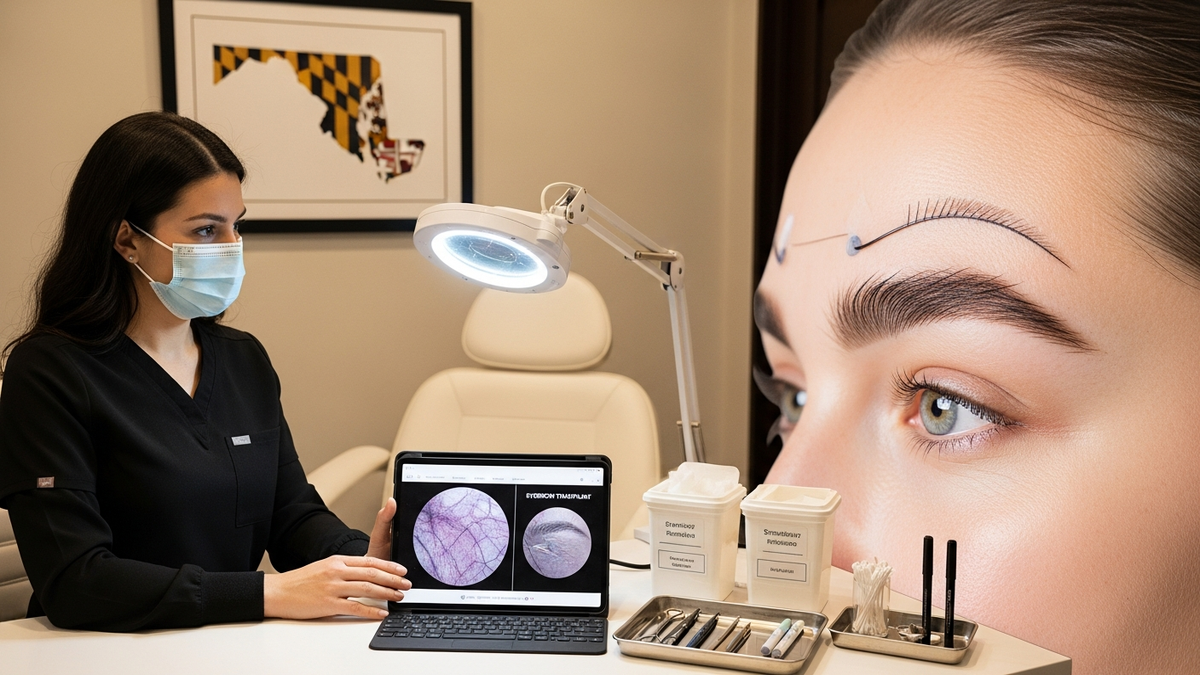
A natural eyebrow isn’t just “more hair.” It’s a sculpted framework with intentional variation in thickness and curvature. A skilled surgeon will consider:
- Head-to-tail taper: The front should transition smoothly into the arch and taper toward the tail.
- Arch height: Arch placement can subtly change how expressive your eyes look.
- Symmetry vs. natural asymmetry: Perfect mirror symmetry is not always desirable; realistic symmetry often looks more authentic.
- Skin undertone and contrast: The same density can look different on different skin tones.
Why “natural” is a measurable goal
Clinics that prioritize natural outcomes typically plan for:
- Low-visibility graft placement so the brows don’t look patchy
- Appropriate spacing to allow regrowth and avoid clumping
- Realistic density targets based on your starting point
In many cases, eyebrow restoration may be staged. A first procedure can establish a foundation, with a second refinement for additional density or improved shape.
What Results Can You Expect?
Eyebrow transplant results evolve over time. Understanding the timeline helps you avoid frustration during early healing stages.
Typical eyebrow transplant timeline
- Immediately after: Mild redness, swelling, and temporary tenderness may occur.
- First few weeks: Transplanted hairs often shed—this is common and does not mean the procedure failed.
- 1–3 months: Early regrowth begins; fine hairs may appear.
- 3–6 months: Noticeable improvement in fullness and shape.
- 6–12 months: Final density and texture often become clearer.
Some patients see meaningful improvement sooner, while others require closer to a year for the most natural-looking outcome. Your surgeon should provide individualized expectations based on your donor hair and eyebrow baseline.
Recovery and Aftercare: How to Heal for Best Results
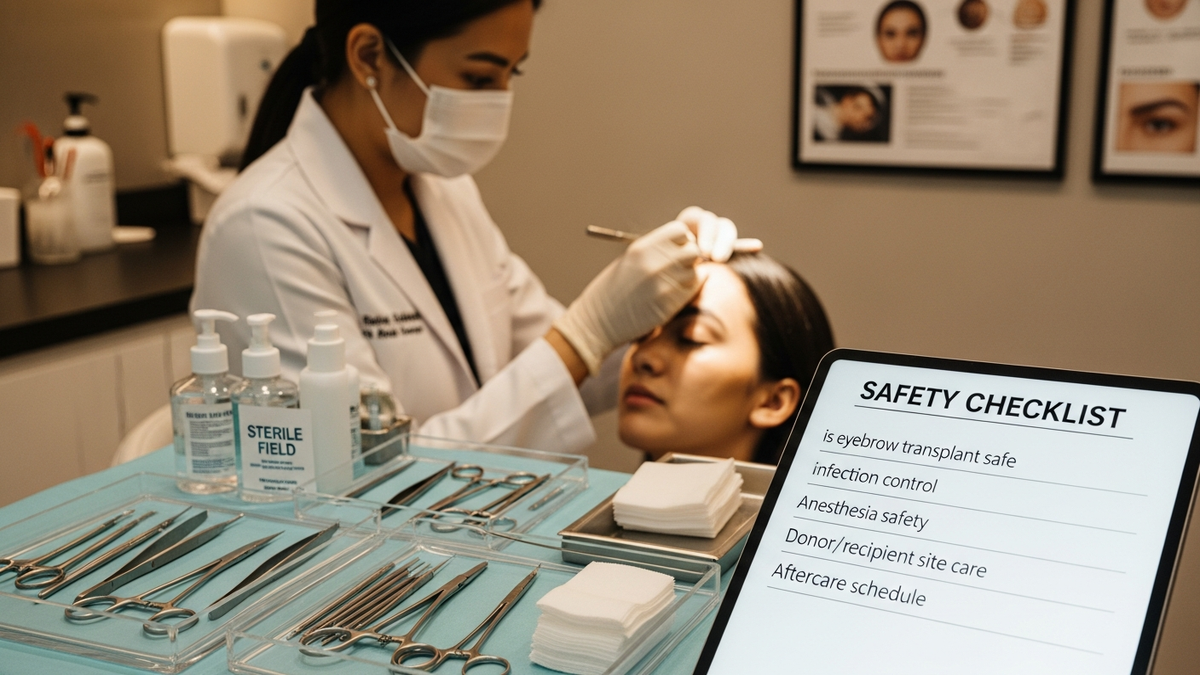
Recovery is a key determinant of outcomes. While your surgeon’s instructions are the final authority, most post-op guidance includes protecting graft sites, minimizing friction, and following a gentle cleansing routine.
What to expect during recovery
- Swelling and redness in the eyebrow area, usually temporary
- Crusting around graft sites as they heal
- Temporary sensitivity when washing or touching the area
- Activity restrictions to reduce strain and friction
Actionable aftercare tips (general guidance)
- Follow cleansing instructions exactly—over-washing can irritate healing skin.
- Avoid picking scabs or rubbing graft sites.
- Protect from sun exposure (UV can affect healing and pigmentation).
- Be mindful with makeup; wait for your surgeon’s clearance.
- Sleep carefully to avoid pressure on the eyebrow region.
- Attend follow-ups so your provider can assess healing and graft survival.
If you also have concerns related to eyelids or brow position—such as drooping that affects your field of vision—discuss it. Procedures like Blepharoplasty or a brow lift may be relevant depending on anatomy and goals.
Cost Considerations for Eyebrow Transplant Maryland
Cost varies widely based on graft count, complexity (e.g., scarring), surgeon expertise, and whether the procedure is performed as a single session or staged plan. When comparing prices, focus on total value: design quality, technique, graft management, and follow-up care—not just the headline number.
What can influence price
- Number of grafts needed for your density goals
- Difficulty of placement due to skin texture or scarring
- Need for refinement (some patients benefit from a second session)
- Surgeon training and experience with eyebrow-specific work
- Facility standards and post-op support
For many patients, financing may be available. Still, prioritize outcomes and safety over affordability—especially because eyebrow work is highly visible and detail-driven.
How to Choose the Right Surgeon for Eyebrow Transplant Maryland
Your eyebrows are not a place to “experiment.” Choose a provider with proven experience in eyebrow restoration and a track record of natural, patient-specific results.
Evaluation checklist
- Eyebrow-specific outcomes: Review before-and-after photos of eyebrow cases, not just scalp hair.
- Transparent consultation: The surgeon should explain candidacy, limitations, and expected timelines.
- Natural design philosophy: Look for evidence they plan for facial harmony.
- Comfort with complexity: If you have scarring or uneven brows, ask how they handle it.
- Clear aftercare plan: You should receive written instructions and follow-up scheduling.
- Board certification and training: Verify credentials relevant to facial plastic/reconstructive care.
In the FlowGeniQ Digest editorial experience, one recurring theme is that natural results come from specialization. Eyebrow transplantation is more than grafting—it’s facial design, precision placement, and careful management of regrowth.
A Maryland-Friendly Perspective: Coordinating Brow Goals With Overall Facial Rejuvenation
Some patients who seek eyebrow transplant Maryland also have broader facial rejuvenation goals—such as addressing eyelid heaviness, forehead wrinkles, or overall facial aging. When brow restoration is coordinated with other facial procedures, the final appearance can look more cohesive.
Examples of related facial procedures (case-dependent)
- Brow lift (to reposition brow height and improve upper-face aesthetics)
- Blepharoplasty for eyelid concerns such as excess skin or puffiness (see Blepharoplasty)
- Facelift for broader facial aging concerns (see Facelift)
- Rhinoplasty when nasal shape changes influence overall facial balance (see Rhinoplasty)
Not every patient needs these additional procedures. But if you’re planning multiple changes, it’s wise to discuss sequencing and recovery so you can heal efficiently and maintain a consistent aesthetic plan.
Where Eyebrow Transplant Fits in the Broader Hair Restoration Conversation
Hair loss can be multifactorial. If you’re also dealing with scalp hair thinning, you may be researching a hair transplant alongside eyebrow restoration. Scalp treatments and eyebrow transplantation are distinct procedures, but the decision-making process overlaps: donor management, realistic expectations, and long-term hair health.
If you’re exploring scalp options, you can review resources from specialized services such as hair transplant offerings. For eyebrow-specific needs, the best outcomes typically come from eyebrow-focused planning and placement.
Eyebrow Transplant vs. Other Eyebrow Enhancement Options
Before committing to surgery, it’s common to compare alternatives. Here’s a balanced overview of typical options:
Non-surgical options
- Makeup and brow pencils: immediate but temporary
- Microblading/permanent makeup: can look great initially, but results vary and may be challenging if you later choose transplantation
- Topicals and growth serums: may help some people, but results are often subtle and inconsistent
Surgical option
- Eyebrow transplant: designed for longer-term restoration when there is true loss of follicles
In general, transplantation is most appropriate when follicles are absent or significantly reduced. If follicles are still present but sparse, a combination approach may be considered by your clinician.
Spotlight: Eyebrow Transplant Expertise and Patient Education
Eyebrow transplantation is a detail-intensive procedure that benefits from a surgeon who prioritizes education, honest expectations, and natural-looking results. For example, Dr. Hootan Zandifar is a board-certified Facial Plastic & Reconstructive Surgeon known for focusing on head and neck cosmetic and reconstructive surgery. His approach emphasizes patient education, trustworthy guidance, and natural outcomes—principles that align closely with what patients expect when searching for eyebrow transplant maryland.
For readers exploring eyebrow restoration services, you may also find relevant information through eyebrow-specific resources such as eyebrow transplant educational pages. (Always confirm availability and location details during your consultation.)
Frequently Asked Questions About Eyebrow Transplant Maryland
1) How long does an eyebrow transplant take?
Timelines vary based on graft count and the complexity of your design. Many eyebrow transplant sessions are completed within a single day, but your surgeon will provide an individualized estimate after assessing your brows and donor hair.
2) Will my transplanted eyebrows look natural?
They can look very natural when the procedure is designed around facial harmony and when hair direction, spacing, and density are handled with precision. Ask to see eyebrow-focused before-and-after examples from cases similar to yours.
3) Do transplanted eyebrow hairs shed?
It’s common for transplanted hairs to shed in the early healing phase. This is part of the regrowth cycle. The key is long-term regrowth over months, not what happens immediately after the procedure.
4) Can eyebrow transplants help with scarring?
Sometimes. Outcomes depend on the type and extent of scarring, skin quality, and whether viable graft placement is possible. A thorough evaluation is necessary to determine feasibility and realistic density targets.
5) What should I avoid after the procedure?
Generally, you should avoid picking crusts, rubbing the graft sites, excessive sun exposure, and makeup until cleared by your surgeon. Follow your personalized aftercare instructions closely, since they may vary by your healing response.
Next Steps: How to Prepare for Your Eyebrow Transplant Consultation
If you’re considering eyebrow transplant maryland, the best next step is a consultation where your goals and anatomy are evaluated together. Use this preparation checklist to make your visit productive:
- Bring photos of your brows from multiple angles and lighting conditions.
- Write down your history: when thinning started, any treatments tried, and any medical causes you suspect.
- List medications and supplements (including blood thinners or immune-modulating therapies).
- Ask about design and density planning specific to your facial proportions.
- Discuss your timeline (work, travel, and events) so recovery planning is realistic.
- Request a clear aftercare plan and follow-up schedule.
When you choose a clinic that prioritizes education and natural outcomes, you reduce uncertainty and increase confidence in the process.
CTA: Ready to Explore Eyebrow Transplant Options?
If you’re searching for eyebrow transplant maryland and want a calm, informed path toward fuller, more natural brows, consider scheduling a consultation with a qualified facial plastic or reconstructive specialist who offers eyebrow-focused expertise.
Book a consultation to discuss candidacy, design options, expected timelines, and recovery planning—so you can make a well-informed decision with clarity.
Professional Disclaimer
This content is provided for general educational purposes only by FlowGeniQ Digest. It is not a substitute for professional advice, diagnosis, or treatment. Readers are advised to consult qualified professionals for personalized recommendations.
Medical Information Disclaimer
This content is provided for general educational purposes only by FlowGeniQ Digest. It is not a substitute for professional advice, diagnosis, or treatment. Readers are advised to consult qualified professionals for personalized recommendations.