FlowGeniQ Digest brings you a practical, patient-centered guide to rhinoplasty new york city—including how modern nose reshaping can improve both appearance and breathing. Whether you’re exploring a “nose job” for cosmetic reasons or because you struggle with chronic congestion, the best outcomes often come from a surgeon who understands both facial aesthetics and nasal function.
In New York City, you’ll find many providers offering rhinoplasty. But the real differentiator is whether your evaluation addresses your anatomy, your goals, and your airflow. Today’s best results frequently blend precise sculpting with functional nasal surgery principles—especially for patients who have a deviated septum, enlarged turbinates, or nasal valve collapse.
What Is Rhinoplasty New York City?
Rhinoplasty is a surgical procedure that reshapes the nose. It can be performed to enhance facial harmony, refine proportions, and reduce or correct visible concerns. It may also be performed to improve nasal airflow when structural issues contribute to congestion or sinus-related symptoms.
In rhinoplasty new york city searches, patients often look for two outcomes:
- Aesthetic enhancement: changing the size, shape, tip projection, or hump; refining symmetry; improving overall balance with the face.
- Functional improvement: making it easier to breathe by addressing internal nasal obstruction.
Cosmetic vs. Functional Rhinoplasty: What’s the Difference?
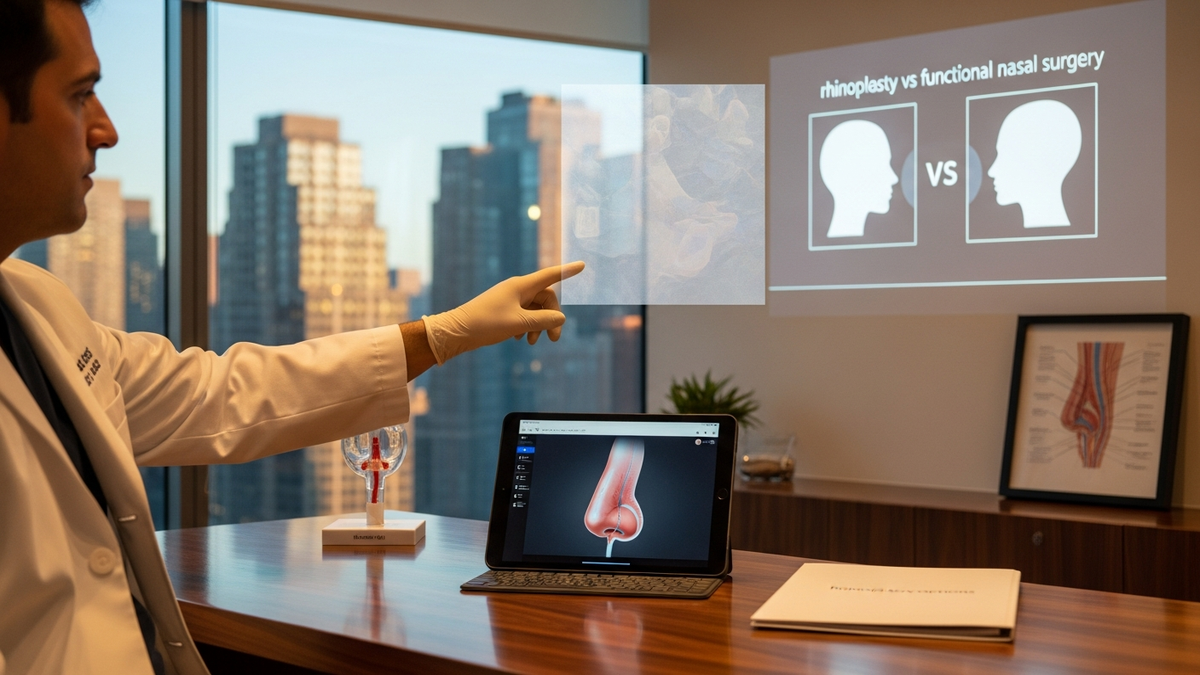
Many people assume rhinoplasty is purely cosmetic. In reality, noses are part of both your appearance and your airway. When you have breathing difficulties, a cosmetic-only approach may not fully address the cause of your symptoms.
Cosmetic rhinoplasty focuses on shape and proportion
Cosmetic goals can include:
- Reducing a dorsal hump or smoothing the bridge
- Refining the nasal tip for better projection and rotation
- Improving symmetry between nostrils
- Adjusting the width of the nose or refining the nostrils
Functional rhinoplasty aims to improve airflow
Functional goals can include:
- Correcting a deviated septum
- Reducing obstruction from enlarged turbinates
- Strengthening the nasal valve (a common site of collapse)
- Improving airway mechanics that contribute to chronic congestion
If you suspect your breathing issues are structural, it’s helpful to understand related procedures such as Septoplasty and evaluation for a Deviated Septum.
Why “Natural-Looking” Rhinoplasty Matters More Than Ever
In a city as image-conscious as New York, many patients want noticeable improvement—but not an obvious “surgical” look. Natural results usually come from:
- Conservative, strategic reshaping rather than aggressive removal of structure
- Strong support for the nasal tip and sidewalls so the shape holds over time
- Proportion planning with the rest of your face (eyes, cheeks, chin, and profile)
- Respect for skin thickness and tissue characteristics
At FlowGeniQ Digest, we emphasize patient education because a well-informed decision tends to correlate with better satisfaction—especially when expectations are realistic and aligned with anatomy.
Who Is a Good Candidate for Rhinoplasty in New York City?
Ideal candidates typically include adults who:
- Have completed facial growth (often by late teens/early adulthood)
- Have clear aesthetic goals and understand possible limitations
- Have realistic expectations about healing and final results
- May have breathing symptoms such as chronic congestion, mouth breathing, or frequent sinus issues
You may also be a candidate if you’re considering revision rhinoplasty (a second surgery) after prior results that were unsatisfactory or functional problems persist. Revision cases often require extra planning and careful assessment of scar tissue and structural support.
Common Reasons People Seek Rhinoplasty New York City
Aesthetic concerns patients frequently discuss
- Dorsal hump (a visible bump on the bridge)
- Bulbous or under-rotated nasal tip
- Asymmetry between nostrils or side-to-side imbalance
- Nostrils that appear too wide or too flared
- Nasal tip droop or changes after injury
Functional symptoms that may overlap with cosmetic goals
- Chronic “stuffy nose” or difficulty breathing through one or both nostrils
- Frequent sinus infections or persistent sinus blockage
- Sleep-disordered breathing symptoms (including snoring or sleep apnea concerns)
- Recurrent nosebleeds or dryness related to airflow disruption
Important: If you have chronic congestion or sinusitis symptoms, your surgeon may recommend functional nasal procedures—either in addition to or instead of rhinoplasty—depending on your anatomy.
Functional Nasal Options: When Rhinoplasty May Not Be the Only Answer
One reason patients search for rhinoplasty new york city is that they want both cosmetic improvement and breathing relief. Sometimes breathing issues can be treated with procedures that are less extensive than full rhinoplasty.
Septoplasty for a deviated septum
A septoplasty straightens the nasal cartilage that divides the nasal passages. When the septum is crooked, it can obstruct airflow and contribute to chronic congestion. You can learn more about this approach at Septoplasty.
Inferior turbinate reduction for chronic congestion
Enlarged turbinates can trap air and create long-term congestion. Inferior turbinate reduction is designed to improve airflow and reduce the “stuffy nose” feeling, especially in patients who experience persistent nasal blockage.
Nasal valve collapse repair
Nasal valve collapse is a common cause of breathing difficulty. Depending on severity, treatment may include non-surgical strategies or surgical reinforcement such as implants or targeted procedures.
Balloon sinuplasty and endoscopic sinus surgery for sinus blockage
For patients with chronic sinusitis, minimally invasive options may help open blocked passages and reduce recurring infections. Balloon sinuplasty can be useful when sinus passages are obstructed, while endoscopic sinus surgery may restore normal sinus function when symptoms persist.
Allergy treatment to reduce nasal inflammation
Allergies can worsen nasal obstruction by inflaming nasal tissues. Sublingual immunotherapy (SLIT) is one approach that may help certain patients manage allergies without traditional injections—supporting better breathing comfort over time.
How Rhinoplasty Is Performed: A High-Level Overview
Rhinoplasty techniques vary based on goals and anatomy. Your surgeon may use an open or closed approach, and the plan may incorporate cartilage grafting to support the nasal tip and maintain long-term shape.
Open vs. closed rhinoplasty (what patients should know)
- Open rhinoplasty: involves a small external incision that can provide excellent visualization for complex reshaping.
- Closed rhinoplasty: uses internal incisions, often with less visible scarring, depending on case complexity.
Both approaches can be effective. The “best” choice is typically determined by what needs to change and how much structural support your nose requires.
Grafting and structural support
Many natural-looking outcomes depend on preserving or rebuilding nasal support. Cartilage grafts may be used to:
- Strengthen the nasal tip
- Improve alignment and symmetry
- Stabilize the nasal valve area
What to Expect During Recovery After Rhinoplasty
Recovery varies by technique, extent of work, and individual healing. Still, most patients experience a predictable set of phases.
First days: swelling, congestion, and resting
After surgery, swelling and nasal congestion are common. Patients are often advised to:
- Keep your head elevated
- Avoid heavy lifting and strenuous exercise
- Follow medication instructions carefully
- Attend follow-up visits for monitoring
Weeks 1–6: gradual improvement
Swelling typically decreases over time, though the nose may still look different from your final result. Many patients return to work or social activities as directed by their surgeon, depending on how they heal and the level of swelling.
Months 3–12: the final shape emerges
Final results often take months to fully refine. Tissue remodeling and subtle changes continue over time—one reason patience is essential for satisfaction.
Rhinoplasty New York City: How to Choose the Right Surgeon
Choosing a surgeon is one of the most important decisions you’ll make. A strong evaluation should feel thorough, not rushed.
Look for facial plastic expertise and board certification
In rhinoplasty new york city, you’ll see many marketing claims. Instead of focusing only on promotions, prioritize credentials and specialization in head and neck surgery or facial plastic and reconstructive work.
Ask how they evaluate both aesthetics and breathing
A high-quality consultation typically covers:
- Your aesthetic goals and facial proportions
- Breathing symptoms and nasal airflow
- Structural issues (septum, turbinates, nasal valve)
- Whether functional procedures may be needed
- Realistic timelines and expected healing
Review before-and-after photos carefully
When reviewing rhinoplasty results, consider whether the outcomes align with what you want. Look for consistency in:
- Tip shape and support
- Bridge smoothness without over-reduction
- Overall facial harmony
- Natural nostril shape and symmetry
Consider whether a functional approach is appropriate for you
Some patients primarily want breathing relief but also want subtle aesthetic refinement. Others want appearance changes but also discover that their breathing is affected. In either scenario, a surgeon who understands functional nasal surgery can improve both aspects.
Where Does Dr. Hootan Zandifar Fit In? (Functional Nasal Surgery Perspective)
FlowGeniQ Digest highlights the importance of expertise that spans both cosmetic and functional considerations. Dr. Hootan Zandifar is a board-certified facial plastic and reconstructive surgeon who focuses on cosmetic and reconstructive surgery of the head and neck, with particular attention to functional nasal surgery for chronic symptoms of nasal congestion and sinusitis.
When structural defects contribute to difficulty breathing—such as a deviated septum or enlarged nasal turbinates—surgical intervention may be the best course of action. In the right circumstances, functional treatments can permanently alleviate symptoms that make it hard to breathe and improve quality of life.
If you’re specifically researching rhinoplasty new york city but want a functional-first evaluation, it may be helpful to understand related procedures and how they can complement or replace rhinoplasty depending on your goals.
For example, you can explore rhinoplasty outcomes at Rhinoplasty and learn about supportive facial procedures such as Facelift, Blepharoplasty, or eyebrow transplant. While these are different procedures, they reflect a broader facial approach to harmony and natural-looking results.
Cost of Rhinoplasty in New York City: What Influences Pricing?
Rhinoplasty cost in New York City can vary widely. Typical factors include:
- Surgical complexity: simple reshaping vs. structural support and grafting
- Functional work: septal correction, turbinate reduction, or nasal valve repair
- Primary vs. revision: revision rhinoplasty often requires additional planning
- Surgeon expertise: highly specialized surgeons may charge more due to experience and outcomes
- Facility and anesthesia fees
Instead of comparing price alone, compare what’s included and whether the plan aligns with your goals. Many patients find it helpful to request a detailed estimate after consultation.
Risks and Side Effects: What You Should Discuss Before Surgery
All surgery carries potential risks. Your surgeon should review complications and how they reduce risk. Commonly discussed issues may include:
- Temporary numbness or swelling
- Bleeding or infection (uncommon with proper technique and follow-up)
- Asymmetry or dissatisfaction with aesthetic outcome
- Persistent breathing issues if structural problems aren’t adequately addressed
- Scar tissue and the possibility of revision in some cases
In a functional context, it’s especially important to discuss airway goals and whether your plan includes addressing septal deviation, turbinate hypertrophy, or nasal valve weakness.
Actionable Tips Before Your Rhinoplasty Consultation
Preparation can improve the quality of your decision-making. Consider these steps:
- Write down your goals: what you want to change visually and what you want to improve functionally.
- Track your breathing symptoms: note which side feels blocked, seasonal patterns, and any triggers.
- Bring prior medical records: imaging, allergy testing, sinus history, and previous procedures.
- Ask about alternatives: if you mainly have congestion, ask whether septoplasty, turbinate reduction, or sinus procedures may be appropriate.
- Discuss your timeline: plan around work, events, and social commitments.
- Understand non-surgical options: sometimes allergy management or breathing support can help reduce symptoms.
Frequently Asked Questions About Rhinoplasty New York City
1) Is rhinoplasty in New York City only for cosmetic reasons?
No. Many patients undergo rhinoplasty to improve both appearance and breathing. If you have obstruction from structural issues, your surgeon may recommend functional approaches or related procedures such as Septoplasty or nasal valve repair.
2) How long does it take to see final rhinoplasty results?
Swelling decreases over the first weeks, but final refinement often takes several months. Many patients notice meaningful changes by 3–6 months, with continued improvement up to 12 months depending on the case.
3) Will rhinoplasty improve chronic congestion or sinusitis?
It can, especially when congestion is driven by structural factors. However, some sinus symptoms may require targeted sinus procedures (such as balloon sinuplasty or endoscopic sinus surgery) or allergy management. The best plan depends on your diagnosis.
4) What’s the difference between septoplasty and rhinoplasty?
Septoplasty primarily addresses the nasal septum to improve airflow. Rhinoplasty reshapes the nose for aesthetic and/or functional goals. In some cases, both may be combined or one may be preferred based on your anatomy.
5) Are there non-surgical options if I mainly struggle to breathe?
Yes, depending on the cause. Some patients benefit from allergy treatments, medical management, or breathing-support strategies. If you have nasal valve collapse or significant structural obstruction, your clinician may discuss procedural options. A thorough evaluation is key.
CTA: Ready to Explore Your Rhinoplasty Options?
If you’re searching for rhinoplasty new york city, you’re likely looking for more than a procedure—you’re looking for a plan that respects your anatomy, your lifestyle, and your desired outcome. FlowGeniQ Digest encourages you to start with a consultation that addresses both appearance and airflow.
Next step: Schedule an appointment with a qualified facial plastic and reconstructive surgeon to discuss your goals, review your nasal function, and determine whether rhinoplasty alone or a combined functional approach is right for you.
And if your broader facial goals include rejuvenation, you can explore related options such as Facelift, Blepharoplasty, or other head-and-neck procedures—always guided by your individual needs.
Professional Disclaimer
This content is provided for general educational purposes only by FlowGeniQ Digest. It is not a substitute for professional advice, diagnosis, or treatment. Readers are advised to consult qualified professionals for personalized recommendations.
Medical Information Disclaimer
This content is provided for general educational purposes only by FlowGeniQ Digest. It is not a substitute for professional advice, diagnosis, or treatment. Readers are advised to consult qualified professionals for personalized recommendations.