FlowGeniQ Digest is here to help you make informed choices—especially when you’re considering a nose job in New York. Whether your goals are aesthetic (refining the tip, narrowing the bridge, balancing facial proportions) or functional (improving chronic congestion, sinus pressure, or difficulty breathing), the “right” operation depends on your anatomy, symptoms, and long-term expectations.
In this premium guide, we’ll break down the most common options—rhinoplasty and functional nasal surgery—so you can better understand what’s possible, what recovery looks like, and which questions to ask before you book a consultation.
What People Mean by “Nose Job in New York”
In everyday conversation, a “nose job” usually refers to rhinoplasty, a procedure that changes the shape of the nose. But in many modern practices—especially those focused on the head and neck—patients may also be evaluated for structural causes of nasal obstruction.
That matters because a nose that looks great can still feel “wrong” if it doesn’t breathe well. Conversely, breathing improvements can sometimes enhance how the nose looks in motion and in photographs. A comprehensive consult should address both.
Aesthetic goals vs. functional goals
- Aesthetic goals: refining the bridge, improving symmetry, reshaping the tip, correcting dorsal humps, reducing or adjusting nostril width, and improving overall facial harmony.
- Functional goals: treating a deviated septum, enlarged nasal turbinates, nasal valve collapse, chronic congestion, recurrent sinus infections, or difficulty tolerating allergy symptoms.
When you’re searching for a nose job in New York, it’s smart to look for a surgeon who evaluates both—rather than focusing on appearance alone.
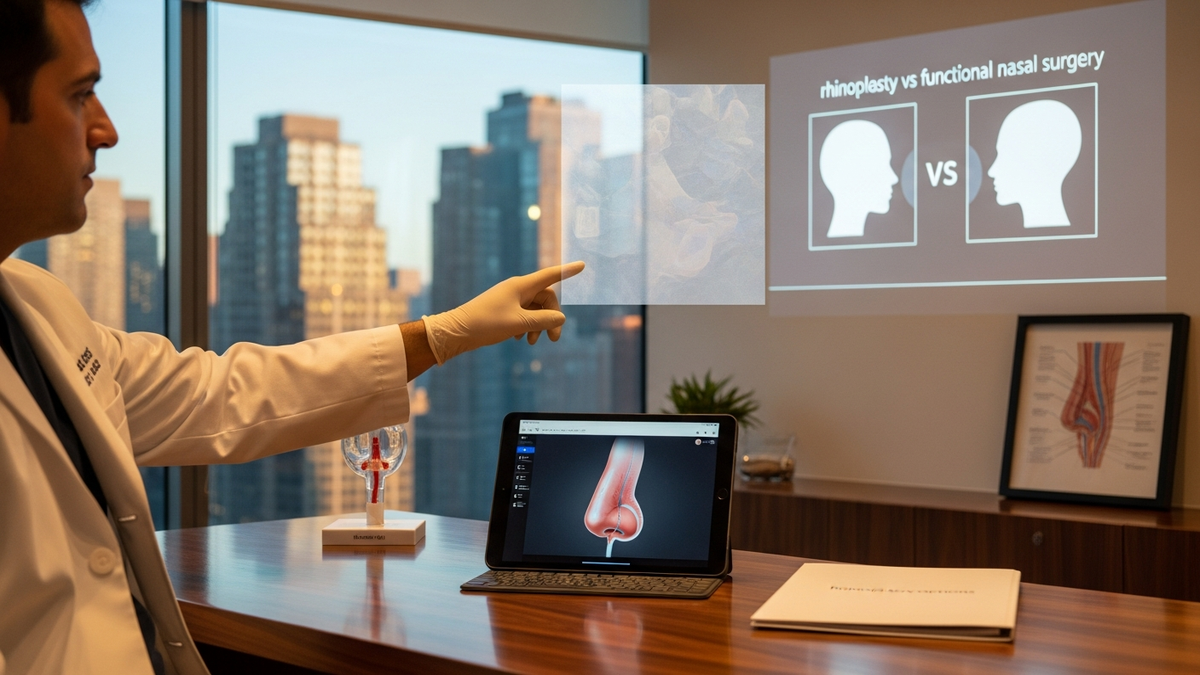
Rhinoplasty vs. Functional Nasal Surgery: How the Options Differ
Not every patient needs full rhinoplasty to get meaningful improvement. In many cases, targeted functional procedures can permanently alleviate breathing issues, sometimes with minimal external change.
Rhinoplasty (“classic” nose job)
Rhinoplasty is designed to alter the nose’s structure for appearance and/or function. Some patients choose it primarily for aesthetics; others need a combination of aesthetic refinement and structural support.
For readers exploring options, you can learn more about the rhinoplasty approach here: Rhinoplasty.
Functional procedures that can improve breathing
Functional nasal surgery focuses on the internal structures that affect airflow. These treatments can be less invasive than rhinoplasty in the right circumstances and may provide long-term relief for patients who experience chronic congestion or sinusitis symptoms.
Common functional procedures (and why they matter)
- Septoplasty: Straightens a crooked internal nasal partition that can obstruct airflow. If you’re dealing with a Deviated Septum, this is often a key evaluation point. Learn more here: Septoplasty and Deviated Septum.
- Inferior turbinate reduction: Addresses enlarged turbinates that contribute to a “stuffy nose,” sometimes affecting sleep and worsening chronic congestion.
- Nasal valve collapse repair: The nasal valve is a critical “bottleneck” for airflow. Some patients benefit from non-surgical approaches first, and others may be candidates for implants or surgical repair.
- Septal perforation repair: Needed when there’s a hole through the septum that can cause symptoms such as chronic nosebleeds or whistling during breathing.
- Balloon sinuplasty and endoscopic sinus surgery: Used to treat blocked sinus passages and chronic sinusitis. These are designed to restore normal sinus function and reduce recurrence.
Why this matters for your decision in New York: If your primary complaint is breathing difficulty, you may be able to achieve your goals without a full external reshaping procedure—depending on your anatomy.
Who Is a Good Candidate for a Nose Job in New York?
Ideal candidates typically have a clear set of goals, realistic expectations, and anatomy that can be safely and effectively addressed. During your consultation, your surgeon should assess both appearance and function.
Common reasons patients seek a nose job
- Cosmetic concerns: hump, crookedness, asymmetry, tip droop, wide nostrils, or disproportion to facial features.
- Breathing concerns: chronic congestion, one-sided blockage, mouth breathing, snoring, or reduced tolerance for allergies.
- Post-injury or post-surgery correction: nasal trauma, complications, or structural changes that affect airflow.
Red flags to discuss early
Bring these up openly during your evaluation:
- History of nasal surgeries or significant trauma
- Chronic nosebleeds or crusting
- Severe allergies or suspected chronic sinusitis
- Sleep-disordered breathing symptoms
- Uncontrolled medical conditions that could affect healing
Consultation Checklist: What to Ask Before You Choose a Surgeon
Finding the right surgeon for a nose job in New York is not only about credentials—it’s about fit, communication, and a plan that matches your goals. Use this checklist to guide your consult.
Questions about your goals
- “Are my goals primarily aesthetic, functional, or both?”
- “What specific structures are causing my breathing issues—septum, turbinates, nasal valve, or sinus drainage?”
- “If I only address aesthetics, what functional risks could remain?”
Questions about the procedure plan
- “Do I need full rhinoplasty, or would a functional procedure (like Septoplasty) address my symptoms better?”
- “What techniques will you use to support the nasal tip and preserve natural appearance?”
- “What is the plan for managing swelling and maintaining airway patency?”
Questions about outcomes and safety
- “What does recovery look like week by week?”
- “What are the most common complications in your practice, and how do you reduce risk?”
- “How do you measure success—breathing improvement, aesthetic satisfaction, or both?”
Actionable tip: Ask to see before-and-after images of patients with similar anatomy and similar goals (both aesthetic and functional). If your concern is congestion, ask specifically about breathing outcomes, not just appearance.
What to Expect During Recovery After a Nose Job
Recovery varies based on the type of procedure (rhinoplasty vs. functional nasal surgery), your anatomy, and whether additional procedures are performed. Still, most patients follow a similar timeline.
Typical early recovery
- First days: swelling and bruising are common; nasal splinting or internal support may be used depending on the procedure.
- Breathing support: some patients experience temporary nasal congestion from swelling, packing, or internal work.
- Pain management: discomfort is usually manageable with prescribed medications and follow-up instructions.
Returning to daily life
- 1–2 weeks: many people return to non-strenuous routines; bruising and swelling may begin to improve.
- 3–6 weeks: visible swelling typically continues to resolve; you may start to feel more “normal,” though tissue healing is ongoing.
- Months: final aesthetic refinement often takes time as cartilage and soft tissue settle.
Functional recovery considerations
If you undergo functional procedures such as Septoplasty or nasal valve repair, you may notice breathing changes at different rates. Some patients feel improvement sooner, while others require time for swelling to subside and airflow to stabilize.
Actionable tip: Plan your schedule with recovery in mind—especially for the first 10–14 days. Avoid heavy lifting and follow surgeon-specific instructions to protect healing structures.
How Much Does a Nose Job in New York Cost?
Pricing for a nose job in New York can vary widely based on surgeon experience, facility fees, anesthesia, procedure complexity, and whether functional work is included.
Cost factors to understand
- Procedure type: rhinoplasty vs. functional nasal procedures (or a combination).
- Complexity: revision cases, structural deformities, or multiple internal components addressed.
- Pre-op diagnostics: imaging, endoscopy, and evaluation of nasal airflow.
- Facility and anesthesia: outpatient vs. hospital-based care.
Actionable tip: Request a detailed estimate that breaks down surgeon fees, facility fees, and anesthesia. If breathing symptoms are part of your case, ask how your surgeon documents functional indications—this can matter for insurance considerations in some scenarios.
Natural-Looking Results: The Difference Between “Small Changes” and “Artistry”
Many people seeking a nose job in New York want a nose that looks like it belongs on their face—not a “new” face. Natural results usually come from:
- Respect for facial proportions (bridge-to-tip balance, tip rotation, and nostril shape relative to lips and chin).
- Structural support (preserving cartilage strength and airway function).
- Thoughtful refinement rather than overcorrection.
At FlowGeniQ Digest, we emphasize informed decision-making: ask your surgeon to explain how your plan will preserve your identity while improving your goals.
Functional Nasal Surgery and Quality of Life
For patients with chronic congestion or sinus-related symptoms, functional surgery can be life-changing. When internal airflow improves, many people experience:
- More comfortable nasal breathing
- Reduced “stuffy nose” sensation
- Better sleep quality (for some patients)
- Improved ability to manage allergies
- Potential reduction in recurrent sinus infections
Minimally invasive tools for sinus and allergy support
Depending on your diagnosis, your surgeon may discuss options like:
- Balloon sinuplasty to open blocked sinus passages
- Endoscopic sinus surgery guided by endoscopic visualization to restore normal drainage pathways
- Sublingual immunotherapy (SLIT) as a no-shot approach for some allergy patients
Actionable tip: If you suspect allergies or chronic sinusitis, don’t wait. Bring your symptom timeline—seasonal patterns, triggers, medications tried, and prior infections—to your consult.
Finding the Right Provider in New York (What to Look For)
When you search for a nose job in New York, you’ll likely see many options. To narrow the field, prioritize providers who:
- Are board-certified and have strong head-and-neck expertise
- Assess both aesthetics and airway function
- Offer individualized surgical planning (not one-size-fits-all)
- Provide clear pre-op and post-op instructions
- Communicate honestly about risks, limitations, and realistic outcomes
Why head-and-neck expertise can matter
The nose is both a visible feature and a functional airway. Surgeons with deep training in head and neck anatomy may be especially well-positioned to evaluate structural contributors to congestion and sinusitis—while still delivering refined aesthetics when rhinoplasty is appropriate.
Can You Combine a Nose Job With Other Facial Procedures?
Many patients consider additional facial rejuvenation when planning facial plastic surgery. In some cases, combining procedures can be beneficial; in other cases, sequencing is recommended to optimize healing and outcomes.
Common pairings (examples)
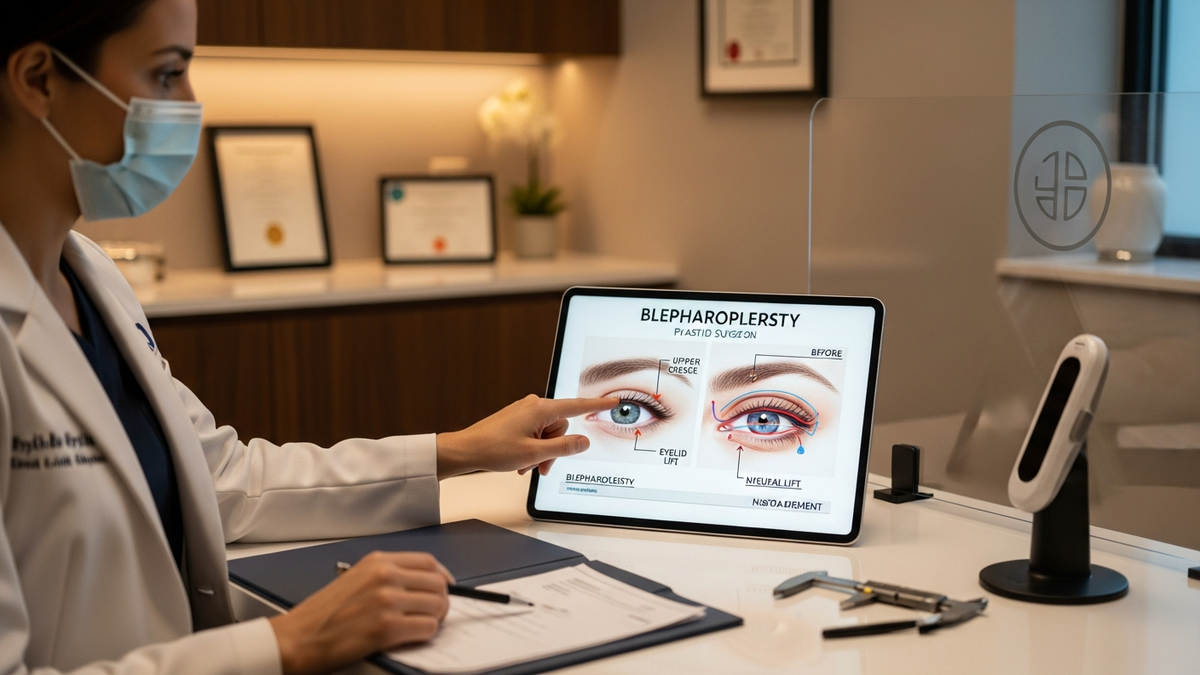
- Blepharoplasty for eyelid concerns: Blepharoplasty
- Facelift for mid-to-lower facial aging: Facelift
While these are not required for a nose job, they may come up during consultations if your goals include broader facial harmony.
Note on nonsurgical options
Depending on your concerns, your surgeon may discuss non-surgical treatments first—particularly for nasal valve issues where non-surgical methods can sometimes help increase airway patency.
What If You Have a Deviated Septum or Other Breathing Issues?
If you’re experiencing chronic congestion, one-sided blockage, or recurrent sinus symptoms, it’s important to evaluate structural causes. A deviated septum is a common contributor.
In many cases, a surgeon may recommend Septoplasty to straighten the nasal cartilage and improve airflow. You can review background information here: Septoplasty.
Actionable tip: If you’ve tried allergy medications but still struggle with breathing, ask whether your symptoms could be structural rather than purely allergic.
FAQ: Nose Job in New York
1) Is a nose job in New York covered by insurance?
In some cases, insurance may cover functional nasal procedures when medically necessary (for example, certain septal or airway-related issues). However, cosmetic-only rhinoplasty is typically not covered. Your eligibility depends on diagnosis and documentation—ask your surgeon what can be evaluated for functional indications.
2) Will I be able to breathe normally right after rhinoplasty?
Most patients experience temporary nasal congestion from swelling and internal support. Breathing often improves as swelling resolves, but the timeline varies. If you have significant pre-existing obstruction, your surgeon should explain expected functional recovery.
3) What’s the difference between rhinoplasty and septoplasty?
Rhinoplasty reshapes the nose for aesthetic and/or functional goals. Septoplasty focuses on straightening the septum to improve airflow. Some patients need both; others may benefit from functional surgery alone.
4) How do I choose between a cosmetic surgeon and an ENT-focused facial plastic specialist?
Look for board certification, relevant experience, and a consult process that addresses both appearance and airway function. If breathing symptoms are a major concern, providers with strong head-and-neck expertise can be especially valuable.
5) How long until final results are visible?
Swelling improves over weeks, but final refinement can take months as tissues settle. Your surgeon should provide a realistic timeline for your specific plan.
CTA: Ready to Explore Your Options?
If you’re considering a nose job in New York, the best next step is a consultation where your goals—both aesthetic and functional—are evaluated together. A thoughtful exam can clarify whether rhinoplasty is the right path or whether targeted functional nasal surgery may deliver the breathing improvement you want with minimal external change.
Explore your options with FlowGeniQ Digest as your guide to better questions and better decisions. When you’re ready, schedule a consultation with a qualified head-and-neck specialist to discuss your anatomy, symptoms, and expected outcomes.
Professional Disclaimer
This content is provided for general educational purposes only by FlowGeniQ Digest. It is not a substitute for professional advice, diagnosis, or treatment. Readers are advised to consult qualified professionals for personalized recommendations.
Medical Information Disclaimer
This content is provided for general educational purposes only by FlowGeniQ Digest. It is not a substitute for professional advice, diagnosis, or treatment. Readers are advised to consult qualified professionals for personalized recommendations.