Looking for rhinoplasty near me? You’re likely balancing appearance goals with how your nose actually functions—breathing, airflow comfort, and long-term nasal health. In Beverly Hills and Los Angeles, many patients explore “nose job” options because they want a more harmonious profile, improved symmetry, or relief from chronic congestion. At FlowGeniQ Digest, we focus on helping you make well-informed decisions by breaking down what rhinoplasty really involves, how to vet a surgeon, and when functional nasal surgery may be the more appropriate first step.
For patients who need both aesthetic refinement and breathing improvement, the best outcomes often come from a surgeon who understands the head-and-neck anatomy and can plan with both form and function in mind. Board-certified facial plastic and reconstructive expertise matters—especially when you want results that look natural, feel comfortable, and hold up over time.
What “rhinoplasty near me” should mean in real terms
When people search for rhinoplasty near me, they often mean one of three things:
- Aesthetic change: reshaping the nose for proportion, refinement, or balance with facial features.
- Functional improvement: better nasal airflow and relief from symptoms like chronic congestion or sinus-related breathing issues.
- Both: a nose that looks better and breathes better.
Distance alone shouldn’t be the deciding factor. Your nose is a complex structure with cartilage, bone, soft tissue, and airflow mechanics. A careful consultation should translate your goals into a surgical plan tailored to your anatomy—not a one-size-fits-all template.
Rhinoplasty vs. functional nasal surgery: why the distinction matters
Some patients assume they automatically need rhinoplasty to improve breathing. In reality, the cause of nasal obstruction can be structural (like a septal deviation or enlarged turbinates), dynamic (like nasal valve collapse), inflammatory, or a combination.
When rhinoplasty is the right choice
Rhinoplasty may be appropriate when you want aesthetic refinement and/or when the nasal structure requires modification to support both appearance and nasal function. A skilled surgeon evaluates both the visible nose and the internal anatomy that controls airflow.
If you’re specifically interested in aesthetic refinement, you can explore Rhinoplasty to understand how a surgeon approaches planning, technique selection, and natural-looking outcomes.
When functional procedures may come first
In many cases, functional nasal procedures can permanently alleviate breathing symptoms—sometimes with less disruption than traditional rhinoplasty. If your primary concern is chronic congestion or difficulty breathing, it’s worth discussing whether a functional approach could address the root cause.
For example:
- Septal deviation may be treated with Septoplasty, which straightens the nasal septum and improves airflow.
- Enlarged turbinates may respond to inferior turbinate reduction to help reduce a long-term “stuffy nose.”
- Nasal valve collapse may require targeted repair or specialized treatments designed to increase airway support.
- Chronic sinus blockage may be approached with minimally invasive options such as balloon sinuplasty or endoscopic sinus surgery when indicated.
If your symptoms suggest a structural cause like a Deviated Septum, you may be a strong candidate for septal correction—often as a step toward better breathing and, in some cases, a smoother foundation for any later aesthetic refinement.
How to choose the best surgeon for rhinoplasty near me
Choosing where to have surgery is one of the most important decisions you’ll make. Here’s a practical checklist you can use when evaluating surgeons who offer rhinoplasty in your area.
1) Confirm board certification and facial plastic expertise
For rhinoplasty near me searches, look for surgeons who are board certified and specifically trained in facial plastic and reconstructive surgery. Rhinoplasty is not only cosmetic—it involves delicate facial structures and often overlaps with reconstructive and ENT knowledge.
At Hootan Zandifar, MD, FACS, the focus is on surgeries of the head and neck, with specialized training in functional nasal surgery and facial plastic outcomes. This head-and-neck focus supports both aesthetic planning and functional airway considerations.
2) Ask how they balance aesthetics and airflow
A high-quality consultation should include a discussion of:
- How your nose looks from multiple angles (front, profile, and dynamic views).
- How you breathe today—symptoms, triggers, and any history of sinusitis or congestion.
- Whether your anatomy suggests septal deviation, turbinate enlargement, or nasal valve issues.
- How the surgical plan protects long-term airflow while achieving your aesthetic goals.
In other words: you want a plan that respects both the external and internal nose.
3) Evaluate before-and-after galleries critically
Not all rhinoplasty results look natural, and not all “before and after” photos are comparable. When reviewing galleries, look for:
- Consistency across patients with similar starting noses.
- Proportional harmony with the rest of the face.
- Functional considerations (do results appear too pinched or over-reduced? does the tip look supported?).
- Long-term plausibility (subtle refinement often ages better than extreme changes).
4) Make sure you understand the technique and your recovery timeline
Ask what approach they recommend (and why) and what to expect during recovery. A responsible surgeon should explain:
- What swelling and bruising typically look like in the first weeks.
- When you can return to work, exercise, and social activities.
- How long it takes for the nose to settle and for final shape to emerge.
- Potential risks and what they do to minimize them.
5) Confirm a personalized plan—not a generic package
“Rhinoplasty near me” can turn into a quick decision if you’re not careful. But your nose is unique. The best surgeons tailor:
- Cartilage and bone modification strategy
- Tip refinement and support
- Skin thickness and how it will respond to reshaping
- Any functional repairs that may be needed for breathing comfort
At FlowGeniQ Digest, we emphasize patient education because the more clearly you understand your options, the more confident you’ll feel about your choice.
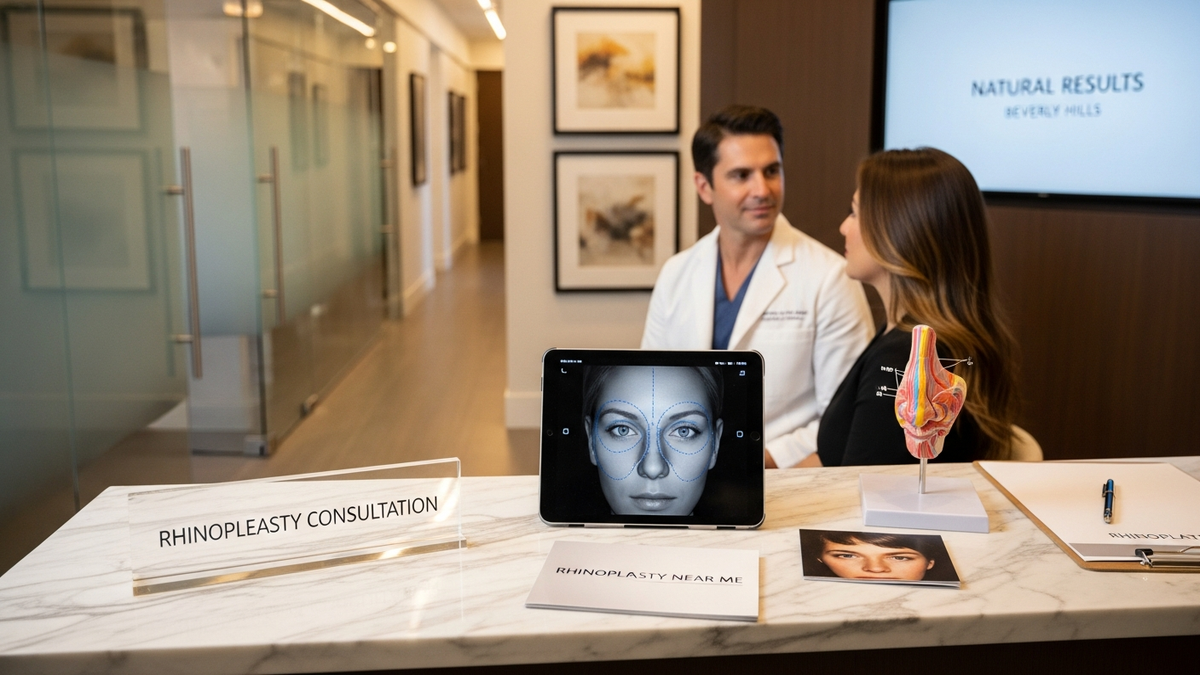
What to expect at your rhinoplasty consultation
A strong consultation is where your goals become a surgical plan. Expect the surgeon to:
- Review your medical history and any breathing-related symptoms.
- Perform an exam focused on both external shape and internal structures.
- Discuss your desired aesthetic outcome and reference points for “natural” results.
- Explain the difference between purely cosmetic changes and functional corrections.
- Outline risks, realistic expectations, and a recovery approach.
Questions to ask your surgeon
Bring these questions to your appointment:
- Will my plan address breathing, or is it purely aesthetic?
- Do I show signs of septal deviation, turbinate enlargement, or nasal valve collapse?
- What would you recommend first if my primary concern is congestion?
- How do you define “natural-looking” results for my face?
- What risks are most relevant to my anatomy?
- What does recovery look like week by week?
Functional nasal surgery options that may complement or replace rhinoplasty
Sometimes, improving breathing can be the priority—and aesthetic goals can be addressed with a strategy that doesn’t compromise airflow. Functional nasal procedures may help when chronic symptoms are driven by structural anatomy.
Septoplasty for a deviated septum
Septoplasty is designed to straighten the nasal septum when it obstructs airflow. If you have symptoms consistent with a Deviated Septum, this procedure can be a foundational step toward easier breathing.
Learn more about Septoplasty and how surgeons evaluate candidacy.
Inferior turbinate reduction for chronic “stuffy nose”
Enlarged turbinates can contribute to long-term nasal blockage. Inferior turbinate reduction may improve airflow and reduce persistent congestion. In some patients, it may also be relevant to sleep-disordered breathing symptoms.
Nasal valve collapse repair
Even when the septum and turbinates are improved, dynamic obstruction can occur at the nasal valve. Treatment may include non-surgical approaches or surgical support depending on severity. The goal is consistent airflow, especially during activity and sleep.
Balloon sinuplasty and endoscopic sinus surgery
For patients with sinus blockage and chronic sinusitis, minimally invasive options can restore sinus drainage and support better airflow. When indicated, endoscopic sinus surgery can widen sinus passages, help clear trapped mucus, reduce recurring infections, and support smell recovery.
Allergy treatment: SLIT (no-shot method)
Allergies can worsen nasal congestion and affect breathing efficiency. Sublingual immunotherapy (SLIT) is a no-shot method for some patients and may be considered as part of a comprehensive plan.
Natural results: how surgeons think about “balance”
One of the most common concerns when patients search rhinoplasty near me is ending up with an unnatural-looking nose—too small, too narrow, or “overdone.” Natural results typically come from:
- Proportional planning relative to your facial features (eyes, lips, chin, and overall profile).
- Preserving structural support so the tip remains stable as healing progresses.
- Respecting skin characteristics (thin skin may show definition differently than thicker skin).
- Subtle refinement rather than drastic reshaping in cases where it would look out of character.
At Hootan Zandifar’s practice, the approach emphasizes head-and-neck expertise, patient education, and natural-looking solutions—aimed at helping patients look their best while maintaining functional nasal comfort.
Recovery and downtime: practical expectations
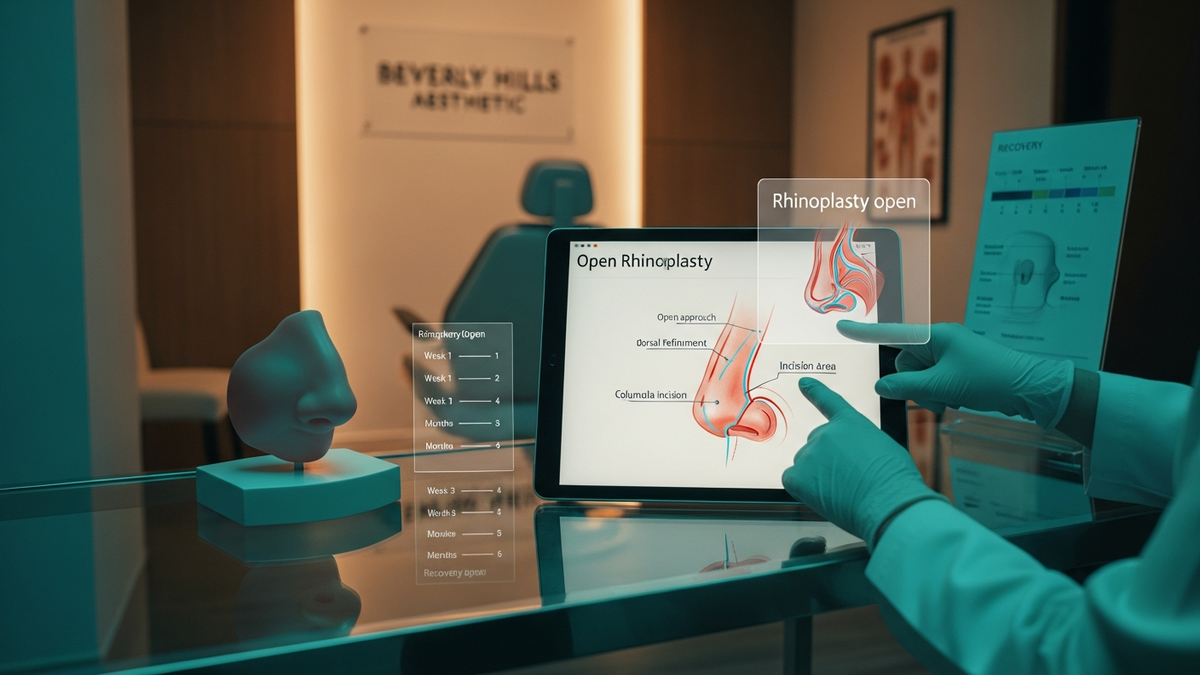
Recovery varies based on technique, individual healing, and whether functional components are included. However, most patients can expect:
- First week: swelling and bruising, with activity restrictions.
- Weeks 2–4: gradual reduction in visible swelling; you may look more “normal” day to day.
- Months 2–6: continued refinement as tissues settle.
- Up to 12 months: final shape and definition often continue to mature.
Your surgeon should provide specific instructions for splints, medications, gentle cleaning, and when it’s safe to resume exercise and protective contact sports.
How to prepare for rhinoplasty near me—actionable steps
Use these steps to increase clarity and reduce avoidable stress:
- Document your goals. Note what you want changed (e.g., hump, tip droop, asymmetry) and what you want preserved.
- Track breathing symptoms. Write down congestion patterns, triggers, sleep quality, and any sinus infection history.
- Review your health history. Share allergies, medications, bleeding tendencies, and smoking/vaping status.
- Ask about imaging/exam methods. You want an evaluation that considers both anatomy and airflow.
- Plan your recovery support. Arrange time off work, transportation, and help at home for the first days.
- Set realistic timelines. Healing happens in phases; final results take time.
Why location is only one factor: Beverly Hills care with a head-and-neck focus
Many patients in Los Angeles and surrounding communities search for rhinoplasty near me because they want access to experienced care and advanced techniques. In Beverly Hills, you may find surgeons who specialize in facial plastic and reconstructive surgery with training that spans both cosmetic and functional priorities.
Dr. Hootan Zandifar is a board-certified facial plastic and reconstructive surgeon who focuses solely on head and neck surgeries. His training includes residency in Head and Neck Surgery and a fellowship under the American Academy of Facial Plastic and Reconstructive Surgery (AAFPRS). This background supports careful planning for both aesthetics and nasal function.
Related facial procedures you might consider (only if they truly fit your goals)
Some patients explore other head-and-neck aesthetic treatments alongside nasal refinement to create a cohesive, refreshed look. If you’re considering additional changes, discuss them with your surgeon to ensure your plan stays balanced and safe.
- Facelift: If facial aging is also a concern, you can review Facelift options.
- Blepharoplasty: For eyelid concerns that affect your overall expression, explore Blepharoplasty.
- Hair restoration: If hair loss is part of your confidence goals, a hair transplant may be considered in appropriate cases.
- Eyebrow restoration: If eyebrows are thinning or missing, an eyebrow transplant can restore facial balance.
Note: These are only relevant when they align with your anatomy, timing, and priorities. Your surgeon should help you sequence procedures safely.
FAQ: rhinoplasty near me
How do I know if I need rhinoplasty or a functional procedure?
It depends on your goals and the cause of your symptoms. If you want aesthetic refinement, rhinoplasty may be considered. If your primary issue is chronic congestion or difficulty breathing, your surgeon should evaluate whether structural problems like a deviated septum or turbinate enlargement can be treated first (for example with Septoplasty).
Will rhinoplasty improve breathing?
Rhinoplasty can improve breathing when the surgical plan addresses functional contributors (such as structural support and internal airflow mechanics). However, not every aesthetic change automatically resolves obstruction—an individualized evaluation is essential.
What does “natural-looking” rhinoplasty mean?
Natural-looking rhinoplasty typically means subtle, proportionate refinement that supports your facial identity rather than creating a generic “model nose.” A good surgeon plans changes based on your anatomy, skin characteristics, and long-term stability.
How long until I see my final results?
Swelling decreases over weeks, but definition continues to evolve. Many patients see substantial improvement by a few months, while final shape often matures over 9–12 months. Your surgeon can provide a tailored timeline based on your plan.
What should I bring to my rhinoplasty consultation?
Bring a list of your aesthetic goals, a record of breathing symptoms, current medications, and relevant medical history. It also helps to bring photos you like (and photos you don’t) to communicate your preferences clearly.
CTA: Ready to explore your best path?
If you’re searching for rhinoplasty near me, consider starting with a consultation that evaluates both appearance and nasal function. FlowGeniQ Digest encourages you to choose expertise that prioritizes natural results and patient education—so your plan is truly personalized.
Next step: Schedule an appointment to discuss your goals, breathing symptoms, and whether rhinoplasty or functional nasal surgery (such as Septoplasty in appropriate cases) is the most effective approach for you.
Professional Disclaimer
This content is provided for general educational purposes only by FlowGeniQ Digest. It is not a substitute for professional advice, diagnosis, or treatment. Readers are advised to consult qualified professionals for personalized recommendations.
Medical Information Disclaimer
This content is provided for general educational purposes only by FlowGeniQ Digest. It is not a substitute for professional advice, diagnosis, or treatment. Readers are advised to consult qualified professionals for personalized recommendations.