FlowGeniQ Digest presents this practical, safety-focused overview of rhinoplasty in turkey prices to help you understand what you might pay, what’s usually included, and how to evaluate clinics and surgeons beyond the headline number.
If you’re considering a “nose job” for appearance, breathing function, or both, pricing is only one piece of the decision. The best outcome depends on surgical planning, surgeon expertise, and post-op care—not just cost.
Quick answer: What do rhinoplasty in Turkey prices typically look like?
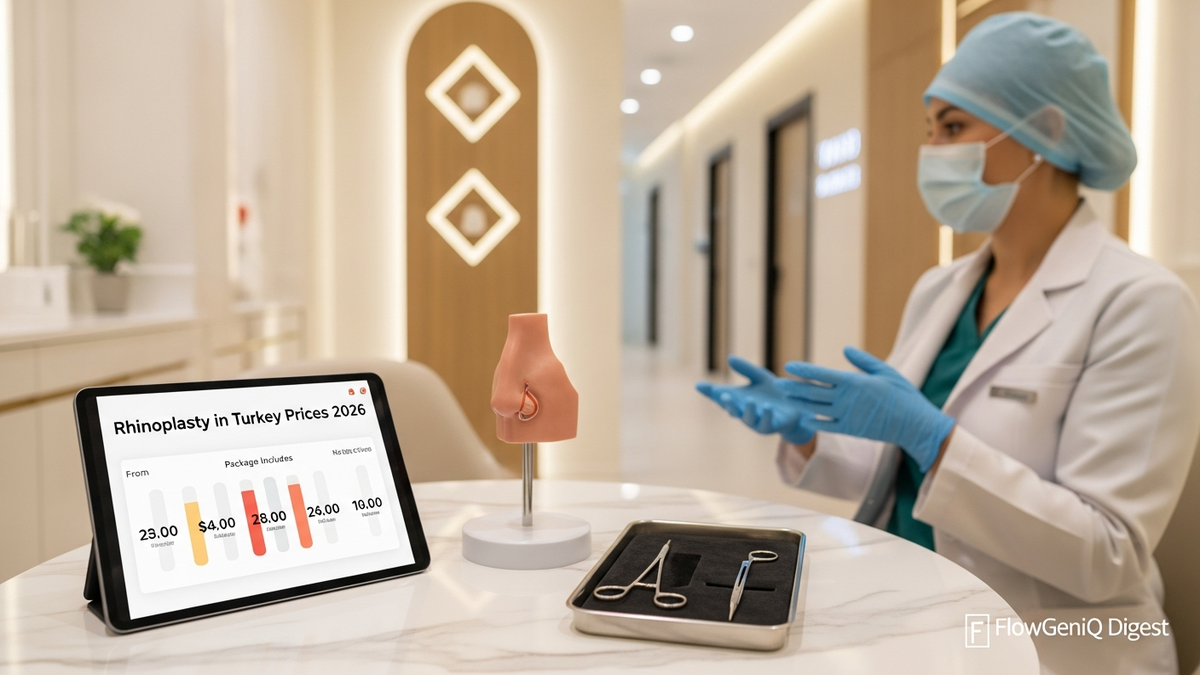
“Rhinoplasty in turkey prices” can vary widely depending on technique (open vs. closed), complexity (revision vs. primary), anesthesia setting, and whether the package includes hospital fees, medications, imaging, and follow-up visits. In many cases, international clinics publish all-in package pricing, while others separate surgeon fees, facility costs, anesthesia, and translation/coordination.
Common reality: the lowest published price is not always the lowest total cost once you add travel, potential revisions, medications, and follow-up outside Turkey. The safest approach is to compare what’s included, not just the base figure.
Why Turkey is a popular destination for rhinoplasty
Turkey has become widely known for medical tourism, including facial plastic surgery and ENT-related nasal procedures. Patients often choose Turkey for a combination of:
- Experienced surgical teams in high-volume centers
- Competitive pricing relative to many Western markets
- Package logistics (airport transfers, accommodations, translation)
- Modern facilities and established post-op follow-up workflows
That said, quality varies. A transparent, evidence-based clinic should be able to clearly explain goals, risks, and the plan for both functional and aesthetic outcomes.
Rhinoplasty vs. functional nasal surgery: why your diagnosis can change the price
Not every “nose job” is the same. Some patients want cosmetic refinement (tip shaping, dorsal reduction, symmetry). Others need functional improvement for chronic congestion or sinus symptoms. In functional nasal surgery, the focus is airflow and nasal valve support, which can involve additional procedures.
When you may need more than cosmetic rhinoplasty
If you have structural issues such as a septal deviation or enlarged turbinates, your surgeon may recommend additional steps before or during rhinoplasty planning. For example:
- Septal deviation may be addressed via procedures like Septoplasty and related nasal cartilage adjustments. (If you’re specifically searching for Deviated Septum, you’ll often see similar diagnostic pathways: Deviated Septum.)
- Nasal obstruction from turbinate hypertrophy may require inferior turbinate reduction as part of your overall plan.
- Nasal valve collapse can sometimes be treated with targeted therapies or structural support, depending on severity.
- Chronic sinus blockage may be evaluated for minimally invasive options; in some cases, balloon sinuplasty or endoscopic sinus surgery may be considered.
Because functional work can add time, complexity, and specialized instruments or steps, it can affect rhinoplasty in turkey prices—sometimes substantially.
What factors most affect rhinoplasty in Turkey prices?
To compare offers responsibly, ask how each of the following elements is handled in the quote.
1) Primary vs. revision rhinoplasty
Revision (secondary) rhinoplasty is often more complex because of scar tissue, altered anatomy, and prior grafting. Revision cases frequently cost more due to longer operative time and more advanced reconstruction.
2) Open vs. closed technique
Open rhinoplasty provides certain surgeons more visualization and may be preferred for complex reshaping or structural support. Closed techniques can be appropriate for selected cases. Your surgeon should explain why one approach fits your anatomy.
3) Grafting and cartilage sources
Some outcomes require cartilage grafting for tip support, dorsal refinement, or valve stability. The need for grafts (and the source—septal cartilage, ear cartilage, or other materials) can change the total cost.
4) Anesthesia and facility type
Quotes can differ based on whether surgery occurs in a hospital vs. accredited surgical center, and whether general anesthesia is used. Reputable facilities should be able to describe their anesthesia protocol and safety standards.
5) What “package pricing” includes
Many clinics advertise package deals. Typical inclusions may include:
- Surgeon and assistant fees
- Operating room and anesthesia
- Pre-op consults and imaging
- Medications and post-op supplies
- Airport transfers and hotel
- Translation/concierge services
- Post-op follow-ups during your stay
Less obvious add-ons can include additional imaging, extended follow-up, revision costs (if needed), or post-op care after you return home.
6) Surgeon experience and outcome track record
Price should correlate with quality—but the only way to know quality is through credible evidence: before/after case examples, clear documentation, patient selection criteria, and complication management protocols.
Typical cost components you should request in writing
Before you pay a deposit, request an itemized estimate or a written “package breakdown.” This is one of the most actionable steps you can take to avoid surprise charges.
Ask for a detailed quote that includes:
- Surgeon fee
- Facility fee (operating room, recovery room)
- Anesthesia fee
- Pre-op evaluation (consultation, imaging, labs)
- Medications (antibiotics, pain control, nasal care)
- Stent/splint and any dressings
- Post-op visits scheduled in Turkey
- Emergency plan if complications occur
- Revision policy (what’s covered, timeframe, criteria)
When a clinic can’t provide clear answers, it’s a red flag—regardless of how low the initial rhinoplasty in turkey prices appear.
What’s usually included in rhinoplasty packages (and what isn’t)
Below is a practical comparison framework you can use when reviewing different Turkey clinic offers.
Common inclusions
- Initial consultation (in-person or via structured digital assessment)
- Surgery and immediate post-op management
- Hotel stay for a defined number of nights
- Airport transfers
- Basic translation support
- Follow-up visits during the early healing phase
Common exclusions
- Longer follow-up after you return home
- Additional procedures if unexpected findings arise
- Imaging beyond the initial workup
- Revision surgery (unless explicitly covered)
- Complication management if care is needed after travel
For a truly informed decision, ensure the clinic explains how you’ll be supported if your recovery requires additional visits.
Safety checklist: how to choose a clinic when comparing rhinoplasty in Turkey prices
Medical tourism can be safe when you choose carefully. Use this checklist to evaluate offers systematically.
1) Confirm credentials and surgical scope
Ask:
- Is the surgeon board-certified in relevant specialties?
- Do they specialize in nose surgery (and how much of their practice is rhinoplasty)?
- Do they manage both cosmetic and functional considerations when needed?
2) Review outcomes with context
Look for:
- Before/after photos with consistent lighting and patient selection
- Case examples relevant to your goals (e.g., tip refinement, dorsal hump, breathing improvement)
- Evidence of revision experience, if you’re considering secondary rhinoplasty
3) Ask about functional evaluation
If you have breathing issues, ensure the clinic evaluates airflow and nasal structures, not just the external profile. In some cases, functional nasal procedures may be recommended to improve chronic congestion symptoms.
4) Get a written risk discussion
Your surgeon should explain realistic risks, including bleeding, infection, asymmetry, scarring, persistent swelling, breathing changes, and—rarely—more serious complications. A transparent consent process is a marker of professionalism.
5) Confirm follow-up and emergency support
Ask how follow-up will continue after you return home, and what to do if you experience unexpected symptoms.
6) Avoid “too good to be true” pricing
Extreme discounts can be associated with limited operating room time, unclear inclusion of anesthesia/facility fees, or insufficient post-op support. If the clinic can’t provide a clear package breakdown, prioritize safety over savings.
How long is recovery, and how does it affect your overall cost?
Recovery timelines vary, but planning matters financially and practically. Many patients schedule time off work and ensure they have access to follow-up care. Budget not only for surgery day but also for:
- Travel to and from Turkey
- Time in-country for early post-op visits
- Medications and nasal care supplies
- Potential additional consultations if swelling or healing requires adjustments
When comparing rhinoplasty in turkey prices, include the cost of your time—missed work, hotel extensions, and transportation for follow-up.
Choosing between Turkey and local options: what to consider
Some readers compare Turkey pricing with local options in the U.S. or Europe. It’s not necessarily “better” to stay local or travel—it’s about matching your needs with the right surgical plan and follow-up support.
If you prioritize functional nasal expertise
Patients with chronic congestion, sinusitis symptoms, or structural airflow issues may benefit from a surgeon who regularly performs functional nasal surgery. The best plan is the one that addresses both aesthetics and breathing when clinically appropriate.
For example, Dr. Hootan Zandifar (Los Angeles/Beverly Hills) focuses on head-and-neck cosmetic and reconstructive surgery and offers functional nasal approaches for chronic congestion and sinus-related symptoms using minimally invasive strategies when appropriate. You can explore related services such as Rhinoplasty to understand how a functional-aesthetic framework may be discussed in consultation.
If you’re also considering other facial procedures
Some patients bundle treatments to align recovery timing. While you should avoid rushing decisions, it can be helpful to understand how different procedures are planned. For instance, a patient focused on facial rejuvenation may explore options like Facelift or Blepharoplasty depending on their goals.
Note: bundling procedures can change surgical duration and recovery. Always ask whether combining surgeries is medically appropriate for your specific health profile.
Realistic expectations: what results can and can’t do
Rhinoplasty results evolve over time. Early swelling may obscure final contours. Most patients see meaningful changes as healing progresses, but it can take months for refinement to fully settle.
What to discuss in your consultation
- Your aesthetic goals (profile, tip shape, symmetry)
- Your functional goals (breathing, congestion, sleep quality)
- Any history of trauma, prior surgeries, or allergies
- Medication and health history (including bleeding risk)
- How the surgeon plans to preserve or improve nasal structure
A high-quality surgeon will align your expectations with what’s anatomically achievable and clinically safe.
Actionable steps before you book rhinoplasty abroad
Here’s a practical pre-booking plan to help you make a confident decision—without letting price alone drive the outcome.
Step 1: Collect comparable quotes
Request written package breakdowns from at least 2–4 clinics. Compare what’s included and what would cost extra.
Step 2: Ask for a personalized surgical plan
Even if you start with online photos, request a plan that addresses both appearance and function when relevant. If you have breathing issues, ask how the clinic evaluates airflow.
Step 3: Verify follow-up and aftercare
Confirm how follow-up occurs during your travel window and whether you can access support after you return home.
Step 4: Plan your budget beyond the procedure
- Flights and local transport
- Hotel extensions
- Medications and supplies
- Time off work
- Possible extra consultation if healing is slower than expected
Step 5: Consider whether functional nasal surgery is part of the solution
If you have chronic congestion or sinus symptoms, you may require a more comprehensive approach than cosmetic reshaping alone. Discuss whether functional procedures (such as septoplasty for a Deviated Septum or related nasal airflow work) should be part of your plan.
Where FlowGeniQ Digest fits in: how we help you research smarter
FlowGeniQ Digest compiles credible, user-friendly guidance to help you navigate complex healthcare decisions—especially when pricing varies across countries and clinics. Our goal is to support better questions, clearer comparisons, and safer planning.
While this article focuses on rhinoplasty in turkey prices, we encourage you to broaden your research to include surgeon credentials, functional evaluation, and follow-up care. Those factors often matter as much as the initial quote.
Related reading: other facial enhancement procedures (optional)
If you’re exploring additional aesthetics, you may find these topics helpful as part of your broader facial goals:
- Blepharoplasty (upper and lower eyelid surgery)
- Facelift (face and neck rejuvenation)
- Blepharoplasty (for tired or heavy-looking eyes)
For hair-related concerns that sometimes coincide with facial rejuvenation planning, you may also explore a hair transplant.
FAQ: Rhinoplasty in Turkey Prices
How much do rhinoplasty in Turkey prices usually cost?
Pricing varies based on whether it’s primary or revision rhinoplasty, the technique used, whether functional procedures are included, and what the package covers (hospital/anesthesia, medications, transfers, and follow-up). Always request a written breakdown so you can compare total value, not just the base number.
Do Turkey rhinoplasty packages include anesthesia and hospital fees?
Often they do, but not always. Some clinics bundle these costs; others quote a surgeon fee only. Ask for itemized details covering surgeon fee, facility fee, anesthesia fee, and post-op visit schedule.
Is functional rhinoplasty more expensive than cosmetic-only rhinoplasty?
It can be. If your case involves additional structural work to improve breathing—such as addressing septal deviation or nasal valve issues—the procedure may require added steps and longer operative time, which can increase the overall cost.
What should I worry about if the rhinoplasty in turkey prices seem unusually low?
Be cautious if the quote lacks transparency on facility/anesthesia fees, post-op medication coverage, follow-up visits, or revision policy. “Too cheap” can sometimes mean limited support during the healing period or unclear complication management.
How do I compare clinics safely across countries?
Compare credentials, ask for a personalized plan, review relevant before/after outcomes, confirm risk discussion and emergency support, and ensure follow-up care is clearly defined both during and after your travel.
CTA: Get a clearer plan for your goals—before you choose a price
If you’re comparing rhinoplasty in turkey prices, don’t stop at the headline cost. Ask for a detailed package breakdown, confirm functional evaluation for breathing concerns, and ensure follow-up and emergency support are clearly documented.
Next step: If you want to understand how a functional-and-aesthetic nose plan is typically evaluated, consider scheduling a consultation with a qualified facial plastic or reconstructive specialist. For example, you can review rhinoplasty information from Dr. Hootan Zandifar here: Rhinoplasty.
Professional Disclaimer
This content is provided for general educational purposes only by FlowGeniQ Digest. It is not a substitute for professional advice, diagnosis, or treatment. Readers are advised to consult qualified professionals for personalized recommendations.
Medical Information Disclaimer
This content is provided for general educational purposes only by FlowGeniQ Digest. It is not a substitute for professional advice, diagnosis, or treatment. Readers are advised to consult qualified professionals for personalized recommendations.