Rhinoplasty Beverly Hills has become a popular search for people who want a nose that looks balanced with their face—and, in many cases, breathes better too. In Los Angeles, rhinoplasty is often discussed as a “nose job,” but the most satisfying results come from a surgeon who treats the nose as both an esthetic and functional structure. At FlowGeniQ Digest, we help you approach cosmetic decisions with clarity, so you can ask better questions and make more informed choices.
Below, you’ll find an evidence-aware overview of how rhinoplasty works, what “natural-looking” should really mean, how to evaluate a surgeon, and when functional nasal surgery may be relevant. We’ll also highlight how board certification and fellowship training matter—especially when you want results that look refined from every angle.
What rhinoplasty Beverly Hills patients typically want
When people search for rhinoplasty beverly hills, they often have one or more goals:
- Refined proportions: reshaping the bridge or tip so the nose fits the face more naturally.
- Improved symmetry: addressing slight asymmetries that may be noticeable in photos or from certain angles.
- A more defined tip: improving tip rotation, projection, or shape while preserving a natural profile.
- Comfortable breathing: reducing chronic congestion when it relates to nasal structure.
- Camouflage of past trauma: correcting deformities from injury or prior procedures.
While appearance is often the primary reason, the nose’s anatomy also affects airflow. That’s why the best candidates benefit from surgeons who understand the interplay between cosmetic goals and nasal function.
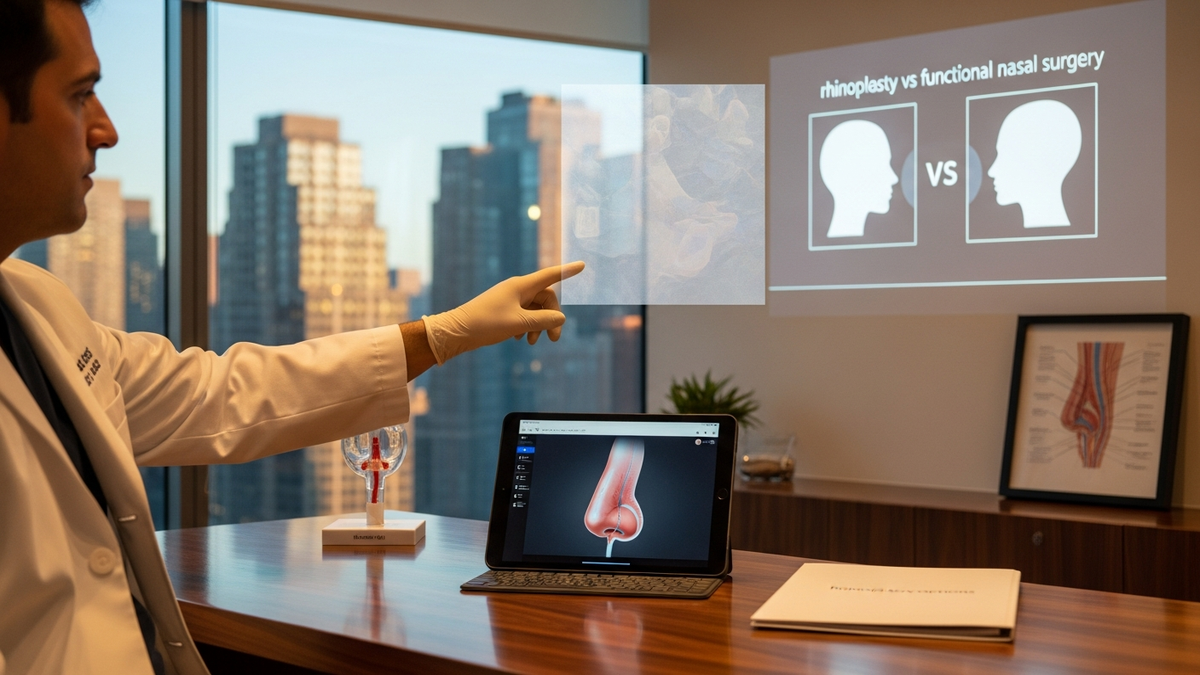
Rhinoplasty vs. functional nasal surgery: what’s the difference?
A common misconception is that rhinoplasty is purely cosmetic. In reality, nasal aesthetics and breathing are closely connected. Some patients mainly want cosmetic refinement; others have both cosmetic concerns and symptoms like chronic nasal congestion, sinus pressure, or difficulty breathing.
When functional concerns matter
If you have symptoms such as persistent “stuffy nose,” frequent sinus irritation, or trouble breathing through one side, your surgeon may discuss functional nasal procedures either as part of rhinoplasty planning or as an alternative in the right circumstances.
For example, Septoplasty is designed to correct a crooked or obstructive nasal septum. If you’re specifically dealing with a Deviated Septum, addressing that structural issue can improve airflow and comfort. In some cases, patients may benefit from procedures that reduce turbinate obstruction or support nasal valve function.
Why this matters for rhinoplasty results
Even when a patient’s primary goal is appearance, functional considerations can influence surgical strategy. A nose that looks great but causes airflow issues may not feel “right” day to day. Conversely, focusing only on breathing without considering facial harmony can miss the aesthetic outcome patients desire.
That’s why it’s valuable to choose a facial plastic and reconstructive surgeon who approaches the nose with both aesthetic artistry and surgical discipline.
How surgeons create “natural-looking” rhinoplasty outcomes
Natural results aren’t accidental—they come from planning, precise technique, and restraint. In rhinoplasty Beverly Hills discussions, “natural-looking” typically means your nose:
- Maintains appropriate proportions relative to your eyes, lips, and overall face shape.
- Preserves your identity (rather than chasing an unrelated celebrity aesthetic).
- Creates smooth lines and realistic contours in both frontal and profile views.
- Looks consistent with your skin thickness and underlying cartilage structure.
- Doesn’t appear over-operated (e.g., overly pinched tips or unnatural bridge angles).
Key planning elements
Many surgeons use structured planning to align the surgical plan with your facial features and anatomy. While methods vary, the best consultations often include:
- In-depth facial analysis: evaluating the nose in relation to your midface, jawline, and smile.
- Tip and cartilage assessment: understanding how cartilage support affects tip definition and long-term stability.
- Skin assessment: thicker skin can respond differently than thinner skin, affecting how shape changes present over time.
- Functional evaluation: assessing airflow issues that could influence the surgical approach.
At FlowGeniQ Digest, we emphasize that “natural” is a result of personalization—not a one-size template.
What to expect during your rhinoplasty consultation
Choosing a surgeon starts long before surgery day. A high-quality consultation should feel educational, not rushed. Here’s what to expect when exploring rhinoplasty beverly hills options.
1) Medical history and symptom review
Your surgeon should ask about:
- Prior nasal injuries or surgeries
- Allergies, chronic congestion, or sinus issues
- Sleep-related breathing concerns (when relevant)
- Medications and bleeding risk factors
2) Physical exam and nasal airflow assessment
A comprehensive exam may include evaluating the nasal septum, turbinates, and nasal valve area. If functional issues are present, the plan may include additional steps or discuss alternatives beyond cosmetic reshaping.
3) Personalized goals and realistic expectations
You should be encouraged to describe what bothers you most—bridge shape, tip definition, asymmetry, or breathing. The surgeon should then translate your goals into a surgical plan that is anatomically achievable and likely to remain stable over time.
4) Before-and-after examples (with context)
Ask to see examples of results for patients with similar anatomy and goals. Pay attention to whether outcomes look consistent across different angles and whether the nose looks like it belongs to the patient’s face.
Rhinoplasty techniques: what “open” and “closed” can mean
Rhinoplasty techniques are often described as open or closed, based on how access is achieved. While the exact approach depends on anatomy and goals, the key point for patients is that the surgeon should choose the method that best supports your planned changes.
Open rhinoplasty (common for complex reshaping)
Open approaches can provide more direct visualization of nasal structures. This can be helpful when significant tip work or structural adjustments are needed.
Closed rhinoplasty (often for more limited changes)
Closed approaches keep incisions inside the nostrils. Some surgeons prefer this for certain cases where the changes are more limited and the anatomy allows.
Whether open or closed, the goal is the same: achieve the aesthetic changes you want while maintaining support and function.
Recovery timeline after rhinoplasty Beverly Hills
Recovery is a major part of the decision. While every patient heals differently, understanding the typical phases can help you plan realistically.
First week
- Swelling and bruising are common, especially around the nose and under-eye area.
- Splints, dressings, or protective coverings may be used depending on your surgeon’s protocol.
- Pain is usually manageable with prescribed medication and follow-up instructions.
Weeks 2–4
- Swelling gradually decreases, though it may still fluctuate day to day.
- Many patients can return to non-strenuous activities, depending on surgeon guidance.
- Visible results begin to look more refined, but the nose may still be “in transition.”
Months 2–6 (and beyond)
- Continued refinement occurs as healing progresses and tissues settle.
- Tip definition and bridge contour can continue to improve over time.
- Final aesthetic results may take many months to fully declare.
If you’re comparing options, ask your surgeon for an individualized recovery estimate based on your planned technique and your anatomy.
Choosing the right surgeon for rhinoplasty in Beverly Hills
In a city known for cosmetic surgery, it’s easy to find marketing claims. But choosing the right surgeon is about credentials, experience, communication, and surgical philosophy.
Look for facial plastic and reconstructive expertise
Rhinoplasty is not just about shaping cartilage—it involves delicate structural support and careful tissue handling. A surgeon who focuses on head and neck procedures may be more attuned to both aesthetic and functional anatomy.
For example, Dr. Hootan Zandifar is a board-certified Facial Plastic & Reconstructive Surgeon who focuses on surgeries of the head and neck. He is known for an honest, trustworthy, and compassionate approach, with an emphasis on patient education and natural-looking outcomes.
Verify board certification and fellowship training
Credentials matter because rhinoplasty outcomes depend on surgical judgment and refined technique. Dr. Zandifar is double board certified and fellowship trained, with extensive training in head and neck surgery and facial plastic and reconstructive surgery.
Ask about functional nasal considerations
When you consult, ask how the surgeon evaluates breathing and nasal valve function. If you have chronic congestion or symptoms, discuss whether your plan should include functional steps or whether functional procedures (like septal correction) should be addressed.
If you’re exploring cosmetic-only goals, it still helps to understand how the surgeon protects airflow structures during reshaping.
Assess communication and educational clarity
A premium consultation should help you understand:
- What will be changed and what will not
- What risks are relevant to your anatomy
- How your results will evolve during recovery
- How the surgeon handles revision cases (and what “revision” means in your context)
Questions to ask before committing to rhinoplasty Beverly Hills
Use this checklist to keep your consult focused. Great surgeons will welcome thoughtful questions.
- What is my nose’s main structural issue? (Tip support, bridge contour, septum, or nasal valve?)
- What aesthetic goals are realistic for my anatomy? Ask for specific, tailored targets.
- Will you address breathing as part of the plan? If I have congestion, what options exist?
- Do you recommend open or closed rhinoplasty for my case, and why?
- How do you define “natural-looking” in your practice?
- What does recovery look like for someone with my schedule?
- What risks should I know based on my health history?
Rhinoplasty can be part of a broader facial rejuvenation plan
Many patients don’t want only a nose change—they want the face to feel refreshed and harmonious. Depending on your goals and age, surgeons may discuss complementary procedures.
How facial rejuvenation may pair with rhinoplasty
Some patients consider other facial procedures after or before rhinoplasty to enhance overall balance. For instance:
- Blepharoplasty for upper eyelid or under-eye concerns—often considered when the eyes look tired or aged. Learn more about Blepharoplasty.
- Facelift strategies for sagging skin and deeper signs of aging. Explore Facelift.
Not every patient needs additional procedures, and timing matters. A thoughtful surgeon will sequence options to support healing and aesthetic balance.
When you might not need rhinoplasty
Not all nasal concerns require rhinoplasty. If your primary issue is chronic obstruction or breathing difficulty, you may be a candidate for functional nasal procedures that can alleviate symptoms with less alteration of appearance.
Examples of functional pathways
In the right circumstances, functional options may include:
- Septoplasty for septal deviation-related airflow problems
- Inferior turbinate reduction for persistent “stuffy nose”
- Nasal valve support approaches when the valve collapses during breathing
- Endoscopic or minimally invasive sinus approaches when chronic sinusitis is involved
Dr. Hootan Zandifar also offers functional nasal surgery designed to treat chronic symptoms of congestion and sinusitis using minimally invasive procedures. When breathing symptoms are the main driver, functional treatment can sometimes be the best course.
What makes a rhinoplasty in Beverly Hills “premium”?
Premium care isn’t just about aesthetics—it’s the entire patient experience and surgical approach. In the context of rhinoplasty beverly hills, premium often includes:
- Specialized expertise in head and neck anatomy
- Natural-looking outcomes through individualized planning
- Functional awareness so breathing is considered, not ignored
- Patient education so you understand options, risks, and recovery
- Clear follow-up and support during healing
If you want to explore rhinoplasty specifically, you may find helpful starting information at Rhinoplasty.
Common concerns and how to address them
It’s normal to have doubts. Here are a few common concerns patients bring to rhinoplasty Beverly Hills consultations—and how to address them constructively.
“Will my nose look too different?”
This is a planning conversation. Ask your surgeon how they preserve identity and create harmony. Good candidates for natural results often want subtle refinement rather than dramatic transformation.
“Will I be able to breathe after surgery?”
Breathing outcomes depend on anatomy and technique. Discuss your symptoms (if any) and ask how the surgeon protects nasal airflow structures. If functional issues exist, ask whether functional steps are recommended.
“How long until I see final results?”
Swelling may fluctuate for weeks, and tissues continue to settle for months. Ask for a timeline aligned with your case so expectations match reality.
Related considerations: head-and-neck harmony
Sometimes patients also consider other facial refinements—like hair restoration or eyebrow restoration—because facial balance is multi-dimensional. If you’re exploring broader head-and-neck aesthetics, you may also research options like a hair transplant or an eyebrow transplant. While these are separate procedures, they can contribute to how the face reads as a whole.
That said, rhinoplasty decisions should be anchored in your nasal anatomy and goals first. Any additional procedures should be discussed with your surgeon to ensure safe timing and cohesive planning.
FAQ: Rhinoplasty Beverly Hills
1) Is rhinoplasty in Beverly Hills only for cosmetic reasons?
No. Many patients pursue rhinoplasty for appearance, but some also have functional concerns such as congestion or airflow limitations. A thorough evaluation can determine whether breathing issues should be addressed during the same surgical plan or through functional alternatives.
2) How do I know if I’m a good candidate for rhinoplasty?
Good candidates generally have stable nasal growth (for younger patients, this may mean waiting until development is complete), realistic expectations, and sufficient overall health to undergo surgery. Your surgeon should also evaluate nasal structure and breathing symptoms to tailor the plan.
3) What’s the difference between septoplasty and rhinoplasty?
Septoplasty primarily focuses on correcting the nasal septum to improve airflow. Rhinoplasty reshapes the nose’s external form and may also include functional adjustments depending on your anatomy and goals.
4) Will my nose look natural after rhinoplasty?
Natural results depend on individualized planning, appropriate technique, and restraint. Ask to see results from patients with similar facial features and discuss how your surgeon approaches proportion and tip definition.
5) How long does rhinoplasty recovery take?
Most swelling and bruising improve within the first few weeks, but the nose continues to refine over months. Your surgeon can provide a personalized timeline based on the complexity of your procedure.
CTA: Schedule a consultation and start with a clear plan
If you’re considering rhinoplasty Beverly Hills, the best next step is a consultation where your surgeon can evaluate both aesthetics and function—and explain what’s realistic for your anatomy. At FlowGeniQ Digest, we encourage you to approach your decision with confidence, education, and a surgeon who communicates clearly.
To begin: schedule an appointment with a qualified facial plastic and reconstructive surgeon to discuss your goals, nasal breathing concerns (if any), and a tailored surgical plan.
Professional Disclaimer
This content is provided for general educational purposes only by FlowGeniQ Digest. It is not a substitute for professional advice, diagnosis, or treatment. Readers are advised to consult qualified professionals for personalized recommendations.
Medical Information Disclaimer
This content is provided for general educational purposes only by FlowGeniQ Digest. It is not a substitute for professional advice, diagnosis, or treatment. Readers are advised to consult qualified professionals for personalized recommendations.