FlowGeniQ Digest brings you a clear, evidence-informed overview of what patients commonly experience—so you can plan realistically. If you’re researching the recovery time for rhinoplasty, you’re probably balancing two goals: getting the results you want and protecting your healing process. While every nose (and every surgical plan) is different, most rhinoplasty recoveries follow a fairly predictable pattern of swelling, discomfort, and gradual return to normal activities.
Recovery time for rhinoplasty: a realistic overview
In general, initial recovery takes about 1–2 weeks, when splints and sutures are removed and many day-to-day activities become easier. Visible swelling often peaks in the first several days, then gradually improves over the next few weeks. Most people can return to work or routine social plans within 2–3 weeks, depending on their job demands and how noticeable the swelling is. However, full refinement of the nose typically continues for 6–12 months—sometimes longer for subtle changes.
Because rhinoplasty can be performed for both cosmetic and functional goals (e.g., improving nasal airflow), recovery can also include breathing-related changes. If your plan involves structural adjustments that affect airflow, your timeline may differ from a purely aesthetic case.
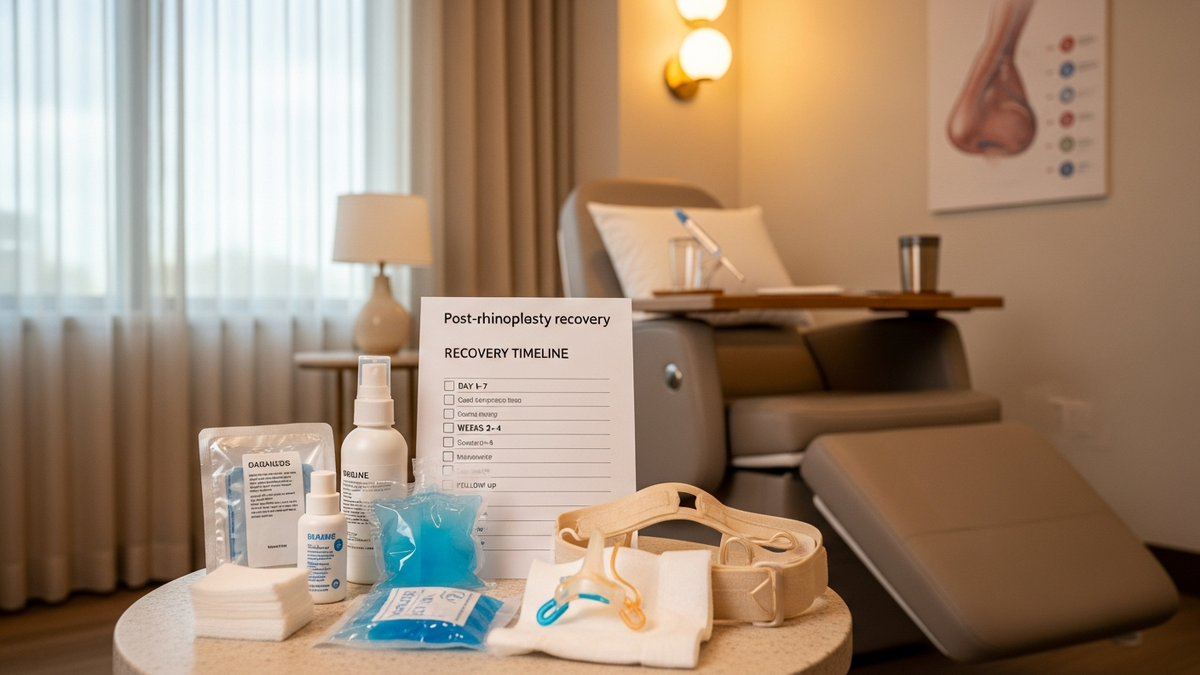
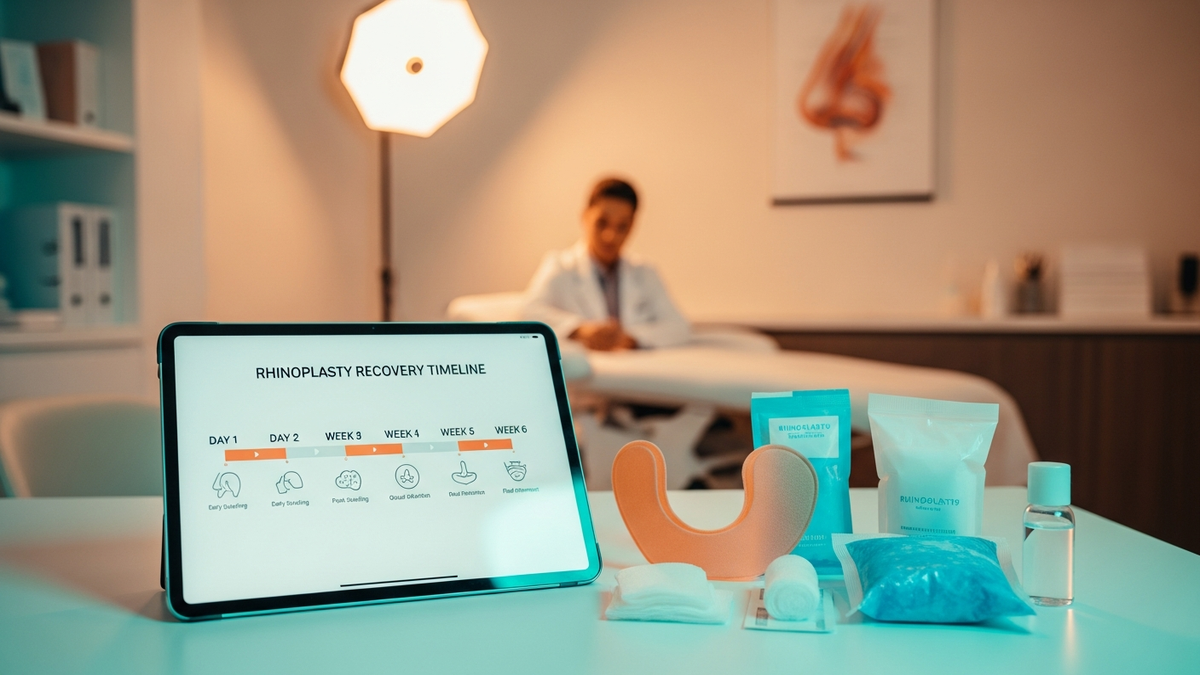
Typical rhinoplasty recovery timeline (week by week)
Below is a practical timeline many patients relate to. Your surgeon will personalize this based on your anatomy, the surgical technique used, and whether cartilage grafting, septal work, or other components are involved.
First 0–72 hours: the “early healing” window
- Swelling: Often begins immediately and can be most noticeable during the first 2–3 days.
- Discomfort: Usually manageable with prescribed medication. Pressure and tenderness are common.
- Breathing: Many people feel more nasal congestion due to internal swelling and splints/packing (if used).
- Bruising: Bruising under the eyes can appear quickly, sometimes peaking around day 3–5.
Actionable tip: Plan for a calm, upright routine. Gentle head elevation helps reduce swelling. Avoid bending, lifting, or anything that increases blood pressure to the face.
Days 4–7: bruising peaks, swelling starts to settle
- Swelling: Still present; often begins to feel “tighter” rather than more painful.
- Bruising: Can look dramatic but is usually a normal part of healing.
- Activity: Many patients can do light activities with caution.
What to watch: If pain suddenly worsens, you develop fever, or you notice concerning drainage, contact your surgical team promptly.
Week 1–2: splint/suture removal and “getting back to life”
- Milestone: Splints and sutures are often removed around this stage (timing varies).
- Swelling: Gradual improvement continues, though the nose may still look puffy.
- Appearance: Many patients look noticeably better after external supports come off, but some swelling remains.
- Work: Some return to desk work around 7–14 days, depending on comfort and visibility of swelling.
Actionable tip: If your job is public-facing, consider a conservative return plan—especially if you’re sensitive to how swelling photographs.
Weeks 3–4: social recovery and improved comfort
- Swelling: Often significantly reduced compared with week 1.
- Skin sensitivity: The nose can feel more “normal,” but touch sensitivity may persist.
- Exercise: Light exercise may be allowed; high-impact training is typically delayed.
Practical expectation: You’ll likely still see changes when you compare early photos to later ones—but the overall shape starts to look more like the final direction.
Months 2–3: refinement begins
- Swelling: Residual swelling can fluctuate day to day.
- Definition: Tip and contour definition often continue to improve.
- Consistency: Many patients feel more confident in appearance during this period.
Months 4–6: the “new nose” phase
- Contour stabilization: Many of the visible changes are now more stable.
- Photography: Your results may look more consistent across different lighting conditions.
Months 6–12 (and sometimes beyond): final refinement
- Subtle changes: The nose tip and internal structures may continue to settle.
- Long-term healing: Patience matters—rhinoplasty is a gradual transformation.
What affects recovery time for rhinoplasty?
While the timeline above is common, your recovery time for rhinoplasty may be shorter or longer depending on several factors. Understanding these variables helps you plan conservatively.
Surgical complexity and technique
Rhinoplasty ranges from relatively limited reshaping to complex structural work. If your surgeon needs to address cartilage support, tip refinement, or internal valve stability, healing may take longer—especially for the tip area.
Functional nasal goals (breathing and airflow)
Some patients pursue rhinoplasty to improve aesthetics and also address chronic congestion. In these cases, internal swelling and airway adjustments can influence how quickly you feel comfortable breathing through your nose.
Not every breathing problem requires cosmetic rhinoplasty. For example, structural breathing issues such as a deviated septum or nasal obstruction may be treated with procedures like Septoplasty or other functional interventions. If you’re evaluating your options, ask your surgeon what portion of your plan is cosmetic versus functional.
If you’re specifically researching Rhinoplasty in Beverly Hills, it’s helpful to discuss expected swelling patterns and how breathing symptoms may change during healing.
Swelling and bruising tendency
Some people bruise more easily or experience more visible swelling. Genetics, skin thickness, and baseline inflammation can all play a role.
Smoking, vaping, and nicotine exposure
Nicotine is known to impair blood flow and can increase the risk of delayed healing and complications. If you use nicotine products, discuss a quit plan with your surgeon well in advance.
Medications and supplements
Blood-thinning medications and certain supplements may increase bruising. Your surgeon may ask you to stop or adjust specific medications. Follow their instructions exactly.
Post-op compliance
Healing improves when you follow the plan: head elevation, medication adherence, wound care instructions, and activity restrictions. Even small deviations (like early intense exercise) can add swelling or prolong recovery.
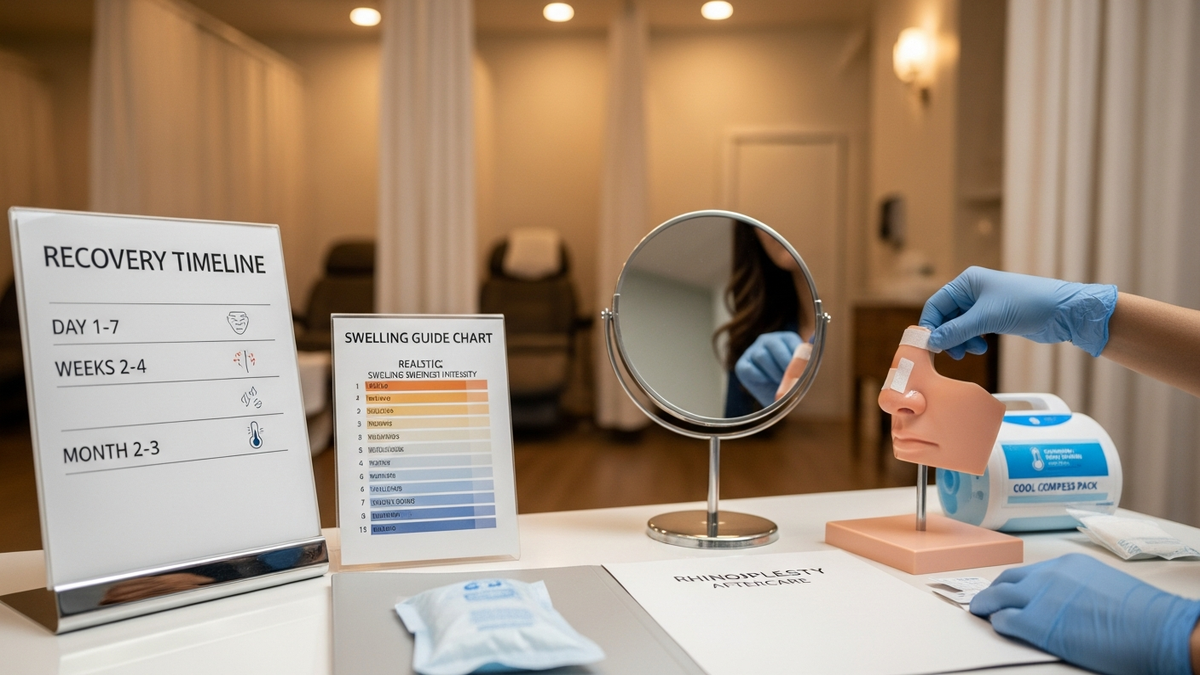
Swelling stages: when will my nose look “normal”?
Swelling is the main factor people notice when estimating recovery time for rhinoplasty. The key is understanding that swelling doesn’t disappear in a straight line.
Early swelling (days 1–7)
Expect the nose to look fuller. Bruising under the eyes can be part of the process. This period is not a “judgment window.” Your surgeon’s plan is designed to support healing, not to reveal final contour immediately.
Intermediate swelling (weeks 2–4)
Swelling often becomes less intense and more localized. Some people look noticeably improved by week 2, while others may need the full 3–4 weeks to feel comfortable in public.
Residual swelling (months 2–6)
Residual swelling may fluctuate. You may notice that your nose looks different at the end of the day, after salty meals, or following increased activity. This is usually normal—your surgeon will help you distinguish expected changes from complications.
Return to work, exercise, and normal activities
Planning ahead can reduce stress. Use the guidance below as a framework, then confirm your personalized restrictions with your surgical team.
Work
- Desk work: often 7–14 days, depending on swelling and comfort.
- Public-facing roles: consider 2–3 weeks if you want to minimize visibility.
- Physical jobs: may require 3–6+ weeks depending on exertion and safety risks.
Exercise
- Light walking: commonly encouraged early (as directed).
- Yoga and gentle workouts: often later in week 2–4 with approval.
- High-impact training: typically delayed until the surgeon confirms healing stability.
Sleep and head position
Many surgeons recommend sleeping with your head elevated to reduce swelling. Avoid pressure on the nose (including side-sleeping) until cleared.
How to heal faster (and more safely)
There’s no “instant recovery,” but you can optimize conditions for healing.
Follow your post-op instructions exactly
Your surgeon’s directions for splint care, nasal hygiene, and medication timing are tailored to your case. Even small changes can affect swelling and comfort.
Use cold compresses as directed
Cold compresses can help reduce swelling early on, but only use them if your surgeon recommends and instructs you to do so. Don’t apply pressure to the nose unless explicitly allowed.
Stay hydrated and eat for recovery
Protein-rich meals support tissue repair. Fiber and fluids help with comfort and medication-related constipation.
Avoid triggers that increase swelling
- Alcohol (can worsen swelling and dehydration)
- High-sodium meals (may increase fluid retention)
- Heat exposure (saunas/hot tubs) early in recovery
- Strenuous activity before clearance
Be careful with glasses and facial pressure
Glasses can add pressure to the bridge or tip area. Ask about taping or alternative support methods during the early healing period.
Common concerns during rhinoplasty recovery
It’s normal to have questions when your appearance changes day to day. Here are common concerns—and how to think about them.
“Will I be able to breathe right away?”
Many patients feel congested early due to swelling, splints, and internal healing. Over time, breathing often improves as internal tissues settle. If you have functional goals, discuss what improvements to expect and when.
“Is my nose supposed to look crooked while healing?”
As swelling changes, the nose may look uneven temporarily. This doesn’t always mean something went wrong. Your surgeon will monitor alignment during follow-up visits.
“When can I stop worrying about bruising?”
Bruising is often most visible in the first week. If bruising expands rapidly, is accompanied by severe pain, or you notice unusual drainage, contact your provider.
“Will I feel numbness?”
Some numbness or altered sensation can occur and typically improves gradually. Healing is a sensory process as well.
When to call your surgeon (red flags)
Most recoveries are smooth, but it’s important to know when to seek help. Contact your surgical team immediately if you experience:
- Severe or worsening pain that doesn’t respond to medication
- Fever or signs of infection
- Heavy bleeding or sudden swelling on one side
- Foul-smelling discharge
- Breathing that dramatically worsens instead of gradually improving
Functional nasal options: not always “rhinoplasty” for breathing problems
At FlowGeniQ Digest, we often see patients assume rhinoplasty is the only route for nasal obstruction. In reality, some breathing issues may be addressed with functional nasal procedures that can be less invasive than a full cosmetic rhinoplasty—depending on your anatomy and symptoms.
Septoplasty for structural airflow issues
If your symptoms relate to a Deviated Septum, a targeted procedure like Septoplasty may be recommended. Correcting internal alignment can help airflow and reduce chronic congestion for appropriate candidates.
Rhinoplasty when aesthetics and function overlap
When both appearance and airflow are priorities, a surgeon may integrate functional support into the rhinoplasty plan. In these cases, your recovery time for rhinoplasty may include internal healing milestones in addition to external swelling reduction.
If you’re exploring Rhinoplasty with a facial plastic and reconstructive approach, ask how functional work affects your expected recovery and breathing timeline.
Why choosing an experienced facial plastic surgeon matters
Rhinoplasty is both an art and a functional procedure. Technique influences not only the final contour but also how tissues heal and how internal structures support airflow. A surgeon who specializes in head and neck anatomy can be especially helpful when there’s a functional component.
In Beverly Hills, Hootan Zandifar, MD, FACS is known for a patient-centered approach to cosmetic and reconstructive head-and-neck surgery. His practice emphasizes education and realistic expectations—so patients understand not only what the surgery can do, but also how the recovery process typically unfolds. For functional nasal concerns, he also focuses on minimally invasive options that may permanently alleviate chronic congestion symptoms in the right circumstances.
Note: If you’re comparing multiple facial procedures, you may also be curious about other recovery timelines (for example, Facelift or Blepharoplasty). Each procedure has its own healing pattern, and your surgeon can help you plan a safe sequencing strategy if combining treatments.
How to plan your schedule around rhinoplasty recovery
A little planning can make recovery feel more manageable.
Plan for the first 2 weeks
- Arrange help at home for the first few days if possible.
- Stock easy meals and hydration options.
- Prepare a comfortable sleep setup with head elevation.
- Keep social plans light until swelling improves.
Leave buffer time for weeks 3–4
Even if you return to work earlier, you may prefer a phased schedule for events, travel, and high-visibility activities. Swelling can still change during this window.
Set expectations for long-term results
If you’re planning a major event (wedding, photoshoot, conference), consider booking your surgery with enough time for refinement. Most people feel confident earlier, but the most natural “final” look often comes later.
FAQ: Recovery time for rhinoplasty
How long is the recovery time for rhinoplasty?
Many patients have initial recovery in about 1–2 weeks, with more comfortable return to normal activities often around 2–3 weeks. Full refinement can continue for 6–12 months.
When can I return to work after rhinoplasty?
Desk work may be possible around 7–14 days, while public-facing roles often benefit from 2–3 weeks to allow swelling to settle. Physical jobs may require longer.
When will my nose stop looking swollen?
Swelling typically peaks in the first week and improves over the following weeks. Residual swelling may fluctuate for months, with more stable refinement often seen after 3–6 months.
Will I be able to breathe normally during recovery?
Breathing may feel congested early due to swelling and internal healing. For patients with functional goals, improvements often occur gradually as tissues settle. Your surgeon can describe a more specific breathing timeline based on your plan.
What increases the risk of delayed healing after rhinoplasty?
Nicotine exposure, not following post-op instructions, premature high-impact activity, and certain medication/supplement changes can contribute to delayed healing or increased swelling. Discuss risks and restrictions in your pre-op visit.
CTA: Ready to discuss your rhinoplasty goals and timeline?
If you’re planning your surgery, the best next step is a consultation where you can review your anatomy, your functional concerns (if any), and a realistic recovery time for rhinoplasty tailored to your case. At FlowGeniQ Digest, we encourage informed decision-making—so you can feel confident about both the procedure and the healing journey.
Schedule a consultation with a qualified facial plastic and reconstructive surgeon to discuss your goals, expected swelling stages, and safe return-to-work and activity milestones.
Optional note: If you’re exploring other facial rejuvenation or head-and-neck procedures as part of your overall plan, it’s also worth asking about how sequencing might affect recovery comfort and scheduling.
Professional Disclaimer
This content is provided for general educational purposes only by FlowGeniQ Digest. It is not a substitute for professional advice, diagnosis, or treatment. Readers are advised to consult qualified professionals for personalized recommendations.
Medical Information Disclaimer
This content is provided for general educational purposes only by FlowGeniQ Digest. It is not a substitute for professional advice, diagnosis, or treatment. Readers are advised to consult qualified professionals for personalized recommendations.