Written for FlowGeniQ Digest by a team focused on clear, evidence-informed guidance for aesthetic and reconstructive care.
Choosing blepharoplasty is often about more than looks—it can refresh the eyes, improve how you see, and help you feel like yourself again. But the real question many patients ask is: what happens after blepharoplasty?
In this premium recovery guide, we’ll break down the typical healing timeline, explain what’s normal (and what isn’t), and share practical aftercare strategies to support comfortable, natural-looking results.
What “after blepharoplasty” really means
“After blepharoplasty” refers to the period from the day of surgery through the final stages of healing and settling. During this time, your eyelids go through inflammation, tissue repair, and gradual remodeling. The eyes may look different week to week—often with swelling, bruising, tightness, and changes in sensation.
It’s helpful to know that near-term appearance is not the final result. Most patients experience noticeable improvement early, while the last details continue to refine over weeks to months.
Blepharoplasty recovery timeline: day-by-day expectations
Recovery varies based on whether you had upper eyelid, lower eyelid, or both. Your surgeon’s technique, your skin quality, and your personal healing rate also influence timing.
First 24–48 hours: protecting the surgical area
- Swelling and bruising are usually most noticeable early.
- Tightness and a “pulled” feeling are common.
- Watery eyes, mild irritation, and light sensitivity can occur.
- Most patients are instructed to use cold compresses (as directed) and keep the head elevated.
Tip: Plan for a calm, low-activity day. Have sunglasses, a clean pillow setup, and easy-to-prepare meals ready.
Days 3–7: bruising fades, comfort improves
- Bruising often shifts colors (e.g., purple to yellow-green) as it resolves.
- Swelling begins to soften, though it may still fluctuate.
- Many patients feel more comfortable with gentle routines.
During this week, your surgeon may adjust your aftercare plan—such as when to switch from cold to warm compresses (if appropriate) and how to continue ointments or drops.
Weeks 2–4: the “in-between” phase
- Visible improvement becomes clearer.
- Some patients notice firmness or subtle unevenness that gradually improves.
- Lower lid cases may take longer for swelling to settle.
It’s common for patients to feel impatient during this phase because the eyes look “better but not fully done.” This is where adherence to follow-up visits matters most.
Months 2–6: final refinement and settling
As healing continues, eyelid tissues remodel and the result becomes more natural and refined. The final aesthetic outcome often emerges over several months—especially for lower eyelid blepharoplasty.
At follow-ups, your surgeon can tell you whether your healing pattern is on track and whether any minor adjustments (like scar management) are needed.
Upper vs. lower blepharoplasty: how recovery can differ
Upper and lower eyelids heal differently because of anatomy, tissue movement, and the way swelling presents.
Upper eyelid blepharoplasty
- Often involves removing excess skin and/or fat.
- Swelling may be more concentrated in the upper lid crease area.
- Many patients feel comfortable with normal social activities sooner (still within surgeon guidance).
Lower eyelid blepharoplasty
- May involve fat repositioning and/or skin tightening.
- Swelling and sensitivity can last longer, particularly around the under-eye region.
- Dryness and tearing sensations are also common during early healing.
Common symptoms after blepharoplasty (and what’s normal)
Knowing what to expect reduces anxiety and helps you distinguish normal healing from potential complications.
Swelling and bruising
Swelling is expected and often peaks in the first few days. Bruising typically resolves over 1–2 weeks, though subtle discoloration can linger longer.
Dryness, gritty sensation, and watery eyes
Because the eyelids and tear film interact, many patients experience dryness or irritation. Paradoxically, some people also develop watery eyes as the surface becomes irritated.
Actionable recommendation: Use lubricating drops or ointment exactly as prescribed. Avoid “guessing” with over-the-counter products unless your surgeon approves.
Light sensitivity and blurred vision
Mild light sensitivity is common. Blurred vision can occur due to swelling and lubrication changes. If vision is worsening, painful, or accompanied by severe redness, contact your surgeon promptly.
Numbness or altered sensation
Temporary numbness or hypersensitivity around the eyelids can happen as nerves recover. Sensation often improves gradually over weeks.
Itching and tightness
Itching can occur as tissues heal and stitches dissolve or settle. Tightness may be more noticeable when blinking or looking up/down.
Reminder: Don’t rub your eyes. Rubbing is a leading cause of irritation and can affect healing.
Aftercare essentials: what to do after blepharoplasty
Your surgeon’s protocol is the priority. Below are general aftercare principles that many patients follow—always confirm specifics with your own medical team.
1) Keep your head elevated
Elevation helps reduce swelling and may improve comfort. Many surgeons recommend sleeping with an elevated pillow setup for the first several nights.
2) Use compresses only as directed
Cold compresses are commonly used early to minimize swelling. Later, some patients transition to gentle warm compresses to support circulation—but only if your surgeon recommends it.
3) Take medications as prescribed
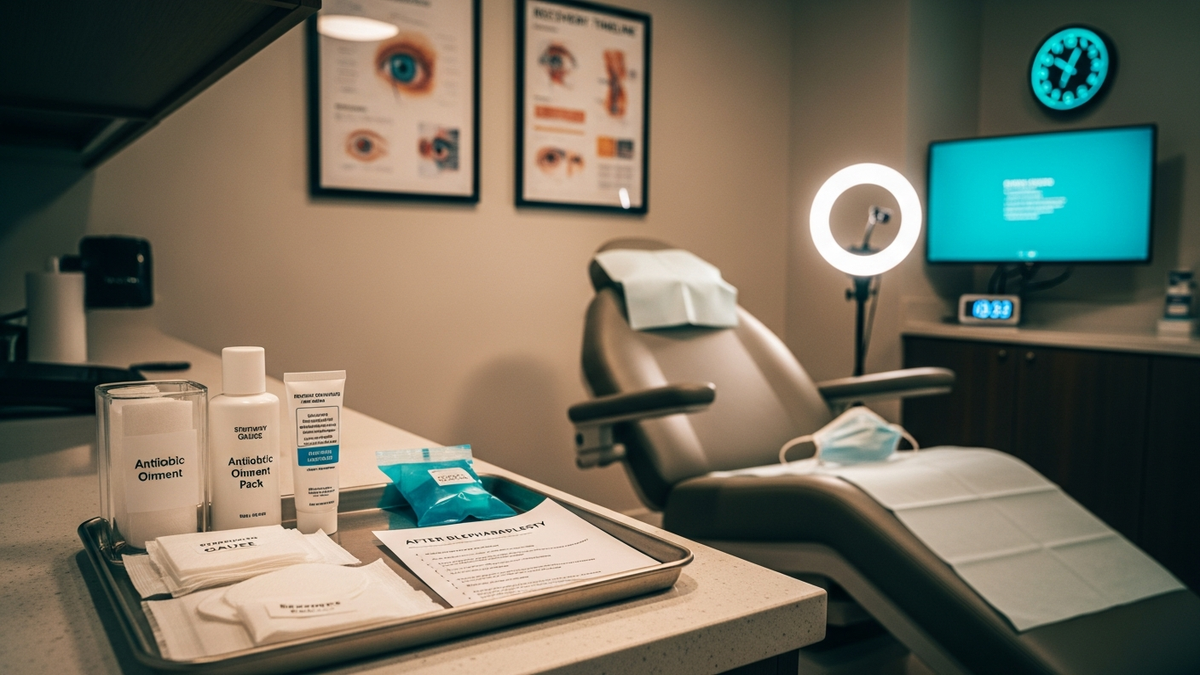
Pain control, antibiotic ointment (if prescribed), and eye drops help support healing. Avoid changing medication schedules without approval.
4) Maintain incision and eye hygiene
- Follow instructions for cleaning the eyelid margins or removing discharge (if any).
- Use only the products your surgeon recommends.
5) Protect your eyes from irritation
During early healing, avoid smoke, dusty environments, and heavy wind exposure. Sunglasses can help with comfort and light sensitivity.
6) Avoid strenuous activity early
Heavy lifting, bending over for long periods, and intense exercise can increase swelling. Your surgeon will provide a timeline for when you can safely return to workouts.
Activity and lifestyle: when can you return to normal?
Patients often plan around work, social events, and travel. While individual recommendations vary, the following framework is common.
Work and social activities
Many patients can return to low-contact work within about a week, depending on swelling and comfort. If your job involves significant computer time or exposure to bright screens, ask your surgeon about eye lubrication and break schedules.
Exercise and lifting
Light walking is usually encouraged early. Strenuous cardio and lifting are typically restricted longer to reduce pressure-related swelling.
Makeup and skincare
Makeup application is often limited early to reduce irritation and contamination risk. Your surgeon may specify when it’s safe to resume eyeliner, concealer, or skincare near the incision lines.
Contact lenses
Contact lens use may be paused during early healing. Ask your surgeon when it’s safe to restart—dryness and irritation can complicate the timeline.
How to support natural-looking results
Great outcomes are not only about surgical technique—they’re also about healing conditions. Consider these patient-centered strategies.
Attend all follow-up visits
Follow-ups allow your surgeon to monitor eyelid position, swelling trends, incision healing, and ocular surface health. If you have concerns, early evaluation is usually more effective than waiting.
Be cautious with “home remedies”
Even well-intentioned suggestions (like frequent warm compresses, aggressive massage, or herbal supplements) can interfere with healing or increase bruising. Stick to your surgeon’s plan.
Manage expectations about appearance
After blepharoplasty, eyelids may look uneven at first. This can be temporary. Over time, swelling decreases and tissues settle into a more balanced look.
When to call your surgeon after blepharoplasty
Most recovery experiences are smooth, but it’s important to know when to seek help. Contact your surgeon urgently if you experience:
- Severe or worsening pain that doesn’t respond to medication as directed
- Sudden vision changes (significant blur, loss of vision)
- Increasing redness with heat and worsening swelling
- Heavy bleeding or a rapidly expanding bruise
- Fever or feeling unwell
When in doubt, it’s always safer to reach out—your care team can triage whether symptoms are normal healing or require evaluation.
How blepharoplasty fits into a broader facial rejuvenation plan
For many patients, refreshed eyelids are part of a larger anti-aging strategy. Some people also consider brow elevation, skin tightening, or other facial procedures depending on their anatomy and goals.
At FlowGeniQ Digest, we encourage patients to think holistically: the eyes, brows, and mid-face work together. If you’re exploring additional options, discuss them with a qualified, board-certified specialist.
Related options you may hear about
- Facelift: If you have sagging in the lower face and neck, a Facelift may be considered as part of a comprehensive rejuvenation approach.
- Brow lift: If brow position contributes to eyelid heaviness or upper-lid crowding, a brow lift may complement eyelid surgery.
- Rhinoplasty (unrelated to eyelid healing but relevant for facial goals): If you’re planning multiple facial procedures, coordinate timing and recovery planning. Learn more about Rhinoplasty if nose aesthetics or function is part of your broader plan.
Choosing a surgeon: what to look for before you schedule
Because the eyelids are delicate and highly visible, selecting an experienced facial plastic and reconstructive surgeon matters. Here are practical criteria to evaluate during your consultation.
Board certification and focused expertise
Look for credentials, training, and experience specifically in head and neck cosmetic/reconstructive procedures. For example, Dr. Hootan Zandifar is a double board certified, fellowship-trained Facial Plastic & Reconstructive Surgeon who focuses on head and neck surgery, emphasizing natural-looking outcomes and patient education.
A personalized plan (not a one-size-fits-all template)
Upper and lower blepharoplasty can be performed in different ways depending on anatomy, skin quality, and fat distribution. Your surgeon should explain the rationale for the approach recommended for you.
Clear communication about risks and realistic recovery
A trustworthy provider will discuss potential risks, how complications are managed, and what your recovery will likely look like week to week.
FAQ: After blepharoplasty
How long does swelling last after blepharoplasty?
Swelling typically peaks in the first few days and improves over 1–2 weeks. Many patients notice continued refinement through weeks 2–4, with additional settling over a few months—especially for lower eyelid procedures.
When can I wear makeup after blepharoplasty?
Makeup timing varies by surgeon and healing progress. Many patients are advised to wait until incisions have healed and irritation risk is low. Ask your surgeon for a personalized timeline.
Is it normal to feel numbness or tightness after blepharoplasty?
Yes. Temporary numbness, tightness, and altered sensation are common as tissues heal. If symptoms are severe, worsening, or accompanied by other concerning signs, contact your surgeon.
What activities should I avoid during recovery?
In most cases, avoid heavy lifting, intense exercise, and activities that increase blood pressure or strain early on. Gentle walking is often encouraged. Follow your surgeon’s specific restrictions.
When should I worry about complications?
Seek prompt medical guidance for severe or worsening pain, sudden vision changes, rapidly increasing redness/swelling, heavy bleeding, fever, or any symptom that feels significantly worse than expected.
CTA: Ready to plan your aftercare with confidence?
If you’re considering blepharoplasty or you’re already in recovery and want a clear, patient-first plan, schedule a consultation. In Beverly Hills and the Los Angeles area, Dr. Hootan Zandifar supports patients with honest education, natural-looking results, and a focus on head and neck surgical excellence.
Next step: Review your personal recovery goals, ask about your timeline, and confirm aftercare instructions so you know exactly what to do after blepharoplasty.
Professional Disclaimer
This content is provided for general educational purposes only by FlowGeniQ Digest. It is not a substitute for professional advice, diagnosis, or treatment. Readers are advised to consult qualified professionals for personalized recommendations.
Medical Information Disclaimer
This content is provided for general educational purposes only by FlowGeniQ Digest. It is not a substitute for professional advice, diagnosis, or treatment. Readers are advised to consult qualified professionals for personalized recommendations.