From FlowGeniQ Digest
Choosing rhinoplasty is a big decision—so it makes sense that you want a clear, realistic plan for recovery after rhinoplasty. Whether your goal is aesthetic refinement, functional improvement, or both, the first weeks after surgery set the stage for how you feel, how your nose heals, and when you’ll start seeing your final look.
In this guide, you’ll learn what’s typical during rhinoplasty recovery, what swelling and bruising mean, how to manage discomfort, and which habits can support safer healing. You’ll also find a practical timeline—from day 1 through the months ahead—plus an FAQ for common concerns.
Recovery After Rhinoplasty: The Big Picture
Rhinoplasty is a precise procedure that reshapes nasal bone and/or cartilage while respecting the structure that supports breathing and facial balance. Because the nose is highly vascular and sensitive, the healing process involves inflammation, tissue remodeling, and gradual settling of swelling.
It’s helpful to think of recovery in phases:
- Early healing (days 1–14): swelling, bruising, congestion sensation, and pressure are most noticeable.
- Intermediate healing (weeks 2–6): bruising fades; the nose becomes easier to handle visually, though internal healing continues.
- Refinement (months 2–12+): the nose “settles” as tissues remodel; final results evolve slowly.
How Long Is Recovery After Rhinoplasty?
Most people can return to light, non-strenuous activities within 1–2 weeks, depending on how their body responds and the specifics of their surgery. However, “feeling normal” and “looking final” are not the same timeline.
Here’s a realistic expectation:
- 1–7 days: peak swelling/pressure; rest and protective care are essential.
- 1–2 weeks: many patients resume work that doesn’t involve heavy exertion; external swelling continues to improve.
- 3–6 weeks: visible bruising typically resolves; swelling is still present but often less dramatic.
- 3–12 months: gradual refinement; subtle changes can continue beyond a year.
Key point: The nose heals from the inside out and from the inside tissues outward. Even if you look “better” sooner, internal remodeling is still happening.
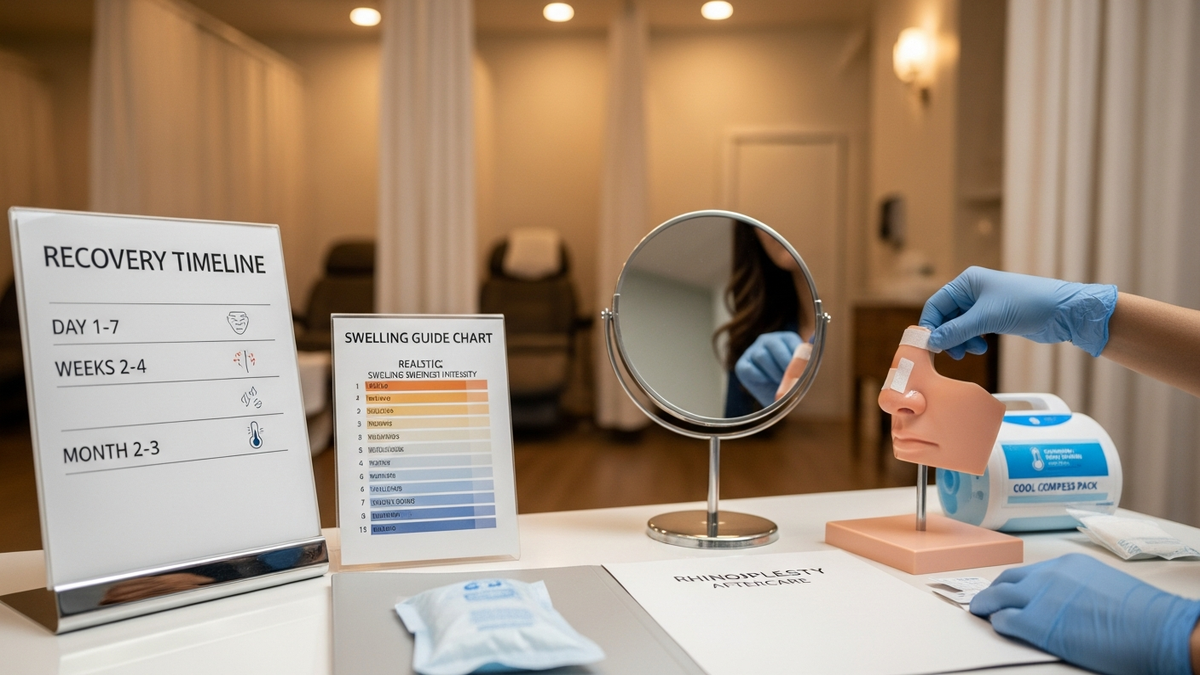
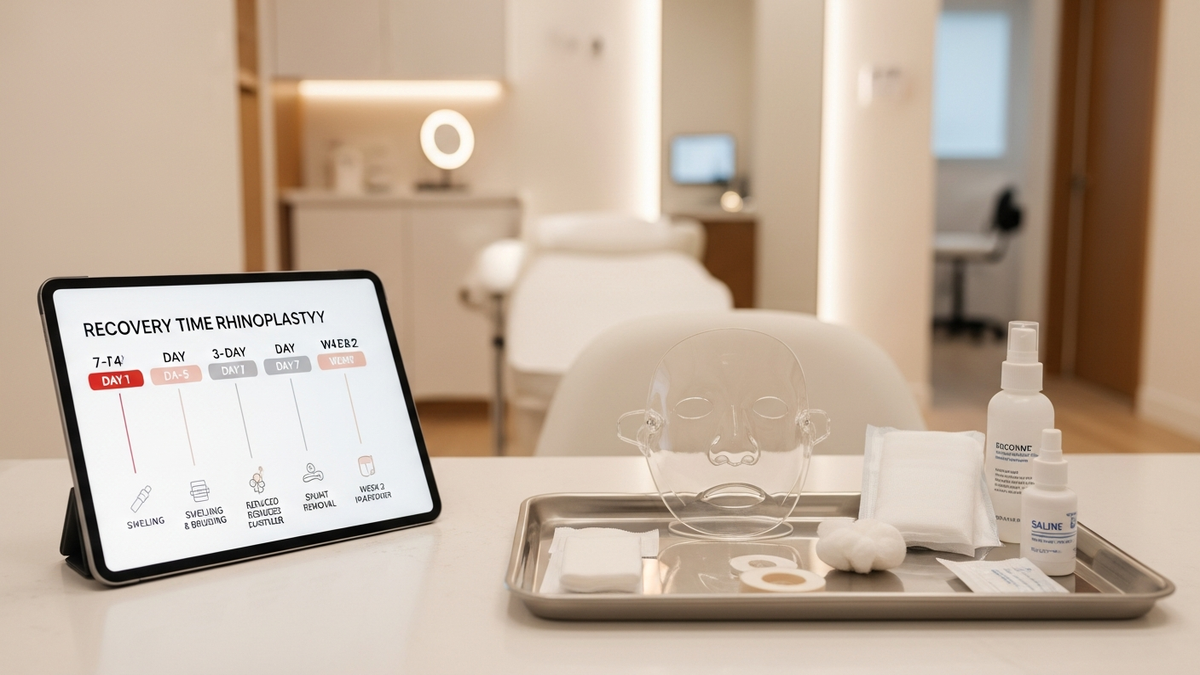
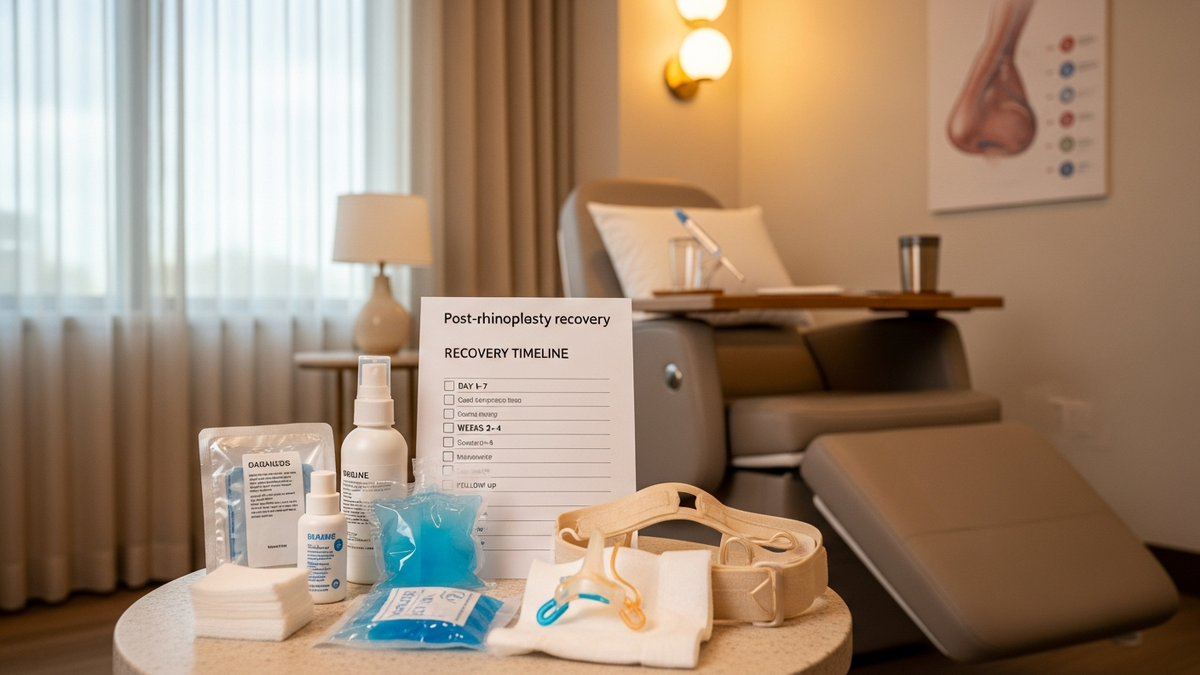
Day-by-Day Recovery Timeline (What to Expect)
Days 1–3: The “Pressure and Protection” Phase
In the first few days after surgery, it’s common to experience:
- Swelling around the nose and sometimes the cheeks/under-eye area
- Congestion sensation or difficulty breathing through the nose (especially if splints or packing were used)
- Bruising that may shift downward as gravity moves fluid
- Throbbing or tight pressure rather than sharp pain
Practical tips that often help during this phase:
- Sleep elevated (head elevated above heart level) to reduce swelling.
- Use cold compresses as directed (not directly on fragile skin; follow your surgeon’s instructions).
- Take medications exactly as prescribed for pain and inflammation control.
- Avoid bending/lifting that increases pressure in the head.
Days 4–7: Swelling Peaks for Many Patients
For many people, swelling is still significant around days 4–7. You may notice:
- Bruising becoming more visible (often darker) before it starts to fade
- A gradual reduction in intense pressure
- Dryness or crusting in/around the nose area
What typically matters most now is adherence to aftercare: gentle cleaning methods, humidity support if recommended, and avoiding anything that could disrupt healing.
Week 2: Splints, Sutures, and a Noticeable Difference
By the second week, many patients attend follow-up visits where external splints are assessed/removed (timing varies by technique). You may notice:
- Improved comfort and less obvious bruising
- External swelling continuing to decrease
- A clearer view of the nose’s new shape (though not final)
Important: Even if you feel better, you should still protect the nose from trauma. Avoid activities that raise risk of impact—sports, intense workouts, or anything with accidental contact.
Weeks 3–4: The “Looks Better, Still Healing” Phase
During weeks 3–4, swelling often becomes less intense, but some internal swelling can linger. It’s common to experience:
- Temporary asymmetry (one side may look more swollen than the other)
- Changes in how the nose feels due to healing tissue
- Increased sensitivity to temperature changes
Many patients are surprised that the nose can look different day-to-day. This is usually normal and relates to ongoing fluid shifts and remodeling.
Weeks 5–6: More Activity, Still No “Full Send”
By weeks 5–6, many people look substantially improved and feel confident returning to more routine schedules. However:
- Swelling can still be present and may fluctuate
- Cartilage and bone healing is ongoing
- High-impact exercise may still need restrictions
Follow your surgeon’s specific clearance timeline for exercise and protective measures.
Months 2–6: Refinement and “Settling”
As you move into the middle months, healing becomes less about immediate changes and more about refinement. You may notice:
- Improved definition of the nasal tip and contour
- Gradual smoothing of residual irregularities
- Less visible swelling, especially in photographs taken in consistent lighting
It’s normal for the nose to keep evolving—sometimes subtly—during this window.
Months 6–12+: Final Results Evolve Slowly
Even after 6 months, the nose may continue to refine over the next 6 months or longer. Some changes are subtle but meaningful, including:
- Further settling of the tip
- More mature appearance of skin thickness and texture
- Improved symmetry as swelling resolves internally
Patience is part of recovery after rhinoplasty—because the best outcomes often require time for tissues to remodel properly.
What Is Normal During Recovery After Rhinoplasty?
Understanding what’s typical can reduce anxiety and help you spot when something needs medical attention. Common normal experiences include:
- Swelling that peaks early and then gradually decreases
- Bruising that changes color as it resolves
- Congestion or “stuffy” sensation
- Dryness and crusting inside the nose
- Tenderness and pressure with movement
Many patients also report that sleep positioning and hydration significantly affect how they feel day-to-day.
Swelling and Bruising: How to Manage Them
Swelling is expected after rhinoplasty. While you can’t eliminate it entirely, you can often reduce discomfort and help your body heal efficiently.
Sleep Position Matters
For most patients, sleeping with the head elevated helps reduce fluid pooling. Use extra pillows or a supportive wedge if recommended.
Cold Compresses (When Approved)
Cold compresses can help with swelling and bruising in the early stage—but only follow your surgeon’s instructions. Direct pressure on the nose can be harmful.
Hydration and Nutrition
Hydration supports overall healing. Nutrition supports tissue repair. Many surgeons encourage:
- Protein for tissue rebuilding
- Fruits/vegetables for micronutrients
- Avoiding excess alcohol and smoking/vaping, which can impair healing
Be Careful With Supplements
Some supplements can increase bleeding risk. Don’t start new supplements or medications without clearance from your surgical team.
Pain Control: What Feels Like “Too Much”?
Pain levels vary by technique, individual sensitivity, and whether the surgery included functional components. Discomfort is expected; severe pain that worsens rather than improves is not.
In general:
- Mild to moderate pressure that gradually improves is typical.
- Sharp, escalating pain or pain accompanied by concerning symptoms should be evaluated.
Actionable recommendation: Keep your aftercare plan accessible and contact your surgeon promptly if you’re unsure. Early intervention is often the safest approach.
Breathing and Nasal Care During Recovery
Many people expect breathing to feel different after rhinoplasty—especially if splints are placed or if structural changes were made. Congestion sensation can be normal as tissues swell.
If You Had Functional Concerns
Some patients seek rhinoplasty not only for aesthetics but also for functional improvement. In Los Angeles and beyond, many individuals also consider functional nasal procedures when chronic symptoms like nasal congestion or sinusitis are present.
Depending on your anatomy and symptoms, a surgeon may discuss options such as Septoplasty for a Deviated Septum, or other airway-focused interventions. Your recovery plan may differ slightly if functional work is included.
Gentle Nasal Hygiene
Crusting and dryness can occur. Use only the cleaning methods and products your surgeon recommends. Avoid forceful blowing or picking at the nose early in recovery.
Activity Restrictions: When Can You Work Out?
Returning to exercise too soon can increase swelling and bleeding risk. The safest approach is to follow your surgeon’s timeline and use a staged return:
- First 1–2 weeks: walking only; avoid elevated heart rate and heavy lifting.
- Weeks 3–4: light activity if cleared; still avoid high-impact training.
- Weeks 5–6: gradual return to cardio; follow clearance for strength training.
- After 6+ weeks: more normal routines if healing is stable.
If you’re unsure, err on the side of caution. Recovery after rhinoplasty is a process, not a countdown to a specific date.
Work, Travel, and Social Life During Rhinoplasty Recovery
Many patients plan to take time off for early healing. Consider:
- Work: desk work may be possible sooner than physically demanding roles.
- Travel: avoid long flights early unless your surgeon approves; swelling can worsen and access to medical care matters.
- Social events: you may feel self-conscious during the early weeks. Plan photos and big events after you’ve had follow-ups.
How to Support Natural-Looking Results
Achieving natural results depends on surgical technique, tissue handling, and postoperative care. While you can’t control every variable, you can influence the healing environment.
Choose a Surgeon Who Treats the Nose as Part of the Face
Rhinoplasty outcomes are influenced by facial proportions, skin characteristics, and structural goals. In Beverly Hills, Hootan Zandifar, MD, FACS is a board-certified facial plastic and reconstructive surgeon who focuses on head and neck surgery, with a strong emphasis on patient education and natural-looking solutions. His approach emphasizes understanding your goals and your anatomy so your plan is tailored—not templated.
If you’re considering aesthetic Rhinoplasty, it’s worth discussing how your recovery plan will be managed, including realistic timelines for swelling resolution.
Follow Your Aftercare Plan Like It’s Part of the Surgery
Your surgeon’s instructions are grounded in their experience with what supports safe healing. Treat them as non-negotiable—especially in the first two weeks.
Avoid Smoking/Vaping and Manage Medications
Nicotine can impair circulation and healing. Also, review medications with your surgical team. Some meds may need adjustment around surgery and recovery.
When to Call Your Surgeon (Red Flags)
While most recovery experiences are normal, you should contact your provider promptly if you notice:
- Severe pain that is worsening rather than improving
- Heavy bleeding that doesn’t slow with recommended measures
- Fever or chills
- Increasing redness, warmth, or foul discharge
- Breathing that suddenly becomes significantly worse
In these situations, it’s better to be cautious. Recovery after rhinoplasty is safer when concerns are addressed early.
How Recovery Differs With Functional Nasal Work
Some patients have both aesthetic and functional goals. If you’re also dealing with chronic congestion, sinus issues, or structural airway problems, your surgeon may recommend airway-focused procedures. Functional recovery can include different sensations and follow-up priorities.
For example, procedures like Septoplasty are designed to improve airflow when there is a Deviated Septum. Others may address turbinate enlargement or nasal valve collapse depending on diagnosis.
Your exact recovery plan should be individualized based on what was done during surgery and how your tissues respond.
Frequently Asked Questions (FAQ)
1) When will I see my final results after rhinoplasty?
Most swelling improves substantially in the first few months, but final results can take 9–12+ months. The nose “settles” as internal tissues remodel over time, so patience is essential for accurate expectations.
2) Is it normal to feel congested during recovery after rhinoplasty?
Yes. Congestion, dryness, and a stuffy sensation are common early on—especially if splints or internal healing changes are present. Follow your surgeon’s nasal care instructions and avoid forceful blowing or picking.
3) How can I reduce swelling during rhinoplasty recovery?
Common strategies include sleeping with your head elevated, using cold compresses if approved, staying hydrated, and avoiding activities that raise blood pressure or risk trauma. Also, don’t start new supplements or medications without clearance.
4) When can I return to exercise?
Exercise timelines vary. Many patients start with walking early and gradually return to workouts after the first couple of weeks. High-impact activity typically waits longer. Always follow your surgeon’s clearance.
5) What if my nose looks uneven while healing?
Temporary asymmetry can occur as swelling resolves unevenly. This is often normal. If you notice sudden changes, severe pain, or other red flags, contact your surgeon for evaluation.
CTA: Plan Your Recovery With a Qualified Facial Plastic Surgeon
Whether you’re focused on aesthetics, breathing, or both, recovery after rhinoplasty is best navigated with a personalized plan and a surgeon who prioritizes education and natural outcomes. If you’re considering rhinoplasty in Beverly Hills or nearby areas, consider scheduling a consultation to discuss your goals, your anatomy, and a realistic healing timeline.
Ready to take the next step? You can learn more about Rhinoplasty and explore how a tailored approach may support both appearance and comfort during recovery.
FlowGeniQ Digest provides editorial guidance and educational content. For individualized recommendations, consult a qualified clinician.
Professional Disclaimer
This content is provided for general educational purposes only by FlowGeniQ Digest. It is not a substitute for professional advice, diagnosis, or treatment. Readers are advised to consult qualified professionals for personalized recommendations.
Medical Information Disclaimer
This content is provided for general educational purposes only by FlowGeniQ Digest. It is not a substitute for professional advice, diagnosis, or treatment. Readers are advised to consult qualified professionals for personalized recommendations.