At FlowGeniQ Digest, we publish evidence-informed, patient-focused guides to help you make confident decisions. If you’re planning a procedure or already in the early stages of healing, this article is designed for one goal: helping you understand post rhinoplasty recovery—what’s normal, what’s not, and how to support healing so you can get the best possible outcome.
Rhinoplasty (often called a “nose job”) can change the look of the nose and, in many cases, improve nasal function. Recovery varies from person to person, but there are common milestones you can use as a roadmap. Below, you’ll find a practical timeline, swelling and breathing guidance, daily do’s and don’ts, and a clear list of warning signs that should prompt you to contact your surgeon.
What “post rhinoplasty recovery” really means
Post rhinoplasty recovery is more than just the first week after surgery. Most patients experience visible changes over days and weeks, while deeper tissue healing and refinement continue for months. Your nose may look “better” sooner than you expect, yet it can still feel different as swelling fluctuates and the internal structure settles.
Why timelines differ
- Surgical technique (structural support, cartilage work, tip refinement) can affect swelling patterns.
- Extent of changes (cosmetic-only vs. functional goals) influences internal healing.
- Your biology—age, skin thickness, tendency to bruise, and overall health—impacts recovery speed.
- Post-op care—sleep position, medication adherence, and activity restrictions—can change how quickly you feel comfortable.
Cosmetic and functional considerations
Some patients pursue rhinoplasty for appearance, others for breathing, and many for both. If you’re also dealing with chronic nasal congestion or structural issues, your surgeon may discuss whether a functional nasal approach is appropriate. For example, procedures such as Septoplasty may be considered when a Deviated Septum contributes to airflow problems. In the right circumstances, these functional treatments can permanently alleviate symptoms that affect quality of life.
In other cases, rhinoplasty itself may address both form and function. If you’re researching options, you can explore general background on Rhinoplasty and how Beverly Hills surgeons approach aesthetic and structural goals.
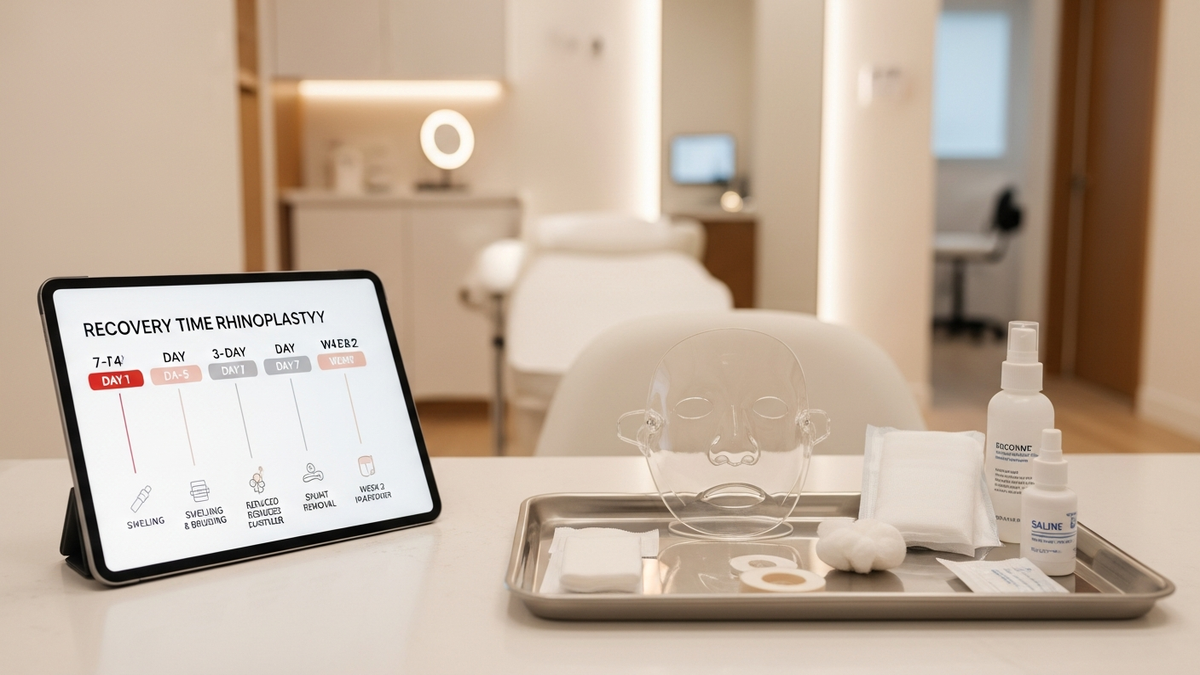
Post rhinoplasty recovery timeline (day by day to months)
Use this as a typical framework. Your surgeon’s instructions always take priority.
First 0–48 hours: settling and early swelling
- Expect: congestion, pressure sensations, mild to moderate discomfort, and noticeable swelling.
- Common experience: watery eyes, a “stuffy” feeling, and bruising around the nose and under-eye area.
- Do: keep your head elevated, take prescribed medications as directed, and avoid bending/straining.
Days 3–7: splint care, bruising peak, and routine adjustments
- Expect: swelling may peak, and bruising can become more apparent.
- Breathing: you may feel blocked due to internal swelling and temporary splinting.
- Do: follow your post-op cleaning plan, attend follow-up visits, and avoid contact with the nose.
- Don’t: blow your nose, pick at crusting, or use harsh sprays unless your surgeon approves.
Week 2: suture/splint removal and improved comfort
- Expect: many patients feel more “normal” by the second week, though swelling remains.
- Common milestone: splints and/or sutures are often removed around this period (timing varies).
- Appearance: you may see early shape definition, but the tip and sides can still look puffy.
Weeks 3–6: gradual refinement and fluctuating swelling
- Expect: swelling can go up and down—often worse later in the day or after activity.
- Activity: many surgeons allow increased walking and light routines, but heavy exercise is usually restricted.
- Skin sensitivity: the nose may feel tender or numb; this typically improves over time.
Months 2–3: visible improvements become more consistent
- Expect: bruising should be largely resolved, and the nose may look more proportionate.
- Tip healing: the tip often takes longer to soften and settle.
Months 6–12: final refinement (results continue to mature)
- Expect: the final aesthetic outcome emerges gradually as tissues fully heal.
- Structural settling: internal swelling and tissue remodeling can continue for up to a year or longer.
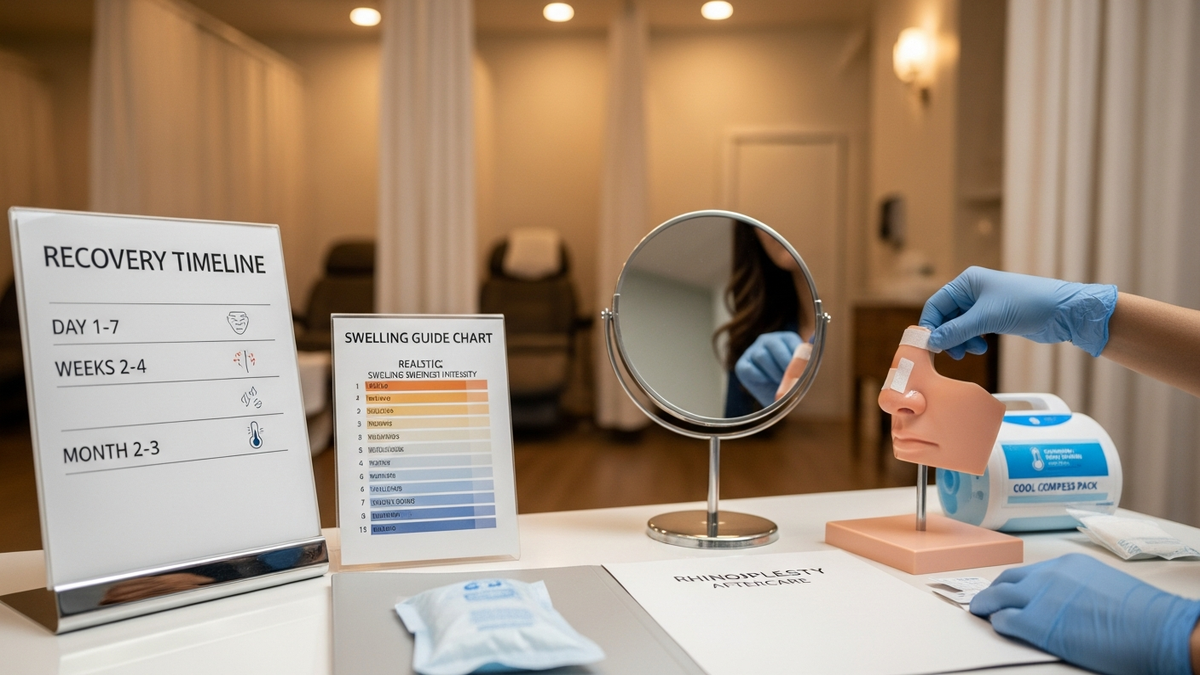
Swelling and bruising guide: what’s normal vs. what’s concerning
Swelling is the most common “recovery question” after rhinoplasty. A helpful mindset: swelling follows a pattern, not a straight line. It can be worse in the morning or after activity, then improve. Bruising may migrate and change color over time.
Normal swelling patterns
- Under-eye bruising that appears a few days after surgery and gradually fades.
- Tip and side swelling that can linger longer than the bridge.
- Day-to-day fluctuations that are still within expected healing.
What may signal a problem
Contact your surgeon promptly if you experience:
- Severe or worsening pain that doesn’t respond to prescribed medication.
- Heavy bleeding or persistent bleeding beyond what was instructed.
- Fever or chills.
- Increasing redness, warmth, or foul-smelling discharge.
- Sudden worsening of breathing or a rapidly changing appearance.
Breathing changes during post rhinoplasty recovery
It’s normal to feel congested after surgery. Even if your goal includes improved airflow, internal swelling and the healing process can temporarily narrow the airway. Many patients notice gradual improvement over weeks, with more meaningful changes as swelling resolves.
How to support healthy nasal healing
- Use saline exactly as directed (sprays, rinses, or gels—your surgeon will specify).
- Keep your head elevated to reduce congestion and swelling.
- Avoid nose blowing until cleared.
- Don’t smoke and limit secondhand smoke—healing can be significantly affected.
If you have chronic congestion or sinus issues, your surgeon may evaluate whether functional procedures are part of your plan. In certain cases, conditions like nasal obstruction can be addressed with approaches such as Septoplasty or turbinate reduction. In others, balloon sinuplasty or endoscopic sinus surgery may be considered for sinus-driven symptoms.
Do’s and don’ts for post rhinoplasty recovery
Do: set yourself up for an easier recovery
- Plan your first week: arrange help for meals, errands, and childcare if needed.
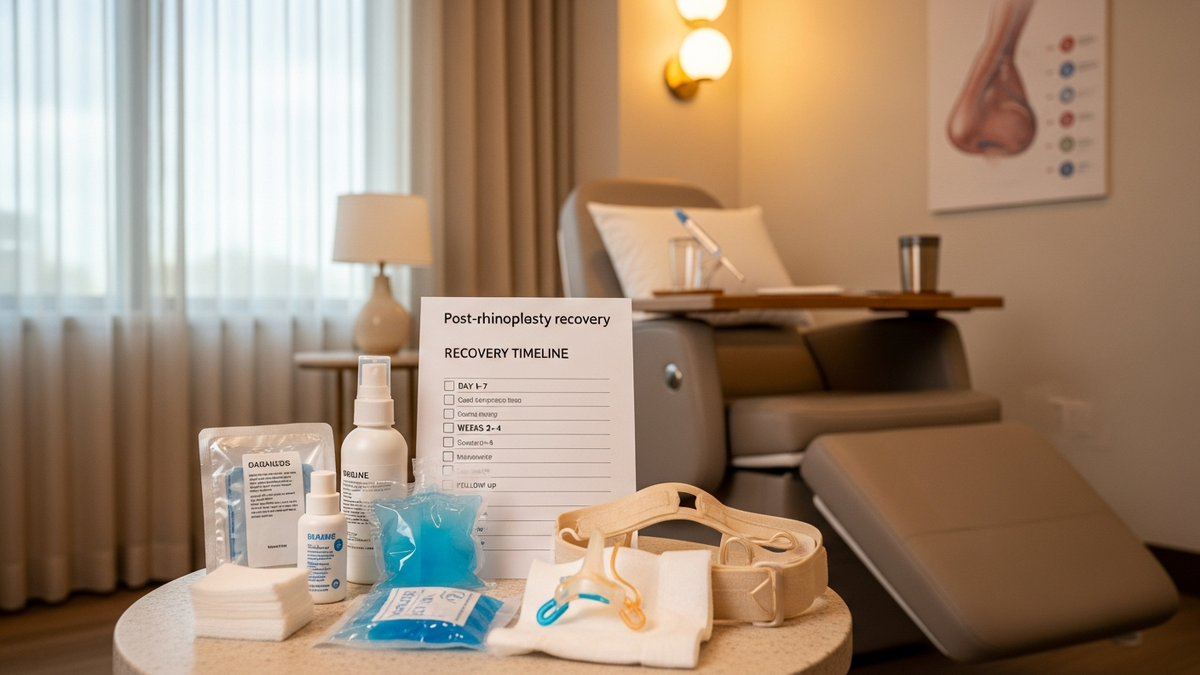
- Stock up: saline, prescribed ointments, clean gauze (if recommended), and comfortable clothing.
- Sleep smart: keep your head elevated; many patients sleep in a recliner or with extra pillows.
- Wear front-opening shirts to avoid pulling anything over your head.
- Take follow-ups seriously: these appointments help your surgeon monitor healing and adjust guidance.
Don’t: the habits that can set healing back
- Avoid strenuous exercise until cleared (especially anything that raises blood pressure significantly).
- Skip alcohol early on if your surgeon advises it—alcohol can affect swelling and medication safety.
- Avoid heat exposure (hot tubs, saunas) early in recovery unless approved.
- No smoking/vaping during the healing window.
- Don’t massage the nose unless your surgeon specifically instructs it.
Medication, pain control, and swelling management
Your surgeon will prescribe a plan tailored to your procedure and medical history. Always follow their instructions. If you’re unsure about a medication, ask your care team before making changes.
Common elements of post-op care
- Pain management: typically includes a combination of prescribed and/or recommended over-the-counter options, depending on your case.
- Antibiotics: sometimes used to reduce infection risk.
- Anti-inflammatory guidance: some surgeons advise specific timing for cold compresses or topical care.
- Saline care: essential for keeping the nasal passages comfortable and clear.
Tip: If you tend to bruise easily, ask whether your surgeon recommends any specific precautions for the first two weeks.
How to handle everyday life during post rhinoplasty recovery
Recovery isn’t only about the nose—it’s also about comfort, confidence, and staying on track with care.
Work and social plans
- Many patients return to light work within 5–14 days, depending on swelling and job demands.
- Public-facing fatigue is common: you may feel “fine” physically but look noticeably swollen.
- Schedule thoughtfully: consider timing big meetings or events after the first two weeks.
Travel considerations
If you’re flying, ask your surgeon when it’s safe. Ear pressure, dehydration, and activity can affect comfort. Many surgeons prefer avoiding long travel in the earliest recovery window.
Makeup, glasses, and hair care
- Makeup: ask when you can resume; avoid pressure on the nose.
- Glasses: you may need a special arrangement to avoid resting frames on the bridge/tip.
- Hair washing: keep movements gentle and avoid pulling on the face/head area.
Choosing a surgeon and setting realistic expectations
Quality outcomes depend on surgical planning, technique, and follow-up care. When researching providers, look for board certification, relevant experience, and a patient education approach.
Why facial plastic expertise matters
Rhinoplasty is a high-precision procedure involving skin, cartilage, bone, and internal airway structures. It also requires an aesthetic eye for facial harmony—something that benefits from specialized training in head and neck surgery.
In Beverly Hills, Dr. Hootan Zandifar, MD, FACS is a board certified Facial Plastic & Reconstructive Surgeon who focuses on cosmetic and reconstructive head and neck surgery. He is known for an honest, trustworthy, and compassionate approach, with a strong emphasis on patient education and natural-looking results. If you’re considering rhinoplasty, it can be valuable to discuss both aesthetic goals and functional concerns during consultation.
How to talk to your surgeon
Bring a list of questions, including:
- What swelling timeline should I expect based on my procedure?
- Will my surgery address breathing issues or only appearance?
- When can I return to exercise, sleep positions, and travel?
- What signs are “normal” for my case versus urgent?
- How will follow-up visits be scheduled?
Comparing rhinoplasty with functional nasal options
Not every breathing problem requires rhinoplasty. Some patients primarily struggle with structural airflow limitations such as septal deviation or turbinate enlargement. In those cases, functional nasal procedures may be less invasive and can help restore nasal breathing.
When Septoplasty may be relevant
If a crooked septum contributes to congestion, Septoplasty can straighten nasal cartilage and improve airflow. If you’re researching the role of structural nasal issues, it’s also helpful to understand how a Deviated Septum can affect breathing.
When nasal valve support may be considered
Nasal valve collapse can also cause breathing difficulty. Depending on severity, treatment may include non-surgical support or surgical options. Your surgeon can evaluate your anatomy and recommend an appropriate pathway.
Note: This article focuses on post rhinoplasty recovery. If you’re not sure which procedure you need, a consult can clarify whether rhinoplasty, functional nasal surgery, or a combination is best for your goals.
Helpful recovery habits that go beyond the basics
Nutrition and hydration
Healing requires resources. Aim for balanced nutrition and adequate hydration. If your surgeon gave dietary instructions (especially around medications), follow them closely.
Sleep and stress management
Quality sleep supports recovery. Stress can worsen perceived discomfort and make it harder to follow care routines. Consider gentle, low-stimulation activities during the first week.
Gentle movement (when allowed)
Once cleared, light walking helps circulation. Avoid anything that spikes blood pressure or causes you to strain.
Frequently asked questions about post rhinoplasty recovery
1) How long does post rhinoplasty recovery take?
Most patients feel meaningfully better within 1–2 weeks, but healing continues for months. Visible swelling often improves over the first month, while final refinement can take 6–12 months (sometimes longer), depending on technique and individual factors.
2) When will my swelling go down?
Swelling typically peaks early and then gradually improves. Many patients notice fluctuations—sometimes worse later in the day or after activity—during weeks 3–6. By months 2–3, changes often become more consistent.
3) Is it normal to feel congested after rhinoplasty?
Yes. Congestion is common due to internal swelling and healing. Breathing frequently improves gradually as tissues settle. If congestion is severe or worsening, contact your surgeon.
4) Can I sleep on my side during post rhinoplasty recovery?
Many surgeons recommend sleeping with your head elevated and avoiding pressure on the nose. Side-sleeping rules vary by case; follow your surgeon’s specific guidance.
5) What are red flags I should not ignore?
Seek prompt medical advice for heavy bleeding, fever, worsening pain, increasing redness/warmth, foul discharge, or sudden worsening breathing or appearance.
CTA: Ready to plan your rhinoplasty recovery with confidence?
If you’re considering rhinoplasty—or you’re preparing for post rhinoplasty recovery and want guidance tailored to your goals—schedule a consultation with a qualified facial plastic and reconstructive surgeon. A personalized plan can help align expectations, support safe healing, and address both aesthetic and functional needs.
To explore related facial procedures that people sometimes consider alongside rhinoplasty, you may also find helpful information on Facelift or Blepharoplasty. (Recovery pathways differ by procedure, so always confirm timelines with your surgeon.)
FlowGeniQ Digest is here to support your research journey—so you can ask better questions and make well-informed decisions.
Professional Disclaimer
This content is provided for general educational purposes only by FlowGeniQ Digest. It is not a substitute for professional advice, diagnosis, or treatment. Readers are advised to consult qualified professionals for personalized recommendations.
Medical Information Disclaimer
This content is provided for general educational purposes only by FlowGeniQ Digest. It is not a substitute for professional advice, diagnosis, or treatment. Readers are advised to consult qualified professionals for personalized recommendations.