Recovery from upper blepharoplasty is often one of the biggest questions patients ask before eyelid surgery. And it makes sense: the upper eyelids are delicate, highly visible, and closely tied to how bright and refreshed your eyes look. The good news is that most healing follows a predictable pattern—if you know what’s normal, what’s not, and how to support your recovery day by day.
In this guide, FlowGeniQ Digest brings together practical, evidence-informed expectations with patient-centered advice—so you can plan your downtime, reduce discomfort, and understand the milestones of eyelid healing. We’ll also cover when to call your surgeon, how to manage swelling and bruising, and how to protect your final aesthetic outcome.
What “upper blepharoplasty” recovery really involves
Upper blepharoplasty (often called Blepharoplasty) is designed to remove or redistribute excess skin and sometimes fine fat from the upper eyelids. During recovery, your eyelids go through a typical surgical healing process: inflammation, fluid shifts, tissue remodeling, and gradual settling of the incision line.
Why swelling and bruising happen
After surgery, your body increases blood flow and immune activity to repair tissues. That can cause:
- Swelling around the eyelids and sometimes the brow area
- Bruising that may migrate downward over the first several days
- Tightness or a “pulling” sensation along the incision
- Temporary dryness or mild irritation
These effects are usually most noticeable early on and then steadily improve.
What results look like during recovery
It’s common for patients to notice that their eyes look more swollen at first, or that the eyelid crease looks different while healing is still in progress. Final definition typically becomes clearer as swelling resolves and tissues soften. The goal of early recovery isn’t “perfect appearance overnight”—it’s safe, well-managed healing.
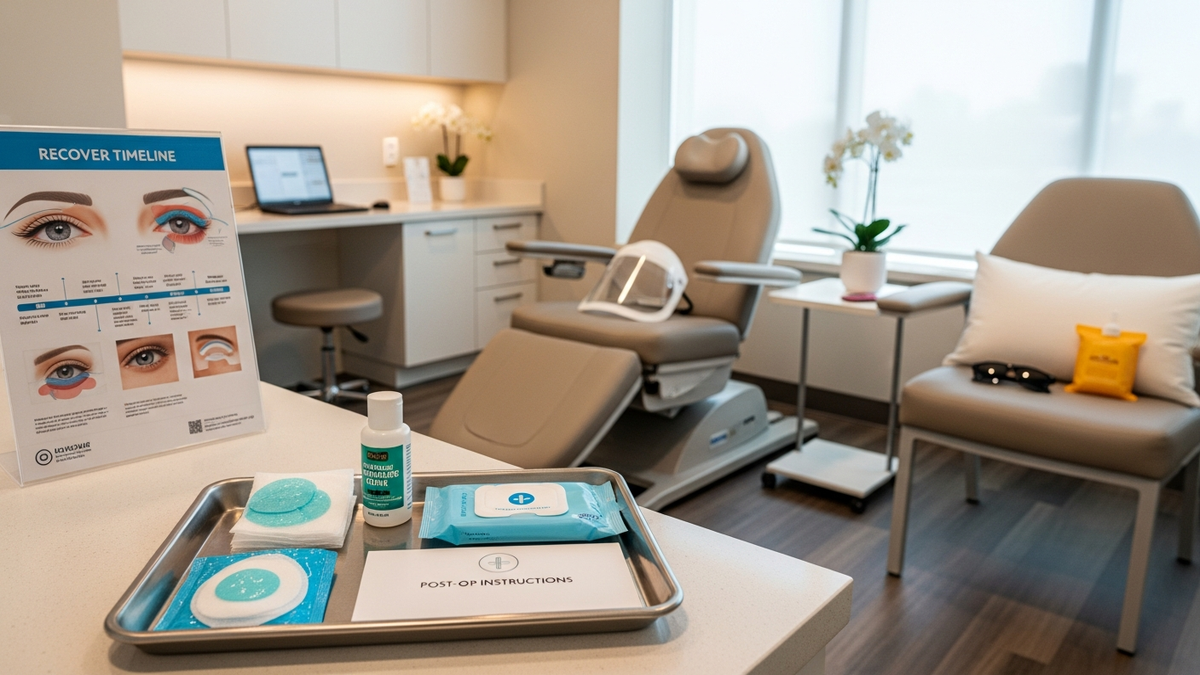
Recovery from upper blepharoplasty timeline: day-by-day expectations
Timelines vary depending on incision technique, whether additional fat was addressed, your skin quality, and how your body responds to surgery. Still, most patients follow a similar arc.
First 24–48 hours: protection, rest, and controlled swelling
- Expect: swelling, mild to moderate discomfort, watery eyes, and some bruising.
- What helps: keeping your head elevated (often recommended at all times except brief bathroom breaks), using cold compresses as instructed, and resting without straining.
- Typical activity: mostly quiet indoor rest.
Tip: Plan your first two days like a recovery “buffer.” Arrange pillows, hydration, easy-to-reach snacks, and entertainment so you’re not tempted to overdo it.
Days 3–7: bruising may peak, then begins to fade
- Expect: swelling still present; bruising can look darker and may move toward the cheeks.
- Comfort: many patients report improving soreness, though eyelid tightness can persist.
- Appearance: the eyelid crease may look uneven early—this is often temporary.
Practical note: If you’re working, you may be able to do light desk tasks after a few days, but many patients prefer a full week for the most comfortable social transition.
Week 2: incision care, reduced swelling, and “settling”
- Expect: swelling continues to decrease; bruising usually fades significantly.
- Incisions: your surgeon will advise when and how to clean incisions and when to stop ointments or adjust drops.
- Vision/comfort: dryness may still occur—follow the lubrication plan exactly.
Weeks 3–4: more natural eyelid definition
- Expect: improved eyelid contour and a more “awake” look.
- Residual effects: mild puffiness or subtle asymmetry can remain while tissues remodel.
- Activity: many patients return to normal daily routines; strenuous exercise is typically still limited depending on your surgeon’s guidance.
Months 2–3: final refinement
- Expect: the incision line softens and blends more naturally.
- Fine tuning: your eyes look increasingly consistent with your long-term result.
How to support healing: practical recovery tips
While your surgeon’s technique matters, your day-to-day choices also influence comfort and outcomes. Here are actionable steps patients commonly find helpful.
1) Keep your head elevated—especially early
Elevation reduces fluid pooling and can help swelling settle more quickly. Follow your surgeon’s specific instructions regarding how long to sleep elevated and whether you should use extra pillows.
2) Use cold compresses correctly
Cold can reduce swelling and soothe discomfort. However, don’t apply ice directly to the skin. Use a barrier and stick to the schedule provided by your care team.
3) Take medications exactly as prescribed
Postoperative plans often include antibiotic ointment or drops and pain control. If you’re also using allergy medications, lubricating drops, or other eye-related treatments, confirm what to continue and what to pause.
4) Protect your eyes from dryness and irritation
Upper blepharoplasty can temporarily change tear film dynamics and blink patterns. To support recovery:
- Use lubricating drops/ointment as directed
- Avoid rubbing your eyes
- Consider wearing sunglasses outdoors to reduce wind and glare irritation
5) Follow incision care instructions—no shortcuts
Incisions require gentle care. Avoid harsh cleansers, exfoliants, and makeup until cleared. If you notice crusting, soften it only as directed.
6) Watch your activity level (and your heart rate)
Strenuous activity can increase swelling and bleeding risk. During early recovery, avoid heavy lifting, intense workouts, and anything that spikes blood pressure. Ask your surgeon when you can resume:
- Exercise and cardio
- Strength training
- Swimming or hot tubs
- Contact sports
7) Plan for bruising: clothing, hair, and makeup
Bruising may be visible for several days. Consider:
- Soft-front clothing that doesn’t require pulling over your head
- Careful hair washing (avoid splashing into the eyes)
- Waiting to use makeup until your surgeon gives clearance
Common recovery milestones (and what they mean)
Understanding what each milestone suggests can reduce anxiety. Here are frequent experiences patients report.
“My eyelids feel tight—why?”
Tightness is a normal response to healing and tissue contraction. It often improves as swelling decreases and the incision matures.
“My bruising moved downward—should I worry?”
Bruising migration is common due to gravity and fluid movement. It typically fades over time. If bruising is rapidly worsening, extremely painful, or accompanied by visual changes, contact your surgeon promptly.
“One eye looks different than the other.”
Early asymmetry can occur while swelling resolves at different rates. Your surgeon will monitor healing and can explain what to expect at each follow-up visit.
Red flags during recovery: when to call your surgeon
Most recoveries are straightforward, but you should never ignore warning signs. Contact your surgeon urgently if you experience:
- Sudden or worsening vision changes
- Severe pain that is not controlled with prescribed medication
- Increasing redness, heat, or swelling at the incision
- Fever or chills
- Significant bleeding that soaks dressings
If you ever feel something is “off,” it’s appropriate to reach out. Your care team would rather evaluate you early than late.
Recovery planning: how to schedule life around healing
Good recovery isn’t just medical—it’s logistical. Use these suggestions to plan your return to work and social activities.
Work and social events
If your job is public-facing, consider scheduling time off for at least the first week. If you can work remotely and your role is behind the scenes, you may be able to resume light tasks sooner—depending on swelling and comfort.
Driving and screen time
Driving depends on comfort, vision clarity, and whether you’re using any sedating medications. Screen time can increase dryness; follow lubricating recommendations and take breaks as needed.
Travel and flights
Air travel can increase discomfort and swelling. If you must travel soon after surgery, discuss it with your surgeon ahead of time so they can advise on timing, movement, and eye care.
Factors that can change your recovery from upper blepharoplasty
Not everyone heals at the same pace. Your recovery may vary based on:
- Extent of correction (skin only vs. skin plus fat reshaping)
- Skin type and elasticity
- Baseline dryness or eye conditions
- Smoking history and overall health
- Medication/supplement use (especially those affecting bleeding risk)
- How closely you follow postoperative instructions
During consultations, a qualified surgeon will review your medical history and help you understand what’s likely in your case.
Upper blepharoplasty vs. other facial procedures: how recovery differs
Some patients consider additional facial rejuvenation options. It’s useful to understand that recovery timelines may differ between procedures.
Upper blepharoplasty and lower blepharoplasty
Lower eyelid surgery can involve additional swelling in the midface and under-eye region. If you’re considering both, ask your surgeon for a combined recovery plan.
Upper blepharoplasty and a facelift
If you’re also addressing sagging in the midface or neck, you may be considering a Facelift. Combining procedures can be efficient but may change recovery intensity and scheduling. A surgeon can help weigh benefits and risks based on your anatomy and goals.
Upper blepharoplasty and rhinoplasty
Some patients pursue nose reshaping for both function and aesthetics. If you’re also exploring Rhinoplasty, coordinate recovery planning carefully because postoperative restrictions may overlap differently across surgical sites.
Note: The best plan is individualized—your surgeon can help decide whether staged procedures or a combined approach better supports safety and results.
What to ask your surgeon before surgery (recovery-focused checklist)
Preparing questions can lead to a smoother recovery experience. Consider asking:
- What is my expected timeline for swelling and bruising?
- When can I return to work, exercise, and driving?
- What exact eye drops/ointment should I use, and for how long?
- How should I care for incisions and when can I resume skincare/makeup?
- What are the most common complications—and what symptoms should prompt a call?
- Will I have a follow-up visit schedule, and what will you check at each?
How a facial plastic and reconstructive surgeon supports natural-looking outcomes
Recovery is not only about healing—it’s also about achieving the aesthetic goals that motivated surgery in the first place. Skilled surgeons plan incision placement, eyelid contour, and tissue handling to support natural, balanced results as swelling resolves.
Dr. Hootan Zandifar—owner and lead facial plastic and reconstructive surgeon—focuses on surgeries of the head and neck with a commitment to patient education and natural-looking outcomes. As a double board-certified and fellowship-trained specialist, he emphasizes honest, trustworthy guidance so patients understand what to expect from consultation through recovery.
Frequently asked questions about recovery from upper blepharoplasty
How long does swelling last after upper blepharoplasty?
Swelling typically peaks in the first few days and continues to improve over 1–2 weeks. Many patients notice their appearance becoming significantly more natural by weeks 3–4, with continued refinement over the following months.
When can I return to normal activities?
Light activities and desk work may be possible within about a week for many patients, but strenuous exercise and heavy lifting are usually restricted longer. Your surgeon will provide a personalized timeline based on your specific procedure and healing.
Will I have bruising?
Bruising is common, though its intensity varies. It often looks worse around days 3–7 and then fades. Following medication and activity instructions can help reduce complications.
Is it normal for my eyelids to look uneven at first?
Yes. Early unevenness can occur as swelling resolves at different rates. Your surgeon will monitor healing and help set expectations for when symmetry should improve.
What symptoms are not normal after upper blepharoplasty?
Seek urgent medical advice if you experience severe pain not controlled by your plan, sudden vision changes, fever, rapidly worsening redness or swelling, or significant bleeding. When in doubt, contact your surgeon.
CTA: Get a personalized recovery plan
If you’re planning surgery or you’re already scheduled, the best next step is a consultation where your surgeon can review your anatomy, eye health, and goals—and give you a recovery plan tailored to your timeline. FlowGeniQ Digest encourages you to discuss your expectations openly and ask recovery-focused questions so you can heal with confidence.
Ready to take the next step? Schedule a consultation with Dr. Hootan Zandifar to talk through your upper blepharoplasty goals, postoperative schedule, and what a safe return to work and activities may look like for you.
Professional Disclaimer
This content is provided for general educational purposes only by FlowGeniQ Digest. It is not a substitute for professional advice, diagnosis, or treatment. Readers are advised to consult qualified professionals for personalized recommendations.
Medical Information Disclaimer
This content is provided for general educational purposes only by FlowGeniQ Digest. It is not a substitute for professional advice, diagnosis, or treatment. Readers are advised to consult qualified professionals for personalized recommendations.