In the world of modern facial rejuvenation, the platelet rich plasma facelift has become one of the most searched terms for people who want a natural-looking refresh—often with less downtime than traditional surgery. At FlowGeniQ Digest, we regularly track patient questions and emerging trends in aesthetic medicine, and PRP-based treatments are consistently at the top of the list.
This article explains what a platelet rich plasma facelift is (and what it isn’t), how PRP is prepared and used, expected benefits, realistic outcomes, potential risks, and how to choose a qualified provider—especially if you’re in or near Los Angeles. We’ll also compare PRP to other facial procedures so you can better understand where PRP fits in a comprehensive anti-aging plan.
What Is a Platelet Rich Plasma Facelift?
A “platelet rich plasma facelift” is a regenerative aesthetic approach that uses platelet rich plasma (PRP)—a concentration of platelets derived from your own blood. Platelets contain growth factors that may support skin healing, collagen formation, and tissue repair.
Despite the phrase “facelift,” PRP is typically not a surgical face lift. Instead, it’s generally delivered through microneedling, topical/serum application, or targeted injections in the face and sometimes the neck. The goal is usually to improve skin quality—such as texture, tone, fine lines, and overall “youthful glow”—rather than to surgically lift sagging tissue.
How PRP Works in Facial Rejuvenation
PRP is created by drawing blood, then processing it to concentrate platelets. When PRP is applied or injected, growth factors may help:
- Support collagen remodeling (improving firmness over time)
- Enhance wound healing (useful after microneedling or resurfacing)
- Improve skin hydration and elasticity
- Reduce the appearance of fine lines and early aging changes
Importantly, PRP is often described as biologic rather than “instant.” Many patients see gradual improvement over weeks to months as skin repair processes progress.
Platelet Rich Plasma Facelift vs. Traditional Facelift Surgery
Because the term “facelift” can be confusing, it helps to compare PRP with surgical options. A traditional Facelift is designed to lift and tighten facial skin and deeper tissues. PRP, by contrast, focuses more on skin rejuvenation and subtle texture changes.
When PRP May Be a Good Fit
A platelet rich plasma facelift approach may be considered if you have:
- Early to moderate signs of aging (fine lines, dullness, mild laxity)
- Skin texture concerns (uneven tone, roughness)
- Desire for a lower-downtime option
- A preference for natural-looking enhancement rather than dramatic change
When Surgery Might Be Considered Instead
If you have more significant sagging or want structural repositioning, you may need a different strategy. For comprehensive lift and tightening discussions, many patients explore a Facelift consultation to evaluate facial anatomy and goals.
In some cases, patients combine approaches—surgical lifting for structure, plus PRP-based treatments for skin quality.
What Happens During a PRP Session?
Exact protocols vary by provider and technique, but most platelet rich plasma facelift experiences follow a similar workflow.
1) Consultation and Candidacy Review
During your first visit, you should expect a thorough review of:
- Your skin goals (fine lines, texture, tone, mild laxity)
- Medical history and medications (especially blood thinners or clotting-related conditions)
- Prior aesthetic treatments and how your skin responded
- Realistic outcome expectations
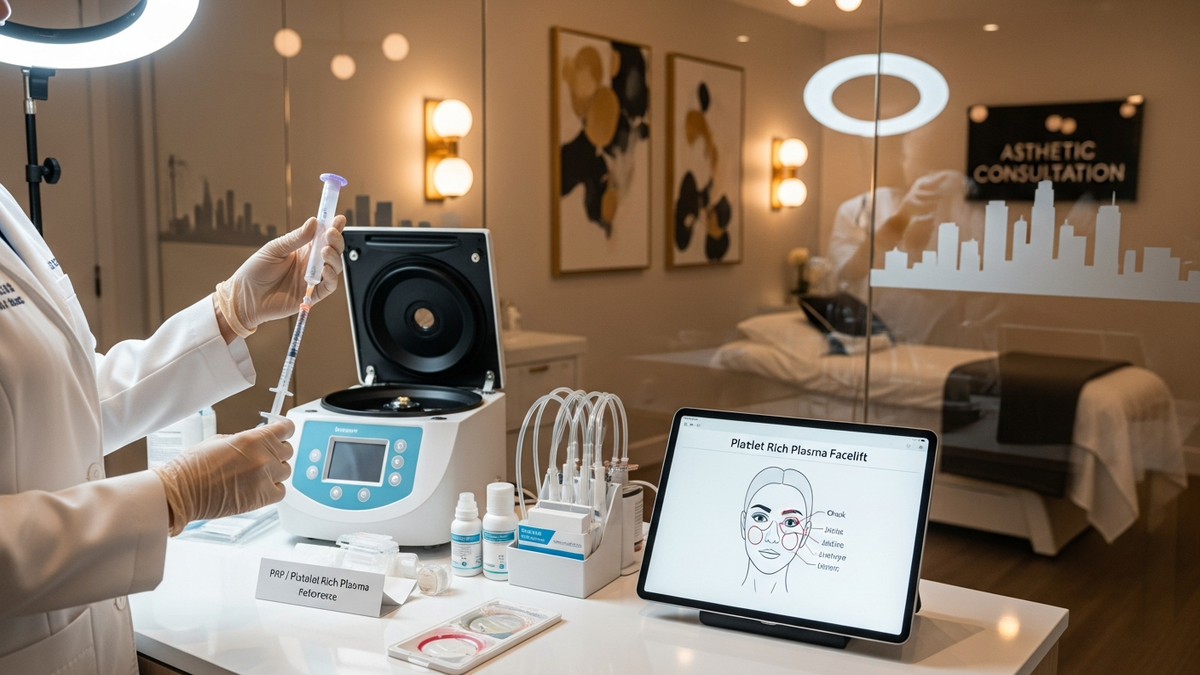
2) Blood Draw and PRP Preparation
PRP is created from your own blood. The care team draws a sample, then processes it to concentrate platelets. Providers may use different centrifugation systems and preparation methods.
Quality matters. Ask how PRP is prepared, how contamination risk is minimized, and what parameters are used to ensure consistent concentration.
3) Delivery Method: Injection, Microneedling, or Both
Depending on your plan, PRP may be delivered by:
- Microneedling with PRP to support controlled micro-injury and healing
- Injections into specific facial zones (commonly for fine line softness and skin quality)
- Topical application in select protocols
Some patients pursue a combination “series” because PRP often aims for cumulative improvement.
4) Aftercare and Recovery
After PRP, your skin may be red or sensitive. Your provider will usually recommend a tailored aftercare plan. Common short-term guidance may include:
- Avoiding heavy exercise for a short window (varies by protocol)
- Gentle skincare and sun protection
- Avoiding certain active ingredients temporarily (retinoids, strong acids)
- Monitoring for unusual pain, swelling, or persistent discoloration
Most people can return to daily activities relatively quickly, but the exact downtime depends on whether microneedling or injections were performed.
Expected Benefits of a Platelet Rich Plasma Facelift
A platelet rich plasma facelift is typically chosen for skin refinement. While results vary, many patients report improvements such as:
- More even tone and improved “radiance”
- Reduced appearance of fine lines
- Smoother texture (especially after microneedling)
- Better hydration and softness
- Gradual improvement over several weeks to months
Think of PRP as a skin-quality upgrade rather than a replacement for lifting or structural reshaping.
How Long Do Results Last?
Many patients need a series (often multiple sessions) to achieve optimal results. Maintenance schedules vary, but PRP is generally considered an ongoing wellness-style treatment rather than a one-time fix.
Your provider should discuss:
- How many sessions they recommend for your skin goals
- Expected timeline for noticing changes
- Maintenance intervals to preserve results
Platelet Rich Plasma Facelift Risks and Side Effects
Because PRP uses your own blood, many patients perceive it as low-risk. However, no medical procedure is risk-free. Potential side effects may include:
- Temporary redness, swelling, or tenderness
- Bruising (more likely with injections)
- Skin irritation (especially after microneedling)
- Infection risk (rare, but possible with any invasive technique)
- Uneven pigmentation or persistent discoloration (uncommon, but risk increases with sun exposure or improper aftercare)
Red flags to call your provider about immediately include severe pain, fever, spreading redness, pus, or symptoms that worsen instead of improve.
Who Should Be Cautious or Avoid PRP?
Your provider may advise against PRP or require special precautions if you have:
- Active skin infections or certain inflammatory skin conditions
- Known blood disorders or uncontrolled clotting issues
- Recent use of medications that significantly affect healing (your clinician will advise)
- Immunologic conditions that require tailored management
- Pregnancy or breastfeeding (often handled case-by-case)
Always disclose your full medical history and medication list.
Choosing a Provider for a Platelet Rich Plasma Facelift
The quality of PRP preparation, sterile technique, and individualized injection/microneedling strategy can strongly influence outcomes. When evaluating providers, consider asking:
- What PRP method is used? (Preparation system, concentration approach, how consistency is ensured.)
- What delivery technique is recommended for my goals? Injections vs microneedling vs a combination.
- How many sessions do you recommend? and what is the maintenance plan?
- What results are typical for someone with my skin type and concerns? Request before-and-after examples (with appropriate context).
- How do you manage side effects? and what aftercare protocol will you provide?
- What training and credentials do you have? Particularly for injection-based treatments.
In Los Angeles, many patients seek facial plastic and reconstructive expertise to ensure a cohesive plan—especially if they’re also considering other head-and-neck procedures.
How PRP Fits into a Broader Anti-Aging Plan
Most people don’t rely on a single treatment forever. A successful anti-aging plan often blends skin rejuvenation with structural and volume strategies.
PRP and Surgical Options: A Complement, Not a Competition
If you’re exploring more comprehensive rejuvenation, PRP may be considered alongside other facial procedures. For example:
- Facelift for lifting and tightening structure: PRP may help skin quality.
- Blepharoplasty for eyelid concerns: PRP may be used as part of a broader resurfacing or recovery strategy in select cases. Learn more about Blepharoplasty.
- Brow lift strategies for forehead/eyebrow positioning (provider-dependent).
For some patients, addressing nasal breathing or facial balance can also be part of the bigger picture. If you’re considering nasal procedures, it’s worth discussing relevant options such as Septoplasty for functional concerns, including a Deviated Septum.
And if your aesthetic goals include nose refinement, you may also want to review Rhinoplasty options.
What to Expect Before and After Your Platelet Rich Plasma Facelift
Before Your Appointment: Practical Preparation
To improve comfort and outcomes, consider these practical steps:
- Follow medication guidance from your provider (especially blood thinners/anti-inflammatories).
- Review skincare: ask whether to pause retinoids, exfoliants, or other actives.
- Plan for sun protection: avoid intense sun exposure before treatment.
- Arrange downtime if you’re doing microneedling or injections.
After Your Appointment: Recovery Checklist
Aftercare is where results can be protected. While your clinician will provide specific instructions, a general checklist may include:
- Use gentle cleansers and moisturizers
- Apply sunscreen as directed (often after the initial healing window)
- Avoid picking or rubbing treated areas
- Skip strenuous workouts for the recommended period
- Attend any scheduled follow-ups
If you’re comparing experiences, remember that individual healing varies by technique, skin type, and how your body responds to platelet-derived growth factors.
Platelet Rich Plasma Facelift and Skin Types: Tailoring Matters
Skin tone and sensitivity influence how your treatment plan should be designed. Providers should tailor:
- Energy level and depth for microneedling (if used)
- Injection strategy and distribution
- Aftercare to reduce risk of hyperpigmentation
Ask how they adjust protocols for your skin type to balance efficacy with safety.
FAQ: Platelet Rich Plasma Facelift
1) Is a platelet rich plasma facelift the same as a surgical facelift?
No. A PRP facelift is typically a regenerative, non-surgical approach focused on improving skin quality. A surgical facelift is designed to lift and tighten facial tissues. Some patients choose both strategies for different goals.
2) How many PRP sessions are usually needed?
Many providers recommend a series rather than a single session. The exact number depends on your starting point, the delivery method (injection vs microneedling), and your desired outcome.
3) What is the downtime for PRP facial rejuvenation?
Downtime varies. Injection-based PRP may involve mild bruising/swelling, while microneedling can cause more visible redness for a short period. Your provider can give a clearer estimate based on your plan.
4) Are there risks of infection or allergic reaction?
Since PRP uses your own blood, allergic reactions are uncommon. However, infection risk can exist with any invasive procedure. Choosing a provider who uses rigorous sterile technique is essential.
5) When will I see results?
Many patients notice improvements gradually over weeks, with continued skin refinement over time. Your clinician should explain a realistic timeline based on your treatment plan.
CTA: Ready to Discuss a Platelet Rich Plasma Facelift?
If you’re considering a platelet rich plasma facelift, the best next step is a personalized consultation to match your goals with the right approach—whether that’s PRP alone for skin quality, or a combined plan that may include other facial rejuvenation options.
At FlowGeniQ Digest, we’re committed to helping you ask better questions and make informed decisions. When you meet with your provider, come prepared with your goals, medical history, and a list of questions about PRP preparation, delivery method, session count, and aftercare.
Disclaimer: If you’re exploring multiple facial treatments, consider discussing how they fit together so your plan is safe, cohesive, and aligned with your anatomy.
Professional Disclaimer
This content is provided for general educational purposes only by FlowGeniQ Digest. It is not a substitute for professional advice, diagnosis, or treatment. Readers are advised to consult qualified professionals for personalized recommendations.
Medical Information Disclaimer
This content is provided for general educational purposes only by FlowGeniQ Digest. It is not a substitute for professional advice, diagnosis, or treatment. Readers are advised to consult qualified professionals for personalized recommendations.