Plastic surgery for facelift is one of the most searched topics in cosmetic facial rejuvenation—because aging often shows up first in the areas a facelift can address: lower face sagging, jowls, deep folds, and skin laxity along the jawline and neck. If you’re exploring options, you’re likely balancing two priorities at once: achieving visible improvement while still looking like yourself.
In this FlowGeniQ Digest guide, we’ll break down what a facelift can—and can’t—do, how modern facial plastic approaches focus on natural-looking outcomes, what the consultation process typically involves, and how to plan for recovery. We’ll also share practical recommendations to help you make confident, well-informed decisions.
What “Plastic Surgery for Facelift” Usually Means
When people search for plastic surgery for facelift, they’re commonly referring to surgical procedures designed to lift and tighten facial tissues. In practice, “facelift” is an umbrella term. Surgeons may recommend different techniques depending on your anatomy, skin quality, degree of laxity, and goals.
Most facelift strategies aim to do three things:
- Lift deeper facial tissues to restore support
- Tighten areas that have lost elasticity
- Redraping the skin so it sits more naturally
Many patients also consider complementary procedures—such as eyelid rejuvenation, brow lift, or a neck lift—because aging is rarely confined to one zone. For example, if you have upper or lower eyelid concerns, a Blepharoplasty may enhance the overall harmony of your results.
Facelift vs. Other Facial Rejuvenation Options
A key part of choosing plastic surgery for facelift is understanding where surgery fits compared to non-surgical treatments. While injectables and skin resurfacing can improve texture and fine lines, they may not address significant sagging or structural aging.
Facelift: Best for structural aging and sagging
Facelift surgery is most effective when the main issue is decreased support in the mid-to-lower face and neck. Patients often seek facelift surgery for:
- Jowls and lower-face sagging
- Deepening nasolabial folds due to tissue descent
- Loose skin along the jawline
- Neck laxity and “banding” appearance
Neck lift: When the neck is the priority
Some people have minimal lower-face laxity but notice early neck aging. In those cases, a neck lift (often paired with a facelift, depending on your exam) can be more targeted.
For localized fat rather than laxity, some patients may consider submental liposuction as part of a comprehensive plan. The goal is to refine the jaw/neck contour while maintaining natural proportions.
Eyelid and brow procedures: Restoring balance
Facelift results can be even more striking when paired with procedures that address the upper face. Common examples include:
- Brow lift for forehead heaviness or frown-line changes
- Blepharoplasty for excess upper eyelid skin or under-eye puffiness
Choosing the right combination is highly individualized—your surgeon should explain how each procedure supports your overall facial balance.
Who Is a Good Candidate for Plastic Surgery for Facelift?
Not everyone needs a facelift, and not everyone is an ideal candidate for the same type of facelift. A thorough evaluation helps determine whether surgery is appropriate and which technique best matches your anatomy.
Common candidacy factors
You may be a strong candidate if you have:
- Visible sagging in the lower face and/or neck
- Skin laxity that is progressing despite skincare and non-surgical treatments
- Realistic expectations about natural improvement
- Good overall health and stable medical conditions
Factors that may affect timing or technique
Your surgeon may adjust the plan if you have:
- Significant weight fluctuations
- Smoking history (which can affect healing)
- Bleeding or clotting disorders (if present)
- Skin conditions that require preoperative management
- Previous facial procedures that altered tissue planes
In practice, many surgeons—including facial plastic specialists focused on head and neck surgery—prioritize patient education. That means you should understand what’s driving your aging (skin quality, tissue descent, fat distribution, or muscle movement) before you decide on plastic surgery for facelift.
How a Board-Certified Facial Plastic Surgeon Plans a Facelift
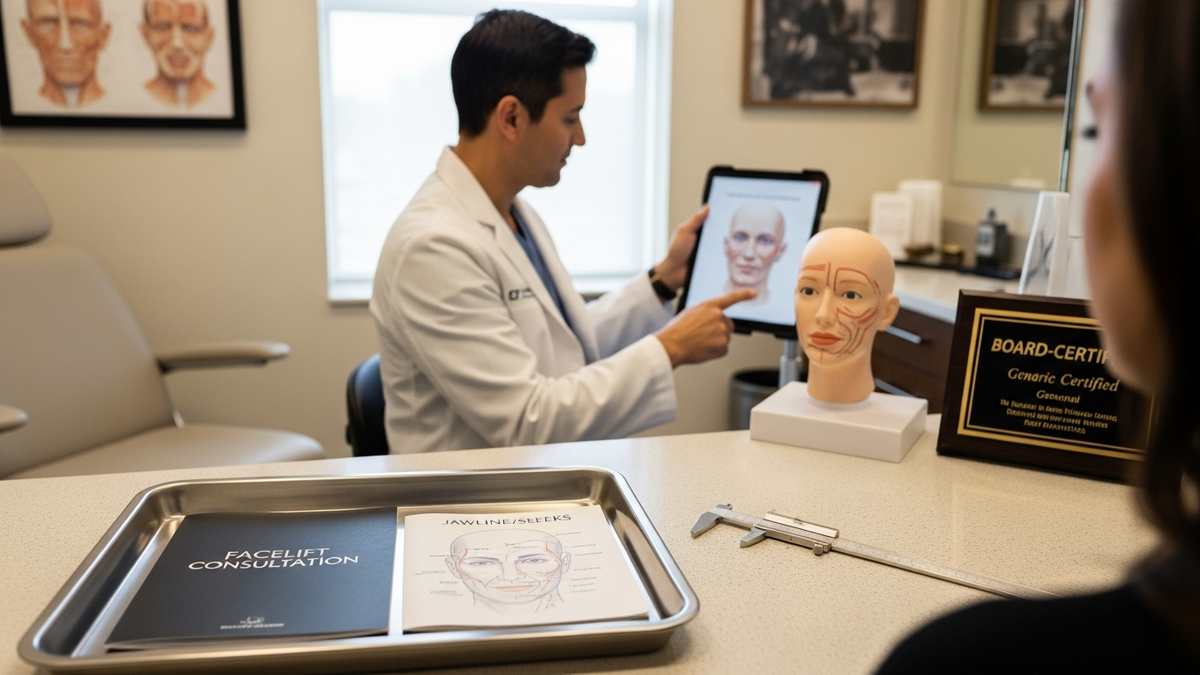
One of the most important steps is a consultation that goes beyond a quick exam. A high-quality facelift plan typically includes careful assessment of facial aging patterns and a discussion of your goals.
1) Detailed facial analysis
Your surgeon should evaluate:
- Skin thickness and elasticity
- Tissue position and support
- Jawline definition and neck contour
- Symmetry and proportions
- Previous scars or surgical history
2) Goal-setting and expectation alignment
Natural-looking facelift outcomes often come from aligning technique with your desired look. During your appointment, you should be able to answer:
- Do I want a subtle refresh or a more noticeable lift?
- Which area bothers me most—jawline, jowls, neck, or combination?
- What does “looking like me” mean to my personal aesthetic?
3) A personalized surgical strategy
Modern facial plastic surgery emphasizes preserving natural contours and minimizing the “over-tightened” look. Surgeons may tailor incision placement, tissue handling, and skin redraping to your anatomy.
For patients in Los Angeles and Beverly Hills, many choose experienced facial plastic and reconstructive surgeons because head/neck-focused expertise can support more precise aesthetic outcomes. Dr. Hootan Zandifar, MD, FACS—board certified in facial plastic surgery and fellowship trained—focuses solely on head and neck cosmetic and reconstructive procedures, supporting a specialized approach to natural rejuvenation.
Facelift Techniques: What You Might Hear During Consultation
Different facelift techniques exist, and the “right” one depends on your aging pattern. While specific methods vary, the consultation should clarify the rationale behind the recommended plan.
Skin tightening vs. tissue repositioning
Some older approaches emphasized skin tightening. Contemporary strategies often emphasize repositioning support structures for a more natural lift.
Neck components and jawline refinement
Many facelift plans include attention to the neck and jawline. Even when the primary concern is lower face sagging, the neck can influence how youthful your overall result looks.
Combining procedures for harmony
Depending on your needs, surgeons may recommend pairing a facelift with other enhancements. For instance:
- Blepharoplasty to brighten the eyes
- Brow lift to open the forehead and reduce heaviness
- Submental liposuction for contour refinement
If your primary concern includes nasal breathing issues alongside facial aging concerns, it’s worth noting that head and neck specialists may also offer functional nasal procedures for conditions like a Deviated Septum or chronic congestion. That said, facelift planning is separate and should be guided by your aesthetic and medical priorities.
What to Expect Before Plastic Surgery for Facelift
Preparation helps reduce uncertainty and supports a smoother recovery. Your surgeon will provide individualized instructions, but these are common preoperative steps.
Pre-surgical evaluation
- Medical history review and medication reconciliation
- Physical exam and facial measurements
- Discussion of anesthesia options
- Photography for documentation and planning
Medication and lifestyle guidance
Your surgeon may advise you to:
- Avoid smoking or nicotine products for healing support
- Pause certain medications and supplements that can increase bleeding risk (only as instructed)
- Plan support at home for the first days after surgery
Questions to ask your surgeon
Bring a list to your appointment. Consider asking:
- What facelift approach do you recommend for my facial aging pattern, and why?
- What results are realistic for my age, skin quality, and anatomy?
- How do you minimize visible scarring and maintain natural contours?
- What does recovery look like week by week?
- What are common risks in your practice, and how are they managed?
Plastic Surgery for Facelift Recovery: Timeline and Practical Tips
Recovery varies by technique and individual factors, but most facelift patients experience predictable stages. Planning ahead can make the process easier.
First 48 hours
- Swelling and bruising are common
- You may have dressings or drains (if used)
- Pain is typically manageable with prescribed medication
- Sleep with your head elevated as instructed
Days 3 to 14
- Swelling gradually improves
- Bruising may shift colors as it resolves
- Sutures or dressings may be adjusted/removed (per surgeon guidance)
- Light activity may be encouraged; avoid strenuous exertion
Weeks 3 to 6
- Tissues continue settling into their lifted position
- More normal facial movement resumes as cleared
- Some patients return to work depending on job demands and healing
Months 2 to 6
Final results typically continue to refine as swelling resolves and skin redrapes fully. Many patients notice the most natural-looking improvement as healing completes.
Actionable recovery recommendations
- Follow postoperative instructions exactly (especially elevation, wound care, and activity limits).
- Attend all follow-up appointments so your surgeon can monitor healing.
- Protect your incision sites from sun exposure as instructed (sun can affect scar appearance).
- Keep expectations realistic: early swelling can temporarily mask the final lift.
Risks and Side Effects: What You Should Know
Like any surgery, plastic surgery for facelift carries potential risks. A responsible surgeon will discuss risks clearly, including how they reduce likelihood and how complications are handled.
Common side effects
- Swelling and bruising
- Temporary numbness or altered sensation near incisions
- Asymmetry during healing (often improves)
Potential complications
While uncommon, possible complications can include:
- Infection
- Bleeding or hematoma
- Scarring changes
- Prolonged discomfort or delayed healing
- Changes in skin sensation
The takeaway: your best “risk reduction” strategy is choosing an experienced, board-certified surgeon who performs facelifts regularly and provides a detailed plan tailored to your anatomy.
How to Choose the Right Surgeon for Plastic Surgery for Facelift
Choosing a surgeon is not only about credentials—it’s about fit, communication, and surgical philosophy. Here’s a practical checklist.
Look for specialized training in head and neck surgery
Facelift outcomes depend on precise tissue handling and an understanding of facial anatomy. A surgeon who focuses on head and neck cosmetic and reconstructive procedures can bring depth to planning and execution.
Confirm board certification and fellowship training
Credentials matter. For example, Dr. Hootan Zandifar is double board certified and fellowship trained, with a career focused exclusively on surgeries of the head and neck. That specialized focus supports a high standard of patient education and natural-looking results.
Ask to see before-and-after examples that match your goals
Don’t just look for “overall attractiveness.” Compare how results look in the same areas you’re concerned about—jawline, neck contour, and lower-face lift.
Evaluate the consultation experience
A strong consultation should feel educational and transparent. You should leave understanding:
- Why surgery is recommended
- What technique will be used
- Expected recovery and timeline
- Risks and alternatives
Facelift Results: What “Natural-Looking” Really Means
Natural-looking facelift outcomes are not about removing all signs of aging. They’re about restoring youthful support, improving skin drape, and rebalancing facial proportions. The goal is often a refreshed appearance that doesn’t look “done.”
Common expectations patients should set
- Your face may look smoother and more lifted as swelling resolves
- Incision lines typically mature over months
- Some asymmetry can appear during healing and improve later
- Results vary based on skin quality, age, and lifestyle
How complementary procedures can enhance results
If your eyes or brows are also aging, addressing them can improve overall harmony. For instance, patients who need eyelid rejuvenation may explore Blepharoplasty, while those with brow heaviness might discuss a brow lift.
Some patients also seek other head-and-neck enhancements. For example, if you’re considering nasal changes for aesthetics and/or breathing, you may explore Rhinoplasty. (That’s separate from facelift planning, but it’s a good example of how facial plastic surgery can be thoughtfully coordinated.)
Plastic Surgery for Facelift in Los Angeles: Why Location and Access Matter
If you’re in Los Angeles or the surrounding region, accessibility can matter for recovery and follow-up. After surgery, you’ll likely need postoperative check-ins to monitor healing, manage swelling, and address any concerns promptly.
For patients seeking a specialized head-and-neck approach in the Beverly Hills area, you can learn more about facelift options at Facelift. A surgeon’s availability for follow-ups and clear postoperative communication can make a meaningful difference during the healing process.
Frequently Overlooked Questions About Facelift Surgery
Many patients have concerns they don’t immediately ask. Here are a few that commonly come up during consultations.
Will a facelift look “tight” or unnatural?
A high-quality facelift plan should prioritize tissue repositioning and natural skin drape. Your surgeon should discuss how they avoid over-tightening and how they tailor the lift to your anatomy.
How long do facelift results last?
Facelift results are long-lasting, but they don’t stop aging completely. Skin quality, lifestyle, and genetics influence longevity. Many patients enjoy years of improvement.
Can I combine facelift surgery with other procedures?
Often, yes. Many patients pursue a comprehensive facial rejuvenation plan. Your surgeon will determine what’s safe and appropriate based on your health and priorities.
What if I also want hair restoration?
Some people consider hair restoration alongside facial rejuvenation. If that’s part of your broader aesthetic goals, you can explore a hair transplant consult. While hair restoration is distinct from facelift surgery, coordinated planning can help you manage timelines and recovery across procedures.
FAQ: Plastic Surgery for Facelift
1) Is plastic surgery for facelift only for older patients?
No. While many patients are in their 40s, 50s, or older, some younger adults seek facelift or limited-lift approaches for early laxity due to genetics or lifestyle. The right timing depends on your anatomy and skin quality, not just age.
2) What’s the difference between a facelift and a neck lift?
A facelift primarily targets lifting and tightening of the lower face, while a neck lift focuses on the neck area. Many patients benefit from both because aging often affects both regions. Your surgeon will recommend the combination that best matches your concerns.
3) How painful is a facelift recovery?
Most patients report discomfort that can be managed with prescribed medication. Swelling and bruising are common, and your surgeon’s instructions for elevation and wound care are key to comfort and healing.
4) How do I know if I’m a good candidate?
During consultation, your surgeon will assess skin laxity, tissue support, overall health, and your goals. If your concerns are mainly fine lines or texture changes, non-surgical treatments may be more appropriate than a facelift.
5) What should I ask my surgeon before scheduling plastic surgery for facelift?
Ask about the recommended technique, expected results, recovery timeline, risks and how they’re managed, and how they tailor the plan to your facial anatomy. Clear communication is a strong indicator of a patient-centered practice.
CTA: Ready to Explore Your Facelift Options?
If you’re considering plastic surgery for facelift and want a plan grounded in anatomy, education, and natural-looking results, schedule a consultation with a qualified facial plastic and reconstructive surgeon. In the Beverly Hills area, Dr. Hootan Zandifar offers a specialized head-and-neck approach designed to help patients smooth wrinkles, reduce sagging, and restore a refreshed appearance.
Next step: Book your consultation to discuss your goals, review your options, and create a personalized pathway to rejuvenation.
Professional Disclaimer
This content is provided for general educational purposes only by FlowGeniQ Digest. It is not a substitute for professional advice, diagnosis, or treatment. Readers are advised to consult qualified professionals for personalized recommendations.
Medical Information Disclaimer
This content is provided for general educational purposes only by FlowGeniQ Digest. It is not a substitute for professional advice, diagnosis, or treatment. Readers are advised to consult qualified professionals for personalized recommendations.