Introduction: Why People Search “dr jason diamond eyebrow transplant”
If you’re researching a dr jason diamond eyebrow transplant, you’re likely looking for more than a procedure—you’re looking for confidence, facial harmony, and results that look naturally you. Eyebrows frame the eyes, influence perceived age, and can dramatically affect self-image. When eyebrows thin or disappear due to genetics, over-plucking, scarring, autoimmune conditions, or medical treatments, a transplant may be a thoughtful reconstructive and cosmetic option.
At FlowGeniQ Digest, we publish practical, education-first guidance to help readers understand modern facial procedures and make informed decisions. In this article, we’ll explain what an eyebrow transplant typically involves, who may be a good candidate, what recovery looks like, likely risks, and how to evaluate a surgeon’s approach—so you can move forward with clarity.
What Is an Eyebrow Transplant?
An eyebrow transplant is a procedure that restores eyebrow hair using transplanted follicles. The goal is not simply to add hair—it’s to recreate eyebrow shape, density, direction, and texture so the result blends with your natural features.
Common reasons people pursue eyebrow restoration
- Genetic thinning or age-related brow changes
- Over-plucking or brow pattern loss
- Scarring from injury, burns, or prior procedures
- Medical or autoimmune causes (e.g., alopecia areata)
- Trauma affecting brow density
Eyebrow transplant vs. other options
Depending on your situation, you may also consider non-surgical approaches (like prosthetics, camouflage, or topical therapies) or related facial procedures (like a brow lift for sagging that affects brow position). If you’re exploring broader facial rejuvenation, you can review related options such as a Facelift to understand how facial aging changes can impact brow appearance.
How Eyebrow Transplants Work (The Core Principles)
Successful eyebrow restoration depends on surgical planning and meticulous execution. A skilled surgeon designs the brow to match your face, then places follicles to mimic the natural hair growth pattern.
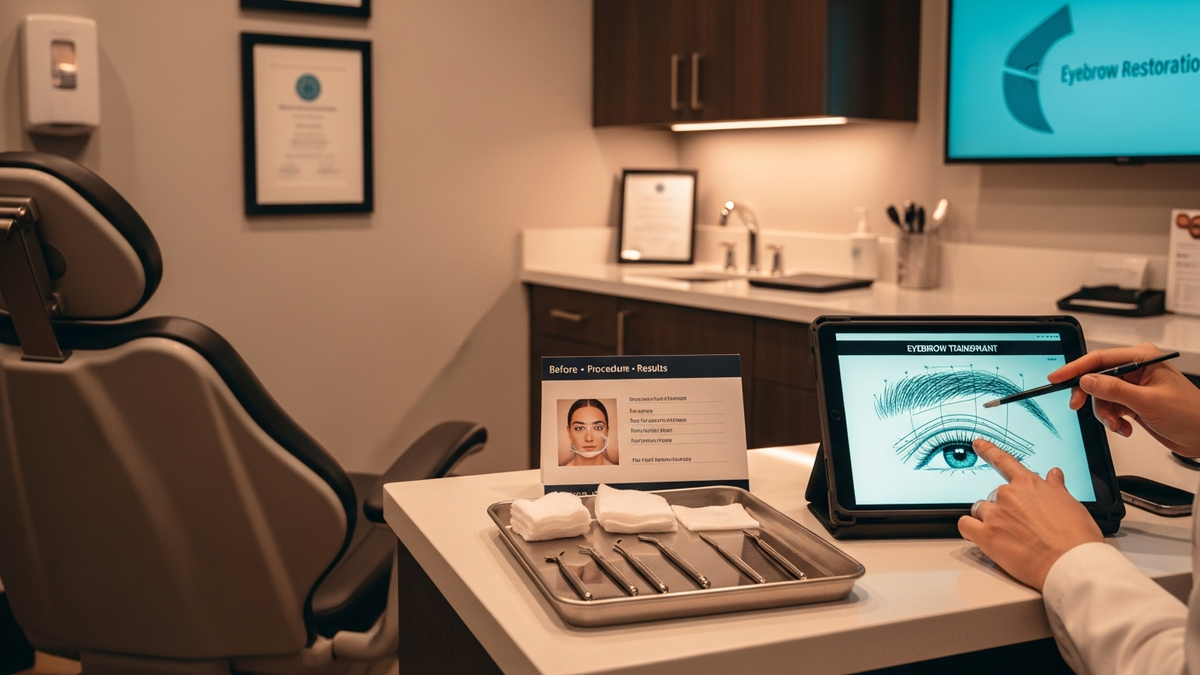
1) Mapping your eyebrow design
Eyebrows aren’t symmetrical by default; they naturally vary slightly. During consultation, your surgeon typically maps:
- Start point (medial brow)
- Arch and peak position
- Tail (lateral brow)
- Thickness and density goals
- Hair direction (how hairs angle and flow)
- Texture and curl considerations
This step is critical for avoiding an artificial “drawn-on” look.
2) Choosing a follicle source and technique
Eyebrow transplants typically use donor hair follicles from areas of the body where hair characteristics can match brow hair more closely. Many clinics offer hair restoration options using established methods such as FUE or FUT for hair transplantation, and the underlying principles of follicle selection and placement translate to eyebrow work.
In broader hair restoration contexts, some patients research a hair transplant and then wonder if the same approach applies to brows. While the overall concept of moving follicles is similar, eyebrow restoration is more delicate because brows require higher precision in angle, density, and aesthetic design.
3) Implanting follicles for natural alignment
During the procedure, the surgeon creates recipient sites according to the planned hair growth direction and then places grafts carefully to maintain survival and achieve realistic density. The best results come from consistent spacing and attention to how brows lay on the skin.
Is a “Dr. Jason Diamond Eyebrow Transplant” Right for You?
Searches for a specific name often reflect a desire for credibility, but the more important question is whether the surgeon’s philosophy and technique match your anatomy and goals.
Good candidates for eyebrow transplantation
- Adults with stable brow loss (not rapidly progressing without a plan)
- People with realistic expectations about density and timeline
- Those who understand that results evolve over months
- Patients willing to follow aftercare instructions
- Individuals with suitable donor hair and appropriate skin conditions
When you may need additional evaluation
Consider extra assessment if you have:
- Active scalp or skin inflammation
- Uncontrolled autoimmune activity
- Significant scarring where graft survival may be lower
- Recent cosmetic procedures affecting the brow area
- Medical conditions that may impact healing
Why a specialist in facial surgery matters
Eyebrows are a focal point. A surgeon who focuses on head and neck procedures often has the aesthetic and functional understanding required for natural facial outcomes. For example, Dr. Hootan Zandifar focuses solely on cosmetic and reconstructive surgery of the head and neck, emphasizing natural-looking results and patient education. If your brow loss is part of broader facial aging concerns, a facial plastic and reconstructive surgeon can also consider how adjacent structures (forehead, eyelids, and brow position) influence overall appearance.
Expected Results: What Eyebrow Transplant Outcomes Look Like
One of the most common questions is: “When will my brows look normal?” Eyebrow hair grows in phases, and early changes can look surprising if you’re not prepared.
Typical timeline
- First days to weeks: swelling or mild redness may occur; tiny scabs or healing marks can appear depending on technique.
- Weeks 2–6: transplanted hairs often shed. This is frequently expected and does not mean failure.
- Months 2–4: new growth begins gradually.
- Months 4–9: density and texture improve; brows start to look more complete.
- Months 9–12+: final refinement in appearance; some patients may pursue a touch-up depending on goals.
What “natural” actually means
Natural results are shaped by:
- Angle of hair growth (not straight or uniform)
- Density distribution (heavier at the right zones, lighter elsewhere)
- Symmetry that respects natural variation
- Matching brow length and proportion
- Texture that blends with surrounding hair
Eyebrow Transplant Costs: What to Expect and How Pricing Works
Costs for eyebrow transplant procedures vary widely based on technique, graft count, surgeon expertise, facility fees, and whether you need additional sessions. When you search “dr jason diamond eyebrow transplant,” you might be trying to estimate what you’ll pay—but the most accurate pricing comes after an in-person or virtual consultation.
Factors that influence total cost
- Graft quantity (more grafts often mean higher cost)
- Complexity of design (restoring shape, scars, or asymmetry)
- Technique (time, precision, and planning requirements)
- Number of sessions (some cases require staged work)
- Surgeon and facility credentials
- Post-operative care included in the package
Actionable tip: Ask for a written estimate that includes what’s covered (medications, follow-ups, and any touch-ups). Avoid pricing that’s unclear about graft count or session structure.
Risks and Side Effects: The Honest Conversation
Like any procedure, eyebrow transplantation involves potential risks. A reputable clinic will discuss these openly and provide a plan to reduce risk.
Potential risks
- Infection (risk reduced with sterile technique and proper aftercare)
- Bleeding or scarring (varies by individual and technique)
- Swelling and temporary redness
- Folliculitis (inflamed follicles)
- Uneven density or irregular hair direction
- Graft shedding during the early growth cycle
- Donor site concerns depending on source area
- Need for revision if results don’t meet expectations
How to minimize risk
- Choose a board-certified specialist with proven eyebrow outcomes.
- Follow pre-op instructions (including medication guidance).
- Follow aftercare precisely, including cleansing and activity restrictions.
- Report symptoms early (increasing pain, discharge, fever, or worsening redness).
Recovery and Aftercare: A Practical Guide
Eyebrow transplant recovery is usually manageable, but it requires patience and discipline. Your surgeon will provide specific instructions, but here are common expectations.
What you may notice after surgery
- Swelling around the brow or upper eyelid area
- Mild discomfort and tightness
- Scabs or crusting at recipient sites
- Temporary tenderness or itching as healing progresses
General aftercare recommendations
- Keep the area clean using the method your surgeon recommends.
- Avoid rubbing or scratching the graft sites.
- Don’t apply makeup until cleared.
- Limit exercise for the first several days (or as instructed).
- Protect from sun and follow sunscreen guidance when allowed.
- Sleep with head elevation if advised to reduce swelling.
If you wear contact lenses or have eye sensitivity, ask your surgeon about eye-area precautions. Because brows sit close to the eyelids, careful postoperative guidance is especially important.
How to Choose the Right Surgeon for an Eyebrow Transplant
Because eyebrow outcomes are highly aesthetic, selecting the right surgeon is the difference between “looks good” and “looks natural.” Here’s a checklist you can use during consultations.
Questions to ask at your consultation
- How do you map eyebrow design? (What measurements and principles do you use?)
- What technique do you recommend and why?
- How many grafts do you expect to place?
- What does your typical timeline look like?
- What are the most common complications you see? How do you manage them?
- Can I see before-and-after results for eyebrow restoration specifically?
- Do you offer staged procedures if density goals are high?
- How do you handle scarring or uneven brow growth?
Look for surgeon credibility and a patient-education style
FlowGeniQ Digest encourages readers to prioritize specialists who combine technical training with a strong commitment to patient education. In head and neck cosmetic care, that includes understanding how eyelids, brow position, and facial balance interact. For example, Dr. Hootan Zandifar is double board certified and fellowship trained, focusing on natural-looking solutions and honest guidance.
Eyebrow Transplant and Related Facial Procedures
Sometimes eyebrow restoration isn’t the only step. Depending on your facial aging pattern or functional concerns, other procedures may complement your results.
If eyelids contribute to your “tired” look
Thinning brows and heavy eyelids can compound the appearance of fatigue. If excess eyelid skin affects your upper field of vision or aesthetics, you might also explore Blepharoplasty. This can work synergistically with eyebrow restoration by improving the overall eye area framing.
If brow position is the real issue
A brow lift can raise and reposition brow tissue. This may be a better fit than transplant when the primary challenge is brow position rather than hair loss.
If nasal function affects comfort and breathing
Facial aesthetics often overlap with function. If nasal obstruction is present, your surgeon may discuss options such as Septoplasty or a Deviated Septum evaluation. While this isn’t directly related to eyebrow hair, it’s an example of how comprehensive head-and-neck specialists approach patient goals.
What About “Eyebrow Hair Transplant” Clinics and Brands?
When searching for a dr jason diamond eyebrow transplant, you may encounter multiple clinics and brand names. Many advertise eyebrow restoration, but the most important variable is not the marketing—it’s the surgeon’s technique, the quality of graft placement, and the realism of the plan.
How to evaluate claims
- Consistency: Do results look similar in quality across patients?
- Naturalness: Are hair angles and densities believable?
- Transparency: Does the clinic explain shedding, timeline, and limitations?
- Safety: Is there a clear complication-management protocol?
If you’re comparing surgical philosophies, it can also help to review dedicated eyebrow restoration pages. For example, you can explore eyebrow transplant information to understand how eyebrow restoration is approached within a head-and-neck surgical practice.
Frequently Asked Questions About Eyebrow Transplants
1) How long does a dr jason diamond eyebrow transplant procedure take?
Procedure time varies by graft count, technique, and complexity of brow mapping. During your consultation, your surgeon can estimate timing based on your plan.
2) Will my transplanted eyebrow hair look exactly like my original brows?
Often, the goal is integration, not perfect replication. A skilled surgeon designs direction, density, and shape so the result appears natural and harmonious with your facial features.
3) Is eyebrow transplant painful?
Most patients experience manageable discomfort controlled with anesthesia and prescribed medications. Your clinic should provide a clear pain-control plan and aftercare guidance.
4) When will I see final results?
Eyebrow growth is gradual. Many people see meaningful improvement within 4–9 months, with final refinement often closer to 9–12 months.
5) Can I combine eyebrow restoration with other facial procedures?
Yes, in some cases. A facial plastic and reconstructive surgeon may coordinate timing if you’re also considering procedures such as Blepharoplasty for eyelid aesthetics or other facial rejuvenation strategies.
Actionable Next Steps (What to Do Before Booking)
If you’re serious about an eyebrow transplant, don’t rush. Use these steps to improve your odds of a satisfying outcome.
- Collect your history: note when brow loss began, any prior treatments, and whether there’s scarring.
- Gather photos: take clear pictures in consistent lighting (front, 45-degree, and close-ups).
- Write down your goals: define density, shape, and symmetry preferences.
- Ask about technique and mapping: ensure the plan addresses hair direction and distribution.
- Review before-and-after results: specifically for eyebrow restoration.
- Discuss realistic timelines: confirm shedding expectations and when growth begins.
- Plan your downtime: arrange time off for healing and follow-up visits.
CTA: Ready to Explore Eyebrow Transplant Options?
If you’re considering a dr jason diamond eyebrow transplant—or you’re simply trying to understand whether eyebrow restoration is right for you—start with an expert consultation. At FlowGeniQ Digest, our goal is to help you ask better questions and make confident decisions.
Next step: Schedule a consultation with a qualified head-and-neck or facial plastic surgeon to review your brow loss pattern, donor hair availability, and realistic density goals. If your brow loss is part of broader facial concerns, you may also discuss complementary options such as Blepharoplasty or other rejuvenation approaches. And if your aesthetic goals extend beyond brows, you can explore additional facial procedures like Rhinoplasty.
Remember: the best eyebrow transplant plans are personalized, safety-focused, and designed to create natural-looking brows that fit your face.
Professional Disclaimer
This content is provided for general educational purposes only by FlowGeniQ Digest. It is not a substitute for professional advice, diagnosis, or treatment. Readers are advised to consult qualified professionals for personalized recommendations.
Medical Information Disclaimer
This content is provided for general educational purposes only by FlowGeniQ Digest. It is not a substitute for professional advice, diagnosis, or treatment. Readers are advised to consult qualified professionals for personalized recommendations.