Cheek fat grafting is one of the most sought-after facial rejuvenation options for people who want a natural, subtle improvement rather than an overly “done” look. By transferring your own fat to the midface, surgeons can restore lost volume, soften hollowing, and support a refreshed facial contour that often looks like you—just more rested.
In this FlowGeniQ Digest guide, we’ll walk through what cheek fat grafting is, who may be a good candidate, how the procedure is performed, what results typically look like, and how to plan for recovery. We’ll also cover safety considerations and practical questions to bring to your consultation.
What Is Cheek Fat Grafting?
Cheek fat grafting (also called fat transfer or autologous fat grafting) is a procedure where fat is gently harvested from a donor area of your body, processed, and then injected into specific areas of the cheeks. The goal is to improve facial balance by adding volume where it’s needed most—often in the midface, under-eye/tear-trough transition zones, or along the cheekbone area.
Because it uses your own tissue, fat grafting is commonly chosen for its ability to create a soft, natural-looking contour. However, it’s also a biologically complex process—so outcomes depend heavily on technique, fat handling, and individualized facial analysis.
Why People Choose Cheek Fat Grafting
Facial aging often involves more than skin laxity. Many patients notice volume loss in the cheeks and midface, which can lead to:
- Hollowing or a “tired” appearance
- Less defined cheekbones and reduced facial structure
- Nasolabial fold deepening due to midface support changes
- Under-eye transition issues when the midface loses support
- Asymmetry from natural differences or prior facial changes
For patients who want restoration with a gentle aesthetic approach, cheek fat grafting can be a strong option—especially when paired with other head-and-neck facial rejuvenation strategies when appropriate.
Cheek Fat Grafting vs. Dermal Fillers
Both cheek fat grafting and dermal fillers can improve midface volume. The difference is the material and biology behind the results.
Fat grafting uses your own fat
Fat transfer uses autologous tissue, which may provide long-term potential as some of the transferred fat integrates into its new location. That said, not all injected fat survives, so surgeons plan for variable fat take rates.
Fillers provide predictable volume immediately
Hyaluronic acid and other fillers can produce immediate contour changes. Results typically last months to longer depending on product type. Some patients prefer fillers for a “test drive,” while others prefer a tissue-based approach.
Which is better?
The best choice depends on your anatomy, desired degree of change, skin quality, and how your midface is aging. A qualified facial plastic surgeon can help you compare options and set realistic expectations for longevity and texture.
How Cheek Fat Grafting Works (Step-by-Step)
While every surgeon’s protocol differs, the overall workflow is typically consistent. Here’s what you can generally expect.
1) Consultation and facial analysis
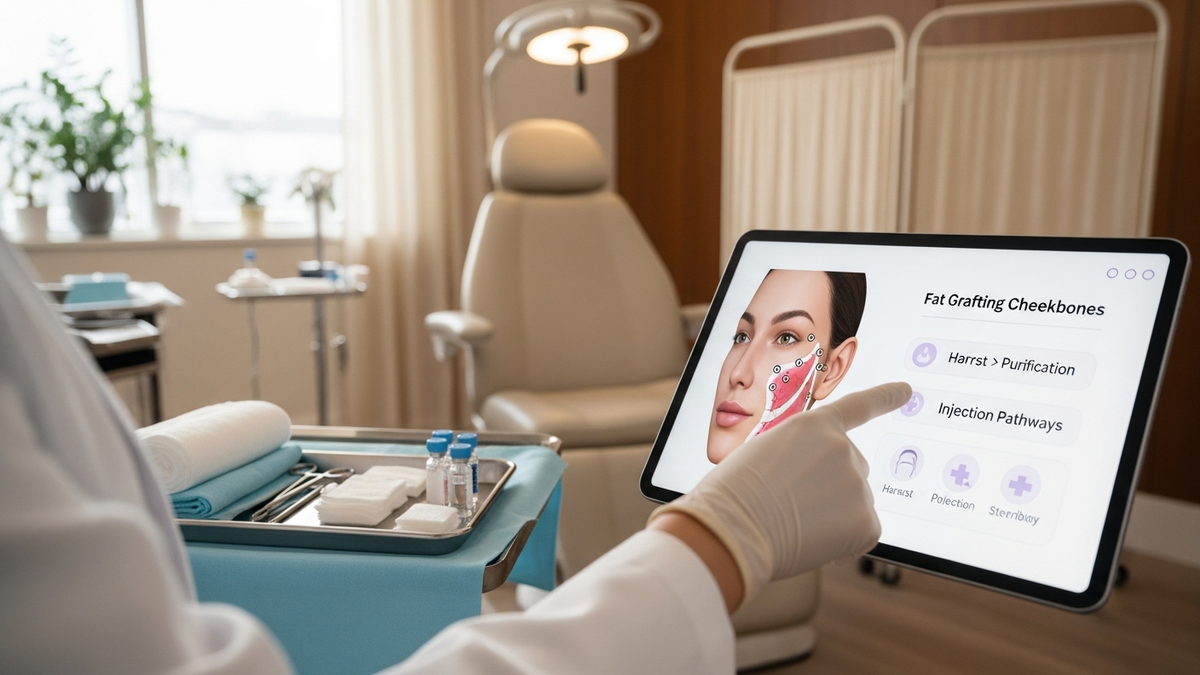
Your journey begins with a detailed evaluation. Your surgeon will assess your midface structure, cheekbone position, skin thickness, and facial proportions—often using photographs and measurements. The goal is to identify where volume loss has created shadows or imbalance and to map injection points accordingly.
At this stage, you’ll also discuss:
- Donor fat availability
- Past surgeries or filler history
- Medical conditions and medications
- Desired aesthetic outcome (subtle lift vs. fuller restoration)
2) Donor fat harvesting
Fat is typically harvested from areas such as the abdomen, flanks, or thighs using a minimally invasive technique. The goal is to collect fat gently to preserve the cells’ viability.
3) Processing the fat
Harvested fat is processed to separate usable fat from fluid components. The processing method matters because it influences cell survival and, ultimately, long-term contour stability.
4) Injection into the cheeks
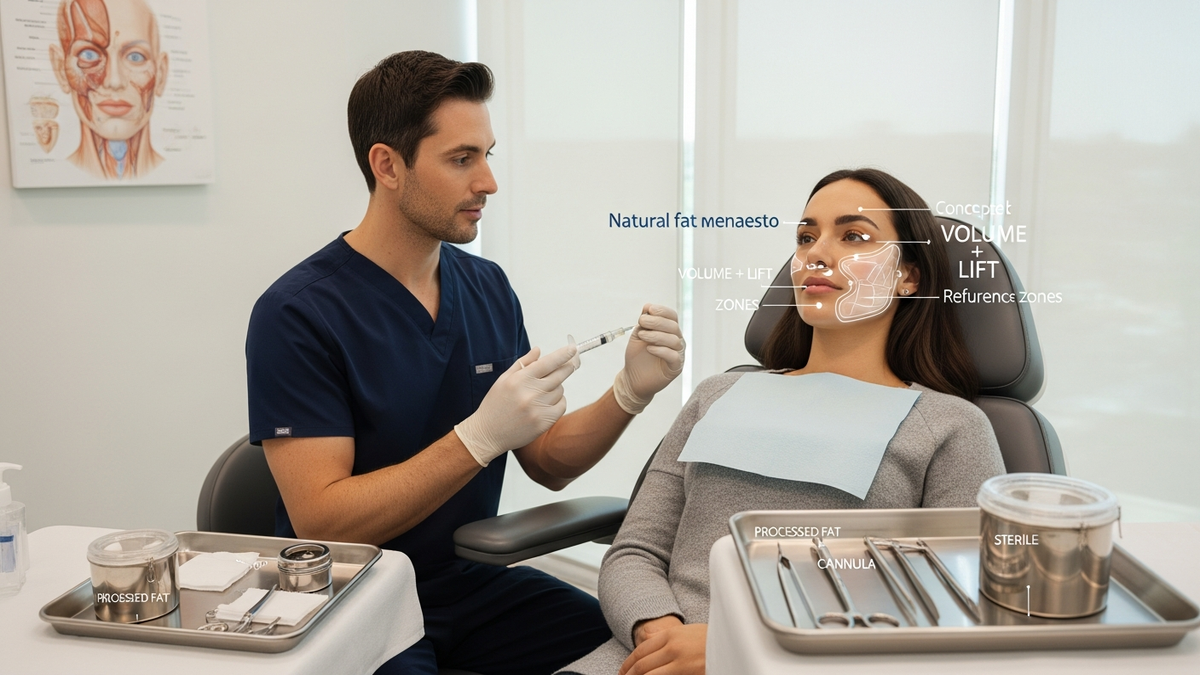
After processing, the fat is carefully injected into planned areas of the cheek. Many surgeons use a layered approach to support facial structure and create smooth transitions. The injection technique aims to reduce unevenness, lumps, or overcorrection.
5) Immediate post-procedure care
Swelling and bruising are common. Your surgeon will provide instructions for massage (if recommended), sleeping position, activity restrictions, and follow-up visits.
Who Is a Good Candidate for Cheek Fat Grafting?
Cheek fat grafting may be a good option if you:
- Have noticeable midface volume loss or cheek hollowing
- Prefer a natural-looking result using your own tissue
- Have sufficient donor fat for harvesting
- Understand that results evolve as swelling resolves and some fat resorbs
- Are generally healthy and can follow pre- and post-operative guidance
You may need an alternative approach if you have limited donor fat, active smoking habits, certain medical conditions, or expectations that don’t align with what fat grafting can reliably achieve.
What Results Can You Expect?
Cheek fat grafting results are often described as soft, natural, and harmonious because the transferred fat behaves like living tissue. However, it’s important to understand the timeline.
Timeline of improvement
- First 1–2 weeks: swelling and bruising peak for many patients; contour may look fuller than expected.
- Weeks 3–8: swelling gradually improves; the face begins to “settle.”
- 3–6 months: more stable contour emerges as fat integrates.
- 6–12 months: final refinement is often clearer; additional touch-up may be discussed in some cases.
Longevity and fat survival
Not all transferred fat survives. Some patients retain a substantial portion of the graft, while others may experience more resorption. Surgeons plan for this by assessing your goals and using techniques designed to maximize graft viability.
Potential Risks and Side Effects
Any surgical procedure carries risks. While cheek fat grafting is generally considered safe in qualified hands, possible side effects include:
- Swelling, bruising, and temporary discomfort
- Asymmetry as swelling resolves
- Lumps or irregularities (rare, but possible)
- Cyst formation in some cases
- Infection or delayed healing (uncommon)
- Fat resorption leading to less volume than expected
Choosing an experienced surgeon and following aftercare instructions can significantly reduce risk and improve the odds of a smooth, natural result.
Cheek Fat Grafting Recovery: What to Plan For
Recovery varies by person, but most patients can expect a predictable pattern: initial swelling and bruising, followed by gradual improvement over weeks.
Common recovery expectations
- Bruising and swelling: often noticeable for 5–14 days
- Sleeping position: many surgeons recommend keeping your head elevated
- Activity restrictions: avoid strenuous exercise initially
- Work timeline: some patients return to desk work within about a week, depending on their response to swelling
Aftercare tips that support better outcomes
To protect the graft and reduce complications, consider these practical steps (your surgeon’s plan takes priority):
- Follow medication guidance precisely (including antibiotics or pain control if prescribed).
- Avoid smoking and nicotine—they can impair circulation and fat survival.
- Attend follow-up visits so your surgeon can monitor contour and healing.
- Be gentle with the treated area and avoid pressure unless instructed.
- Stay hydrated and eat a balanced diet to support tissue repair.
When to call your surgeon
Contact your provider urgently if you experience severe pain, fever, rapidly worsening redness, or drainage from incision sites.
How to Choose a Surgeon for Cheek Fat Grafting
Because fat grafting is both technical and artistic, selecting the right provider is essential. Look for someone who demonstrates:
- Expertise in facial anatomy and midface aesthetics
- Proven outcomes with before-and-after examples that match your goals
- Transparent patient education about fat survival, timelines, and tradeoffs
- Personalized planning rather than one-size-fits-all injection patterns
- Strong safety practices and a clear approach to risk management
In Los Angeles and beyond, many patients seek head-and-neck specialists for facial rejuvenation because these surgeons focus on the unique structures, proportions, and functional considerations of the face.
Head-and-Neck Facial Rejuvenation: Considering the Whole Face
Cheek fat grafting often complements other facial procedures. Some patients benefit from a broader plan that addresses skin quality, soft-tissue support, and structural balance.
When a combination approach makes sense
Depending on your goals, a surgeon may discuss options such as:
- Facelift for skin laxity and deeper support changes: Facelift
- Blepharoplasty for upper or lower eyelid concerns that affect overall facial harmony: Blepharoplasty
- Rhinoplasty for nasal aesthetics that influence midface balance: Rhinoplasty
- Neck contouring when submental fullness affects the jawline transition
For example, submental fullness may be addressed with submental liposuction, which is designed to eliminate excess fat in the chin/neck/jawline region and help reveal more defined facial lines. If your midface is aging alongside the jawline, addressing both can improve overall harmony.
Ear aesthetics and facial balance
Sometimes patients also pursue ear reshaping to refine facial proportions, especially when working toward a complete aesthetic picture. Techniques such as otoplasty or ear remodeling can help improve symmetry and balance without affecting hearing.
Cheek Fat Grafting and Facial Symmetry
Many patients seek cheek fat grafting because their cheeks don’t match perfectly. Fat transfer can be used to fine-tune asymmetry—though the surgeon must account for how swelling resolves and how each side’s tissue responds.
A thoughtful plan includes:
- Identifying true structural differences (not only superficial contour)
- Mapping injection volume by area rather than trying to “mirror” the face blindly
- Setting realistic expectations for how long-term contour will settle
Common Questions About Cheek Fat Grafting
Will it look natural?
When performed with careful facial mapping and appropriate injection depth and technique, cheek fat grafting can produce highly natural-looking volume. The goal is to restore structure and avoid an “overfilled” appearance.
How many sessions are needed?
Some patients achieve their desired contour in one session, while others may benefit from a staged approach or touch-up to refine volume after fat integration. Your surgeon can recommend what’s most realistic based on your anatomy and goals.
Can I combine fat grafting with other procedures?
Yes, in many cases. However, the timing and sequence matter. Your surgeon will evaluate your health, healing capacity, and overall facial plan before recommending combinations.
Related Considerations: Breathing, Function, and Overall Head-and-Neck Care
Facial aesthetics and function can overlap. For example, if you’re considering nasal surgery for appearance and breathing, it’s useful to discuss functional concerns such as a deviated septum. If you have nasal obstruction alongside aesthetic goals, ask whether procedures like Septoplasty are relevant: Deviated Septum and Septoplasty.
While this isn’t directly related to cheek fat grafting, it reflects a broader principle: a head-and-neck specialist can coordinate aesthetic and functional elements for a more cohesive outcome.
What to Ask at Your Consultation
To feel confident in your decision, come prepared with questions. Here are high-value prompts that often lead to more productive conversations:
- Where exactly will the fat be placed? (midface, cheekbone area, transitions)
- What is the expected timeline for swelling and final contour?
- How do you plan for fat resorption?
- What steps reduce the risk of lumps or irregularities?
- What does aftercare include? (massage, activity limits, follow-ups)
- How do you evaluate facial balance? (measurements, photos, mapping)
- Do you recommend combining procedures? If yes, why and when?
If you’re also exploring other facial rejuvenation options—such as Blepharoplasty, a Facelift, or even Rhinoplasty—bring those up early so your surgeon can build a cohesive plan. For instance, if you’re addressing both midface volume and eyelid aging, coordinating timing can help optimize your overall results.
How FlowGeniQ Digest Supports Informed Decisions
At FlowGeniQ Digest, we focus on helping readers understand procedures in a practical, evidence-aware way—so you can go into your consultation informed and ready to ask the right questions. This article is designed to offer general educational guidance about cheek fat grafting, not to replace personalized medical evaluation.
Frequently Asked Questions (FAQ)
Is cheek fat grafting permanent?
Cheek fat grafting results can be long-lasting, but not all transferred fat survives. Some patients retain a substantial portion of the graft, while others may need a refinement session depending on fat integration and their aging process.
How long does swelling last after cheek fat grafting?
Swelling and bruising commonly improve significantly within the first 1–2 weeks. Many patients see continued refinement over 1–3 months, with more stable contour at around 3–6 months.
What areas can fat be taken from?
Fat is typically harvested from areas where it’s naturally abundant, such as the abdomen, flanks, or thighs. Your surgeon will determine the best donor site based on your body composition and goals.
Will I need touch-ups?
Some patients achieve their desired volume in one session; others may benefit from additional grafting to refine contour after healing. Your surgeon will discuss realistic expectations during your consultation.
Are there alternatives to cheek fat grafting?
Yes. Dermal fillers, skin tightening procedures, and structural rejuvenation options may be considered depending on your anatomy and goals. A specialist can help compare options for longevity, texture, and expected aesthetic change.
CTA: Ready to Explore Cheek Fat Grafting?
If you’re considering cheek fat grafting, the best next step is a personalized consultation with a qualified facial plastic and reconstructive surgeon. You’ll get a tailored plan based on your facial anatomy, donor fat availability, and aesthetic goals—plus clear guidance on risks, timeline, and realistic outcomes.
Schedule your consultation to discuss whether fat transfer is the right fit for your midface rejuvenation goals.
Professional Disclaimer
This content is provided for general educational purposes only by FlowGeniQ Digest. It is not a substitute for professional advice, diagnosis, or treatment. Readers are advised to consult qualified professionals for personalized recommendations.
Medical Information Disclaimer
This content is provided for general educational purposes only by FlowGeniQ Digest. It is not a substitute for professional advice, diagnosis, or treatment. Readers are advised to consult qualified professionals for personalized recommendations.