Published as an educational resource by FlowGeniQ Digest
Breathing through your nose should feel effortless—but for many people, a structural issue like a deviated nasal septum can make everyday life harder. You may notice chronic congestion, frequent sinus pressure, mouth-breathing, snoring, or even sleep disruption. If symptoms persist despite medical therapy (like allergy management or nasal sprays), an operation for deviated nasal septum may be the most direct path to long-term relief.
This complete guide walks you through what the surgery is called, how it works, who typically qualifies, what recovery looks like, and how to prepare. Along the way, we’ll also clarify how septal surgery fits into a broader plan for nasal airflow—especially when other contributors (like enlarged turbinates or nasal valve collapse) are present.
What is a deviated nasal septum?
Your nasal septum is the thin cartilage and bone structure that centrally divides the right and left nasal passages. In an ideal scenario, it bisects the nose to support balanced airflow. When the septum is off-center or crooked, it can narrow one or both nostrils and disrupt normal airflow.
A deviated septum is common and can be present from childhood. It may become more noticeable after trauma (like a sports injury) or gradually as tissue changes over time. Importantly, the symptoms you feel don’t always correlate perfectly with how “crooked” the septum looks on exam—so clinicians assess both anatomy and function.
Common symptoms linked to a deviated septum
- Nasal congestion (often one-sided, but not always)
- Difficulty breathing through the nose
- Frequent sinus pressure or recurrent sinusitis
- Dry mouth or mouth-breathing, especially at night
- Snoring and sleep disruption
- Reduced sense of smell (in some cases)
What operation is used for deviated nasal septum?
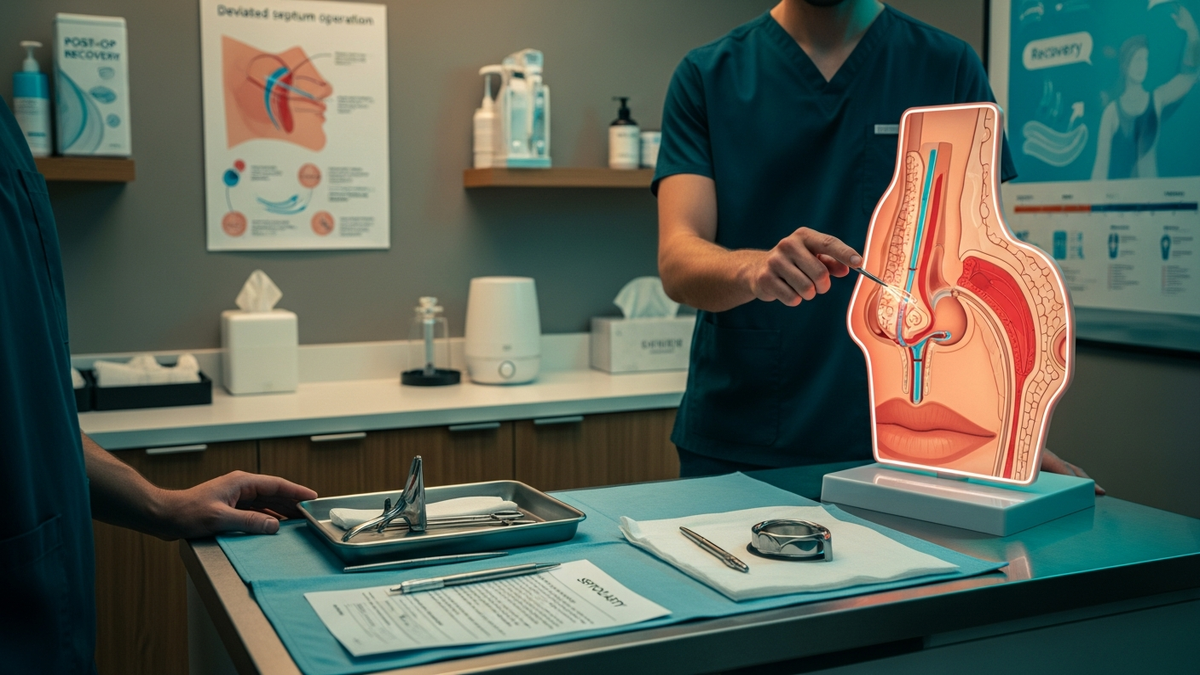
The primary surgical treatment for a deviated septum is septoplasty. Septoplasty straightens the nasal cartilage and corrects the crooked septum to improve airflow. It is a functional surgery focused on breathing—not cosmetic reshaping of the nose.
If you’re researching this topic, you may see the terms operation for deviated nasal septum, septal correction, or septoplasty. For a deeper overview, you can review Septoplasty and how it’s approached in functional nasal surgery.
For additional context on the condition itself, the Deviated Septum page can help you understand what causes nasal obstruction and why structural correction can matter.
Septoplasty vs. rhinoplasty (important distinction)
People sometimes confuse septoplasty with Rhinoplasty. Rhinoplasty is typically a cosmetic procedure that changes the shape of the nose. Septoplasty is designed to improve breathing by aligning the septum. In some cases, surgeons may combine functional and cosmetic goals, but the core purpose differs.
Who may be a candidate for an operation for deviated nasal septum?
Not every deviated septum requires surgery. A good candidate usually has a combination of (1) symptoms that match nasal obstruction and (2) exam findings that support septal deviation as a meaningful cause.
Typical candidacy criteria
- Persistent nasal obstruction that affects daily activities or sleep
- Objective blockage seen on nasal exam or endoscopy
- Symptoms not adequately controlled with non-surgical care (e.g., allergy treatment, saline irrigation, appropriate nasal sprays)
- Recurrent sinus issues that correlate with airflow obstruction
- Impact on breathing mechanics, such as one-sided collapse or chronic mouth-breathing
Why “functional nasal surgery” matters
Many patients have more than one contributor to nasal blockage. For example, enlarged inferior turbinates can create a “stuffy nose” even if the septum is corrected. In other situations, nasal valve collapse can limit airflow despite septal alignment. A functional approach evaluates the entire airway—not just one structure.
In functional nasal surgery, specialists may recommend procedures such as:
- Inferior turbinate reduction to address chronic congestion and airflow resistance
- Nasal valve repair when the valve contributes to obstruction
- Balloon sinuplasty or endoscopic sinus surgery for sinus blockage or chronic sinusitis
- Allergy-focused treatment when inflammation drives symptoms
For patients with chronic nasal congestion and sinusitis symptoms, a comprehensive evaluation can help determine whether septoplasty alone is enough—or whether a combined plan offers better outcomes.
How surgeons perform septoplasty (what the operation involves)
In most cases, septoplasty is performed through the inside of the nose. That means there are typically no external incisions. The goal is to access the septal cartilage and bone, then reshape and reposition them to restore a straighter airway.
Step-by-step overview
- Pre-op assessment: Your surgeon reviews medical history, medications, symptom pattern, and any prior nasal trauma or infections.
- Nasal examination: Often includes endoscopy to visualize the septum, turbinates, and airway dynamics.
- Anesthesia: Many septoplasties are performed under general anesthesia; your surgeon will advise what’s safest for you.
- Septal correction: The surgeon carefully lifts and reshapes cartilage and/or bone to correct the deviation.
- Stabilization: The corrected structures are positioned to maintain improved airflow.
- Closure: Incisions inside the nose are closed, and supportive measures may be used depending on your case.
Because anatomy varies, the exact technique and extent of correction differ from patient to patient. The best approach balances airway improvement with structural stability.
Minimally invasive options and procedure combinations
When you’re planning an operation for deviated nasal septum, it’s helpful to think in terms of “airway optimization.” That may involve more than septoplasty—especially if you have chronic congestion, sinus infections, or sleep-related symptoms.
Inferior turbinate reduction for chronic “stuffy nose”
Enlarged inferior turbinates can create persistent nasal blockage and contribute to mouth-breathing. Inferior turbinate reduction can reduce resistance in the nasal passage, often improving both daytime comfort and nighttime breathing.
Balloon sinuplasty and endoscopic sinus surgery for sinus blockage
If sinus passages are obstructed or sinus inflammation is chronic, septoplasty alone may not fully address symptoms. Minimally invasive options like balloon sinuplasty can help open blocked sinus pathways, while endoscopic sinus surgery can widen sinus passages to restore normal drainage and reduce recurrence of sinus infections.
In many patients, restoring airflow through the nose supports better sinus function—so the combined plan can improve both breathing and sinus health.
Allergy treatment to reduce inflammatory congestion
Allergies can inflame nasal tissues and worsen obstruction. When allergies drive symptoms, clinicians may recommend targeted allergy therapy. For example, sublingual immunotherapy (SLIT) is a no-shot method that some patients use as part of an allergy management strategy.
Recovery timeline after an operation for deviated nasal septum
Recovery is a key part of planning. While every patient heals differently, most people experience predictable stages after septoplasty.
First 48 hours
- Swelling and congestion are common.
- Mild to moderate discomfort may occur; pain management plans are individualized.
- Breathing through the nose may feel limited initially due to swelling and healing tissue.
Days 3–14
- Many patients notice gradual improvement in airflow as swelling decreases.
- Crusting and scab formation inside the nose can happen; gentle care is essential.
- Follow-up visits help monitor healing and remove debris if needed.
Weeks 2–6
- Airflow continues to improve, though subtle congestion may persist.
- Surgeons often guide return to normal activities with safety in mind.
- Exercise restrictions may apply early on to reduce bleeding risk.
Full results
While many patients feel better sooner, final results may take several weeks to a few months as tissues fully heal and the nasal lining settles.
How to prepare for septoplasty (actionable checklist)
Good outcomes often start before surgery. Here’s a practical preparation checklist to discuss with your surgeon.
Medical and medication review
- Bring a list of medications and supplements (including vitamins and herbal products).
- Ask about medications that can affect bleeding risk (your surgeon will provide specific instructions).
- Inform your surgeon about any history of bleeding disorders, easy bruising, or prior surgical complications.
Plan for comfort and logistics
- Arrange time off work and plan for follow-up appointments.
- Stock up on saline spray/irrigation supplies if your surgeon recommends them.
- Prepare a recovery-friendly environment: humidifier, hydration, and easy meals.
Set expectations for nasal care
- Follow your surgeon’s instructions for cleaning, humidification, and medication use.
- Avoid aggressive nose blowing during the early healing phase.
- Report persistent bleeding, fever, or worsening symptoms promptly.
Risks and side effects (what to know before you decide)
All surgeries carry risk. Most patients do well, but an informed decision includes understanding potential complications.
Common or expected effects
- Temporary swelling and congestion
- Crusting and mild bleeding during healing
- Altered sensation inside the nose for a short period
- Stuffy feeling as tissues heal
Potential complications (less common)
- Infection
- Persistent bleeding
- Septal perforation (rare, but important to discuss)
- Asymmetry or incomplete symptom resolution
- Need for revision in select cases
Your surgeon should review your personal risk profile based on anatomy, health history, and surgical plan.
How functional nasal specialists improve outcomes
When symptoms are chronic—especially congestion plus sinus pressure—specialists often treat more than one problem at a time. A functional approach emphasizes airway physiology and long-term symptom control.
For example, surgeons may consider:
- Whether inferior turbinate reduction is needed for long-term “stuffy nose” relief
- Whether a nasal valve collapse contributes to obstruction (sometimes treatable with non-surgical options first, depending on severity)
- Whether sinus drainage requires balloon sinuplasty or endoscopic sinus surgery
- Whether allergy treatment could reduce inflammatory congestion (including sublingual immunotherapy for appropriate candidates)
In the right circumstances, functional nasal procedures can permanently alleviate symptoms that make it hard to breathe and improve quality of life.
What to ask your surgeon during your consultation
Your consultation is where you clarify goals, expectations, and the plan. Consider asking:
- Is my obstruction primarily from the septum, turbinates, nasal valve, or all of the above?
- Would I benefit from septoplasty alone, or should we plan combined procedures?
- What is my expected recovery timeline for return to work, exercise, and normal activities?
- How do you manage pain and post-op nasal care?
- What are my personalized risks based on my medical history?
- How will you assess success—symptom improvement, airflow metrics, or both?
Also ask how your surgeon approaches education and follow-up. A clear, patient-centered plan can make recovery easier and outcomes more predictable.
FlowGeniQ Digest note: building a complete airway plan
At FlowGeniQ Digest, we emphasize the importance of treating causes—not just symptoms. Many patients with a deviated septum also have coexisting issues such as turbinate enlargement, sinus drainage problems, or allergies. When your clinician evaluates the full nasal airway, the operation for deviated nasal septum can become one powerful part of a broader, functional strategy.
For patients seeking comprehensive care in the head and neck region, it’s also helpful to choose a surgeon who specializes in functional nasal surgery and provides a thoughtful, anatomy-based plan. In Los Angeles and Beverly Hills, patients often look for specialists who deliver both expertise and clear guidance—so you can feel confident in your next steps.
Related considerations: when you might also explore cosmetic or other head/neck procedures
While septoplasty is functional, some patients explore cosmetic nasal changes when they have both breathing concerns and shape-related goals. In those scenarios, a surgeon may discuss whether Rhinoplasty is appropriate alongside septal correction.
Outside nasal surgery, some patients researching facial procedures may also consider other options such as Facelift or Blepharoplasty. These are separate treatment pathways and not substitutes for breathing surgery—but it’s common for people to seek comprehensive, head-and-neck-focused care in one practice.
Hair restoration is another example of a distinct service line; if you’re also exploring aesthetic goals, you might review hair transplant or an eyebrow transplant. Again, these are not related to septal surgery, but they reflect the broader way patients sometimes plan their healthcare and appearance goals.
FAQ: Operation for deviated nasal septum
1) Is septoplasty the same as an operation for deviated nasal septum?
Yes. In most cases, the operation for deviated nasal septum is called septoplasty. It straightens the septum to improve nasal airflow. Sometimes, additional functional procedures (like turbinate reduction) are performed depending on your anatomy and symptoms.
2) Will I be able to breathe through my nose right after surgery?
Many people feel more nasal airflow over time, but immediately after surgery breathing can be limited due to swelling, healing tissue, and post-operative care. Your surgeon will explain what to expect for your specific case.
3) How long does recovery take?
Most patients experience noticeable improvement within the first couple of weeks, with continued gains over weeks to months. Full healing can take several months as nasal tissues settle.
4) What are the most common risks of septoplasty?
Common temporary effects include swelling, congestion, crusting, and mild bleeding. Less common risks include infection, persistent bleeding, or rare structural issues such as septal perforation. Your clinician should review your personal risk factors.
5) What if my symptoms don’t improve after septoplasty?
Sometimes symptoms persist if other contributors—like enlarged turbinates, nasal valve collapse, chronic sinusitis, or allergies—remain untreated. That’s why a complete airway evaluation matters. If symptoms continue, your surgeon can reassess and discuss next steps.
CTA: Ready to breathe easier?
If chronic nasal obstruction is affecting your daily life, sleep, or sinus health, an operation for deviated nasal septum may be a meaningful option to explore. The next step is a personalized evaluation—so your clinician can confirm the cause of your symptoms and recommend the right functional plan.
Schedule an appointment to discuss your nasal symptoms, review your anatomy, and understand whether septoplasty (and any needed complementary treatments) is the best path forward.
Professional Disclaimer
This content is provided for general educational purposes only by FlowGeniQ Digest. It is not a substitute for professional advice, diagnosis, or treatment. Readers are advised to consult qualified professionals for personalized recommendations.
Medical Information Disclaimer
This content is provided for general educational purposes only by FlowGeniQ Digest. It is not a substitute for professional advice, diagnosis, or treatment. Readers are advised to consult qualified professionals for personalized recommendations.