Welcome to FlowGeniQ Digest—your practical, research-grounded guide to understanding advanced healthcare decisions. If you’ve been struggling with chronic nasal congestion, one-sided blockage, recurrent sinus infections, or difficulty breathing through your nose, you may have heard the term deviated septum operation. The good news: many people find meaningful relief with targeted functional nasal surgery—most commonly septoplasty—and sometimes with additional procedures that address related airflow issues.
In this complete guide, you’ll learn what a deviated septum operation is, who may benefit, how surgeons evaluate nasal obstruction, what the procedure and recovery typically involve, and which alternatives might fit your situation. We’ll also cover risks, realistic outcomes, and a checklist of questions to help you make an informed decision.
What Is a Deviated Septum?
Your nasal septum is the thin wall of cartilage and bone that centrally divides your nostrils. When it’s straight, it helps deliver balanced airflow through both sides of the nose. When the septum is crooked—or significantly off-center—it can obstruct one or both nasal passages. This structural issue can contribute to symptoms such as:
- Chronic nasal congestion (often persistent or long-term)
- Difficulty breathing through the nose, especially during exertion or at night
- One-sided blockage that doesn’t fully resolve with medications
- Recurrent sinusitis or feelings of sinus pressure
- Dryness, crusting, or nosebleeds in some cases
Deviated septum vs. “just allergies”
Allergies and chronic rhinitis can mimic or worsen nasal obstruction. However, a deviated septum operation is considered when anatomic obstruction is a major driver of symptoms—meaning medications alone haven’t adequately solved the problem or the obstruction is severe enough to affect airflow mechanics.
Functional nasal surgery is often most effective when the underlying anatomy is treated directly, rather than relying solely on symptom management.
What Is a Deviated Septum Operation?
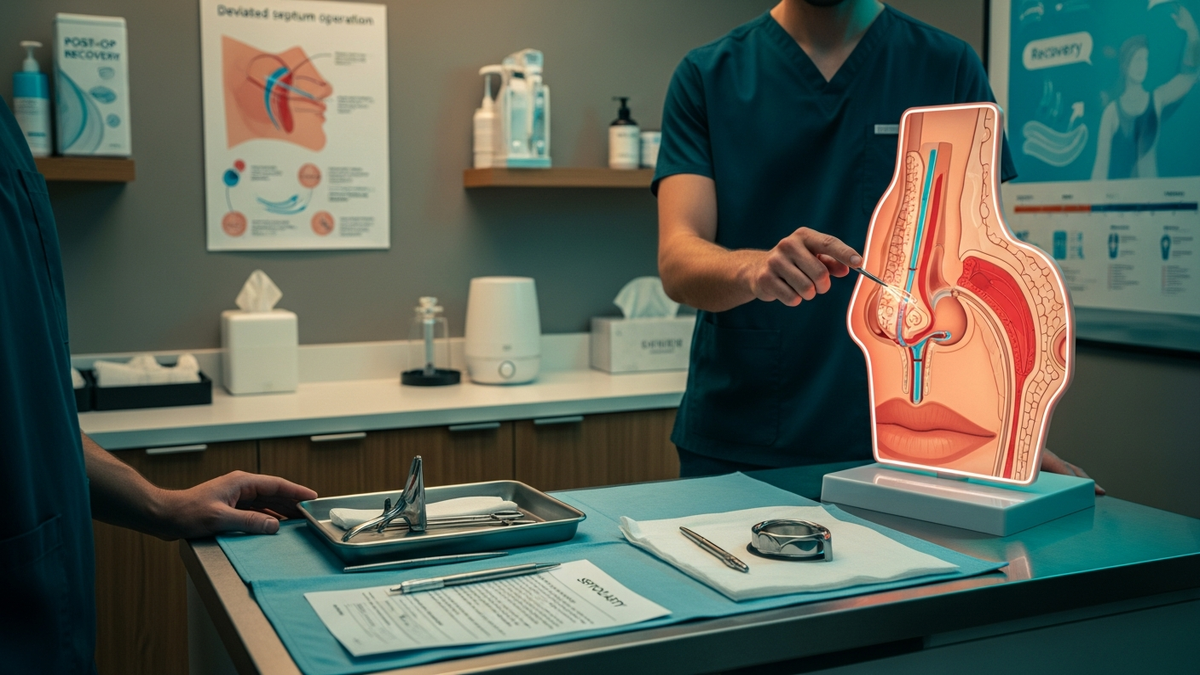
A deviated septum operation typically refers to a septoplasty—a procedure designed to straighten or reposition the nasal septum to improve airflow. Septoplasty is a functional operation, meaning its primary goal is to enhance breathing and reduce chronic nasal obstruction.
In many cases, surgeons also evaluate whether other structures are contributing to obstruction, such as enlarged inferior turbinates, nasal valve collapse, or sinus drainage pathways. If those issues are present, a comprehensive plan may include additional minimally invasive procedures.
Septoplasty: the most common approach
Septoplasty straightens the nasal cartilage and corrects the crooked septum. If you’re comparing options, you can review details about Septoplasty and what functional nasal surgery can accomplish.
When the septum is significantly deviated, the airflow resistance increases—sometimes leading to chronic “stuffy nose” feelings, sleep disruption, and poor tolerance for exercise. Correcting the septum can restore airflow dynamics and reduce symptom burden.
Who Is a Candidate for a Deviated Septum Operation?
Not everyone with a deviated septum needs surgery. The best candidates are usually those whose symptoms correlate strongly with anatomic obstruction and who have persistent issues despite appropriate medical therapy.
Common reasons surgeons consider septoplasty
- Persistent nasal obstruction that affects daily life
- Chronic congestion that doesn’t respond well to sprays, antihistamines, or allergy management
- Recurrent sinus infections linked to impaired drainage
- Sleep-disordered breathing symptoms (sometimes associated with nasal blockage)
- Frequent nosebleeds related to septal trauma or surface irritation
How specialists evaluate your anatomy
At a high-quality consultation, evaluation often involves a careful history and a structural assessment using tools such as nasal endoscopy. Surgeons look at:
- Degree and location of septal deviation
- Turbinates (often enlarged in chronic congestion)
- Nasal valve function (a common hidden contributor to obstruction)
- Sinus drainage patterns when sinusitis is present
This is why two people can both have a “deviated septum,” but only one may truly benefit from septoplasty alone.
How the Deviated Septum Operation Works (Step-by-Step)
While each case is unique, most functional septoplasty plans follow a similar logic: access the septum, reposition the deviated cartilage/bone, and stabilize it to improve airflow.
Typical surgical plan
- Preparation and anesthesia: Your surgical team will review medical history, medications, and anesthesia options.
- Access inside the nose: Septoplasty is commonly performed through the nostrils, so there’s typically no external incision.
- Reshaping and repositioning: The surgeon straightens the septum by removing or repositioning deviated cartilage/bone segments.
- Stabilization: The septum is supported to maintain improved alignment during healing.
- Post-procedure care: Follow-up visits help monitor healing and ensure airflow improvements are progressing.
When septoplasty isn’t the only piece
Many patients have more than one anatomic contributor to nasal obstruction. For example:
- Inferior turbinate enlargement: Can cause long-term “stuffy nose.” In these cases, inferior turbinate reduction may be recommended to improve airflow and comfort.
- Nasal valve collapse: Some patients feel worse when standing or during exercise. Treatment may include non-surgical approaches or, in select cases, surgical options such as implants.
- Chronic sinusitis: If sinus drainage is impaired, targeted sinus procedures (including minimally invasive options like balloon sinuplasty or endoscopic sinus surgery) may be appropriate.
Minimally Invasive Functional Options That Often Pair Well
At FlowGeniQ Digest, we frequently emphasize that the best functional outcomes come from tailoring treatment to the specific source of obstruction—not just the presence of a deviated septum.
Inferior Turbinate Reduction
When turbinates are enlarged, they can block airflow even if the septum is corrected. Inferior turbinate reduction is often recommended for patients with chronic congestion and may be particularly relevant for those with sleep apnea symptoms related to nasal airflow resistance.
Nasal Valve Collapse Repair
Nasal valve collapse can be a “hidden” reason people can’t breathe well despite a corrected septum. Depending on severity, non-surgical methods may include medication-based allergy control and other non-invasive interventions. For severe obstruction, surgical repair options may be discussed.
Balloon Sinuplasty & Endoscopic Sinus Surgery
If sinus blockage is part of your chronic symptoms, minimally invasive sinus procedures can help restore normal drainage. Balloon sinuplasty is often described as convenient and safe for opening blocked sinus passages. For more complex or persistent chronic sinusitis, endoscopic sinus surgery may be used to widen sinus passages, eliminate trapped mucus, reduce recurrent infections, and support smell recovery.
Allergy Treatment (When Inflammation Is a Major Driver)
Allergies can affect how efficiently you breathe through your nose by increasing inflammation. Some patients benefit from structured allergy management, including treatments like sublingual immunotherapy (a “no shot” method). While allergy treatment may not correct a structural deviation on its own, it can significantly improve overall nasal comfort and outcomes when combined with functional surgery.
Deviated Septum Operation vs. Rhinoplasty: What’s the Difference?
This is one of the most common points of confusion. A deviated septum operation (septoplasty) focuses on function—improving airflow by correcting the internal nasal structure. Rhinoplasty is primarily cosmetic and reshapes the external nose.
That said, some patients require both functional and aesthetic considerations. If you’re exploring cosmetic options alongside breathing improvement, you may want to understand Rhinoplasty and how functional nasal surgery differs from cosmetic refinement.
Recovery Timeline: What to Expect After Septoplasty
Recovery varies based on your anatomy, whether additional procedures are performed, and your overall health. Still, there are common phases many patients experience after a septoplasty-based deviated septum operation.
First 24–72 hours
- Swelling and congestion: Nasal swelling can make breathing feel worse before it feels better.
- Discomfort: Mild to moderate discomfort is common and typically managed with prescribed medication.
- Drainage: Some bleeding or watery discharge may occur early on.
Days 4–14
- Gradual improvement: Many patients notice clearer airflow as swelling decreases.
- Follow-up care: Your surgeon may remove splints or check healing progress, depending on your plan.
- Activity adjustments: You’ll likely be advised to avoid strenuous exercise and heavy lifting during early healing.
Weeks 3–6
- More stable breathing: Airflow often continues to improve as internal tissues settle.
- Resuming normal routines: Many people return gradually to work and daily activities based on surgeon guidance.
Full healing: up to several months
Internal healing and tissue remodeling can continue for months. If you have chronic sinus issues or ongoing allergies, additional time and coordinated care may be required for the best long-term results.
Risks and Side Effects of a Deviated Septum Operation
Every surgery has potential risks. A reputable surgical team will review these clearly and tailor risk mitigation to your health profile.
Potential risks
- Bleeding (usually manageable, but sometimes requires additional care)
- Infection (uncommon with appropriate sterile technique and post-op care)
- Persistent nasal dryness or crusting
- Septal perforation (rare, but important to discuss)
- Changes in sensation (temporary numbness can occur)
- Unsatisfactory airflow outcome if obstruction is multifactorial
How to reduce risk
You can often lower risk by following surgeon instructions closely, including medication guidance (especially around blood thinners), hydration, and nasal care/irrigation plans if recommended.
Alternatives to a Deviated Septum Operation
Depending on your anatomy and symptom drivers, non-surgical and medical options may help—or may be used alongside surgery for best results.
Medication and allergy management
- Prescription or over-the-counter nasal sprays (when appropriate)
- Allergy medications to reduce inflammation
- Targeted immunotherapy for select patients
Non-surgical approaches for nasal valve collapse
For some patients with nasal valve collapse, non-surgical methods may improve airway patency. These approaches can include medication-based allergy control and other non-invasive strategies designed to increase airway space.
When alternatives may fall short
If your symptoms are primarily due to a fixed structural obstruction, medications can reduce inflammation but may not fully restore airflow. That’s where a deviated septum operation—specifically septoplasty—often plays a central role.
Choosing a Surgeon: What to Look For
Because nasal airflow is complex, selecting a surgeon with strong functional nasal expertise matters. Look for a clinician who:
- Prioritizes functional outcomes (breathing and symptom relief)
- Uses a comprehensive evaluation approach (septum, turbinates, nasal valve, and sinus drainage)
- Explains realistic outcomes and potential limitations
- Discusses risks clearly and provides individualized recommendations
- Offers minimally invasive options when appropriate
A functional-nasal surgery mindset
For example, Dr. Hootan Zandifar is known for functional nasal surgery focused on treating chronic nasal congestion and sinusitis symptoms using minimally invasive procedures. When dealing with chronic nasal congestion or difficulty breathing resulting from structural defects—such as a Deviated Septum—surgical intervention may be the best course of action. You can learn more about Deviated Septum and how septoplasty is used to correct the crooked septum.
Frequently Overlooked Details: Questions to Ask at Your Consultation
To make your decision easier, bring a list of questions. Here are high-yield prompts that often clarify whether a deviated septum operation is right for you:
- Is my primary problem the septum, the turbinates, the nasal valve, or sinus drainage?
- What specific findings support septoplasty in my case?
- Will I need inferior turbinate reduction or nasal valve repair as well?
- What is the expected recovery timeline for my work and lifestyle?
- What are the most likely side effects for my risk profile?
- How will you manage inflammation if allergies are also contributing?
- What outcomes are realistic for chronic congestion and sinusitis symptoms?
Actionable Pre-Op and Post-Op Recommendations
While your surgeon will provide personalized instructions, the following are commonly helpful steps for many patients considering a deviated septum operation:
Before surgery
- Review medications: Ask about blood thinners, supplements, and any prescriptions you take regularly.
- Optimize nasal health: If you have active infections or uncontrolled allergies, your team may recommend pre-op management.
- Plan for early recovery: Arrange time off work and prepare a comfortable recovery space.
- Follow pre-op instructions: Fasting and medication instructions reduce perioperative risk.
After surgery
- Use prescribed nasal care: Follow irrigation or moisturizing recommendations if provided.
- Avoid trauma to the nose: Don’t pick crusts or blow forcefully unless your surgeon instructs otherwise.
- Go to follow-ups: Healing is monitored over time to ensure alignment and airflow stability.
- Manage allergies: If inflammation persists, it can affect comfort and long-term outcomes.
Where Septoplasty Fits in Broader Head & Neck Care
It’s helpful to understand that nasal breathing is interconnected with sinus health, sleep quality, and overall quality of life. A functional nasal procedure can be life-changing for people who’ve lived with chronic congestion for years.
While deviated septum operation is not cosmetic surgery, some patients also pursue aesthetic head and neck procedures for confidence or balance. If you’re considering cosmetic procedures, your surgeon can help coordinate timelines and expectations across different treatments.
And if you’re also thinking about other appearance-related goals, FlowGeniQ Digest covers many options across specialties. For example, you may come across resources related to a hair transplant, or eyebrow transplant—though these are separate from nasal function and should be discussed with the appropriate specialist.
Related FAQ: Deviated Septum Operation
How long does a deviated septum operation take?
Surgery duration varies depending on complexity and whether additional procedures are performed. Your surgeon can provide an estimate based on your anatomy and the planned steps.
Will I be able to breathe better immediately after septoplasty?
Many patients notice gradual improvement rather than instant results. Early swelling can temporarily make breathing feel worse, with clearer airflow as healing progresses over days to weeks.
Is a deviated septum operation the same as rhinoplasty?
No. A deviated septum operation (usually septoplasty) focuses on internal nasal structure and breathing. Rhinoplasty primarily changes the external shape of the nose. Some patients may need both for functional and aesthetic reasons.
What if I also have chronic sinusitis?
When sinus drainage is impaired, your surgeon may recommend sinus-focused treatments such as balloon sinuplasty or endoscopic sinus surgery alongside septoplasty, depending on your imaging and endoscopic findings.
How do I know if I’m a good candidate?
Good candidates typically have persistent nasal obstruction symptoms that correlate with structural findings. A detailed evaluation—including endoscopy and symptom history—helps determine whether septoplasty alone or a combined plan is most appropriate.
CTA: Ready to Explore Your Options?
If you’re considering a deviated septum operation, the most important next step is a consultation with a clinician who treats nasal obstruction from a functional perspective. At FlowGeniQ Digest, we’re committed to helping you ask better questions and understand your options more clearly.
Take action today: schedule an evaluation to discuss your symptoms, nasal anatomy, and whether septoplasty—or a tailored combination of functional nasal procedures—could help you breathe easier and feel better.
Professional Disclaimer
This content is provided for general educational purposes only by FlowGeniQ Digest. It is not a substitute for professional advice, diagnosis, or treatment. Readers are advised to consult qualified professionals for personalized recommendations.
Medical Information Disclaimer
This content is provided for general educational purposes only by FlowGeniQ Digest. It is not a substitute for professional advice, diagnosis, or treatment. Readers are advised to consult qualified professionals for personalized recommendations.