Source: FlowGeniQ Digest
Choosing nose job rhinoplasty surgery is a highly personal decision—one that can affect both how you look and how you breathe. In Los Angeles, many people explore nasal surgery not only to refine facial harmony, but also to address chronic congestion, obstruction, or sinus-related symptoms that can reduce quality of life. The most satisfying outcomes typically come from a surgeon who can evaluate both the structure and the function of the nose—because the nose is doing more than one job at a time.
This article, brought to you by FlowGeniQ Digest, breaks down what nose job rhinoplasty surgery involves, what to expect during consultation and recovery, and how functional nasal procedures may help when your primary concern is breathing. You’ll also find practical, actionable questions to ask your provider before committing to surgery.
What Is Nose Job Rhinoplasty Surgery?
Nose job rhinoplasty surgery is a cosmetic procedure that changes the shape and/or structure of the nose. In everyday language, many people say “nose job,” while surgeons typically use the term rhinoplasty to describe the operation. Rhinoplasty can be performed for two broad reasons:
- Aesthetic goals: improving the nose’s size, contour, tip shape, or overall facial balance.
- Functional goals: improving airflow by addressing structural issues such as a deviated septum, nasal valve collapse, or enlarged nasal turbinates.
In practice, these goals often overlap. A nose that looks proportionate may still feel “stuffy” if internal airflow is compromised—and a nose that functions better may still benefit from careful aesthetic refinement.
Rhinoplasty vs. Other Functional Nasal Procedures
Not every patient who wants better breathing needs rhinoplasty. Depending on the cause of obstruction, there are targeted, less invasive options that may deliver substantial symptom relief. This is especially relevant for people with chronic congestion, sinusitis, or difficulty breathing due to internal anatomic factors.
When a Deviated Septum Matters
If your septum—the cartilage and bone that divides the nostrils—is crooked, it can obstruct airflow. In many cases, a Septoplasty can straighten the septum to improve nasal breathing. Patients sometimes search for “nose job rhinoplasty surgery” when their real concern is airflow, but septal surgery may be the more direct path if the septum is the primary issue.
Related reading: Deviated Septum
Enlarged Turbinates and Chronic “Stuffy Nose”
The inferior turbinates are structures inside the nose that help humidify and filter air. When they become enlarged, they can block airflow and contribute to chronic congestion. Inferior turbinate reduction is commonly recommended for patients who experience long-term obstruction, sometimes including sleep apnea-related symptoms.
Nasal Valve Collapse: A Common Hidden Culprit
Many patients describe airflow issues as worsening when they exercise, lie down, or experience dryness and allergies. A structural weakness at the nasal valve may contribute. In some cases, non-surgical treatments may be considered first (such as targeted allergy management), while more severe cases may require surgical repair.
Balloon Sinuplasty and Endoscopic Sinus Surgery
If your main problem is chronic sinus blockage or recurrent sinus infections, sinus procedures may be the priority. Options can include:
- Balloon sinuplasty: a minimally invasive approach that helps open blocked sinus passages.
- Endoscopic sinus surgery: using endoscopic visualization to restore normal sinus function and address trapped mucus.
For patients whose symptoms are driven by allergies, allergy-focused treatments—such as sublingual immunotherapy—may also play a role in long-term control.
Aesthetic Goals in Nose Job Rhinoplasty Surgery
When people consider nose job rhinoplasty surgery, they often want specific changes. Common aesthetic goals include:
- Reducing or refining a hump (dorsal irregularities)
- Reshaping the tip (projection, rotation, definition)
- Improving symmetry from one side to the other
- Balancing proportions with the face (bridge-to-tip ratio, nostril width, and angles)
- Refining nostrils (for example, altering flare or shape)
Premium results typically require a surgeon to interpret your facial proportions holistically rather than focusing on the nose in isolation. A well-executed rhinoplasty should look natural in motion and from multiple angles—not only in a front-facing photo.
Functional Goals: Breathing, Airflow, and Quality of Life
Functional rhinoplasty considerations are often what separate “a nose that looks better” from “a nose that works better.” If you struggle with nasal congestion, you may experience:
- Persistent mouth breathing
- Sleep disruption
- Chronic sinus pressure
- Frequent infections or inflammation
- Difficulty exercising due to airflow limitations
A surgeon focused on functional nasal surgery will evaluate the internal architecture of the nose as carefully as the external shape. That means considering structural contributors like the septum, turbinates, and nasal valve, and determining whether targeted functional procedures (sometimes without full rhinoplasty) may be sufficient.
Who Is a Good Candidate for Nose Job Rhinoplasty Surgery?
Ideal candidates generally include patients with realistic goals and a medical profile that supports safe surgery. During consultation, your provider will likely review:
- Your nasal history (congestion patterns, allergies, infections, prior trauma)
- Any prior nasal or sinus procedures
- Your medical conditions and medications
- Smoking status (important for healing)
- Expectations for aesthetics, function, or both
In the right circumstances, functional alternatives such as septoplasty may permanently alleviate symptoms that make it difficult to breathe. In other cases, a combined approach—functional correction plus aesthetic refinement—may be the most balanced solution.
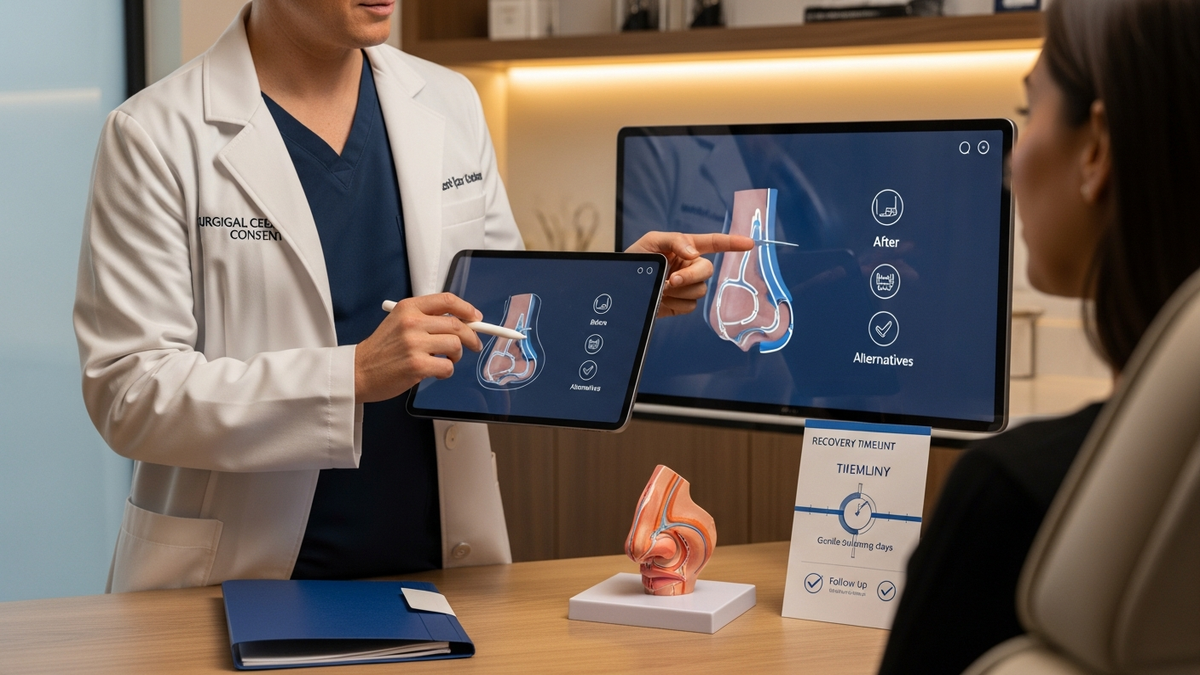
Consultation Checklist: Questions to Ask Before Rhinoplasty
To make the decision confidently, come prepared with thoughtful questions. Consider asking:
- What is the main cause of my breathing difficulty? (septum, turbinates, nasal valve, sinus blockage, allergies?)
- Will my procedure be primarily aesthetic, functional, or both?
- What specific structures are you planning to address? (septum, nasal valve, cartilage support, etc.)
- What results can I realistically expect? Ask about appearance and airflow outcomes separately.
- How do you minimize visible scarring and preserve natural contours?
- What is the recovery timeline? When can I return to work, exercise, and social events?
- What are the risks and how are they managed?
- What alternatives exist if I don’t need full rhinoplasty? (e.g., septoplasty or turbinate reduction)
How Nose Job Rhinoplasty Surgery Is Performed (General Overview)
While techniques vary by surgeon and patient anatomy, rhinoplasty generally involves carefully repositioning nasal cartilage and/or bone to achieve the desired shape and, when indicated, improve airflow. Depending on your anatomy and goals, your surgeon may use:
- Cartilage reshaping to refine the tip and support internal structure
- Bone adjustments to narrow or straighten the bridge
- Grafting when additional structural support is needed
- Internal functional corrections if airflow is compromised
If you’re searching for “nose job rhinoplasty surgery” in Los Angeles, it’s worth reviewing the surgeon’s approach to functional nasal surgery. A board-certified facial plastic and reconstructive surgeon with head-and-neck training can be particularly well-positioned to evaluate the nose as part of the broader head and neck anatomy.
Recovery After Rhinoplasty: What to Expect
Recovery varies, but most patients experience predictable phases. Your surgeon will provide personalized instructions, including how to care for the nose and when to follow up.
First Week: Swelling and Bruising
Swelling and bruising are common. Many patients can expect:
- Visible swelling around the nose and under the eyes
- Discomfort managed with prescribed medication
- Activity restrictions to protect healing tissues
Weeks 2–6: Gradual Improvement
As swelling decreases, the nose may look less puffy and more defined. However, it can still change as tissues settle. Many patients begin to feel more comfortable returning to routine social activities within this window, based on their surgeon’s guidance.
Months 3–12: Refinement and Final Shape
Rhinoplasty results typically continue to evolve over several months. Cartilage and soft tissue remodeling means the nose may look different at various checkpoints. Patience is a key part of achieving natural-looking outcomes.
Common Risks and How to Reduce Them
Every surgery carries potential risks. While serious complications are uncommon in experienced hands, it’s important to understand possibilities and risk-reduction strategies.
- Infection: minimized through sterile technique and proper wound care.
- Bleeding: managed through perioperative planning and follow-up.
- Asymmetry or contour irregularities: depends on anatomy and surgical precision.
- Persistent swelling: part of normal healing but varies by person.
- Breathing issues: may occur if internal airflow is not adequately addressed.
Actionable risk reducers include following pre- and post-operative instructions closely, disclosing all medications and supplements, and avoiding smoking or nicotine products (if applicable) as directed by your surgeon.
Choosing a Surgeon: What “Natural” Really Means
Natural-looking rhinoplasty is not accidental. It reflects careful planning, conservative refinement when appropriate, and an understanding of facial proportions. Surgeons should also explain how they will preserve or reconstruct key internal support structures so that both appearance and function are maintained.
In Los Angeles, patients often look for expertise in both aesthetics and functional nasal surgery. Dr. Hootan Zandifar specializes in head and neck cosmetic and reconstructive surgery and focuses on functional nasal procedures that can help treat chronic nasal congestion and sinusitis using minimally invasive approaches when appropriate.
If you’re exploring aesthetic rhinoplasty as well, you may find helpful background in Rhinoplasty.
When You Might Not Need Full Rhinoplasty
Some patients assume they need a nose job rhinoplasty surgery to fix breathing. But if the primary problem is structural airflow obstruction—such as a deviated septum—more targeted procedures may be recommended.
For example, if your evaluation points to septal deviation as a major contributor, Septoplasty can be a direct and often effective solution. In some cases, improving internal airflow may also make the nose feel and function better even before considering aesthetic changes.
Integrative Considerations: The Nose in Facial Harmony
Rhinoplasty does not happen in a vacuum. Your nose interacts with your eyes, brows, and overall facial balance. Some patients also consider other facial procedures to complement their results—especially when aging affects multiple areas at once.
- Blepharoplasty: to address eyelid heaviness and under-eye puffiness (see Blepharoplasty).
- Facelift: to tighten and reposition facial tissues (see Facelift).
These are not always necessary, but discussing your broader aesthetic goals can help you plan a cohesive strategy.
What About Revision Rhinoplasty?
Some patients seek revision surgery after prior nasal procedures did not meet expectations—either aesthetically or functionally. Revision cases may involve additional complexity due to scar tissue, altered cartilage support, and healing changes. If you’re considering revision, choose a surgeon with experience in both facial plastic surgery and functional nasal evaluation.
Your consultation should include a thorough assessment of what went wrong and what can be safely improved. A quality provider will also discuss realistic outcomes and the healing timeline.
Cost Considerations: What Impacts Pricing?
Pricing for nose job rhinoplasty surgery can vary widely based on complexity, surgeon experience, facility fees, anesthesia, and whether functional corrections are included. Some functional components may be evaluated differently depending on medical necessity, but that determination is individualized.
Instead of focusing solely on the lowest quote, prioritize:
- Surgeon expertise and outcomes
- Safety and facility standards
- Whether the plan is tailored to your anatomy
- Clear explanation of the procedure and recovery expectations
Living With Your Decision: Expectations and Mindset
It’s normal to feel excited and anxious at the same time. A helpful mindset is to view rhinoplasty as a process—not an instant transformation. Swelling, subtle changes, and gradual refinement are part of the journey toward a stable result.
Also, remember that your nose should reflect you. The goal is not to create a “trend” nose, but to enhance your features while maintaining natural identity.
FlowGeniQ Digest Takeaways: A Practical Summary
- Nose job rhinoplasty surgery can improve both appearance and breathing, depending on your anatomy and goals.
- Functional issues like a deviated septum, turbinate enlargement, or nasal valve collapse may be better addressed with targeted procedures such as Septoplasty.
- Recovery is gradual—final shape may take months.
- Choose a surgeon who evaluates both structure and function for the best overall outcome.
Related Topics You May Also Be Searching
Many patients who are considering facial rejuvenation also explore other head-and-neck aesthetic procedures. While not directly related to rhinoplasty, these searches often happen in the same decision cycle:
- Blepharoplasty for eyelid concerns: Blepharoplasty
- Hair restoration for overall facial framing: hair transplant
- Brow restoration when eyebrows are affected: eyebrow transplant
FAQ: Nose Job Rhinoplasty Surgery
How do I know if I need rhinoplasty for breathing or just septoplasty?
It depends on the cause of obstruction. A thorough evaluation may identify septal deviation, turbinate enlargement, nasal valve collapse, or sinus-related blockage. If the septum is the main issue, Septoplasty may be the more direct option. If multiple areas contribute, a combined plan may be recommended.
Will rhinoplasty change my ability to breathe through my nose?
It can. Some patients experience improved airflow when surgery addresses functional obstruction. Others may notice temporary congestion during healing. Your surgeon should discuss your specific risk profile and how they plan to preserve or improve nasal function.
How long does it take to see final rhinoplasty results?
Many patients see meaningful changes within the first few months, but final refinement often continues for up to a year. Swelling reduction and tissue settling occur gradually, so patience is essential.
Is rhinoplasty painful?
Most patients experience discomfort that can typically be managed with prescribed medications and follow-up instructions. The level of discomfort varies, but your surgical team should provide clear guidance for symptom control and recovery care.
Can rhinoplasty be combined with other facial procedures?
Often, yes—depending on your goals, health, and healing timeline. For example, some patients pursue complementary rejuvenation such as eyelid surgery or a facelift. Your provider can help you sequence procedures safely.
CTA: Schedule a Consultation for Functional & Aesthetic Planning
If you’re considering nose job rhinoplasty surgery—or you’re wondering whether a functional nasal procedure could better address your symptoms—take the next step with a consultation. Dr. Hootan Zandifar, a board-certified facial plastic and reconstructive surgeon in Beverly Hills, focuses on head and neck cosmetic and reconstructive care with an emphasis on natural results and functional nasal health.
Schedule online to discuss your goals, review your breathing concerns, and create a personalized plan that respects both your appearance and your quality of life.
Professional Disclaimer
This content is provided for general educational purposes only by FlowGeniQ Digest. It is not a substitute for professional advice, diagnosis, or treatment. Readers are advised to consult qualified professionals for personalized recommendations.
Medical Information Disclaimer
This content is provided for general educational purposes only by FlowGeniQ Digest. It is not a substitute for professional advice, diagnosis, or treatment. Readers are advised to consult qualified professionals for personalized recommendations.