Thinking about a nose job in NY? You’re likely weighing more than aesthetics. For many patients, the goal is to improve facial harmony and breathe more comfortably—especially when nasal obstruction, chronic congestion, or sinus symptoms are part of the picture. In this FlowGeniQ Digest guide, we break down what people typically mean by a “nose job,” how functional nasal surgery differs from cosmetic rhinoplasty, and what to ask before you commit to treatment.
Because the nose is both a visible facial feature and an airway, the best outcomes come from individualized planning. For some patients, a cosmetic rhinoplasty is the right path. For others, functional procedures—such as septal correction or turbinate reduction—may provide more meaningful relief. And in many real-world cases, the most satisfying results come from a combined approach.
Nose Job in NY: What Patients Usually Mean
In everyday conversation, “nose job” is often shorthand for rhinoplasty, a surgical procedure that reshapes the nose. However, in practice, patients may be seeking:
- Cosmetic refinement (e.g., reducing a nasal hump, improving tip shape, balancing proportions)
- Functional improvement (e.g., easier nasal breathing, reducing chronic congestion, improving airflow)
- Both (a combined cosmetic and functional plan)
Choosing between these paths depends on your anatomy, symptoms, and priorities. A consultation with a qualified specialist can help clarify whether your primary issue is structural, mucosal (related to tissue swelling), allergic, or a combination.
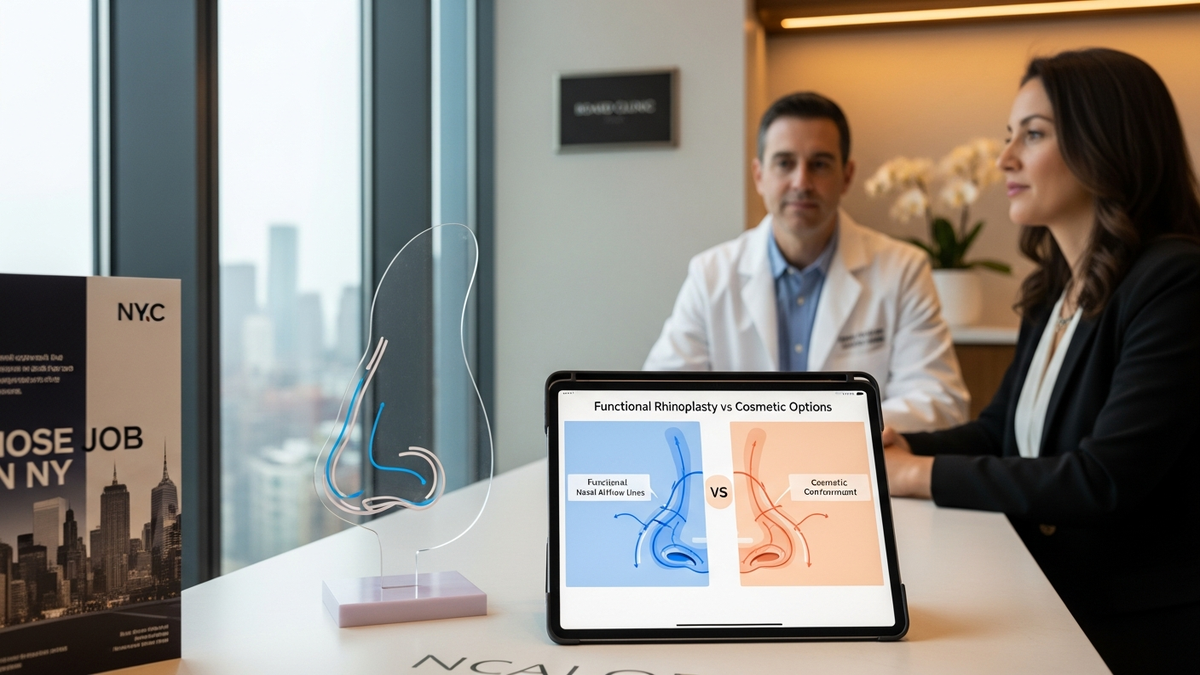
Functional vs Cosmetic Rhinoplasty: The Core Difference
Cosmetic rhinoplasty focuses on appearance
Cosmetic rhinoplasty is designed to alter the nose’s shape and proportions for a more desirable aesthetic outcome. Common goals include:
- Refining the nasal bridge
- Reshaping the nasal tip
- Improving symmetry
- Balancing the nose with facial features (eyes, lips, cheeks)
Even when cosmetic goals are primary, the surgeon should still consider airflow and nasal valve function. A beautiful nose that doesn’t breathe well can leave patients dissatisfied.
Functional nasal surgery focuses on airflow and symptoms
Functional nasal procedures aim to improve breathing by addressing structural causes of obstruction. These can include:
- Septal deviation (a crooked septum narrowing one side)
- Enlarged nasal turbinates contributing to a “stuffy nose”
- Nasal valve collapse (a common cause of dynamic, position-dependent blockage)
- Septal perforation (a hole through the septum that can affect breathing and cause bleeding)
When functional issues are the main driver of symptoms, treating the airway can dramatically improve quality of life.
How a combined plan can be the most satisfying
Many patients want both better breathing and a more refined nose. A combined approach can preserve or improve function while also achieving cosmetic enhancement. The key is a surgeon who understands both aesthetics and nasal physiology.
Key Functional Diagnoses That May Affect Your Nose Job Plan
Before surgery, your specialist should evaluate both external structure and internal airway mechanics. Here are common diagnoses that frequently come up in consultations:
Deviated septum
A deviated septum can obstruct airflow and contribute to chronic congestion. If your symptoms align with septal blockage, correcting the septum may be a primary step. For more information, you can review Septoplasty and Deviated Septum.
Inferior turbinate enlargement
Enlarged turbinates can swell and narrow the nasal passages, producing long-term congestion. Turbinate reduction can help open the airway and reduce the sensation of blockage—particularly for patients who experience persistent “stuffy nose” symptoms.
Nasal valve collapse
The nasal valve is a narrow region that strongly influences airflow. When it collapses, breathing may worsen with exercise, certain positions, or during allergy flare-ups. Treatment ranges from non-surgical options (when appropriate) to structural support, depending on severity.
Septal perforation
A septal perforation can cause symptoms such as chronic nosebleeds, whistling sounds during breathing, and difficulty breathing. In select cases, repair may be recommended to address both symptoms and comfort.
Chronic sinusitis and blockage
Some patients who seek a nose job in NY are primarily dealing with chronic sinus infection patterns, impaired drainage, or reduced smell. Minimally invasive options—such as balloon sinuplasty or endoscopic sinus surgery—may be considered when sinus anatomy and function are contributing factors.
Cosmetic Goals: What a Nose Job Can—and Can’t—Do
A strong consultation sets realistic expectations. A nose job can change shape, proportions, and some aspects of nasal structure. However, it cannot “fix” every facial concern or every symptom without addressing the underlying anatomy.
Common cosmetic requests
- Reducing a dorsal hump or smoothing the bridge
- Refining the nasal tip (droopiness, bulbousness, asymmetry)
- Improving nasal symmetry from side to side
- Balancing the nose to your face rather than chasing a generic “ideal”
Why “natural-looking” matters
Natural-looking results typically come from conservative, precise modifications that respect your existing facial identity. In FlowGeniQ Digest’s editorial lens, the best aesthetic outcomes are those that look like they could have always been part of your face—just refined.
Procedure Options: From Rhinoplasty to Functional Techniques
Not every “nose job” is the same. Your plan may include elements of rhinoplasty, functional correction, or both. Here’s how options generally fit together.
Rhinoplasty (cosmetic and/or functional)
Rhinoplasty is the umbrella term for surgical nose reshaping. Many patients search for rhinoplasty when they mean a nose job. If you’re comparing approaches, it can help to understand what rhinoplasty entails and how it’s discussed in a facial plastic surgery setting. For reference, you may review Rhinoplasty.
Septoplasty for septal deviation
Septoplasty straightens and stabilizes the nasal septum to improve airflow. When septal deviation is a major contributor, this may be the most direct functional solution.
Inferior turbinate reduction for chronic congestion
When turbinates are enlarged and contribute to persistent obstruction, turbinate reduction can improve airflow and reduce chronic “stuffy nose” symptoms.
Repair strategies for nasal valve collapse
Depending on anatomy and severity, nasal valve collapse may be treated with supportive devices or surgical reinforcement. Your surgeon should explain what is being addressed and why it’s expected to improve breathing.
When sinus procedures enter the picture
If chronic sinusitis is driving symptoms such as congestion, pressure, or recurrent infections, your plan may include sinus-focused interventions. Minimally invasive options can sometimes restore drainage and improve smell and comfort.
Choosing a Surgeon for a Nose Job in NY: What to Look For
Because the nose involves both visible artistry and airway function, selection criteria should be more rigorous than for many other cosmetic procedures. When choosing a surgeon for a nose job in NY, consider:
1) Expertise in head and neck facial surgery
A surgeon with training that bridges cosmetic and functional anatomy can better coordinate airway goals with aesthetic outcomes.
2) A track record of natural-looking results
Ask to see before-and-after photos across a range of noses and symptom profiles. Pay attention to how results look in different lighting and from multiple angles.
3) Honest, education-first consultations
FlowGeniQ Digest emphasizes that the best consultations feel empowering—not rushed. You should leave understanding your diagnosis, options, and the reasoning behind the plan.
4) A plan that addresses both breathing and appearance (when relevant)
If you have congestion, allergies, sleep-disordered breathing, or a history of sinus issues, your surgeon should integrate functional evaluation into the decision-making process.
5) Clear discussion of risks and recovery
Ask about swelling timeline, scar visibility, discomfort expectations, and how the clinic supports patients after surgery.
Recovery After a Nose Job: What to Expect
Recovery varies based on the procedure type (cosmetic-only rhinoplasty vs combined functional approaches), your anatomy, and whether additional interventions are performed.
Early recovery (first days to 1–2 weeks)
- Swelling and bruising are common, often peaking in the first several days.
- Congestion may occur due to internal healing and splinting (if used).
- You may have restrictions on strenuous activity and certain facial movements.
Mid recovery (weeks 2–6)
- Swelling begins to settle more noticeably.
- Many patients return to work and lighter social activities depending on their comfort and the surgeon’s guidance.
Long-term refinement (months)
Even after initial healing, the nose continues to refine over time. Final results can take several months as internal tissues settle and the shape stabilizes.
Non-Surgical Alternatives (and When They Matter)
Not all nose concerns require surgery. For some patients, non-surgical strategies may help symptoms or minor aesthetic goals. However, they are not a substitute for structural correction when airflow is significantly compromised.
Breathing-first options
If your primary issue is chronic congestion, your doctor may recommend medical therapy or minimally invasive treatments first—depending on diagnosis.
Allergy management
Allergies can worsen nasal swelling and congestion. Some patients benefit from allergy-focused approaches, which may reduce the frequency and severity of obstructive episodes.
Actionable recommendation: Bring a symptom log to your consultation (nasal obstruction severity, side preference, triggers, sleep quality, sinus flare frequency). This can help your surgeon determine whether the problem is structural, inflammatory, or both.
Costs and Insurance Considerations in NY
Pricing for a nose job in NY can vary widely based on procedure complexity, surgeon experience, facility fees, anesthesia, and whether functional correction is included.
Cosmetic vs functional coverage
In many cases, cosmetic rhinoplasty is not covered by insurance. However, functional procedures may be partially covered when they are medically necessary (for example, to treat significant obstruction). Coverage rules vary, and documentation requirements are specific.
Actionable recommendation: Ask your surgeon’s office about a pre-authorization process, if applicable, and whether your diagnosis supports medical necessity documentation.
What to Ask at Your Consultation (Use This Checklist)
If you want to feel confident about your decision, come prepared. Here’s a practical checklist tailored to anyone considering a nose job in NY—especially if breathing is part of the goal.
About diagnosis and goals
- What is the likely cause of my congestion or breathing difficulty?
- Do I have septal deviation, turbinate enlargement, or nasal valve collapse?
- Which parts of my nose need cosmetic refinement—and which need functional correction?
About the surgical plan
- Will this be cosmetic-only rhinoplasty, functional surgery, or a combined approach?
- What techniques will you use, and why are they appropriate for my anatomy?
- What outcomes are realistic for my specific nasal structure and symptoms?
About safety and recovery
- What are the most important risks in my case?
- What is my expected swelling and congestion timeline?
- What restrictions should I plan for work, exercise, and sleep?
About long-term results
- How do you monitor healing and address concerns if they arise?
- When should I expect to see meaningful changes, and when are results considered final?
A Note on Comprehensive Facial Aesthetics
Many patients who consider a nose job in NY are also thinking about broader facial rejuvenation. While this article focuses on nasal surgery, it’s helpful to remember that facial harmony is interconnected. A surgeon who understands head and neck aesthetics can coordinate goals across multiple concerns.
For example, some patients later explore complementary procedures like Facelift or Blepharoplasty to address aging changes around the eyes and mid-face. The right sequence depends on your anatomy and priorities.
Why Education-First Care Builds Better Outcomes
At FlowGeniQ Digest, we believe the best surgical experiences start with clarity. A nose job is not just an appointment—it’s a process that requires informed decision-making before surgery and consistent follow-up afterward.
In practice, an education-first approach often includes explaining the difference between functional nasal surgery and cosmetic rhinoplasty, reviewing your anatomy and symptom patterns, and outlining recovery expectations. When patients understand the “why” behind each step, satisfaction tends to be higher.
Expert Spotlight: Head & Neck Focused Care for Functional Nasal Surgery
For readers who want a functional-forward perspective, Dr. Hootan Zandifar is a board-certified facial plastic and reconstructive surgeon focused on surgeries of the head and neck. His approach emphasizes both honest guidance and patient education, particularly for patients whose main concern is chronic nasal congestion and sinus-related symptoms.
Dr. Zandifar is known for functional nasal procedures that may be less invasive than traditional rhinoplasty in the right circumstances—aimed at permanently alleviating symptoms that make it hard to breathe and improving overall quality of life. This functional focus is especially relevant when a “nose job” search is driven by airway concerns rather than appearance alone.
Related FAQs About Nose Jobs in NY
Is a nose job in NY the same as septoplasty?
No. A nose job (often rhinoplasty) reshapes the nose for cosmetic and/or functional reasons. Septoplasty specifically corrects a deviated septum to improve airflow. Some patients may require septoplasty as part of a broader plan, while others may primarily need cosmetic refinement.
How long does it take to see final results after rhinoplasty?
Swelling improves over weeks, but subtle internal and external refinement can continue for months. Many surgeons describe final results as taking several months as tissues settle and the nose stabilizes.
Can I breathe better after a cosmetic rhinoplasty?
Often, yes—especially if your appearance concerns overlap with airway issues such as septal deviation, turbinate enlargement, or nasal valve dysfunction. The key is an individualized evaluation so that breathing goals are considered during planning.
Will insurance cover my functional nose surgery?
Sometimes. Functional procedures may be partially covered when medically necessary, but coverage depends on diagnosis, documentation, and insurer policies. Your clinic can typically help you understand how to pursue pre-authorization if needed.
What should I do before surgery to improve outcomes?
Follow pre-op instructions closely (including medication guidance), prepare your recovery schedule, and bring a clear symptom history to your consultation. Avoiding smoking (if applicable) and managing allergies can also support healing and comfort.
CTA: Ready to Explore Your Nose Job Options?
If you’re considering a nose job in NY, the smartest next step is an evaluation that addresses both appearance and breathing. FlowGeniQ Digest encourages you to seek a consultation where your symptoms, anatomy, and aesthetic goals are discussed together—so you can choose the safest, most effective path.
Next action: Schedule a consultation with a qualified facial plastic and reconstructive specialist to review your diagnosis, treatment options, and recovery plan.
Professional Disclaimer
This content is provided for general educational purposes only by FlowGeniQ Digest. It is not a substitute for professional advice, diagnosis, or treatment. Readers are advised to consult qualified professionals for personalized recommendations.
Medical Information Disclaimer
This content is provided for general educational purposes only by FlowGeniQ Digest. It is not a substitute for professional advice, diagnosis, or treatment. Readers are advised to consult qualified professionals for personalized recommendations.