Looking at “nose job before and after” photos is often the first step toward understanding what rhinoplasty (and related nasal procedures) can do. But the most meaningful results aren’t just about appearance—they’re about how your nose looks, how it fits your face, and whether it helps you breathe comfortably. In this FlowGeniQ Digest guide, we’ll break down what people typically experience before and after surgery, what a realistic recovery timeline looks like, and how to choose a plan that supports both aesthetics and function.
Nose job before and after: why photos can be helpful—and misleading
When you search for nose job before and after images, you’re likely trying to answer two questions:
- Will my results look natural?
- Will I breathe better?
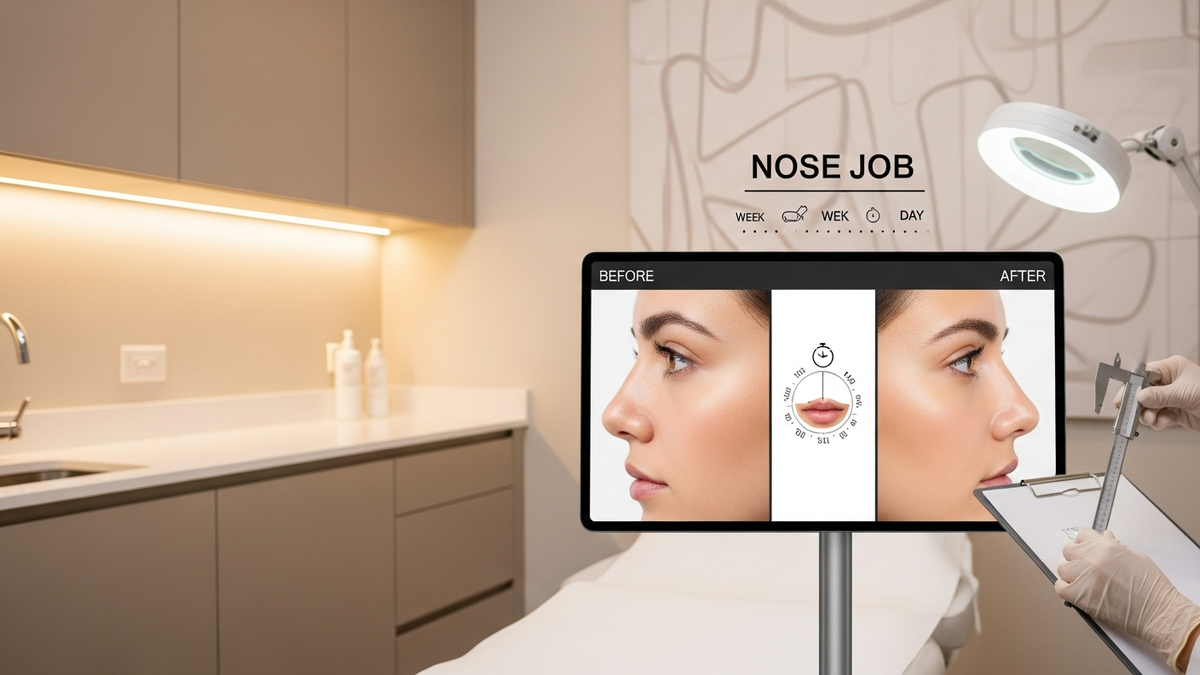
Before-and-after photos can be useful because they show outcomes from real patients. However, they’re also limited by factors like lighting, camera angle, swelling at the time of the photo, and how long after surgery the “after” picture was taken.
That’s why the best approach is to treat photos as a starting point—not a guarantee. Your anatomy, skin thickness, cartilage structure, and healing response will influence your outcome.
What changes are commonly seen in nose job before and after outcomes?
“Nose job” is a common term for rhinoplasty, a surgical procedure that reshapes the nose. Depending on your goals, results may include changes to the nasal bridge, tip, nostrils, and overall proportions. In some cases, the surgery also addresses functional issues that affect nasal airflow.
Typical aesthetic changes
- Straighter bridge or refined contour
- Smaller or more defined tip
- Improved symmetry between sides
- Nostril shape refinement for better balance
- Refined facial harmony (how the nose relates to eyes, lips, and chin)
Typical functional improvements
Some patients pursue cosmetic changes because they also want improved breathing. Nasal obstruction can be caused by structural factors such as a Deviated Septum or enlarged turbinates. When appropriate, tailored surgical or minimally invasive functional treatments may help.
For more context on nasal function procedures, you can explore Septoplasty and Deviated Septum information, which are often discussed when patients experience chronic congestion.
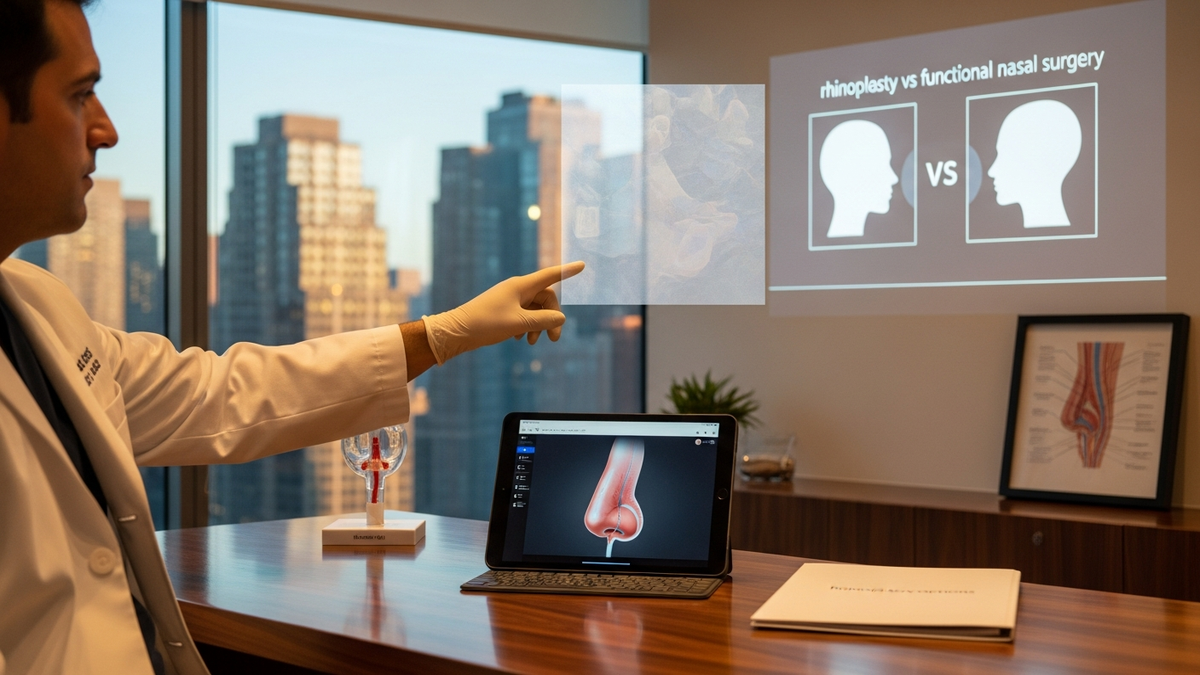
Rhinoplasty vs. functional nasal surgery: not every “nose job” is the same
In everyday conversation, “nose job” often refers to rhinoplasty. But in clinical practice, nasal surgery can range from primarily aesthetic procedures to functional repairs (or both). At Hootan Zandifar, MD—double board certified facial plastic and reconstructive surgeon—care can focus on functional nasal surgery to treat chronic symptoms like congestion or sinusitis, using minimally invasive approaches when appropriate.
When rhinoplasty is the right fit
Rhinoplasty may be considered when you want changes to the nose’s shape and proportions—such as reducing a dorsal hump, refining the tip, or improving overall balance. For an overview of rhinoplasty in Beverly Hills, see Rhinoplasty.
When functional procedures may be more appropriate
Some patients primarily struggle with breathing. In those cases, functional procedures may offer symptom relief with a different focus than purely cosmetic surgery. For example:
- Septoplasty straightens the nasal septum to improve airflow.
- Inferior turbinate reduction may reduce “stuffy nose” symptoms associated with chronic congestion.
- Nasal valve collapse repair can address a common cause of airflow limitation.
These options can sometimes be performed alone or combined with cosmetic refinement, depending on your anatomy and goals.
Recovery timeline: what nose job before and after typically looks like week by week
One reason people misread nose job before and after photos is that swelling can dramatically change the nose’s appearance in the early stages. Below is a general recovery timeline. Your surgeon will provide a plan specific to your procedure and health history.
First 0–7 days: swelling, bruising, and “tight” feeling
- Expect swelling and possible bruising around the nose and eyes.
- Breathing may feel different due to internal healing and splints (if used).
- Comfort is usually supported with prescribed medications and careful care of dressings.
Photo note: Many “after” photos online are taken too early, when swelling is still significant. A nose can look “bigger” or slightly off during this period.
Days 7–14: splint removal and gradual improvement
- Splints/stitches (if used) may be removed around this stage.
- Bruising typically fades.
- Swelling continues to settle, especially at the tip.
Photo note: This is often when people feel they look “better,” but the final shape is still evolving.
Weeks 3–6: the nose starts to “read” more clearly
- Visible contour becomes clearer.
- Tip definition may improve as swelling decreases.
- Minor asymmetries may still be present and can be normal during healing.
Months 3–6: refinement phase
- Ongoing soft tissue settling helps the nose take on its long-term look.
- Most patients experience meaningful improvements in how the nose appears in everyday life.
Months 9–12+: long-term maturation
For many patients, the nose continues to mature beyond the first year. Tip support, cartilage remodeling, and internal healing can take time. If you’re comparing nose job before and after results, look for photos taken at least several months post-op for a more dependable comparison.
How to interpret “nose job before and after” results realistically
If you want results that look natural, it helps to know what “natural” means in surgical planning. Natural-looking outcomes usually reflect:
- Proportional change (the nose fits your face rather than looking “overdone”)
- Balanced angles from multiple views (front, profile, and 3/4 angles)
- Appropriate tip structure (support and rotation that match your anatomy)
- Skin-thickness considerations (how the skin will drape over the cartilage)
It also helps to ask: What was the starting point? A subtle refinement on one patient can appear dramatic if their baseline was very different, while a complex reconstruction may look less dramatic in early photos.
Risks, complications, and why “good results” require good planning
Any surgery can involve risks. A premium, patient-centered approach focuses on minimizing risk through careful evaluation, thoughtful technique, and transparent expectations.
Potential risks (varies by patient and procedure)
- Swelling that lasts longer than expected
- Asymmetry during healing
- Infection (uncommon with proper care)
- Bleeding or delayed healing
- Changes in sensation around the nose
- Breathing issues if internal structures are affected (and how they’re addressed)
How to reduce risk before surgery
- Choose a surgeon who specializes in head and neck and has a track record of natural outcomes.
- Share your full medical history (including allergies, prior nasal trauma, and medications).
- Follow pre-op and post-op instructions closely (including activity restrictions).
- Ask about functional goals if you have congestion or sinus symptoms.
What to ask during your nose job consultation
To move beyond generic expectations, prepare questions that connect your goals to your anatomy. Here are high-value questions for a consultation:
- Am I a good candidate for rhinoplasty, functional nasal surgery, or a combined approach?
- What nose job before and after results look most similar to my starting point?
- How will swelling affect my appearance during the first weeks?
- What breathing improvements are realistic?
- How will you preserve or support nasal function?
- What is your approach to tip refinement and structural stability?
- What does revision planning look like if healing doesn’t match expectations?
Patient education matters: the FlowGeniQ Digest approach to informed decisions
At FlowGeniQ Digest, we emphasize practical education—because the most confident patients are the best-prepared patients. A “nose job before and after” search can be emotionally motivating, but your decision should be grounded in medical fit, surgical planning, and recovery expectations.
That’s also why it’s valuable to understand the broader facial plastic context. For example, many patients consider complementary procedures to match overall facial rejuvenation goals. If you’re exploring other areas, you may find it helpful to review options like Blepharoplasty or a Facelift—not because you need them for a nose job, but because holistic planning can support a cohesive, refreshed look.
Similarly, some patients with hair loss explore a hair transplant, and those with eyebrow thinning may ask about an eyebrow transplant. These are separate decisions, but they reflect the same principle: outcomes look best when your plan is tailored to your features and life goals.
Functional breathing and sinus symptoms: when “nose job” is really about airflow
For many patients, the most frustrating part of nasal issues isn’t appearance—it’s the daily impact of congestion. Chronic symptoms can include difficulty breathing, recurrent sinus infections, and reduced quality of life. When structural problems contribute to your symptoms, targeted functional procedures may offer meaningful improvement.
Common structural contributors
- Deviated septum (septal cartilage not aligned)
- Enlarged turbinates contributing to long-term blockage
- Nasal valve collapse limiting airflow at the narrowest point
- Septal perforation causing bleeding or airflow symptoms
Minimally invasive options (when appropriate)
Depending on your diagnosis, your care team may discuss approaches such as balloon sinuplasty for blocked sinus passages or other targeted interventions to restore normal sinus function. These options can be part of a comprehensive plan when symptoms and anatomy overlap.
Realistic expectations: what results you can (and can’t) guarantee
Even with excellent technique, healing is individual. Here are grounded expectations that help patients stay confident:
- You can expect change—but not instant final results.
- You can expect gradual refinement over months, especially at the tip.
- You should not expect identical symmetry immediately—minor differences can normalize as swelling settles.
- You should expect your surgeon to discuss trade-offs between aesthetics and function when relevant.
If you’re comparing nose job before and after photos, look for consistency: similar baseline anatomy, similar goals (tip refinement vs. bridge narrowing), and photos taken at comparable time intervals post-op.
How to prepare for surgery and protect your results
Preparation isn’t just paperwork—it directly influences healing and outcomes. Use this as a checklist to support a smoother recovery:
Before surgery
- Stop or adjust medications only as instructed by your surgeon (especially blood-thinning medications).
- Plan your recovery space with easy access to hydration, medications, and supplies.
- Arrange time off work based on your timeline and comfort.
- Avoid smoking/vaping if applicable, as it can impair healing.
After surgery
- Follow wound and dressing instructions precisely.
- Keep your head elevated to reduce swelling.
- Avoid strenuous activity during the early healing phase.
- Attend follow-up appointments for monitoring and adjustments.
Where to find trustworthy nose job before and after examples
Not all galleries are equally informative. When you review nose job before and after examples, prioritize:
- Consistency in lighting and angles
- Clear timing (how many months post-op the “after” is)
- Varied cases showing different starting points
- Patient-reported outcomes about comfort and breathing (when available)
Most importantly, ask your surgeon to explain which results are most comparable to your goals—because the best match is rarely the most dramatic transformation.
Meet your care team: why specialized head and neck expertise matters
Nasal anatomy is complex, and the nose plays a dual role in both appearance and breathing. Choosing a specialist who focuses on head and neck surgery can support more nuanced planning—especially when functional symptoms are part of your motivation.
Dr. Hootan Zandifar is a board certified facial plastic and reconstructive surgeon who focuses on cosmetic and reconstructive procedures of the head and neck. He is known for an honest, trustworthy, and compassionate approach, with a commitment to patient education and natural-looking results. For patients in Los Angeles and Beverly Hills, his practice supports both aesthetic refinement and functional nasal surgery options when appropriate.
FAQ: nose job before and after
How long until I see my final nose job before and after results?
Most patients notice meaningful changes within the first few months, but final refinement can take 9–12 months or longer as swelling settles and tissues mature. If you’re comparing photos, focus on “after” images taken several months post-op.
Will a nose job always improve breathing?
Not always. Some patients experience improved airflow—especially when structural issues are addressed. Others may have primarily aesthetic goals. A thorough evaluation helps determine whether functional procedures like Septoplasty or other airway-focused options are appropriate.
Why does my nose look worse before it looks better?
Swelling and bruising can temporarily change the nose’s shape and definition. Early “after” photos may look less refined because the nose is still healing. This is normal and typically improves over time.
Are nose job results supposed to look symmetrical immediately?
Healing is dynamic. Minor asymmetries can be normal in the early stages and may improve as swelling decreases. Your surgeon will monitor progress during follow-ups.
What’s the difference between rhinoplasty and a functional nasal procedure?
Rhinoplasty primarily targets nasal shape and proportions (though it can also address function). Functional nasal procedures focus on airflow and obstruction causes—such as a Deviated Septum—and may be combined with cosmetic goals depending on your case.
CTA: ready to discuss your goals?
If you’re considering a nose job before and after transformation—whether for aesthetics, breathing, or both—your best next step is a consultation with a qualified specialist. Bring your goals, questions, and realistic timeline expectations, and ask how your plan will support both facial harmony and nasal function.
Schedule your appointment to discuss your anatomy and options. In Beverly Hills, Dr. Hootan Zandifar helps patients make well-informed decisions with education-first care and natural-looking results.
Professional Disclaimer
This content is provided for general educational purposes only by FlowGeniQ Digest. It is not a substitute for professional advice, diagnosis, or treatment. Readers are advised to consult qualified professionals for personalized recommendations.
Medical Information Disclaimer
This content is provided for general educational purposes only by FlowGeniQ Digest. It is not a substitute for professional advice, diagnosis, or treatment. Readers are advised to consult qualified professionals for personalized recommendations.