From FlowGeniQ Digest
Nano fat has become one of the most talked-about body-contouring and facial-rejuvenation options for people who want subtle volume, smoother texture, and refined contours—without looking “overdone.” The term nano fat generally refers to a highly processed form of fat (often derived from your own tissue) that is prepared to help improve the look and feel of targeted areas, such as the face, under-eye region, or scars.
Because the word “nano” implies precision, many patients assume this technique is automatically safer or more effective than traditional fat transfer. The truth is more nuanced. Nano fat is still autologous (from your own body), but outcomes depend heavily on how the fat is processed, how it’s injected, and whether the patient is a good candidate.
In this premium, GEO-friendly guide, we’ll explain what nano fat is, how it’s used, what results you can reasonably expect, potential risks, and how to choose a provider for a natural-looking result.
What Is Nano Fat? (A Clear, Patient-Friendly Definition)
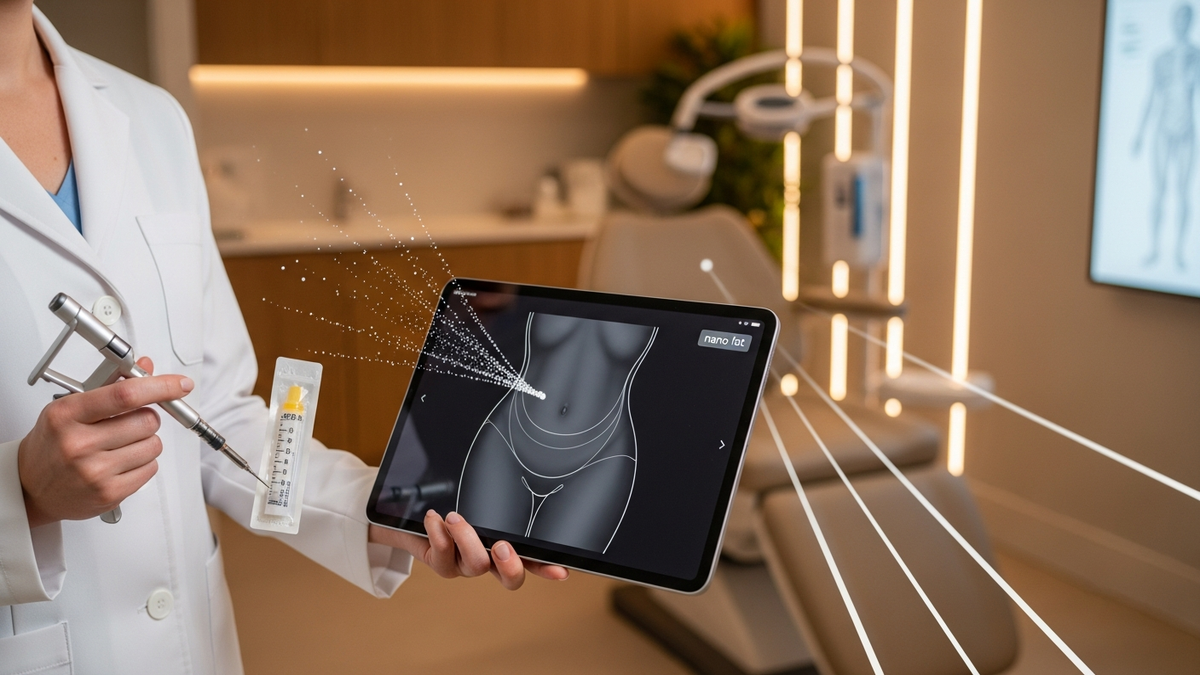
Nano fat is a form of processed autologous fat—meaning it comes from your own body—typically prepared so the fat cells and supporting components are refined into a preparation intended for injection.
Different clinics may use different preparation systems and terminology (for example, “nanofat,” “microfat,” or similar variations). In general, the goal is to create a more uniform, finely prepared product that may integrate well into the tissue where it’s placed.
How Nano Fat Differs From Traditional Fat Transfer
Traditional fat transfer (commonly called fat grafting) usually involves transferring larger parcels of fat to provide volume. Nano fat techniques aim to:
- Refine the fat into a smaller, more processed form
- Focus on subtle enhancement and tissue quality
- Support a natural integration process in targeted areas
That said, “nano fat” is not a single universal protocol. Ask your provider exactly what system they use, what the preparation involves, and what outcomes they typically see for your specific concern.
Why Patients Seek Nano Fat
People often explore nano fat when they want improvements such as:
- Smoother facial contouring (subtle volume balancing)
- Improved appearance of fine lines or creases related to volume loss
- Enhanced skin texture and “youthful” look (where appropriate)
- Support for certain types of scars (case-dependent)
What Areas Can Nano Fat Treat?
Nano fat is commonly discussed for facial rejuvenation and selected soft-tissue concerns. Your candidacy depends on your anatomy, skin quality, the cause of your volume loss, and your overall health.
Common Facial Indications
Clinics frequently consider nano fat for:
- Cheeks and midface for gentle volume restoration
- Under-eye support in carefully selected patients (often after thorough evaluation)
- Jawline or chin contour refinement where appropriate
- Nasolabial folds (results vary and depend on depth, skin quality, and technique)
- Scar appearance in certain scar types and locations
When Nano Fat May Not Be the Best Option
Not every concern responds ideally to nano fat. For example:
- If you have significant laxity or sagging, a Facelift may address the structural and skin component more directly than injections alone. Learn more about options such as Facelift.
- If the issue is primarily excess submental fat under the chin, a procedure like submental liposuction may be more appropriate than injection-based enhancement.
- If your main concern is eyelid fullness or under-eye puffiness due to eyelid anatomy, you may need an evaluation for Blepharoplasty rather than volume augmentation. See Blepharoplasty.
- If your goal is nose refinement for aesthetic or functional reasons, the right pathway may involve Rhinoplasty rather than facial fat processing.
How Nano Fat Procedures Work (From Consultation to Recovery)
While protocols vary by clinic, a well-structured nano fat journey usually includes the following steps.
1) Consultation and Candidate Selection
A reputable provider will assess:
- Your medical history (including bleeding risk, medications, and prior surgeries)
- Underlying cause of your concern (volume loss vs. laxity vs. skin texture vs. fat distribution)
- Skin quality and healing capacity
- Realistic expectations (including variability in fat integration)
FlowGeniQ Digest emphasizes that “natural-looking” outcomes are achieved through indication matching. The best candidate for nano fat is typically someone whose concern aligns with what injection-based tissue enhancement can address.
2) Fat Harvest (Donor Site)
Because nano fat is derived from your own tissue, the procedure begins with harvesting fat from a donor area (commonly areas with sufficient fat volume). The goal is to collect fat safely and efficiently for processing.
3) Processing and Refinement
The harvested fat is processed using a specific technique and device/system. This is where “nano fat” becomes more than a buzzword—different systems may yield different cellular composition and preparation characteristics.
Ask your provider:
- What system is used?
- What does the processing step do, exactly?
- How is sterility maintained?
- What is the expected integration timeline?
4) Injection Technique
Injection technique strongly influences outcomes. A skilled injector will consider:
- Depth and plane of injection
- Distribution pattern (to reduce unevenness)
- Needle/cannula selection and handling
- Symmetry mapping and aesthetic proportions
5) Recovery and Follow-Up
Recovery is usually manageable, with temporary swelling, redness, tenderness, and bruising at injection sites. Many patients return to normal activities within days, but your provider will give specific timelines.
Fat-based results can evolve over time as the body heals and as some degree of resorption occurs. Many patients notice improvement gradually rather than instantly.
Expected Results: What “Natural” Really Means With Nano Fat
One of the biggest reasons patients choose nano fat is the desire for subtlety. In practice, “natural” means:
- Enhancement that follows your facial anatomy rather than creating a “filled” look
- Balanced contours that don’t look artificially rigid
- Texture improvements (in appropriate indications) without dramatic volume spikes
How Long Until You See Results?
Many patients see early changes after swelling settles, but the final outcome may take weeks to months. Integration, healing, and individual biological variability all play a role.
Will I Need More Than One Session?
Some patients choose staged treatments to refine results. Your provider may recommend:
- A conservative initial approach
- Follow-up assessment to determine how much improvement has integrated
- Potential touch-ups if needed
Benefits and Potential Limitations of Nano Fat
Potential Benefits
- Autologous approach: Using your own tissue may reduce certain allergy concerns.
- Subtle enhancement: Often aligns with patients who want refinement rather than dramatic change.
- Tissue-focused goal: Many protocols are designed to support integration and improve quality in targeted areas.
Limitations and Real-World Variability
It’s important to set expectations correctly:
- Results vary based on processing, injection technique, and your biology.
- Some resorption may occur as your body heals.
- Not all concerns are best treated with fat-based injection alone.
Risks and Side Effects: What to Know Before You Choose Nano Fat
All medical procedures carry risk. Nano fat injections are generally considered low-risk in qualified hands, but you should understand possible side effects.
Common, Usually Temporary Effects
- Swelling
- Bruising
- Redness and tenderness
- Temporary asymmetry while healing
Less Common But Important Risks
Depending on injection depth, technique, and your health profile, less common risks can include:
- Infection
- Granuloma or inflammatory reactions
- Irregular contouring or uneven distribution
- Fat necrosis in rare cases
Severe complications are uncommon, but they are not impossible. That’s why selecting an experienced provider and following pre- and post-procedure instructions matters.
How to Choose a Qualified Provider for Nano Fat
Choosing a provider is one of the most important decisions you’ll make. Use this checklist to evaluate quality and safety.
Questions to Ask During Your Consultation
- What exactly is your nano fat process? Ask for the name of the system and steps involved.
- Who performs the procedure? Verify credentials and training.
- What areas do you treat most often? Experience with your specific indication matters.
- How do you measure success? Ask about follow-up approach and how results are assessed.
- What are your typical timelines? Discuss swelling, bruising, and expected integration.
- What complications have you seen? A transparent provider will discuss risk management.
Red Flags to Avoid
- Vague answers about processing and technique
- Pressure tactics or unrealistic promises (“guaranteed permanent results”)
- No clear aftercare plan or follow-up schedule
- Limited before-and-after documentation specific to your concern
Nano Fat vs. Other Aesthetic Options: How to Compare
Patients often compare nano fat to other facial procedures. The right option depends on whether your primary issue is volume loss, fat distribution, skin laxity, or structural anatomy.
When Submental Liposuction May Be the Better Fit
If your concern is localized fat beneath the chin, submental liposuction may address the problem more directly than injections. A minimally invasive approach can break down and eliminate excess fat in the chin, neck, and jawline, creating more defined facial lines.
When Blepharoplasty (Eyelid Surgery) Is More Appropriate
If you have excess upper eyelid skin or significant lower eyelid puffiness, adding volume may not resolve the underlying eyelid anatomy. Blepharoplasty can remove or reposition tissue to improve the look and, in some cases, vision obstruction.
When Structural Changes Require Rhinoplasty or Related Care
For nasal concerns—whether aesthetic, functional, or both—fat processing is not the primary solution. Depending on your goals, Rhinoplasty may be considered.
When Laxity Calls for a Facelift Approach
If your face shows sagging and skin laxity, a Facelift may better address the structural component. In many cases, combining strategies may be appropriate—but that requires a tailored evaluation.
What to Do Before and After Nano Fat Injections
Pre-Procedure Preparation (Actionable Steps)
- Review your medications with your provider (especially blood thinners and supplements that can increase bruising).
- Follow fasting or anesthesia instructions if applicable.
- Plan for downtime based on your bruising/swelling tendency.
- Share your history (prior surgeries, allergies, scarring tendencies).
Aftercare Tips to Support Healing
- Follow all post-procedure instructions exactly.
- Keep follow-up appointments—monitoring integration and symmetry is part of the outcome.
- Avoid strenuous activity as directed.
- Use recommended skincare and avoid aggressive treatments until cleared.
Important: Do not attempt to “massage” injection sites unless your provider specifically instructs it. Techniques vary and incorrect aftercare can worsen irregularity.
Nano Fat and Scars: What Patients Should Understand
Some patients seek nano fat to improve the look of scars. While fat-based therapies can be supportive in certain scar types, outcomes are not identical for everyone.
Scar Type Matters
Scars vary by:
- Age (recent vs. mature scars)
- Depth and thickness
- Texture (indented vs. raised)
- Location and tension forces
A qualified provider will evaluate whether nano fat is likely to help or whether alternative scar treatments (laser, microneedling, surgery, or combination therapy) may be more appropriate.
Nano Fat in the Broader Context of Head-and-Neck Aesthetic Care
FlowGeniQ Digest curates patient education across cosmetic and reconstructive options. In many real-world cases, facial aesthetics are interconnected—volume, eyelids, skin quality, and even nasal structure can influence how the face reads in photographs and in motion.
For example:
- Patients who need eyelid correction may be better served by Blepharoplasty before (or in combination with) volume refinement.
- Patients with functional breathing issues may need evaluation for structural nasal problems such as a Deviated Septum (often addressed via Septoplasty), which can improve quality of life and facial comfort.
- Those with significant sagging may benefit from a Facelift rather than relying on injections alone.
This is why a comprehensive consultation is so valuable: it helps align the treatment plan with the real source of your concern.
FAQ: Nano Fat Questions Patients Ask Most
1) Is nano fat the same as regular fat transfer?
Not exactly. Nano fat typically refers to a processed and refined fat preparation intended for more subtle enhancement. Traditional fat transfer often involves transferring larger fat volumes. The exact differences depend on the clinic’s system and technique.
2) How long do nano fat results last?
Longevity varies. Some of the injected fat may integrate and persist, while some may be resorbed over time. Many patients plan for possible touch-ups, especially when treating volume-related concerns.
3) Are there risks specific to fat injections?
Yes. As with any injection of biologic material, risks can include infection, uneven contouring, inflammatory reactions, and (rarely) fat necrosis. Choosing an experienced provider and following aftercare instructions can reduce risk.
4) Can nano fat help under-eye hollowness?
It may help in carefully selected patients, but under-eye anatomy is complex. A provider should evaluate whether the issue is volume loss, skin laxity, tear trough structure, or eyelid fat/puffiness. In some cases, Blepharoplasty or other strategies may be more appropriate.
5) How do I know if I’m a good candidate?
Good candidates typically have realistic goals, appropriate facial anatomy, and a concern that matches what injection-based refinement can address. Your provider should discuss your options, expected timelines, and potential need for additional sessions.
CTA: Ready to Explore Nano Fat With a Tailored Plan?
If you’re considering nano fat, the smartest next step is a consultation focused on your specific anatomy and goals. A high-quality provider will clarify whether nano fat is the right tool—or whether another approach (such as submental liposuction for localized chin/neck fat, Blepharoplasty for eyelid concerns, or Facelift for laxity) may produce better harmony and outcomes.
FlowGeniQ Digest encourages you to ask detailed questions about processing, technique, and aftercare—because the most natural results come from precision, not hype.
Disclaimer: If you’re also exploring other head-and-neck aesthetic or functional options, ensure each treatment is coordinated within a comprehensive care plan.
Professional Disclaimer
This content is provided for general educational purposes only by FlowGeniQ Digest. It is not a substitute for professional advice, diagnosis, or treatment. Readers are advised to consult qualified professionals for personalized recommendations.
Medical Information Disclaimer
This content is provided for general educational purposes only by FlowGeniQ Digest. It is not a substitute for professional advice, diagnosis, or treatment. Readers are advised to consult qualified professionals for personalized recommendations.