At FlowGeniQ Digest, we often receive questions about male eyebrow transplant before and after results—because eyebrows aren’t just hair. They frame the eyes, influence facial expression, and can dramatically change how a man looks in everyday life. Whether your brows have thinned due to genetics, over-plucking, scarring, aging, or a medical condition, the goal of an eyebrow transplant is the same: restore a balanced, natural-looking brow line that suits your facial structure.
This premium guide breaks down what to expect before the procedure, how results typically develop after surgery, and what you can do to protect your outcome. You’ll also learn how experienced surgeons approach design, graft placement, and recovery for the most convincing “before and after” transformation.
Male eyebrow transplant before and after: why results vary
When people search for male eyebrow transplant before and after photos, they’re hoping for a clear answer: “Will I look like that?” The most important truth is that outcomes depend on multiple factors—some visible, some not.
Key factors that influence your before-and-after result
- Hair characteristics: Eyebrow hair differs from scalp hair in thickness, growth pattern, and texture. Graft selection and placement matter.
- Design accuracy: The eyebrow tail, arch height, and density distribution must match your anatomy—not just a generic shape.
- Scarring and cause of loss: Repairs over scar tissue require careful technique; the “map” of your brow area changes the plan.
- Graft survival and healing: Your body’s healing response affects how many grafts establish and mature.
- Aftercare compliance: Protecting grafts during the early healing period is crucial.
In other words, two men can have the same starting point and still have different results—because surgical planning and biology are not identical.
What an eyebrow transplant actually does
An eyebrow transplant is a specialized hair restoration procedure designed to create realistic eyebrow hair density and direction. Unlike traditional “hair transplant” marketing that focuses on scalp coverage, eyebrow work is more delicate: the hair must be placed to mimic natural brow growth angles and spacing.
In many cases, patients explore options similar to a hair transplant process, but the execution is eyebrow-specific—especially regarding micro-incisions, graft handling, and the final aesthetic density pattern.
Common techniques used for eyebrow restoration
Clinics may use different donor sources and surgical methods. The two most commonly discussed approaches are:
- FUE-based eyebrow transplantation: Follicular units are harvested (often from the scalp) and implanted into the eyebrow region with precision.
- FUT-based approaches (less commonly for brows): Some surgeons prefer specific graft strategies depending on the patient’s donor availability and hair characteristics.
At a premium head-and-neck-focused practice, the emphasis is typically on achieving natural direction, appropriate density, and symmetry rather than simply “adding hair.”
Who is a good candidate for a male eyebrow transplant?
Not every patient needs surgery, and not every patient is an ideal candidate. Strong candidacy usually includes:
- Stable hair loss (so the surrounding area doesn’t continue to thin rapidly)
- Realistic expectations about density and timeline
- Adequate donor hair with characteristics that can be adapted to eyebrow placement
- Eyebrow loss that is correctable with grafting (including certain scar-related cases, depending on scar type)
Men who are dealing with eyebrow loss due to medical conditions, trauma, or thinning may also qualify, but the plan must be individualized.
Male eyebrow transplant before and after timeline: what to expect
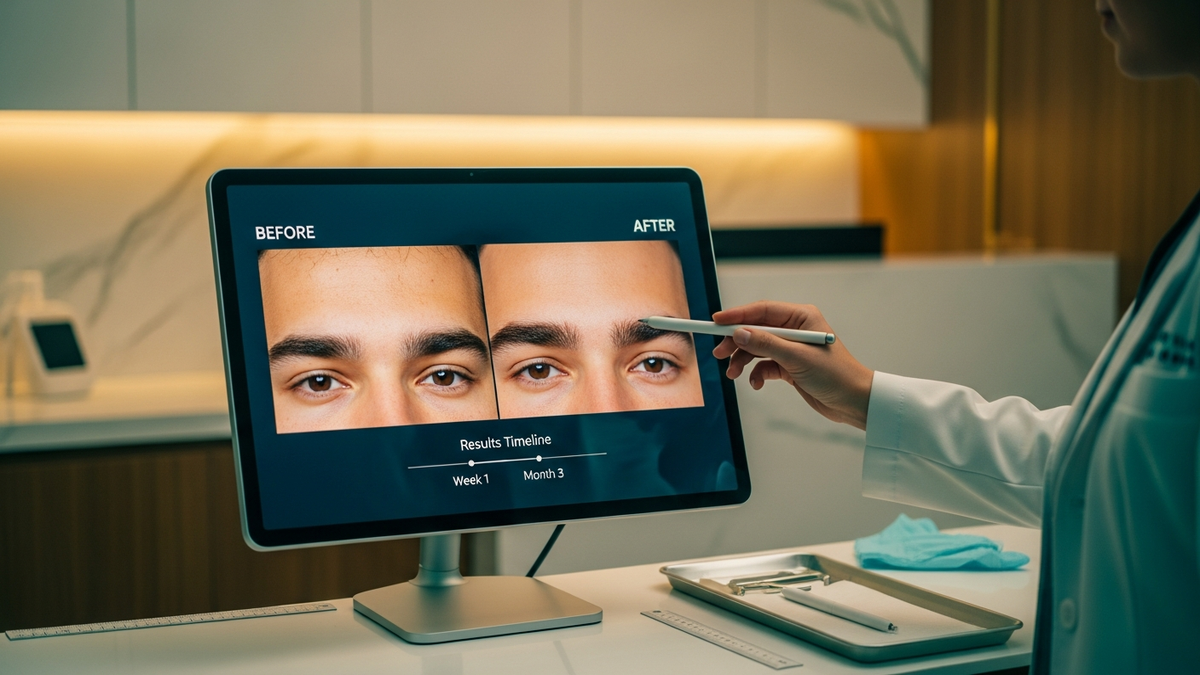
One reason eyebrow transplant stories feel confusing is that “after” doesn’t happen all at once. Most grafts go through a natural shedding and regrowth cycle. If you’re looking at male eyebrow transplant before and after photos from different time points, you’ll notice that early results can look subtle or uneven—then improve.
Typical phases of eyebrow transplant recovery
- 0–7 days: Swelling, redness, and scabbing may occur. The priority is protecting grafts.
- Days 7–21: Scabs typically shed. You may notice temporary dryness or patchy appearance as early growth changes.
- Weeks 3–12: Many patients experience temporary shedding as hairs enter a reset cycle.
- Months 3–6: Early regrowth becomes visible. Brows may look thinner before they thicken.
- Months 6–12: Continued maturation. Density and texture often improve gradually.
- Months 12–18 (sometimes longer): Final refinement for many patients, especially for symmetry and density goals.
How surgeons design brows for a natural look
The most convincing male eyebrow transplant before and after results are not only about “more hair.” They’re about where hair is placed and how it grows.
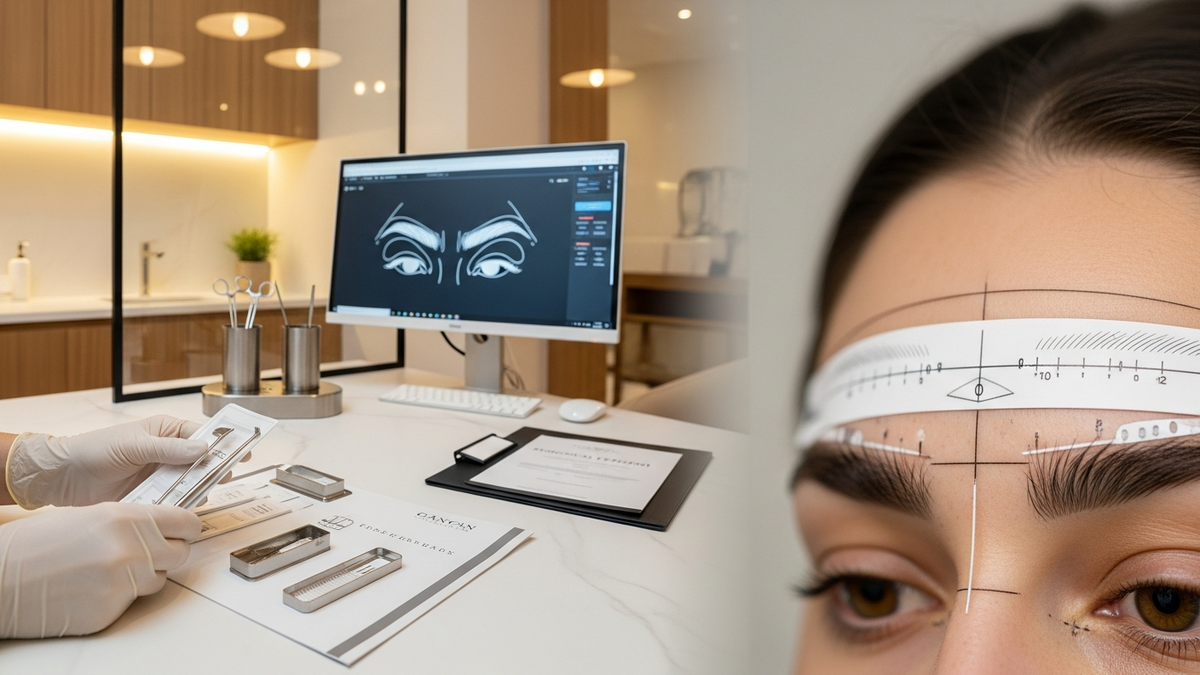
Brow mapping: the foundation of realistic results
Professional eyebrow restoration typically includes brow mapping that considers:
- Eyebrow start (head): Placement affects perceived age and expression.
- Arch height: Too high can look surprised; too low can look tired.
- Tail length: Tail density influences the “lift” effect around the eyes.
- Symmetry: Even small variations can be noticeable in close-up photos.
Natural direction, spacing, and density
Eyebrows have subtle variation: hairs are not uniform. Surgeons often create a blend of:
- Higher-density zones where brow structure needs support
- Lower-density transitions to avoid an artificial, “drawn on” look
- Growth-angle mimicry so hairs fall naturally
This is why choosing a surgeon with eyebrow-specific aesthetic training matters. Many men notice that the most “natural” results look slightly underwhelming at first—then become more convincing as maturation continues.
Male eyebrow transplant before and after: what you should look for in photos
If you’re reviewing male eyebrow transplant before and after content online, don’t just focus on the final image. Use a checklist to interpret photos correctly.
Photo quality checklist
- Time since procedure: Was it 3 months, 6 months, or 12+ months?
- Lighting: Harsh overhead lighting can make uneven regrowth look worse.
- Hair grooming: Are brows brushed upward or left natural?
- Angle and expression: Neutral expressions are easier to compare.
- Starting severity: Compare similar degrees of loss and scarring.
When a clinic shares a range of results, it’s often a sign they understand that eyebrow restoration has a spectrum—not a single “perfect” outcome.
Recovery guidance: how to protect your grafts
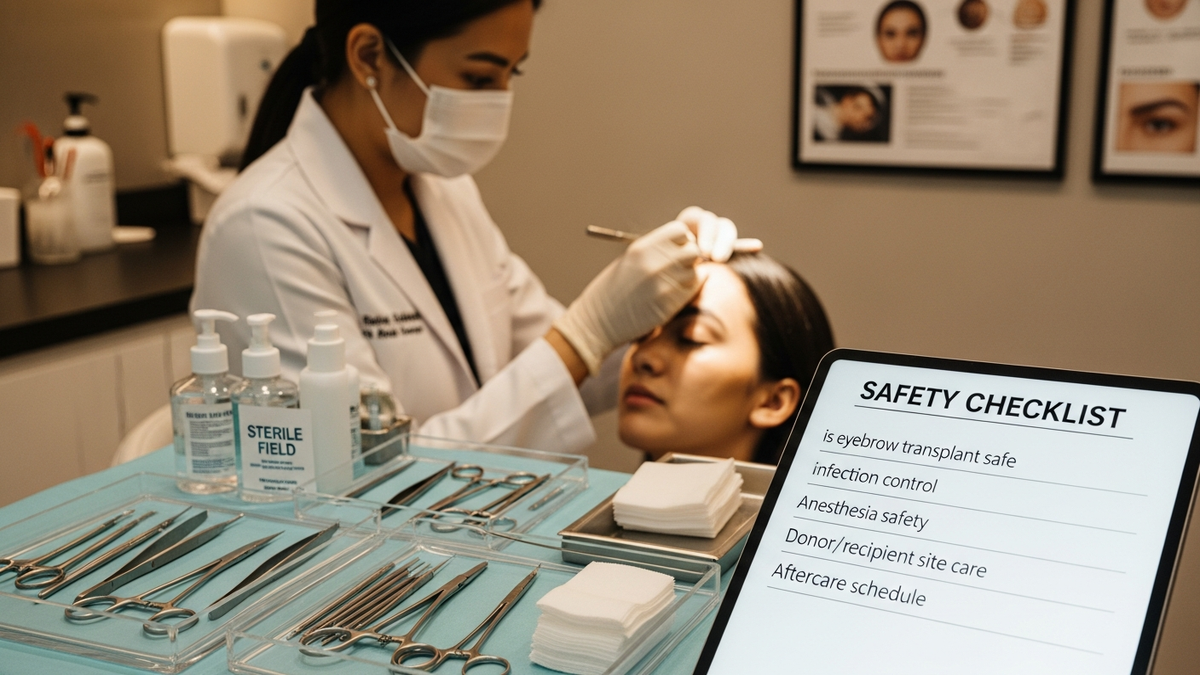
Results depend heavily on the early healing period. While your surgeon will provide personalized instructions, the general principles for protecting eyebrow grafts include:
First week: protect, don’t disturb
- Follow dressing and cleaning instructions exactly as directed.
- Avoid rubbing or touching the brow area.
- Be gentle with washing around the surgical site.
- Sleep with recommended head elevation to reduce swelling.
Weeks 2–6: be cautious with sun and heat
- Limit direct sun exposure on healing skin.
- Avoid intense workouts if your surgeon advises it (sweat and pressure can irritate healing tissue).
- Avoid harsh skincare near the surgical site unless approved.
Months 3–12: manage expectations during shedding
Many men are surprised when regrowth seems to pause or hairs shed. This is often part of the natural cycle. The best approach is to stick to your surgeon’s plan and avoid unnecessary “growing” interventions unless medically advised.
Potential risks and realistic considerations
Any surgical procedure carries risks. With eyebrow transplants, the most important considerations include:
- Temporary redness, swelling, and scabbing
- Uneven early regrowth during the shedding and maturation cycle
- Infection or delayed healing (rare, but possible)
- Scarring depending on technique and individual healing
- Need for refinement if density goals require additional sessions
A careful pre-op assessment helps reduce surprises. In eyebrow surgery, “less hair but more natural” is often the better long-term aesthetic strategy.
Eyebrow transplant vs. other facial procedures
Some men who seek eyebrow restoration also consider other head-and-neck cosmetic treatments. This isn’t about “stacking procedures” for marketing—it’s about understanding how facial aging and expression interact.
When brow restoration may complement other options
- Blepharoplasty (eyelid surgery): If the eyes look heavier due to excess eyelid tissue, brow restoration can support a refreshed upper-face appearance. Learn more about Blepharoplasty.
- Brow lift and forehead rejuvenation: If brow position has dropped over time, lifting may change how brows should be designed.
- Facelift: For broader mid-to-lower facial aging, a Facelift may be discussed in comprehensive planning.
Because eyebrows are a focal point, a thoughtful surgeon will consider how your eyes, forehead, and overall facial proportions influence the ideal brow architecture.
How to choose a clinic for male eyebrow transplant results
If you want the most convincing male eyebrow transplant before and after results, prioritize quality signals over promises. A premium clinic typically offers:
What to look for in a consultation
- Eyebrow-specific planning: Brow mapping, growth direction discussion, and density goals.
- Transparent expectations: Clear timeline and what early regrowth looks like.
- Experienced, board-certified surgical leadership: Eyebrows require precision.
- Evidence of natural outcomes: Photos at multiple time points, not only “best case” results.
- Aftercare support: A protocol for healing and follow-up.
Where Dr. Hootan Zandifar and TestBiz Hair Clinic fit in
In the FlowGeniQ Digest ecosystem, we emphasize education and informed decision-making—especially for cosmetic procedures that change facial expression. For eyebrow restoration, a head-and-neck-focused approach can be beneficial because the surgeon understands facial aesthetics as an integrated system.
TestBiz Hair Clinic is described as a premium hair transplant clinic offering FUE and FUT procedures with state-of-the-art technology and experienced surgeons, serving clients worldwide. When eyebrow restoration is performed, the aesthetic details—brow mapping, graft placement, and natural direction—are critical.
Similarly, Dr. Hootan Zandifar, MD, FACS, is known for focusing solely on surgeries of the head and neck, with a compassionate, education-first approach and an emphasis on natural-looking outcomes. His practice includes multiple facial rejuvenation and reconstructive options, and he highlights the importance of expert performance for eyebrow restoration due to the eyebrows’ role as a facial focal point.
Frequently asked questions about male eyebrow transplant before and after
How long until I see real results?
Most men notice early changes around 3–6 months, with continued improvement through 6–12 months. Final maturation can take 12–18 months depending on your hair cycle and the density goal.
Will my new eyebrows look natural?
They can look very natural when the surgeon uses eyebrow-specific design—growth direction, spacing, and density transitions matter. The most convincing results typically avoid uniform “block” density and instead mimic natural variation.
Is an eyebrow transplant the same as a scalp hair transplant?
The concept is similar (hair follicle transfer), but eyebrow transplantation is a specialized aesthetic procedure. It requires micro-placement, careful angle planning, and a design that matches your facial proportions.
Can I get an eyebrow transplant if I have scars?
Some scar-related eyebrow loss may be treatable, but the feasibility depends on scar type, thickness, and vascularity. A surgeon should evaluate your skin quality and discuss realistic density expectations.
Should I consider other procedures at the same time?
Sometimes, eyebrow restoration can complement treatments like Blepharoplasty or a Facelift. However, timing and safety depend on your specific anatomy and goals. A qualified surgeon can help you decide what’s appropriate.
Take action: your next steps for a confident decision
If you’re considering a male eyebrow transplant before and after transformation, the best next step is a consultation focused on individualized brow mapping and realistic expectations. During your visit, ask questions about donor selection, density planning, and the expected shedding/regrowth timeline.
Actionable checklist before your appointment:
- Bring clear photos of your brows in multiple lighting conditions.
- Share your medical history and any causes of eyebrow loss (including scarring or trauma).
- Discuss your preferred eyebrow style (natural, fuller, or subtle restoration).
- Ask what “natural density” means in your specific case.
- Confirm your aftercare plan and follow-up schedule.
For men who want a trustworthy, education-first pathway, explore eyebrow restoration options and learn more about specialized approaches like eyebrow transplant planning and hair restoration services. If you’re also researching broader facial rejuvenation, you can review related procedures at the same clinic—such as Rhinoplasty for nose aesthetics or Septoplasty and Deviated Septum discussions when relevant to head-and-neck health and function.
CTA: schedule your eyebrow transplant consultation
Ready to move from curiosity to clarity? If you want results that look like you—not a trend—schedule a consultation with a qualified eyebrow restoration specialist. The right surgeon will help you understand what’s achievable, what your timeline will likely be, and how to protect graft survival for the best possible male eyebrow transplant before and after outcome.
Contact TestBiz Hair Clinic or a head-and-neck-focused cosmetic surgery team to discuss your goals, donor options, and a personalized plan.
Professional Disclaimer
This content is provided for general educational purposes only by FlowGeniQ Digest. It is not a substitute for professional advice, diagnosis, or treatment. Readers are advised to consult qualified professionals for personalized recommendations.
Medical Information Disclaimer
This content is provided for general educational purposes only by FlowGeniQ Digest. It is not a substitute for professional advice, diagnosis, or treatment. Readers are advised to consult qualified professionals for personalized recommendations.