FlowGeniQ Digest is where readers come to understand health, beauty, and medical decisions with clarity. In response to growing search interest around the term jeffrey epstein eyebrow transplant, this article separates speculation from evidence and focuses on what eyebrow restoration actually entails—clinically, safely, and realistically.
It’s natural to wonder about celebrity or widely reported cases when you notice a change in appearance. But when it comes to eyebrow hair loss and cosmetic restoration, the “why” behind someone else’s look matters far less than the “how” behind your own treatment plan. Let’s talk about eyebrow transplants, eyebrow lift alternatives, and the practical factors that determine natural-looking results.
Why the search term “jeffrey epstein eyebrow transplant” is trending
Online, people frequently connect visual changes to specific public figures—sometimes accurately, often not. A search like jeffrey epstein eyebrow transplant typically reflects one (or more) of these ideas:
- Visible eyebrow thinning or uneven growth that leads viewers to speculate about cosmetic procedures.
- General curiosity about hair restoration methods, including grafting and transplantation.
- Misconceptions caused by incomplete information, edited images, or unrelated causes of eyebrow change (aging, medications, dermatologic conditions, grooming habits).
Regardless of the origin of the question, the most useful approach is to understand what eyebrow transplantation is and what it can—and cannot—do.
Eyebrow transplant basics: what the procedure actually involves
An eyebrow transplant is a surgical hair restoration procedure designed to restore eyebrow density, shape, and symmetry. Because eyebrows are a focal point for facial expression and perception, results depend heavily on surgeon experience, graft survival, and artistic planning.
Common reasons people seek eyebrow restoration
- Medical or dermatologic causes (for example, scarring conditions, autoimmune-related hair loss).
- Trauma to the eyebrow area.
- Over-plucking or grooming-related thinning.
- Aging-related changes in hair density.
- Post-surgical changes or uneven regrowth.
How graft placement differs from scalp hair transplant
Eyebrows aren’t scalp. Eyebrow hairs are typically finer, shorter, and grow in a distinct pattern. A high-quality eyebrow transplant plan accounts for:
- Hair direction and angulation to mimic natural eyebrow growth.
- Density mapping so you don’t get an overly “filled” look.
- Color and texture matching from donor resources.
- Asymmetry correction—often subtle, but crucial.
In other words, the procedure is not just “put hair where you want it.” It’s a precision aesthetic and functional restoration.
Eyebrow transplant methods: FUE principles and donor considerations
Most modern eyebrow transplantation is performed using follicular unit extraction (FUE)-style principles, where individual follicular units are harvested and then placed in the eyebrow area. Whether a clinic uses FUE or FUT terminology, the key is how grafts are selected, processed, and placed for eyebrow-specific outcomes.
Donor hair: where it comes from
Donor hair may be sourced from areas that provide follicles with appropriate characteristics. Many hair restoration pathways begin with a hair transplant consultation to determine whether you have sufficient donor supply and whether your existing hair and eyebrow pattern will support natural results.
For eyebrow restoration, the goal is not maximum thickness at any cost. The goal is believability: hair that looks like it belongs to your face.
Why “natural-looking” results require more than graft count
Patients often ask, “How many grafts will I need?” The more experienced the surgeon, the more they emphasize that graft number alone doesn’t guarantee a good outcome. Natural results depend on:
- Design (shape, arch, and tail distribution)
- Micro-incision technique and placement depth
- Healing process and post-procedure care
- Realistic growth expectations over time
Risks and limitations: what you should know before considering an eyebrow transplant
Any surgical hair restoration involves risks. A responsible approach is to understand both common side effects and more serious complications.
Potential risks
- Temporary swelling or redness at the harvest and recipient sites.
- Scabbing and shedding during the normal growth cycle.
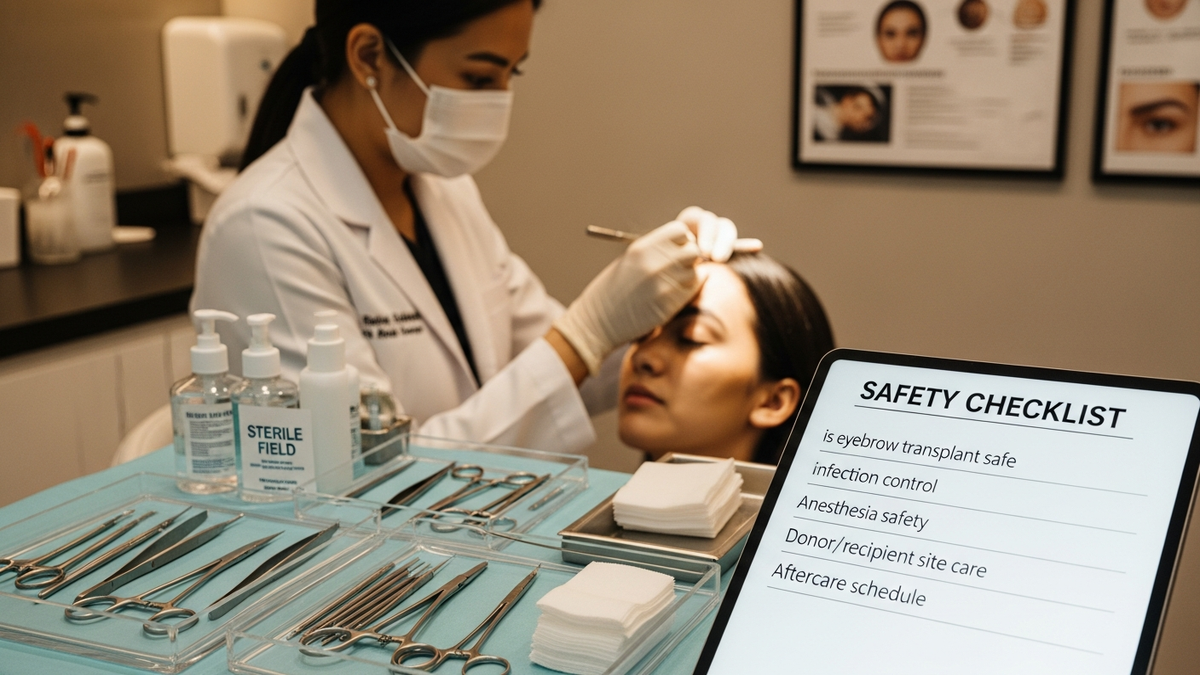
- Infection (uncommon with proper sterile technique and aftercare).
- Scarring or uneven healing, particularly in patients prone to scarring.
- Asymmetry if preoperative design or post-op care is inadequate.
- Unnatural direction of hair growth, which can be hard to correct.
- Graft survival variability based on patient factors and technique.
Limitations: what a transplant can’t always fix
Eyebrow transplantation may not fully correct every appearance concern. For example:
- If the eyebrow change is primarily due to skin laxity, a transplant may not address the underlying facial structure.
- If the brow position is altered by aging, a brow lift or related facial rejuvenation may be more appropriate.
- If the cause is active dermatologic disease, it must be stabilized first.
This is why a thorough evaluation matters—your eyebrow hair loss may be only one part of a broader facial aesthetic picture.
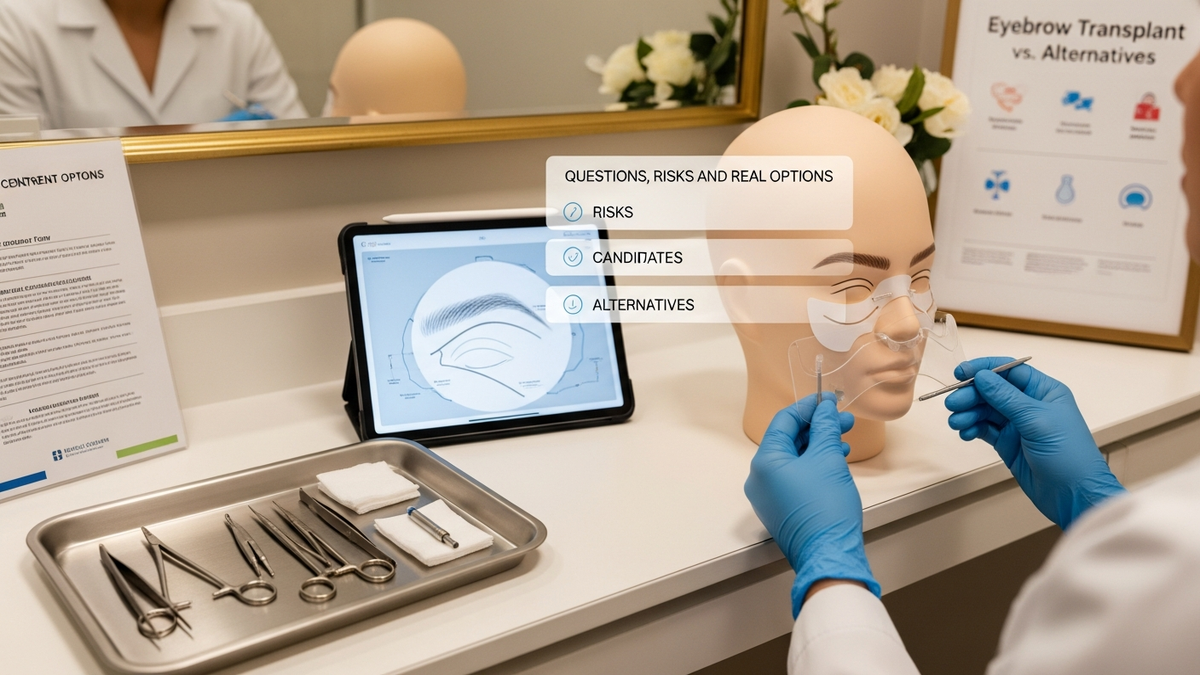
Eyebrow transplant vs. non-surgical options
Depending on your goals, there may be alternatives to surgery. Some people want a short-term cosmetic improvement; others need restoration after true hair loss.
Non-surgical approaches
- Topical treatments (under medical guidance), especially when hair loss is early or inflammatory.
- Cosmetic camouflage (microblading or eyebrow cosmetics), which can be helpful but may not provide true regrowth.
- Eyebrow grooming and styling adjustments to enhance symmetry.
When surgery may be the better option
If you have significant eyebrow thinning, patchy loss, or long-standing absence of hair, surgical restoration can offer a more durable outcome. Still, the best approach is individualized—especially when the facial context and brow position affect how “natural” the eyebrows look.
How to choose a qualified surgeon for an eyebrow transplant
If you’re searching “jeffrey epstein eyebrow transplant” for clues, the most important takeaway is this: eyebrow surgery is highly specialized. Choose a provider with:
- Facial-focused training and a track record of natural eyebrow design.
- Transparent consultation: realistic outcomes, limitations, and risk discussion.
- Before-and-after evidence that matches your desired style and facial features.
- Experience with head-and-neck anatomy and the aesthetic interplay of the brow, eyelids, and forehead.
Questions to ask during your consultation
- What is the underlying cause of my eyebrow loss, and is it being treated or stabilized?
- How will you design my eyebrow shape for my face (not just fill in gaps)?
- What technique will you use for grafting, and why?
- What timeline should I expect for shedding and regrowth?
- How do you manage asymmetry and hair direction?
- What are the complication rates and how are they handled?
Eyebrow restoration in the context of facial rejuvenation
Eyebrows don’t exist in isolation. Their appearance is influenced by eyelids, forehead lines, and brow position. Many patients benefit from a “whole-face” evaluation.
When eyelid and brow procedures may be related
For some people, the perception of eyebrow change is actually linked to eyelid heaviness or under-eye concerns. If you’re also dealing with excess eyelid skin or visual obstruction, you may ask about Blepharoplasty and how it interacts with brow aesthetics.
Similarly, if your forehead or brow position is contributing to an aged look, a brow lift may be considered. A brow lift can raise the eyebrow position and improve forehead lines—supporting a more youthful and balanced appearance.
When a broader facelift approach is considered
For patients with sagging skin that affects the upper face and midface, a Facelift consultation may be relevant. The goal isn’t “more surgery”—it’s correct sequencing and choosing the procedure that best addresses your specific anatomy and aesthetic priorities.
At the same time, not everyone needs these procedures. The key is that a thoughtful clinician evaluates the full picture, rather than treating eyebrows as a standalone problem.
What to expect after an eyebrow transplant (timeline and recovery)
Understanding the timeline helps patients avoid anxiety and make better decisions. Eyebrow transplantation is a process, not an instant fix.
Typical phases
- Immediately after surgery: redness, swelling, and scabbing are common. You’ll follow specific cleansing and care instructions.
- Early weeks: transplanted hairs may shed as part of the normal growth cycle.
- 1–3 months: you may see gradual regrowth, often with variable density.
- 3–6+ months: more noticeable thickening and maturation.
- 6–12 months: final results typically become clearer as hairs continue to mature.
Aftercare essentials
Your surgeon should provide detailed instructions. Common themes include:
- Keeping the area clean and protected as directed.
- Avoiding friction, harsh skincare, and sun exposure during early healing.
- Following medication guidance (if prescribed) and attending follow-ups.
Consistency matters. A good surgical plan can be undermined by poor aftercare, and a less-than-ideal plan can sometimes be improved by excellent healing behavior.
How Dr. Hootan Zandifar approaches eyebrow restoration and facial harmony
In Los Angeles and Beverly Hills, patients often seek natural-looking changes that enhance their appearance without looking “done.” Dr. Hootan Zandifar is a board certified facial plastic and reconstructive surgeon who focuses solely on head and neck procedures, allowing him to concentrate expertise where it matters most for facial aesthetics.
For patients who have eyebrow thinning or loss due to medical or other conditions, eyebrow transplantation may be recommended. Because eyebrows are a focal point, Dr. Zandifar emphasizes careful planning and natural results—prioritizing patient education so you can make informed decisions about risks, timing, and realistic outcomes.
If you’re considering an eyebrow transplant, it’s also wise to discuss how your eyelids, forehead, and overall facial aging may influence the final look. In some cases, addressing related facial concerns can make the eyebrow result appear more harmonious and lifelike.
For more information on the specific procedure, you can explore eyebrow transplant.
Addressing eyebrow concerns alongside related ENT and facial procedures
At first glance, eyebrow transplant and ENT procedures may seem unrelated. However, head and neck anatomy is interconnected, and patients sometimes have multiple goals—cosmetic and functional—when they seek a specialist.
Example: nasal function and facial appearance
Some patients pursue facial aesthetic changes alongside breathing improvement. If you’re considering nasal surgery, it’s important to evaluate structure and function. In relevant cases, discussion may include Septoplasty or treatment for Deviated Septum, and if aesthetic refinement is desired, Rhinoplasty. While these are different procedures than eyebrow transplantation, they reflect the broader principle of comprehensive, patient-specific planning.
Common myths about eyebrow transplants (and how to think clearly)
Misconceptions can lead people to choose the wrong approach or unrealistic expectations. Here are a few myths that often circulate online:
Myth 1: “Eyebrow transplants look instantly natural.”
Reality: the growth cycle takes time. Early shedding and gradual regrowth are typical, and final maturation can take many months.
Myth 2: “More grafts always mean better results.”
Reality: density must match your natural eyebrow pattern and facial proportions. Overfilling can look unnatural.
Myth 3: “Any hair transplant clinic can do eyebrows the same way.”
Reality: eyebrow placement is specialized. Eyebrows require artistic design and micro-precision for hair direction, angle, and density distribution.
Actionable next steps if you’re considering eyebrow restoration
If your interest in jeffrey epstein eyebrow transplant is really about wanting answers for your own eyebrow concerns, here’s a practical roadmap:
- Clarify your goal: Are you addressing patchy loss, overall thinning, or shape asymmetry?
- Identify potential causes: review medical history, dermatologic conditions, medications, and grooming habits.
- Schedule a specialist consultation focused on facial aesthetics and eyebrow-specific technique.
- Ask for a personalized plan: design approach, timeline, and risk mitigation.
- Review recovery expectations: plan for downtime and follow-up visits.
- Consider complementary treatments if brow position or eyelid heaviness affects your overall look.
FAQ: Jeffrey Epstein eyebrow transplant and eyebrow restoration questions
1) Is there evidence that “jeffrey epstein eyebrow transplant” happened?
Public speculation online is not the same as verified medical information. If you’re asking for evidence, the safest approach is to rely on credible, documented sources—then focus on the medical reality of eyebrow transplantation for your own situation.
2) Who is a good candidate for an eyebrow transplant?
Good candidates typically have stable eyebrow loss (or a treatable cause), adequate donor hair, and realistic expectations. A clinician should assess skin quality, scarring, and facial harmony—not just hair density.
3) How long until eyebrow transplant results look fully natural?
Most patients see early changes within months, but final maturation often takes 6–12 months. Shedding and gradual regrowth are part of the normal timeline.
4) What are the biggest risks of eyebrow transplantation?
Risks include infection, scarring, uneven healing, unnatural hair direction, and graft survival variability. Choosing a skilled surgeon and following aftercare can reduce risk.
5) Can eyebrow transplant be combined with other facial procedures?
Sometimes, yes—especially if eyelids, brow position, or facial aging contribute to the overall appearance. Your surgeon should recommend sequencing based on your anatomy and goals.
CTA: Get a professional, eyebrow-specific evaluation
If you’re considering eyebrow restoration, don’t rely on internet speculation—get a consultation that focuses on your anatomy, your hair loss cause, and the artistic design needed for natural results.
FlowGeniQ Digest encourages readers to seek qualified care for personalized guidance. If you’re in the Beverly Hills/Los Angeles area, Dr. Hootan Zandifar’s head-and-neck focus and commitment to patient education can help you understand whether an eyebrow transplant is right for you and what outcomes are realistic.
Next step: Schedule an evaluation and bring photos of your eyebrows from different angles and time periods. This helps your clinician assess changes and plan the most appropriate approach.
Professional Disclaimer
This content is provided for general educational purposes only by FlowGeniQ Digest. It is not a substitute for professional advice, diagnosis, or treatment. Readers are advised to consult qualified professionals for personalized recommendations.
Medical Information Disclaimer
This content is provided for general educational purposes only by FlowGeniQ Digest. It is not a substitute for professional advice, diagnosis, or treatment. Readers are advised to consult qualified professionals for personalized recommendations.