Source: FlowGeniQ Digest
One of the most common questions patients ask before scheduling a “nose job” is how long is rhinoplasty recovery. The honest answer: it varies by technique, your anatomy, and how your body heals—but there are predictable phases. In this guide, you’ll learn a realistic rhinoplasty recovery timeline, what swelling typically looks like week by week, when you can return to everyday activities, and how to support healing for the most natural-looking outcome.
How long is rhinoplasty recovery? A realistic overview
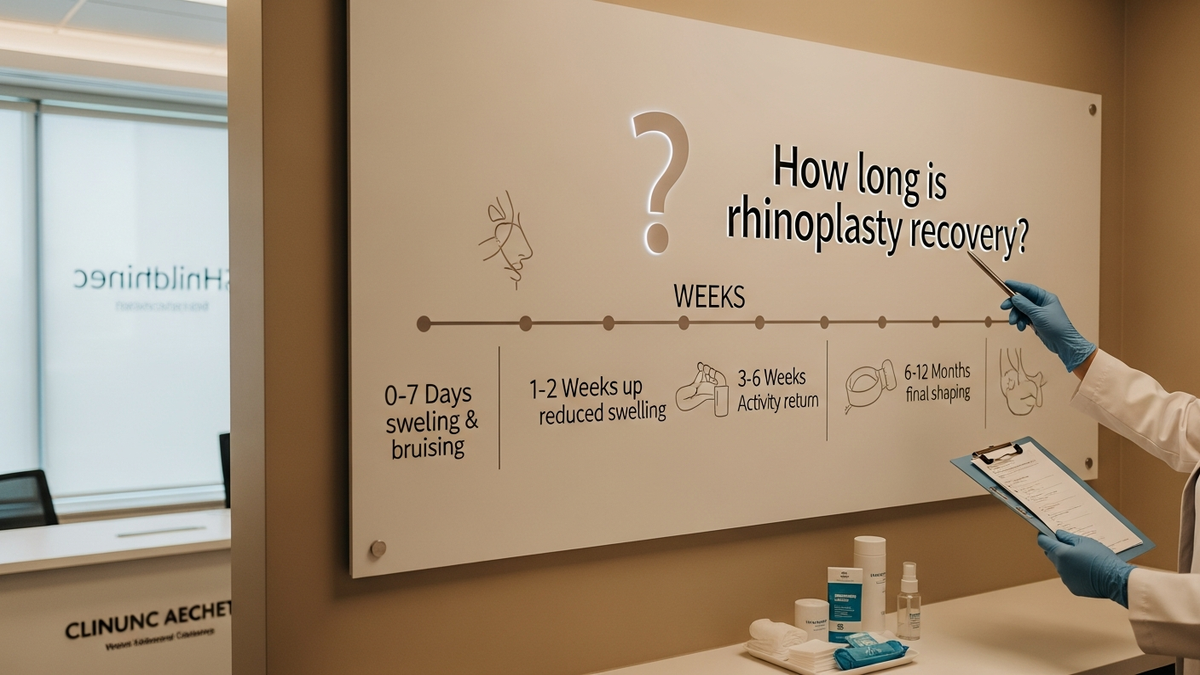
Most people experience noticeable improvement within the first few weeks, but full rhinoplasty recovery can take 9–12 months (sometimes longer) for the nose to refine and settle completely. Early healing focuses on reducing swelling and stabilizing the internal structure. Later healing focuses on subtle reshaping and long-term tissue remodeling.
Below is a practical timeline that many patients can use as a planning framework. Your surgeon’s individualized instructions always take priority.
Typical rhinoplasty recovery timeline (by week and month)
- Days 1–3: Swelling and bruising peak. Most discomfort is greatest during the first 48–72 hours. Rest and careful wound care matter most.
- Days 4–7: Bruising begins to fade. Swelling is still significant, but many people look better than at the peak.
- Week 2: Many external splints/tapes are removed (if used). You may still look “puffy,” especially at the tip.
- Weeks 3–4: Swelling continues to improve. Some patients return to work depending on job demands and how visible the swelling is.
- Months 2–3: A meaningful portion of swelling resolves. Nasal shape becomes more defined, though not fully “final.”
- Months 4–6: Refinement phase. The nose often looks more natural in photos and in motion as residual swelling decreases.
- Months 6–12: Long-term settling. Tip and cartilage remodeling may continue to evolve.
If you’re trying to schedule an event—wedding, photos, a major presentation—many surgeons recommend planning for at least 6–12 months for the most dependable “final” appearance, with 3–6 months for a more comfortable, socially presentable look.
What affects how long rhinoplasty recovery takes?
Even when two people have the same procedure name, their recovery can differ. The biggest factors include:
1) Surgical technique and whether it’s primary or revision rhinoplasty
Primary rhinoplasty (first-time surgery) often heals more predictably than revision rhinoplasty because scar tissue and altered anatomy can change the way tissues respond. More extensive work—especially involving the tip, grafting, or structural support—can extend the timeline for visible settling.
2) Your anatomy and skin type
Thicker skin can retain swelling longer and may require more time to see the final refinement of the tip. Tip definition may improve gradually as tissues soften and edema resolves.
3) How much internal work was done
Some patients undergo rhinoplasty primarily for aesthetics; others also address breathing. When the surgery includes functional changes (for example, correcting structural issues affecting airflow), healing still follows phases, but you may have additional considerations for nasal care and postoperative restrictions.
4) Swelling response and lifestyle factors
Smoking, poor sleep, dehydration, high-sodium diets, and not following surgeon instructions can worsen swelling or prolong recovery discomfort. Conversely, consistent postoperative care can support a smoother course.
5) Compliance with postoperative instructions
Small choices—like how you sleep, whether you avoid pressure on the nose, and when you return to exercise—can affect both swelling and overall healing quality.
Swelling and bruising: when does it improve after rhinoplasty?
Swelling is the main reason people feel like they’re “not seeing the result yet.” The nose is delicate and tissues need time to stabilize. Here’s what many patients notice:
Early swelling (first 2 weeks)
Swelling and bruising tend to be most visible in the first week. The tip often looks the puffiest. Over the second week, many people begin to see a clearer bridge and improved definition, though the nose may still look thicker than final.
Middle swelling (weeks 3–8)
As inflammation decreases, the nose usually becomes more recognizable. However, swelling can fluctuate—some days look better than others. This is normal as tissues continue to settle.
Late swelling (months 3–12)
Residual swelling can persist, especially at the tip and under the skin. Over time, the contour becomes smoother and more refined. Many patients report that the nose looks increasingly natural in daily life and photos as the months progress.
Important: If swelling seems to dramatically worsen after it had been improving, contact your surgical team. While fluctuations can be normal, your surgeon should evaluate any concerning changes.
Rhinoplasty recovery by activity: when can you return to work, exercise, and normal life?
Knowing how long is rhinoplasty recovery isn’t just about appearance—it’s also about safe activity timing. Use these as general guidelines, then follow your surgeon’s personalized plan.
Returning to work
- Desk jobs: Many patients return around 1–2 weeks, depending on swelling and bruising visibility.
- Physical jobs: Often 2–4+ weeks, especially if the role involves lifting, bending, or risk of impact.
- Public-facing roles: Some patients prefer 3–4 weeks for more comfortable social visibility.
Exercise and workouts
Because increased blood pressure and physical strain can worsen swelling, most surgeons recommend a staged return:
- First 2 weeks: Gentle walking only; avoid intense cardio.
- Weeks 3–4: Light activity may be allowed if cleared by your surgeon.
- Weeks 6–8: Many patients can resume more strenuous workouts, but timeline varies.
- After 8 weeks: Usually better clearance for higher-impact exercise, but confirm with your provider.
Sleeping and head position
Sleeping with your head elevated helps reduce swelling. Many surgeons advise sleeping on your back and avoiding pressure on the face. Try to avoid side sleeping until your surgeon says it’s safe.
Driving and pain medication
Driving depends on how you feel and whether you’re taking prescription pain medication. If you’re still using sedating meds, do not drive. Ask your surgeon when it’s safe.
What you can do to support a smoother rhinoplasty recovery
While you can’t control every variable, you can influence outcomes by optimizing healing conditions.
Follow nasal care instructions exactly
Your surgeon may recommend saline sprays, gentle cleaning techniques, or specific post-op routines. These instructions are designed to support internal healing and reduce complications.
Minimize swelling triggers
- Hydrate and reduce excess sodium.
- Sleep with head elevation.
- Avoid heat (hot showers, saunas) early on if your surgeon advises it.
- Don’t smoke or vape—nicotine can impair circulation and healing.
Avoid pressure on the nose
Don’t wear glasses directly on the bridge unless your surgeon approves a method to offload pressure (such as taping to the forehead). Also avoid activities that risk impact.
Be patient with the “not-final” look
Many patients feel concerned when the nose seems larger or differently shaped during early stages. That’s often swelling, not the final contour. The goal is to protect healing while your nose transitions through refinement phases.
How recovery differs for functional nasal surgery vs cosmetic rhinoplasty
Some patients want aesthetic changes, others want improved breathing, and many want both. Your recovery experience can overlap, but the priorities may differ.
When breathing issues are involved
If you have structural causes of nasal obstruction—such as a Deviated Septum—your surgeon may discuss options that can be less invasive than rhinoplasty in the right circumstances. Functional procedures can address airflow without changing the external appearance as much.
Septoplasty as an airflow-focused alternative
For patients whose primary concern is internal obstruction, a Septoplasty may be recommended. Recovery timelines vary, but the procedure is typically focused on nasal cartilage alignment rather than external reshaping.
When rhinoplasty is still the best option
If you want both aesthetic refinement and functional improvement, rhinoplasty may be the most comprehensive approach. Learn more about Rhinoplasty and what to consider when choosing a facial plastic and reconstructive surgeon.
Because Dr. Hootan Zandifar specializes in head-and-neck cosmetic and reconstructive surgery, many patients benefit from a careful, education-first approach to matching goals with the most appropriate procedure—whether that’s cosmetic rhinoplasty or functional nasal surgery. This matters because the best recovery experience is often the one aligned with the right plan.
Common rhinoplasty recovery concerns (and what’s normal)
Here are frequent questions patients have during healing.
“My nose looks worse before it looks better.” Is that normal?
Yes. Swelling and bruising can make the nose appear larger, uneven, or “off” early on. Over weeks and months, the nose typically settles into a more refined shape.
“Why is my tip still puffy months later?”
The tip often takes the longest to refine. Tip swelling and tissue remodeling can continue for months, which is why full results may take 9–12 months.
“Can I expect my nose to look exactly the same as my pre-op simulation?”
Simulations are helpful but not guarantees. Your final result depends on healing response, swelling resolution, and how tissues remodel over time.
“When can I wear makeup or skincare normally?”
Many surgeons advise waiting until incisions and internal healing are stable. Ask your surgeon for specific timing and product guidance. Avoid rubbing the nose during early healing.
Choosing a surgeon: how it impacts recovery quality
If you’re comparing options, remember that how long is rhinoplasty recovery is only one part of the equation. The quality of your surgical plan, tissue handling, and follow-up care can influence swelling, comfort, and the clarity of your final outcome.
What to look for
- Board-certified facial plastic and reconstructive expertise (especially for head-and-neck procedures).
- Clear preoperative education about realistic timelines and what could affect them.
- A personalized plan that considers both aesthetics and function when relevant.
- Thoughtful postoperative follow-up so you can address concerns quickly.
In Beverly Hills, Dr. Hootan Zandifar—an MD, FACS and double board certified facial plastic and reconstructive surgeon—focuses on surgeries of the head and neck. His approach emphasizes patient education, natural-looking results, and compassionate care. That matters because the best rhinoplasty outcomes often come from the right match between goals and technique, supported by clear instructions for recovery.
Frequently asked questions about rhinoplasty recovery
1) How long is rhinoplasty recovery before I can see results?
Many patients notice improvements in the first few weeks, but swelling can obscure the final shape. More meaningful refinement often appears around 3–6 months, with full settling commonly taking 9–12 months.
2) When can I go back to work after rhinoplasty?
For many people with desk jobs, returning around 1–2 weeks is possible depending on swelling and bruising. More physical jobs may require 2–4+ weeks. Your surgeon will guide you based on your specific procedure and healing.
3) Why does my nose still look swollen after a month?
Swelling doesn’t disappear all at once. The tip and certain internal tissues can remain puffy longer. Continued improvement over months is common and expected.
4) Is it normal for my rhinoplasty to feel tight or numb?
Some tightness, sensitivity changes, and temporary numbness can occur as nerves and tissues heal. If you experience severe pain, worsening symptoms, or unusual drainage, contact your surgical team promptly.
5) Can rhinoplasty recovery be shorter with certain techniques?
Some surgical approaches may influence swelling patterns, but recovery timing still depends on your anatomy, skin thickness, and how your body heals. The safest estimate is to plan for gradual improvement and long-term settling.
CTA: Get a personalized recovery plan
If you’re planning for how long is rhinoplasty recovery and want a timeline tailored to your goals—functional breathing improvement, aesthetic refinement, or both—consider scheduling a consultation with a qualified facial plastic and reconstructive surgeon.
At Hootan Zandifar, MD in Beverly Hills, patients receive an education-first approach designed to help you choose the right procedure and understand what to expect during recovery. To explore rhinoplasty options, you can review Rhinoplasty or learn about other head-and-neck aesthetic procedures such as Facelift and Blepharoplasty. If your primary concern is hair restoration, you may also find helpful resources on hair transplant and eyebrow transplant.
Book your consultation online to discuss your goals, review your anatomy, and build a recovery plan that fits your schedule.
Professional Disclaimer
This content is provided for general educational purposes only by FlowGeniQ Digest. It is not a substitute for professional advice, diagnosis, or treatment. Readers are advised to consult qualified professionals for personalized recommendations.
Medical Information Disclaimer
This content is provided for general educational purposes only by FlowGeniQ Digest. It is not a substitute for professional advice, diagnosis, or treatment. Readers are advised to consult qualified professionals for personalized recommendations.