Written for FlowGeniQ Digest — Your recovery plan starts with knowing what’s normal, what’s not, and how your nose heals over time.
If you’re asking how long does it take to recover from rhinoplasty, you’re not alone. “Nose job” recovery is often discussed in broad terms, but the real answer depends on your surgical approach, your anatomy, your healing pattern, and whether your rhinoplasty is cosmetic, functional, or both. Below, you’ll find a practical, stage-by-stage timeline—so you can plan work, social events, and exercise with confidence.
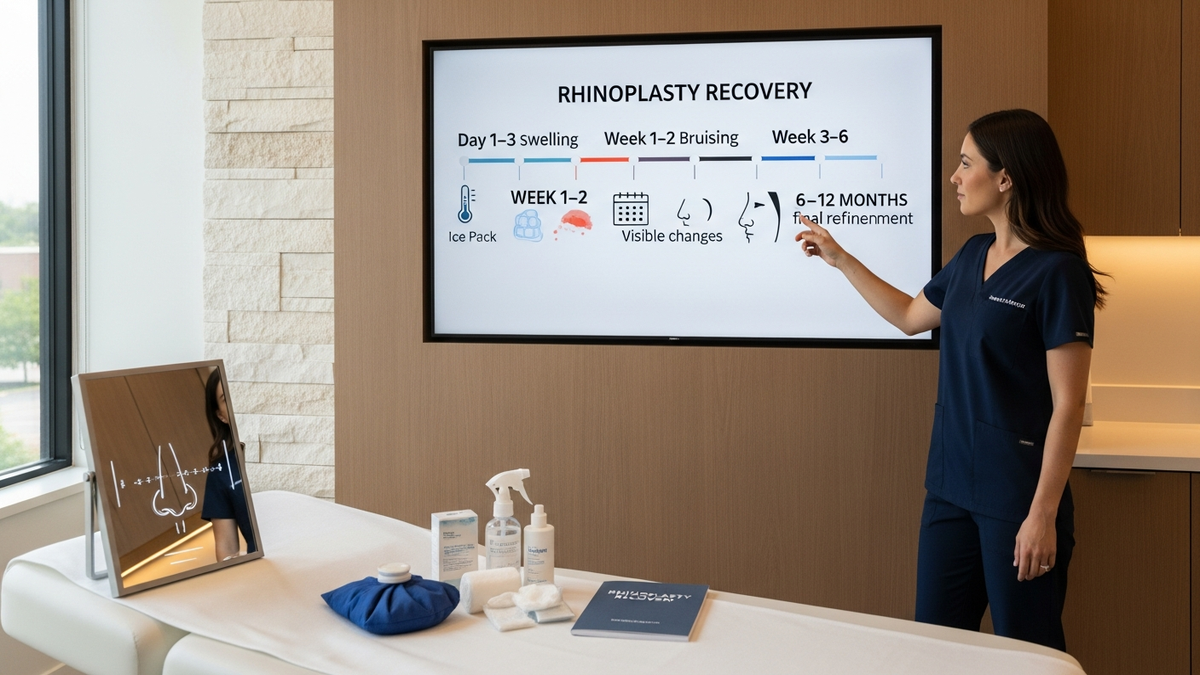
Rhinoplasty recovery timeline: the short answer
Most patients can expect three broad phases:
- 1–2 weeks: noticeable swelling and bruising begin to improve; many people can return to light, non-strenuous activities.
- 3–6 weeks: swelling continues to soften and refine; you’ll look and feel more like yourself, though your nose may still be “puffy.”
- 6–12 months (sometimes up to 18 months): ongoing reshaping and subtle refinement as internal tissues remodel.
While you may be functioning sooner, your nose is still healing internally—so the timeline for “final results” is longer than the timeline for “feeling normal.”
Why rhinoplasty recovery takes time (and why swelling doesn’t follow a straight line)
Rhinoplasty involves repositioning and reshaping nasal cartilage and/or bone. Even when external swelling looks better, internal healing continues. Swelling is also influenced by gravity, activity level, sleep position, salt intake, and how your tissues respond to surgery.
That’s why many surgeons describe recovery in terms of milestones rather than exact dates. A “fast healer” still needs time for structural healing, and a “slower healer” can still achieve excellent long-term outcomes.
How long does it take to recover from rhinoplasty? A detailed stage-by-stage guide
0–48 hours: the immediate post-op period
- What you may notice: congestion, pressure, mild to moderate discomfort, tearing, and swelling. Bruising may start to appear around the eyes.
- Common restrictions: avoid heavy lifting, bending at the waist, and strenuous activity.
- Sleep: most surgeons recommend sleeping with your head elevated to reduce swelling.
During this stage, your body is controlling bleeding and beginning the inflammatory phase of healing. It’s normal to feel “tight” or blocked—especially if nasal packing or splints are used.
Days 3–7: splints, bruising peaks, and the first visible changes
- What you may notice: swelling increases for a short time, then begins to stabilize; bruising can look darker or more dramatic.
- Milestone: many patients have splints or external dressings removed around this period (your surgeon will provide specifics).
- How you’ll look: you may still look significantly different from your pre-op appearance.
It can be tempting to judge your final shape too early. Remember: early swelling can temporarily alter the look of the tip and bridge.
Week 2: improved comfort, reduced bruising, and cautious return to routine
- What you may notice: bruising is typically fading; swelling is still present but often less severe.
- Activity: many patients return to desk work if they feel comfortable and follow restrictions.
- What to avoid: intense workouts, contact sports, and anything that increases blood pressure significantly.
By the end of week 2, many people can see meaningful progress—but the nose may still feel tender or “stiff,” and you may notice intermittent tightness.
Weeks 3–4: “puffiness” improves, but the nose is still healing
- What you may notice: the tip can remain swollen; you might see changes in how the nose looks from different angles.
- Social readiness: many patients feel more confident in photos and public settings.
- Healing reality: internal tissues are still remodeling; the nose’s shape may continue to evolve.
This stage often feels like a plateau—because the most dramatic early improvements are behind you. However, it’s a normal part of the rhinoplasty healing curve.
Weeks 5–6: more refinement in appearance
- What you may notice: swelling softens further; the nose may look closer to its intended shape.
- Exercise: many surgeons allow gradual return to moderate exercise, depending on your healing and comfort.
Even if your nose looks great at this point, avoid rushing back to high-impact training until your surgeon clears you.
Months 2–3: gradual reshaping and reduced visible swelling
- What you may notice: your nose may appear more balanced as residual swelling decreases.
- Skin and tip behavior: the tip and surrounding tissues may still feel different—slightly numb, sensitive, or firm.
Months 4–6: the “middle phase” of refinement
During this period, many patients feel they can finally “see the result.” But the nose still isn’t finished. Cartilage and soft tissue continue to adjust, and the final contour may be subtle but meaningful.
Months 6–12 (and sometimes up to 18 months): final results emerge
Long-term healing is where rhinoplasty becomes truly transformative. The nose can continue to refine in terms of:
- Tip definition
- Soft tissue drape
- Bridge settling
- Symmetry
For many patients, the majority of the final look is present by 12 months, but additional refinement may continue beyond that.
Recovery expectations: swelling, bruising, congestion, and sensation
Swelling: what’s normal and when it usually improves
Swelling typically:
- peaks early (often within the first week),
- then steadily decreases over weeks,
- but can linger as “puffiness,” especially at the tip.
It’s common for swelling to fluctuate day-to-day. A long day, salty foods, or increased activity can make the nose look slightly more swollen temporarily.
Bruising: timeline for fading
Bruising often looks worst around days 3–7 and then fades over the next 1–2 weeks. Some discoloration can last longer, especially in patients who bruise easily or who are on medications that affect clotting.
Congestion and breathing: functional rhinoplasty considerations
Even if your primary goal is aesthetic, many patients experience nasal congestion after surgery. Swelling inside the nose and changes to nasal structures can affect airflow temporarily.
If your rhinoplasty includes functional goals (for example, improving airflow), your recovery may involve additional considerations. In some cases, patients may also benefit from functional nasal procedures rather than—or in addition to—cosmetic rhinoplasty, such as:
- Septoplasty for a Deviated Septum
- Inferior turbinate reduction for chronic “stuffy nose” symptoms
These approaches target nasal obstruction and can permanently improve breathing symptoms for the right patient.
What affects how long it takes to recover from rhinoplasty?
Two people can undergo similar procedures and have different recovery experiences. Key factors include:
- Surgical complexity: minor tip refinement vs. structural changes to bone/cartilage.
- Whether it’s primary vs. revision rhinoplasty: revision cases often require more careful tissue handling.
- Your healing profile: genetics, age, skin thickness, and inflammation response.
- Smoking and nicotine exposure: can impair healing and increase risk.
- Medication and supplements: some affect bleeding risk and swelling.
- Post-op adherence: head elevation, activity restrictions, and wound care.
- Pre-existing nasal obstruction: affects congestion and how “normal breathing” feels during healing.
How to speed up recovery safely (and what not to do)
While you can’t force your nose to heal instantly, you can support optimal recovery. Use these evidence-informed, surgeon-guided strategies:
Do: follow your surgeon’s instructions closely
- Take prescribed medications exactly as directed.
- Keep your head elevated as recommended.
- Attend follow-up visits so your surgeon can monitor healing.
Do: manage swelling with smart daily habits
- Limit salt and stay hydrated.
- Avoid alcohol during early healing (follow your surgeon’s guidance).
- Use cold compresses only if your surgeon approves and instructs you on how to do it.
Don’t: return to intense exercise too early
High-impact training and heavy lifting can increase blood pressure and swelling, potentially affecting internal healing. If you’re wondering when you can resume workouts, ask your surgeon for a personalized clearance plan.
Don’t: wear glasses directly on the nose too soon
Depending on your surgeon’s approach, you may be advised to use tape or a supportive method to protect the nose. Avoid pressure on the healing structure.
Don’t: ignore warning signs
Contact your surgeon promptly if you experience severe worsening pain, uncontrolled bleeding, fever, or signs of infection.
Rhinoplasty vs. functional nasal surgery: does it change recovery time?
It can. Cosmetic rhinoplasty and functional nasal procedures may involve different goals and surgical techniques, and recovery can feel different based on nasal packing, septal/cartilage work, and swelling patterns.
When functional improvements are the priority
For patients with chronic nasal congestion or sinus-related symptoms, functional procedures may be considered. Examples include:
- Septoplasty for a Deviated Septum
- Inferior turbinate reduction for long-term “stuffy nose”
- Balloon sinuplasty or endoscopic sinus surgery for chronic sinusitis in appropriate cases
In some situations, these options can permanently alleviate breathing symptoms. Your recovery timeline depends on what’s actually performed—not just the word “rhinoplasty.”
How to plan your schedule: work, travel, and events
Most patients plan recovery around the first two weeks, because that’s where you’ll feel the biggest difference in bruising and swelling.
Work
- Desk work: often possible around 7–14 days, depending on comfort and visibility of bruising.
- Physical jobs: may require longer downtime due to lifting restrictions and increased swelling risk.
Travel
Flying soon after surgery may increase discomfort and congestion. If you must travel, ask your surgeon about timing and precautions, especially if you’ll be sitting for long periods.
Important events
If you have a wedding, photoshoot, or major presentation, consider timing based on the likely swelling stage:
- Under 2 weeks: typically not ideal for most people’s comfort or appearance.
- 3–6 weeks: often more manageable for social visibility.
- 3–12 months: where final refinement becomes clearer.
Choosing a surgeon matters: natural results and realistic expectations
Recovery isn’t only about time—it’s also about surgical technique, tissue handling, and how your surgeon plans the procedure for your unique anatomy.
In Los Angeles and Beverly Hills, many patients seek a facial plastic and reconstructive surgeon who can balance aesthetics with function. Dr. Hootan Zandifar focuses on head and neck cosmetic and reconstructive surgery and is known for an honest, trustworthy, and compassionate approach. He emphasizes patient education so you can make well-informed choices and understand what your recovery will likely involve.
If you’re researching rhinoplasty, it can also help to review the surgeon’s approach and before-and-after outcomes, and to ask detailed questions about recovery and what to expect at each stage.
For additional reading, you can explore Rhinoplasty information and discuss your goals during a consultation.
Related considerations: other facial procedures and combined recovery planning
Some patients consider additional facial rejuvenation procedures alongside rhinoplasty. Recovery timelines can overlap differently depending on what else is done.
For example, a Facelift may be paired with nasal refinement in select cases, but the combined plan should be managed carefully to ensure safe healing and clear monitoring.
Similarly, if you’re addressing eyelid concerns, you may want to review Blepharoplasty timelines with your surgeon since facial swelling patterns and bruising can interact in the early weeks.
Frequently asked questions about rhinoplasty recovery
1) When can I return to normal activities after rhinoplasty?
Many people resume light, non-strenuous activities within 1–2 weeks. Full recovery for high-impact exercise and complete healing usually takes longer—often several weeks for activity and up to 12 months for final refinement.
2) How long will my nose be swollen?
Swelling typically improves significantly in the first 2–6 weeks, but mild puffiness can last for months. Tip swelling can be especially persistent. Final results often continue to develop over 6–12 months (sometimes up to 18 months).
3) Will my breathing be normal right away?
Not usually. Congestion and swelling inside the nose are common after surgery. If your procedure includes functional work, breathing may improve gradually. Your surgeon can explain what to expect based on your specific anatomy.
4) What’s the difference between recovery time for primary vs. revision rhinoplasty?
Revision rhinoplasty often involves more complex tissue work, which can make recovery feel longer or more variable. Your surgeon can provide a realistic timeline after reviewing your operative plan and history.
5) Can I wear glasses or contacts during recovery?
Glasses may need special support to avoid pressure on the nose during early healing. Contacts are often easier than glasses, but your surgeon will give specific guidance based on your sutures, splints, and how your nose is healing.
CTA: Get a personalized rhinoplasty recovery plan
Because how long does it take to recover from rhinoplasty depends on your unique anatomy and the exact surgical plan, the best next step is a consultation where your surgeon can review your goals, nasal structure, and timeline expectations.
If you’re considering rhinoplasty—or exploring whether functional nasal surgery could better address chronic congestion—schedule an appointment with a qualified facial plastic and reconstructive surgeon. You’ll receive individualized guidance on recovery milestones, activity restrictions, and what your results may realistically look like at each stage.
Professional Disclaimer
This content is provided for general educational purposes only by FlowGeniQ Digest. It is not a substitute for professional advice, diagnosis, or treatment. Readers are advised to consult qualified professionals for personalized recommendations.
Medical Information Disclaimer
This content is provided for general educational purposes only by FlowGeniQ Digest. It is not a substitute for professional advice, diagnosis, or treatment. Readers are advised to consult qualified professionals for personalized recommendations.