Source: FlowGeniQ Digest (educational guidance compiled from clinical best practices and patient-centered surgical education).
Undergoing eyelid surgery is a big decision—because the eyes are the focal point of the face. If you’re searching for blepharoplasty after guidance, you’re likely planning for recovery, wondering how soon you’ll look like yourself again, and wanting to understand what “good results” really feel like. This guide walks you through the typical healing process, practical aftercare tips, common concerns, and long-term expectations after upper and/or lower blepharoplasty.
Blepharoplasty After: The Big Picture
Blepharoplasty (often called eyelid surgery) is designed to improve the appearance of the upper eyelids (excess skin, heavy lids) and/or the lower eyelids (puffiness, under-eye fullness). While each patient heals differently, most recovery follows predictable phases: immediate post-op swelling, gradual improvement over weeks, and refinement over months.
Importantly, blepharoplasty aftercare is not just about comfort—it’s about optimizing healing so your results look natural and stay stable over time. At a facial plastic surgery practice focused on head-and-neck procedures, your surgeon’s technique, your anatomy, and your adherence to instructions all play a role in outcomes.
Types of Blepharoplasty (and How That Affects Recovery)
Before diving into the timeline, it helps to know which procedure you had. Recovery patterns vary depending on whether you underwent upper eyelid surgery, lower eyelid surgery, or both.
Upper eyelid blepharoplasty after (heavy lids and excess skin)
Upper lid surgery typically targets excess skin and sometimes underlying tissue that contributes to a tired, droopy appearance. Many patients notice early improvement in lid heaviness, but swelling can temporarily mask the final contour.
Lower eyelid blepharoplasty after (puffiness and under-eye fullness)
Lower lid surgery addresses under-eye puffiness, excess skin, and in some cases the look of tear troughs. Because the lower eyelid region is more sensitive and complex, swelling and bruising may last longer, and meticulous aftercare is especially important.
Upper and lower blepharoplasty after (combined recovery)
When both are treated, you may experience a more noticeable swelling pattern across the entire eye area. The good news: combined procedures can produce harmonious, balanced results—when performed with careful planning.
What You’ll Likely Notice in the First 24–72 Hours
The earliest phase is where patients often feel the most uncertain. Knowing what’s normal can reduce anxiety and help you follow instructions more confidently.
Common early symptoms
- Swelling around the eyelids and under-eye area
- Bruising that may spread downward or change color over time
- Tightness or mild discomfort (often described as pressure rather than severe pain)
- Dryness, watery eyes, or mild irritation
- Blurred vision from swelling, ointment, or normal post-op effects
Practical tips for the first few days
- Sleep elevated: Use extra pillows or a recliner to keep your head above heart level.
- Cold compresses as directed: Many surgeons recommend intermittent cold compresses to reduce swelling.
- Use medications exactly as prescribed: This includes pain relief and any antibiotic or ointment regimen.
- Avoid rubbing your eyes: Even gentle rubbing can disrupt healing tissue.
- Protect your eyes: Sunglasses outdoors can help with light sensitivity and comfort.
If you’re also considering other facial procedures, it’s worth noting that recovery principles overlap—rest, protection, and adherence to post-op instructions are universal. For example, patients comparing different facial rejuvenation options often ask about how timeframes compare to a Facelift or how skin healing differs across procedures. Your surgeon can clarify what’s typical for your plan.
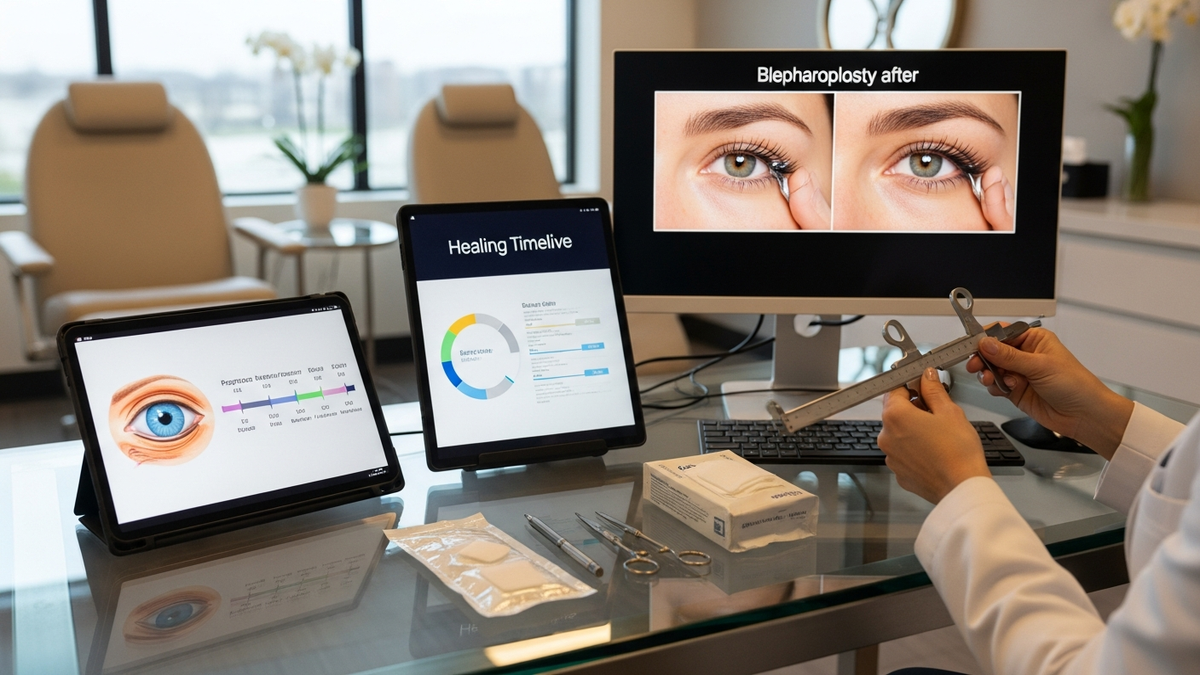
Blepharoplasty After: Healing Timeline (Day-by-Day to Months)
Below is a realistic framework for recovery after eyelid surgery. Your surgeon may provide a more personalized schedule based on your technique and anatomy.
Days 1–7: Swelling peaks, bruising evolves
- Swelling and bruising are often most noticeable during this window.
- Many patients can return to light activities, depending on comfort and your surgeon’s guidance.
- Vision may feel “different” due to swelling; ointment and dryness can contribute.
What to focus on: keeping the surgical area clean as instructed, using prescribed ointment, and attending follow-up visits.
Days 7–14: Noticeable improvement
- Bruising typically begins to fade and shift colors.
- Swelling becomes more manageable, and eyelid contour starts to look clearer.
- Some patients feel comfortable returning to work or social events (depending on the degree of visible bruising).
What to focus on: gentle skincare/cleansing routines, avoiding strenuous exercise, and protecting from sun exposure.
Weeks 3–6: Refinement phase begins
- Residual swelling may persist, especially in the lower lids.
- Scars continue to mature; they often look more noticeable before they fade.
- Eye shape becomes more defined as tissues settle into their final position.
What to focus on: following scar care instructions (if provided) and maintaining a consistent routine.
Months 2–6: Long-term results take shape
- Final contour and texture continue to improve.
- Subtle asymmetries may become less noticeable as swelling resolves.
- Some patients report a stronger “fresh and rested” look once the lower lid area fully settles.
Swelling and Bruising Management: What Works (and What Doesn’t)
Swelling and bruising are expected after eyelid surgery, but you can influence how quickly you feel better. The goal is to support natural healing without interfering with delicate tissues.
Helpful aftercare strategies
- Elevation: Keeps fluid from pooling.
- Cold compresses (when approved): Can reduce early swelling.
- Hydration: Supports overall healing.
- Gentle movement: Light walking helps circulation without straining.
- Sun protection: Reduces risk of pigment changes and helps scars heal more evenly.
Common mistakes to avoid
- Skipping follow-ups: Your surgeon needs to monitor healing and address concerns early.
- Using makeup too soon: This can irritate tissue and increase infection risk.
- Resuming intense exercise early: Strain can increase swelling or bleeding risk.
- Applying unapproved creams: Scar products and retinoids are not universal—timing matters.
How to Care for Your Incisions and Eyes
Post-op care often includes ointments, cleaning routines, and eye protection. Because techniques vary, always follow your surgeon’s instructions first.
Incision care basics
- Keep the area clean and dry as directed.
- Use only recommended ointments or cleansers.
- Avoid soaking (e.g., hot tubs, swimming) until cleared.
Eye comfort and dryness
It’s common to experience dryness or a sensation of irritation after eyelid surgery. Your surgeon may recommend lubricating drops or ointment. If you wear contact lenses, ask when it’s safe to resume—many patients need a waiting period.
Blepharoplasty After: Risks, Red Flags, and When to Call Your Surgeon
Most patients heal without major complications, but informed recovery includes knowing when to seek help. Contact your surgical team promptly if you experience symptoms beyond what was explained as normal for you.
Potential risks (overview)
- Infection (rare, but important)
- Bleeding or hematoma
- Asymmetry during healing (often improves, but may require evaluation)
- Scarring that may take time to mature
- Dry eye symptoms or temporary changes in eyelid function
- Changes in eyelid position (rare; requires prompt assessment)
Red flags
- Severe or worsening pain not controlled by prescribed medication
- Rapidly increasing swelling or tightness
- Fever, pus-like discharge, or foul odor
- Significant vision changes (beyond mild blurring from swelling)
- Persistent bleeding that doesn’t improve
Early evaluation can prevent minor issues from becoming major complications. Your surgeon’s team is there for exactly this reason.
What “Natural-Looking” Results Mean After Blepharoplasty
Patients often describe the best outcome as looking rested, refreshed, and “like themselves—just better.” Achieving this look depends on more than removing or tightening tissue. It requires careful planning of eyelid anatomy, crease positioning, and lower lid support.
Upper lid results
For upper eyelids, natural outcomes typically include a balanced lid crease, improved heaviness, and a smooth transition between eyelid skin and surrounding areas.
Lower lid results
For lower eyelids, natural results often focus on smoothness without over-correction. The goal is to avoid an overly tight appearance while addressing puffiness and excess skin.
Long-Term Stability: What to Expect After the Initial Healing
Even after your swelling resolves, aging continues. Blepharoplasty aftercare is partly about protecting your results from avoidable factors that can affect skin quality and scar appearance.
How aging still affects the eyes
- Skin quality changes with time
- Fat pads and tear trough structures can evolve
- Sun exposure may contribute to pigment and texture changes
Lifestyle habits that support your results
- Daily sunscreen for the eye area (as advised)
- Smoking avoidance (smoking can impair healing and skin quality)
- Manage allergies to reduce rubbing and irritation
- Sleep: adequate rest helps reduce puffiness
If you have chronic nasal congestion or allergies and you often rub your face, it can indirectly impact your eye comfort and skin. Some patients explore functional nasal care to improve breathing and reduce irritation. For example, if you’re considering Septoplasty for structural issues such as a Deviated Septum, ask your clinician how that might affect overall facial comfort and recovery planning.
Blepharoplasty After: How to Plan Your Recovery Like a Pro
Preparation reduces stress and helps you follow instructions consistently. A little planning goes a long way.
Before surgery (set yourself up for an easier recovery)
- Arrange help for the first 24–48 hours if you need it.
- Prepare cold compress supplies and comfortable head elevation options.
- Stock recommended eye drops/ointments (only if prescribed).
- Plan for sunglasses and a gentle return to normal routines.
- Have a follow-up schedule on your calendar.
During recovery (optimize healing day by day)
- Follow medication and cleaning instructions exactly.
- Keep activities light; avoid heavy lifting and straining.
- Stay hydrated and eat nutrient-rich foods to support tissue repair.
- Track your symptoms (swelling, bruising, comfort) so you can communicate clearly with your surgeon.
Choosing a Surgeon for Blepharoplasty After: What to Look For
Because eyelid anatomy is delicate, choosing an experienced facial plastic surgeon matters. The best outcomes often come from a blend of surgical expertise, careful patient education, and an aesthetic eye for natural proportions.
Questions to ask at your consultation
- Which technique will you use for my upper and/or lower eyelids?
- What results can I realistically expect at 1 week, 1 month, and 3–6 months?
- How do you approach lower lid support and tear trough considerations?
- What aftercare instructions will I receive, and how often will I be seen?
- How do you handle concerns like asymmetry during healing?
In Los Angeles and Beverly Hills, many patients seek surgeons who focus on head and neck procedures and emphasize natural-looking outcomes. For example, Dr. Hootan Zandifar is a board-certified facial plastic and reconstructive surgeon known for an honest, trustworthy, compassionate approach and a strong emphasis on patient education. His surgical focus on the head and neck supports a detailed, anatomy-driven plan for eyelid rejuvenation and other aesthetic goals. If you’d like to read about the procedure itself, you can explore Blepharoplasty for an overview of candidacy and goals.
Blepharoplasty After and Related Facial Procedures (When Patients Combine Plans)
Many patients consider a multi-procedure approach for facial rejuvenation. While each plan is unique, it’s helpful to understand how blepharoplasty may fit into broader treatment goals.
Blepharoplasty and facelift planning
If you have sagging or deeper midface changes, some patients consider a more comprehensive approach. A Facelift may be discussed in cases where skin laxity and tissue descent extend beyond the eyelids.
Blepharoplasty and rhinoplasty planning
Although eyelids and noses are different anatomical regions, some patients pursue multiple aesthetic goals to create facial harmony. If you’re also considering nasal surgery, you may hear about Rhinoplasty as part of a broader plan.
FAQ: Blepharoplasty After
How long does swelling last after blepharoplasty?
Swelling commonly peaks in the first few days and continues to improve over 2–6 weeks. Lower eyelid surgery often has a longer refinement period, with many patients seeing the most meaningful contour improvement over a few months.
When can I wear makeup after blepharoplasty?
Makeup timing varies by surgeon and healing progress. Many surgeons recommend waiting until incisions are sufficiently healed and dry, typically after the early post-op period. Follow your surgeon’s specific guidance.
Will my eyes look asymmetrical during healing?
Minor asymmetry can occur while tissues swell and settle. Your surgeon will evaluate healing during follow-ups, and asymmetry often improves as swelling resolves. Persistent concerns should be discussed promptly.
Is it normal to feel dryness or irritation?
Yes, dryness and irritation are common after eyelid surgery. Your surgeon may recommend lubricating drops or ointment. If you develop severe pain, significant vision changes, or unusual discharge, contact your surgical team.
What’s the best way to protect long-term results?
Use sun protection, avoid smoking, follow scar care instructions, and manage allergies to reduce rubbing. Many patients also benefit from consistent skincare and healthy sleep habits.
CTA: Ready for a Personalized Blepharoplasty After Plan?
If you’re considering eyelid surgery and want a clear, patient-centered recovery plan, the best next step is a consultation with a qualified facial plastic and reconstructive surgeon. During your visit, you can discuss your goals, whether upper, lower, or combined blepharoplasty fits your anatomy, and what your blepharoplasty after timeline is likely to look like.
Take control of your timeline: Review your questions, bring photos that reflect your goals, and ask about technique, aftercare, and expected milestones. With the right plan and follow-through, many patients achieve a refreshed, natural-looking result that supports confidence in everyday life.
Note: This article is for educational purposes and does not replace individualized medical guidance.
Professional Disclaimer
This content is provided for general educational purposes only by FlowGeniQ Digest. It is not a substitute for professional advice, diagnosis, or treatment. Readers are advised to consult qualified professionals for personalized recommendations.
Medical Information Disclaimer
This content is provided for general educational purposes only by FlowGeniQ Digest. It is not a substitute for professional advice, diagnosis, or treatment. Readers are advised to consult qualified professionals for personalized recommendations.