FlowGeniQ Digest is proud to share this comprehensive, patient-focused guide to the fue eyebrow transplant—a modern technique designed to help people regain fuller brows with results that look consistent with their facial features.
Whether your eyebrow loss is due to genetics, over-plucking, medical conditions, scarring, or aging, the goal is the same: create eyebrows that frame the eyes naturally. In this article, we’ll explain how FUE (Follicular Unit Extraction) is used for eyebrow restoration, what to expect during treatment and recovery, and how to choose a surgeon who understands facial aesthetics and follicle-level artistry.
What Is a FUE Eyebrow Transplant?
A fue eyebrow transplant is a hair restoration procedure that transfers individual hair follicles (or follicular units) from a donor area to the eyebrow region. Unlike older methods that could produce a more uniform or “pluggy” appearance, FUE is designed to place grafts with precision—supporting a more natural brow look.
For eyebrow restoration, success is not only about obtaining grafts; it’s about design, direction, density, and integration with your existing facial structure.
Why eyebrows are different from scalp hair
Eyebrows are highly visible and move with facial expressions. Their hairs are typically finer, shorter, and follow a distinct pattern. That means eyebrow transplant planning requires:
- Micro-level angulation to mimic natural hair growth direction
- Careful density mapping so brows look full without appearing heavy
- Symmetry and proportion that match your face (not a template)
- Graft survival and healing in a delicate, high-visibility area
How FUE Works for Eyebrow Restoration
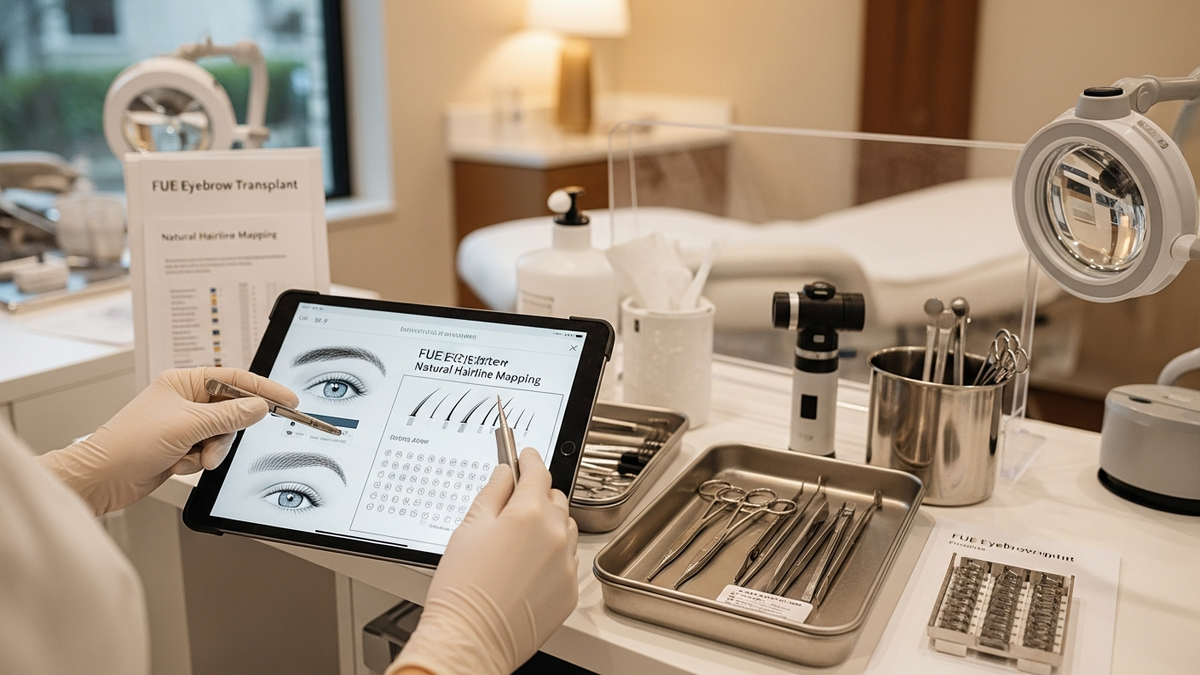
FUE is a donor-harvesting method. Instead of removing a strip of tissue, surgeons extract individual follicular units using specialized tools. The extracted grafts are then prepared and implanted into the eyebrow area.
Step-by-step overview
- Consultation and facial analysis: Your surgeon evaluates eyebrow shape, symmetry, and underlying causes of loss. Measurements help establish brow landmarks.
- Donor assessment: Not every donor area provides ideal graft characteristics for eyebrows. Your surgeon checks hair caliber, density, and suitability.
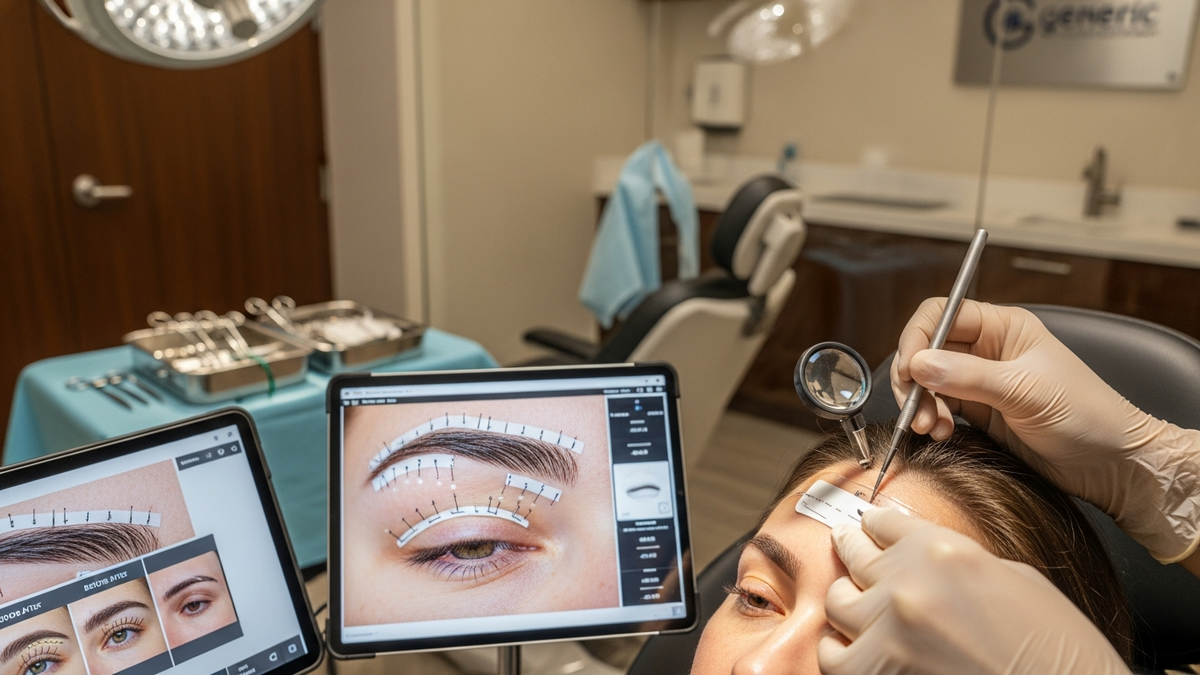
- Designing the brow: A natural pattern is mapped (tail, arch, head). This is where artistry matters as much as technique.
- Graft extraction (FUE): Follicular units are harvested from the donor site with minimal disruption.
- Recipient site preparation: Tiny incisions or channels are created to match the direction and angle of natural eyebrow growth.
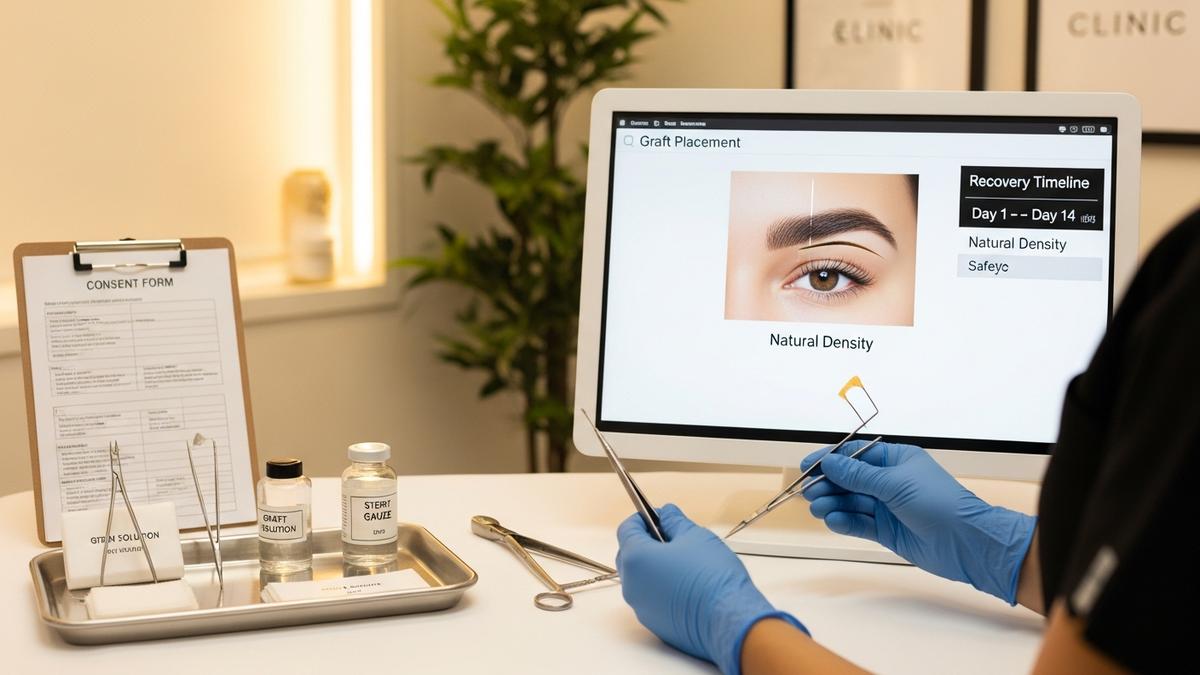
- Graft placement: Grafts are implanted individually to preserve natural texture and spacing.
- Post-procedure care: You’ll follow a plan for cleaning, protection, and follow-up.
If you’re already researching hair restoration more broadly, you may also want to review the clinic’s approach to a broader hair transplant workflow, since eyebrow restoration shares core principles of follicle-level precision while requiring distinct aesthetic planning.
Who Is a Candidate for a FUE Eyebrow Transplant?
Many people are surprised to learn that eyebrow restoration can be considered for more than just “cosmetic” reasons. Candidates typically include individuals who have:
- Genetic thinning or age-related eyebrow loss
- Over-plucking or eyebrow grooming injuries
- Medical or autoimmune-related eyebrow loss (e.g., alopecia areata)
- Trauma or scar-related thinning
- Post-treatment hair changes (depending on medical history)
- Asymmetry that affects facial balance
It’s not just about having hair to transplant
Ideal candidates often have enough donor density and stable expectations. In some cases, additional treatments may be recommended to address underlying causes of hair loss. A skilled surgeon will discuss these possibilities transparently.
What Results Should You Expect?
When people search for a fue eyebrow transplant, they usually want to know: Will it look natural? How long does it take? What about downtime?
Typical timeline
- First days to 1 week: Redness, mild swelling, and scabbing can occur. Most patients can return to light activities quickly, depending on their healing and work environment.
- Weeks 2–6: Many grafts shed temporarily (a normal part of the process as hairs transition).
- Months 2–4: Early regrowth may begin. Brows may look patchy while hairs develop.
- Months 4–8: More visible density and improved shape.
- Months 9–12+: Final maturation and the most natural appearance as hairs thicken and settle into their growth pattern.
Natural-looking outcomes depend on technique
Natural results come from:
- Graft placement angle that mimics your natural brow direction
- Layering and spacing that avoids overly dense “block” brows
- Texture matching (hair caliber and curl/wave characteristics)
- Scarring strategy when recipient areas aren’t uniform
At premium facial plastic and reconstructive practices, surgeons emphasize education and realistic expectations—because the best outcomes are achieved when patients understand the timeline and healing process.
FUE vs. FUT for Eyebrow Transplants
While FUE is the focus of this guide, some clinics offer other transplant approaches, including FUT (Follicular Unit Transplantation). The right method depends on donor characteristics, surgical goals, and surgeon preference.
FUE (Follicular Unit Extraction)
- Harvests individual grafts
- Often results in less visible linear scarring
- May be preferable for certain donor and aesthetic considerations
FUT (Follicular Unit Transplantation)
- Involves removing a strip of tissue and dissecting grafts
- May be suitable for specific cases depending on hair characteristics
- Leaves a linear scar in the donor area
For eyebrow restoration, the critical factor is not only the extraction method—it’s the recipient-site planning and the surgeon’s ability to create a brow that harmonizes with your face.
Designing Eyebrows: The “Art” Part of a FUE Eyebrow Transplant
Two people can receive the same number of grafts and have very different results. That’s because eyebrows are a design problem as much as a transplant problem.
Brow mapping landmarks
Surgeons typically evaluate and map landmarks such as:
- Brow head (where the brow begins)
- Arch (where the brow peaks)
- Brow tail (where it tapers)
- Overall height and symmetry relative to the eyes
Density and spacing for realism
In natural brows, density is rarely uniform. A surgeon aims to distribute grafts so the brow looks “grown,” not “placed.” Too dense can look artificial; too sparse can look incomplete.
Recovery After a FUE Eyebrow Transplant
Recovery varies by person and by the extent of the work performed. However, most patients experience a predictable sequence of healing.
What you may notice
- Swelling around the forehead/eyelid area
- Redness and mild tenderness
- Crusting/scabbing around graft sites
- Tightness or mild discomfort
Aftercare principles
Follow your surgeon’s specific instructions, but commonly recommended aftercare includes:
- Keeping the area clean using the provided regimen
- Avoiding rubbing or aggressive washing
- Protecting from sun exposure and friction
- Taking prescribed medications as directed
- Attending follow-ups to monitor graft take and healing
If you’re considering additional facial procedures for overall harmony—such as eyelid or brow rejuvenation—your surgeon can discuss how timing may affect healing. For example, Blepharoplasty and brow procedures may influence facial balance and eye-area dynamics. Similarly, some patients explore a broader aesthetic plan that can include procedures like a Facelift, depending on goals and anatomy.
Potential Risks and Side Effects
Any surgical procedure carries risks. A reputable clinic will provide a detailed informed consent discussion before treatment. For a fue eyebrow transplant, possible risks may include:
- Temporary shedding of transplanted hairs
- Infection (uncommon with proper aftercare)
- Scarring (usually minimal, but depends on individual healing)
- Uneven density or asymmetry requiring touch-up
- Folliculitis or irritation
- Changes in sensation near recipient or donor areas (often temporary)
Importantly, many concerns are preventable or manageable when a surgeon uses meticulous technique and when patients follow aftercare closely.
How to Choose the Right Clinic for a FUE Eyebrow Transplant
Choosing a clinic is one of the most important steps. The right provider should offer both technical expertise and an aesthetic, head-and-neck understanding of facial harmony.
Questions to ask during your consultation
- How do you plan brow shape? What landmarks do you use?
- What donor area is ideal? Will you evaluate donor hair caliber and density?
- What is your approach to direction and angle? How do you mimic natural growth?
- Can I see before-and-after photos? Look for cases similar to your brow loss pattern.
- What is the expected timeline? Confirm what “normal shedding” looks like and when regrowth typically begins.
- What’s your touch-up policy? Ask how you handle density gaps or asymmetry.
Why facial plastic expertise matters
Eyebrows are a focal point. A surgeon trained in head and neck procedures often brings refined anatomical knowledge and aesthetic sensitivity to the planning process. For example, some facial plastic and reconstructive surgeons—such as Dr. Hootan Zandifar—focus specifically on head and neck surgery and emphasize natural-looking outcomes and patient education.
If you’re specifically considering an eyebrow-specific procedure, you can explore more information through eyebrow transplant resources that discuss the unique planning required for brow restoration.
Cost Considerations (What You Should Know)
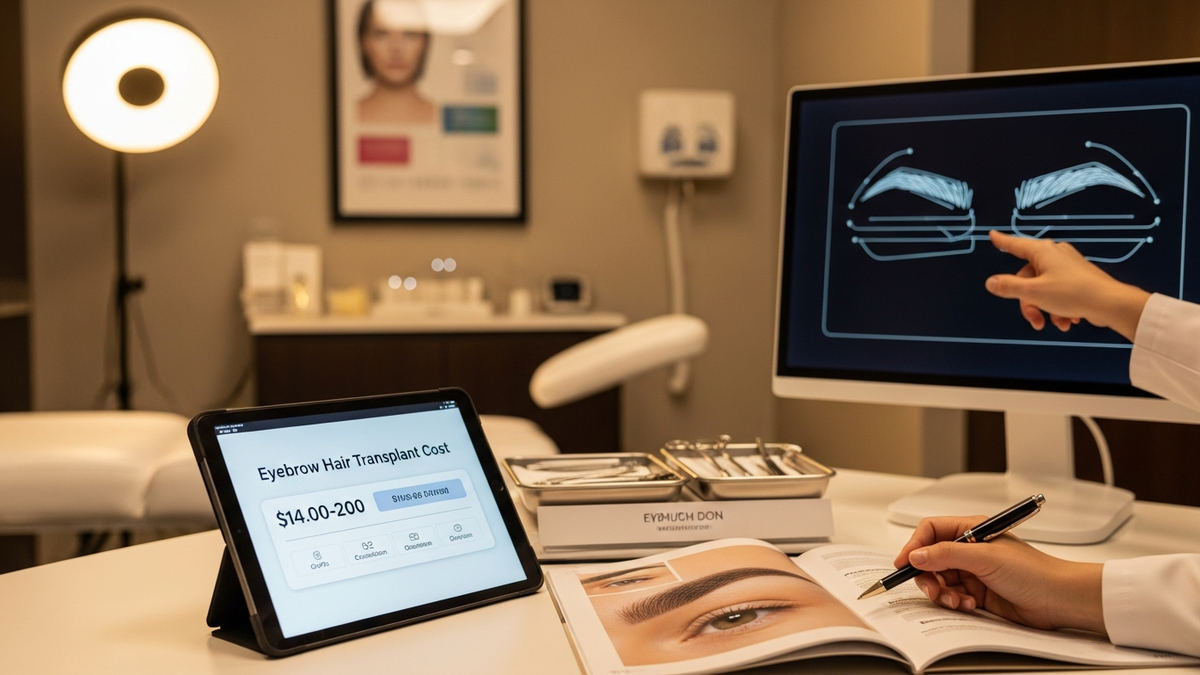
The cost of a fue eyebrow transplant varies based on factors like graft count, complexity, scarring, and the surgeon’s approach. Rather than focusing only on price, consider value:
- Graft planning and placement quality
- Experience with eyebrow restoration
- Personalized design and realistic outcomes
- Aftercare and follow-up
Many patients find it helpful to ask for a transparent estimate and a discussion of what may affect the final treatment plan.
FUE Eyebrow Transplant for Men and Women
Eyebrow restoration can benefit both men and women. However, aesthetic preferences often differ:
- Men may prefer a slightly more rugged or natural density pattern depending on hair color and facial structure.
- Women may prioritize brow shape and definition while still keeping the result soft and realistic.
A skilled surgeon will tailor design to your face and expression patterns rather than applying a one-size-fits-all brow style.
Frequently Considered “Add-Ons” and Related Procedures
Some patients explore additional facial procedures to complement brow restoration. While not required for everyone, these conversations can help with overall facial harmony.
Eye-area rejuvenation
If your concerns include tired-looking eyes or drooping eyelids, you might discuss Blepharoplasty with your surgeon. Improving the eyelid area can change how brows are perceived—making the final aesthetic plan more cohesive.
Brow/forehead balance
Some patients also consider brow lift or forehead rejuvenation. The goal is to ensure your brows sit in a position that matches your eye shape and facial expression.
Note: medical procedures are separate from cosmetic planning
For example, nasal breathing and structural issues may involve procedures such as Septoplasty. While this is unrelated to eyebrow grafting, it’s a reminder that comprehensive facial care often includes both functional and aesthetic considerations when appropriate.
If you have structural nasal concerns, you may hear about the Deviated Septum evaluation process from your specialist.
How to Prepare for Your FUE Eyebrow Transplant
Preparation can improve comfort and support optimal healing. Your surgeon will provide personalized instructions, but commonly recommended steps include:
- Review your medical history and current medications
- Follow guidance on supplements and blood-thinning agents
- Arrange time off for recovery and aftercare
- Plan for transportation on the day of the procedure
- Take baseline photos for tracking progress
Because eyebrows are part of the facial “frame,” some patients also discuss broader aesthetic goals. If you’re considering other procedures such as Rhinoplasty for overall facial balance, it’s best to coordinate timing with your surgeon to support efficient healing and realistic planning.
FAQs About FUE Eyebrow Transplant
1) How long does a fue eyebrow transplant take?
Procedure duration varies depending on the number of grafts and complexity of brow design. Your surgeon can estimate timing during consultation after evaluating your eyebrow pattern and donor availability.
2) Will my transplanted eyebrow hair fall out?
Temporary shedding is common after hair transplantation. This can be alarming, but it is often part of the growth cycle. Most patients see meaningful regrowth over the following months.
3) What makes results look natural?
Natural results typically come from precise brow mapping, correct hair direction and angle, realistic density distribution, and careful graft placement. Surgeon experience with eyebrow-specific aesthetic design is essential.
4) Are there visible scars?
FUE harvesting generally avoids a linear scar, but individual healing varies. Recipient-area scarring is usually minimal when technique is meticulous. A consultation should include discussion of your skin type and scar risk.
5) Can I get an eyebrow transplant if I have scarring?
In many cases, scarring can be addressed with transplant planning tailored to the recipient area. Outcomes depend on scar type, thickness, and stability of the tissue. A surgeon can assess feasibility during an in-person evaluation.
CTA: Ready to Explore a Natural-Looking Eyebrow Restoration Plan?
If you’re considering a fue eyebrow transplant, the best next step is a consultation that focuses on both anatomy and aesthetics. At FlowGeniQ Digest, we encourage readers to seek expert guidance from a qualified provider who can evaluate donor suitability, map your brow design, and explain an evidence-based timeline.
Schedule a consultation to discuss your goals, review realistic expectations, and get a personalized plan for eyebrow restoration. If you’re in Los Angeles or traveling from abroad, look for a clinic that serves international patients and uses state-of-the-art technology with experienced surgeons.
Professional Disclaimer
This content is provided for general educational purposes only by FlowGeniQ Digest. It is not a substitute for professional advice, diagnosis, or treatment. Readers are advised to consult qualified professionals for personalized recommendations.
Medical Information Disclaimer
This content is provided for general educational purposes only by FlowGeniQ Digest. It is not a substitute for professional advice, diagnosis, or treatment. Readers are advised to consult qualified professionals for personalized recommendations.