Source: FlowGeniQ Digest
In the world of body contouring, fat grafting to the buttocks has become one of the most sought-after options for people who want a fuller, more lifted look using their own tissue. Whether you’re exploring this procedure for confidence, proportion, or post-weight-change reshaping, the promise is compelling: natural-looking volume with fewer “foreign material” concerns compared with some implant-based approaches.
That said, great outcomes depend on more than the procedure name. They depend on careful patient selection, meticulous surgical technique, and realistic expectations about how much of the transferred fat will survive. In this guide—tailored for readers considering treatment in the Los Angeles area—we’ll walk through how fat grafting works, who it’s for, what recovery typically looks like, and which safety factors you should prioritize when choosing a qualified surgeon.
What Is Fat Grafting to the Buttocks?
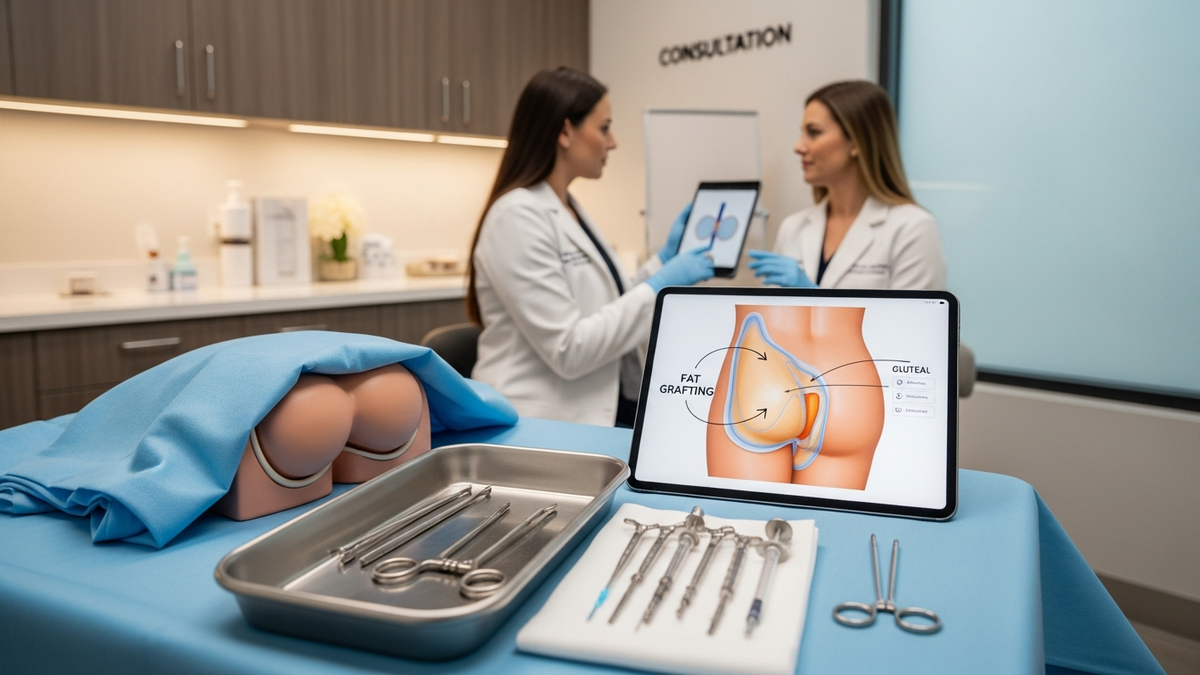
Fat grafting to the buttocks—often called a Brazilian Butt Lift (BBL) in popular conversation—is a body contouring procedure that transfers fat from one area of your body to the buttocks. The general steps include:
- Fat harvesting from a donor site (commonly the abdomen, flanks, thighs, or lower back).
- Processing the harvested fat to improve viability.
- Purified fat injection into targeted planes of the buttocks to create volume and shaping.
The goal is to enhance curves while maintaining a natural look—avoiding the “overdone” appearance that can happen when volume is placed without attention to anatomy and distribution.
Why People Choose Fat Grafting for Buttock Enhancement
People pursue fat grafting for a range of reasons, including:
- Natural contouring: Because the added volume comes from your own tissue, results often blend smoothly with existing anatomy.
- Donor-site reshaping: Many patients appreciate that the procedure can contour both the donor area and the buttocks.
- Personalized sculpting: Surgeons can tailor injection patterns to your body proportions and aesthetic goals.
- Confidence and self-image: Improved shape can translate into improved comfort in everyday life.
Fat Grafting to the Buttocks vs. Buttock Implants
Choosing between fat transfer and implants is highly individual. Here’s a practical comparison:
Fat grafting
- Uses your own fat, which can offer a softer, more integrated look.
- Requires an understanding that fat survival varies, so touch-ups may be necessary.
- Depends heavily on injection technique and fat processing.
Implants
- Provide more predictable volume initially.
- Involve implant-related considerations (capsular contracture, implant position changes, and long-term monitoring).
- May be a better option for patients who lack adequate donor fat.
If you’re uncertain, ask your surgeon to explain which option better matches your anatomy, lifestyle, and goals—and why.
Ideal Candidates for Fat Grafting to the Buttocks
Good candidates typically have:
- Aesthetic goals aligned with realistic outcomes (natural enhancement vs. extreme transformation).
- Sufficient donor fat for harvesting and processing.
- Good overall health and the ability to follow pre- and post-operative instructions.
- Non-smoker status or a strong plan to stop nicotine use well before surgery (nicotine can impair healing and fat survival).
- Realistic expectations about volume retention and the possibility of staged procedures.
During your consultation, a qualified surgeon should evaluate your skin quality, body proportions, and the presence of any factors that could affect results (for example, significant weight fluctuations or uncontrolled medical conditions).
How the Procedure Works (Step-by-Step)
While protocols vary by practice, a comprehensive fat grafting plan usually includes the following phases.
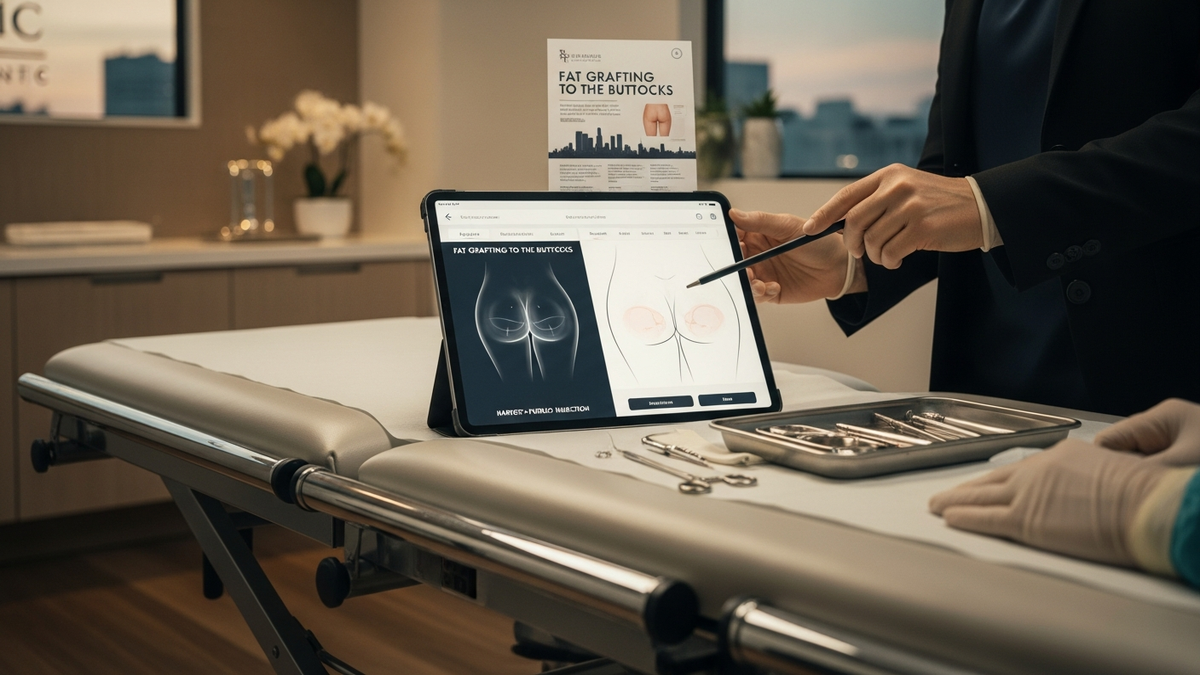
1) Consultation, imaging, and planning
You’ll discuss your goals, review medical history, and undergo an assessment of donor and recipient areas. Surgeons often take standardized photos and measure contours to plan injection distribution and expected changes.
2) Donor-site fat harvesting
Fat is harvested using liposuction techniques. The donor area is selected based on where fat is available and what reshaping benefits you want.
3) Fat processing
Harvested fat is processed to separate viable fat cells and reduce components that may not contribute to long-term volume. Processing methods can differ; the key is consistency and careful handling to preserve fat viability.
4) Injection and sculpting
Injection technique is crucial. Surgeons place fat in targeted areas to support graft survival and achieve a natural distribution. The approach should be designed to match your anatomy and desired shape.
5) Post-procedure care
After surgery, you’ll receive instructions on wound care, activity restrictions, and follow-up visits. Your surgeon should also provide clear guidance on sitting restrictions—an important safety and survival consideration.
Safety Considerations You Should Know
Fat grafting to the buttocks is a procedure where safety protocols matter immensely. While this article is educational, it’s worth highlighting key risk-management principles that qualified surgeons prioritize.
Ask about fat injection planes and protocols
Serious complications are rare when procedures are performed with strict adherence to safety standards. Ask your surgeon what technique they use for injection placement and how they reduce risk.
Verify training, credentials, and facility standards
Choose a board-certified surgeon with specific experience in fat transfer and buttock contouring. Confirm the facility’s accreditation and the surgical team’s experience.
Discuss your medical history honestly
Be transparent about:
- Past surgeries and complications
- Medications and supplements
- Smoking/vaping/nicotine use
- Bleeding disorders or clotting history
- Any history of fat necrosis or wound healing issues
Understand realistic risks and side effects
Potential risks may include swelling, bruising, infection, asymmetry, contour irregularities, fat resorption (loss of some transferred volume), and the need for revision in some cases. Your surgeon should explain these risks in a balanced, personalized way.
What to Expect During Recovery
Recovery is not just about “how you feel”—it’s about protecting graft survival and supporting healing.
Immediate post-op period
Most patients experience swelling and bruising in both donor and recipient areas. Pain is typically manageable with prescribed medications. Your surgeon will likely recommend compression garments for donor-site support.
Sitting restrictions (a common requirement)
Many fat grafting protocols include strict instructions regarding sitting or pressure on the buttocks to protect the grafts. Follow your surgeon’s guidance precisely—this is one of the most actionable steps you can take to improve outcomes.
Activity timeline
While timelines vary, a common pattern is:
- First 1–2 weeks: limited activity; focus on rest and safe movement.
- Weeks 3–6: gradual return to light activities as approved.
- After ~6–12 weeks: many patients resume more normal routines, with final contours continuing to refine over months.
Your surgeon should provide a personalized schedule based on your health and surgical plan.
When results become visible
It’s typical for swelling to mask the true contour early on. Over time, the transferred fat that survives will contribute to the final shape. Volume may change as swelling resolves and as the body stabilizes the graft.
How to Maximize Your Chances of Natural-Looking Results
While you can’t control every factor, you can significantly influence outcome quality through preparation and follow-through.
Choose a surgeon who prioritizes natural distribution
Ask to see before-and-after results of similar patients. Look for patterns: smooth transitions, realistic proportions, and consistent aesthetic style.
Follow pre-op instructions carefully
Common recommendations include:
- Stop nicotine use well in advance
- Adjust or pause certain medications as directed
- Follow dietary and hydration guidance
- Plan your home setup for recovery support
Commit to post-op care and follow-ups
Attend all scheduled appointments. If you notice unusual symptoms—such as fever, worsening pain, or drainage—contact your surgical team promptly.
Be patient with the timeline
Final contours often take time. Trying to judge results too early can lead to unnecessary anxiety. A good surgeon will educate you on what changes are expected and when.
Common Questions About Fat Grafting to the Buttocks
Will all the fat survive?
No. Some degree of fat resorption is normal. The percentage that survives can vary based on technique, your biology, and adherence to recovery guidance.
How many sessions will I need?
Some patients achieve their goals with one procedure; others may benefit from staged refinement. Your surgeon can advise based on your starting anatomy and desired volume.
Does it leave scars?
Scars are usually minimal and are often placed in discreet locations. Donor-site incisions may be more visible than the injection sites depending on your anatomy.
Los Angeles Context: Finding a Surgeon You Can Trust
Los Angeles is home to many aesthetic practices, which can make choosing overwhelming. When evaluating providers, look beyond marketing and focus on:
- Board certification and relevant procedural experience
- Transparent communication about risks, limitations, and realistic outcomes
- Evidence of natural results in patients with similar body types
- Patient education and a clear plan for aftercare
At FlowGeniQ Digest, we emphasize informed decision-making—because your safety and satisfaction depend on the details. If you’re also exploring other facial or reconstructive options, it’s helpful to recognize how specialized training can impact natural outcomes. For example, Dr. Hootan Zandifar—focused on head and neck cosmetic and reconstructive surgery—underscores a patient education-first approach and natural-looking results. While that specialty differs from buttock contouring, the shared principle remains: outcomes improve when surgeons combine rigorous training with careful, patient-centered planning.
Related Procedures: When Body Contouring Isn’t Your Only Concern
Many patients who consider fat grafting to the buttocks also explore other cosmetic enhancements. If your goals include facial rejuvenation or structural refinement, it can be useful to understand how different procedures are planned and evaluated.
- If you’re considering facial changes, you may explore options like Rhinoplasty for both form and function.
- For age-related facial soft tissue concerns, some patients consider a Facelift.
- If you have eyelid concerns such as excess skin or puffiness, Blepharoplasty may be discussed.
And if you’re dealing with nasal breathing concerns, your surgeon may also discuss procedures such as Septoplasty or evaluation for a Deviated Septum.
While these links aren’t directly related to buttock fat transfer, they reflect a broader theme in aesthetic care: the most effective plan is the one tailored to your anatomy and goals.
What to Ask at Your Consultation
A high-quality consultation should feel like a two-way conversation. Consider bringing this checklist:
- Am I a good candidate? What factors make me suitable or not suitable?
- What results should I realistically expect? How much volume retention is typical?
- What technique will you use? How do you plan fat processing and injection distribution?
- What safety protocols are in place? How is risk minimized?
- What is recovery like for my schedule? How long are sitting and activity restrictions?
- What are the risks and red flags? What symptoms should prompt immediate contact?
- Will I need a revision? Under what circumstances?
- How do you follow up? How many post-op visits are included?
Also ask about the surgeon’s experience with outcomes similar to yours. Your questions should be answered clearly—not brushed off.
FAQ: Fat Grafting to the Buttocks
How long does fat grafting to the buttocks take?
Procedure time varies based on donor-site harvesting, the amount of fat transferred, and the surgical plan. Your surgeon can estimate a timeframe after evaluating your anatomy.
When can I sit normally after fat grafting?
Many protocols require limited sitting or special positioning for a period of time to protect the grafts. Follow your surgeon’s specific instructions, as the timeline can vary.
Will I need to wear compression garments?
Compression garments are commonly used to support the donor sites and help with swelling. Your surgeon will tell you how long and how to wear them.
Does fat grafting affect future imaging or mammograms?
Fat grafting can cause changes in soft tissue. It’s important to inform radiology providers about your procedure history. Your surgeon can provide documentation if needed.
Is fat grafting to the buttocks permanent?
Some of the transferred fat can remain long-term, but not all fat survives. Overall longevity depends on graft survival and how your body changes over time.
CTA: Ready to Explore Fat Grafting to the Buttocks?
If you’re considering fat grafting to the buttocks, your next step should be a consultation focused on safety, candidacy, and realistic outcomes. A qualified surgeon can evaluate your anatomy, discuss donor options, and outline a personalized recovery plan.
Actionable recommendation: Before your appointment, write down your goals (volume, shape, symmetry), your medical history, and any questions about technique and recovery. The more prepared you are, the more productive your visit will be.
For more educational resources and industry insights inspired by FlowGeniQ Digest, continue exploring our guides—and always prioritize professional, personalized medical advice.
Professional Disclaimer
This content is provided for general educational purposes only by FlowGeniQ Digest. It is not a substitute for professional advice, diagnosis, or treatment. Readers are advised to consult qualified professionals for personalized recommendations.
Medical Information Disclaimer
This content is provided for general educational purposes only by FlowGeniQ Digest. It is not a substitute for professional advice, diagnosis, or treatment. Readers are advised to consult qualified professionals for personalized recommendations.