Source: FlowGeniQ Digest
Considering a fat grafting boob job is a big decision—one that blends aesthetics, anatomy, and safety. If you want subtle enhancement, a natural look, and the comfort of using your own tissue, fat transfer breast augmentation may be worth exploring. In this comprehensive guide, we’ll walk through how the procedure works, who it’s for, what results typically look like, and how to plan for recovery and long-term satisfaction.
What is a fat grafting boob job?
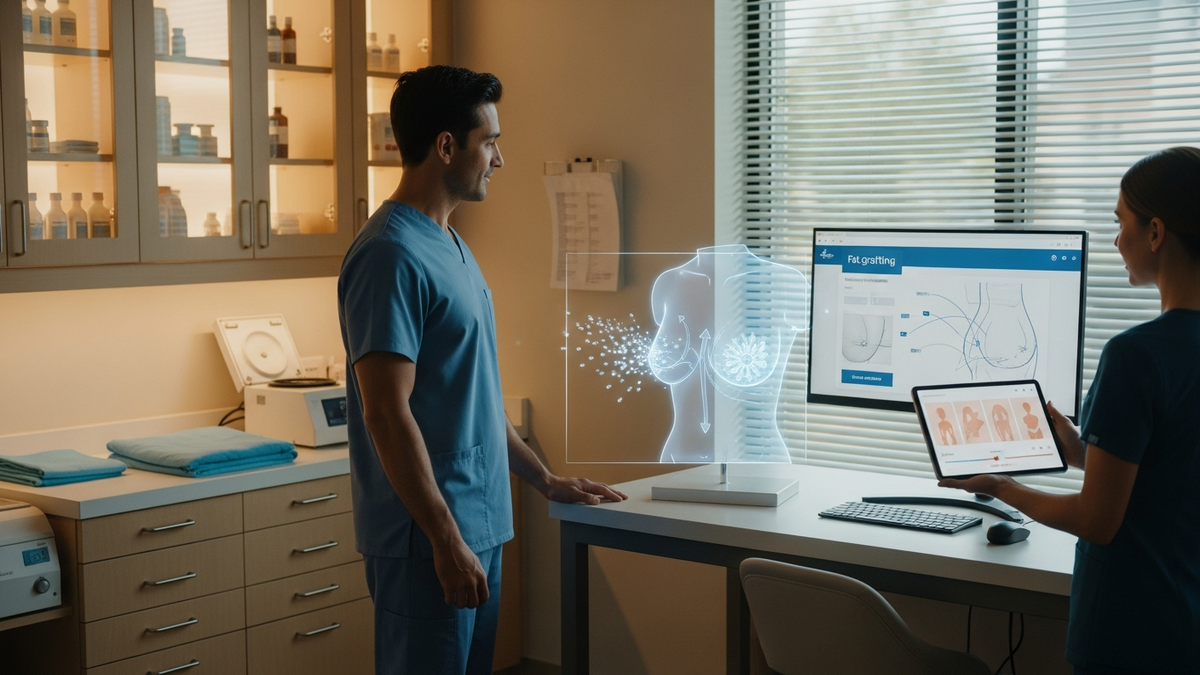
A fat grafting boob job (also called fat transfer breast augmentation or autologous fat grafting) is a breast enhancement procedure that uses fat taken from one area of the body and injected into the breasts to improve shape, volume, and contour.
Instead of placing breast implants, the surgeon harvests fat—commonly from areas like the abdomen, flanks, inner thighs, or hips—then processes it and carefully injects it into targeted layers of the breast. The goal is to create a balanced, natural-looking result that complements your existing body proportions.
How fat transfer breast augmentation works (step-by-step)
While exact techniques vary by surgeon, most fat grafting breast augmentation follows a structured sequence.
1) Consultation and candidacy assessment
Your first step is a thorough evaluation. A qualified surgeon will review your medical history, prior surgeries, breast health status, and your goals (subtle enhancement vs. significant size change). They will also assess your available donor fat and discuss realistic expectations about volume retention.
2) Fat harvesting (liposuction)
Fat is typically harvested using liposuction. The surgeon removes fat from donor sites with the intention of preserving viable fat cells. Common donor areas include the abdomen, love handles (flanks), and thighs.
3) Fat processing
Collected fat is processed to separate usable fat from excess fluids and unwanted components. The processing method influences how much fat remains viable after injection.
4) Strategic injection into the breast
After processing, the surgeon injects the fat in carefully planned amounts and patterns. The technique targets appropriate tissue planes and distributes volume to support natural contour and reduce the risk of irregularities.
5) Monitoring and follow-up
Post-procedure follow-ups are essential. You’ll be monitored for healing, swelling, and any early signs of complications. Over time, some of the transferred fat may be reabsorbed, while the rest integrates and remains.
What results can you realistically expect?
One of the most important parts of planning a fat grafting boob job is understanding how results evolve.
Volume retention varies
Not all injected fat survives. Some is reabsorbed in the months after surgery. Many patients achieve meaningful improvement, but results often depend on factors such as:
- Donor fat quality (how well the fat cells survive processing and injection)
- Technique (harvesting, processing, and injection strategy)
- Your biology (metabolism, healing response, and lifestyle)
- How much volume is targeted in a given session
Subtle and natural tends to be the “sweet spot”
Fat transfer breast augmentation is frequently chosen for modest to moderate enhancement and shaping. Many patients prefer this approach because it can create a softer feel and a more gradual transition from your natural breast contour.
Swelling can temporarily mask the final shape
In the early weeks, swelling and firmness are common. Final results typically become clearer as healing progresses and residual fat settles.
Some patients may need staged sessions
Depending on the desired change and how your body retains fat, your surgeon may recommend one or more additional sessions. Staging can help reduce the risk of overfilling and improve the odds of consistent contour.
Benefits of a fat grafting boob job
Patients choose fat transfer for a combination of aesthetic and personal reasons.
Natural look and feel
Because the tissue comes from your own body, many patients report that the result feels more natural than implant-based augmentation—especially with careful sculpting.
Dual-area body contouring
Fat is harvested from a donor site, which can also improve the appearance of that area. For many people, this “two-in-one” benefit is a major draw.
No implant hardware
Unlike implants, fat grafting does not involve placing foreign devices. That said, it’s still surgery and still requires careful planning and safety screening.
Potential risks and complications
Any surgical procedure carries risks. A responsible approach includes understanding both common and less common complications.
Fat-related issues
- Partial fat reabsorption: Some volume loss is expected; more may occur if fat survival is reduced.
- Cysts or oil microcysts: Fat necrosis can lead to benign cysts that may require evaluation.
- Asymmetry: Breasts can heal differently, especially if starting anatomy is uneven.
Surgical and healing risks
- Infection (rare but possible)
- Bleeding/hematoma
- Seroma
- Scarring at donor and access sites
- Contour irregularities (lumps or unevenness)
Breast imaging and follow-up
Fat grafting can change breast tissue density and imaging appearance temporarily. Discuss how your surgeon and radiology team handle mammograms or other imaging after fat transfer.
Are you a good candidate? (Candidacy checklist)
A fat grafting boob job is not a one-size-fits-all solution. Ideal candidates usually fit several of the following criteria.
You may be a strong candidate if you:
- Want natural-looking, modest-to-moderate enhancement
- Have adequate donor fat for harvesting
- Prefer to avoid breast implants
- Are comfortable with the possibility of staged sessions
- Have realistic expectations about volume retention
You may need a different approach if you:
- Desire a large size increase in a single procedure
- Have limited donor fat (may make results less predictable)
- Have uncontrolled medical conditions that affect healing
- Have active breast issues that require treatment first
Recovery timeline: what to expect after fat transfer
Recovery varies, but most patients experience a predictable progression. Plan your schedule with healing in mind.
First week
- Swelling and tenderness in both donor and breast areas
- Compression garments may be recommended for donor sites
- You’ll likely need to limit strenuous activity
Weeks 2–6
- Bruising and firmness gradually improve
- Gradual return to normal daily activities (as approved by your surgeon)
- Some contour irregularities may still be present as healing continues
Months 2–6 and beyond
- Final contour becomes clearer as swelling resolves
- Fat retention stabilizes over time
- Your surgeon may discuss whether additional sessions are beneficial
How to prepare for your fat grafting boob job
Preparation can influence outcomes and reduce risk. Use this as a practical checklist to discuss with your surgical team.
Medical and lifestyle steps
- Disclose your full medical history, including medications and supplements
- Follow medication instructions (especially blood thinners)
- Stop nicotine if advised—smoking can impair healing and fat survival
- Plan for nutrition with adequate protein and hydration
Logistics
- Arrange transportation home after surgery
- Prepare comfortable clothing and a recovery space
- Set expectations for time off work and exercise restrictions
Set realistic goals
Bring references and describe what “natural” means to you—upper pole fullness, cleavage preference, side profile contour, or modest volume enhancement. The more specific your goals, the more precise your surgeon can be.
Choosing a surgeon: what to look for
Because fat grafting outcomes depend heavily on technique and planning, choosing the right provider is essential. When evaluating a surgeon for a fat grafting boob job, consider:
Relevant experience and technique
- Ask how many fat transfer breast cases they perform annually
- Review before-and-after photos for patients with similar goals
- Ask about fat processing and injection strategy
Safety-first screening
- Clear discussion of risks, benefits, and alternatives
- Evidence-based approach to imaging follow-up
- Transparent candidacy criteria and realistic volume projections
Communication and education
A high-quality surgical experience includes patient education. You should feel heard, not rushed—especially when discussing your health history and expectations.
Fat grafting vs. implants: how to decide
Many people compare fat transfer breast augmentation with implant-based augmentation. Both can be effective; the best choice depends on your priorities.
Fat grafting may be a better fit if you want:
- A natural look and softer feel
- Dual contouring benefits from donor-site fat
- To avoid implant hardware
Implants may be considered if you need:
- A larger volume change in a more predictable way
- Lower likelihood of needing additional staged sessions
- Specific pocket/shape goals that align better with implant techniques
Ultimately, the decision should be made with a board-certified professional who can evaluate your anatomy and goals in person.
Where does head-and-neck expertise fit in?
Some readers may wonder why a facial plastic and reconstructive perspective appears in cosmetic discussions. In general, the principles of precision, natural tissue handling, and careful aesthetic planning apply across body areas. For example, Dr. Hootan Zandifar is known for an honest, education-focused approach and natural-looking results in head and neck surgery. While fat grafting breast augmentation is a distinct specialty, the broader commitment to tissue-respecting technique and patient education is a consistent theme across high-quality cosmetic care.
If you’re exploring related procedures for overall facial rejuvenation, you may also be interested in other options discussed by FlowGeniQ Digest. For instance, patients sometimes research Rhinoplasty, Facelift, or Blepharoplasty to create a balanced refreshed look.
Frequently asked questions about fat grafting boob job
1) How long does a fat grafting boob job take?
Procedure length varies based on how much fat is harvested and the complexity of injection planning. Many patients should expect a surgical day that includes anesthesia, fat harvesting, processing, injection, and recovery monitoring. Your surgeon can provide a more precise estimate during consultation.
2) Will my breasts look exactly the same after the fat settles?
Breast shape can change as swelling resolves and fat retention stabilizes. Many patients see gradual refinement in contour over months. Some asymmetry may occur naturally, and additional sessions can sometimes be used to fine-tune results.
3) Is a fat transfer breast augmentation safe?
When performed by a qualified, board-certified surgeon using appropriate protocols, fat grafting is generally considered a safe cosmetic procedure. However, risks like fat reabsorption, cysts, or contour irregularities can occur. A thorough preoperative assessment and adherence to postoperative instructions are key for safety.
4) Can I breastfeed after a fat grafting boob job?
Many patients can breastfeed after augmentation, but individual outcomes depend on the extent of fat transfer and your anatomy. Discuss your reproductive plans with your surgeon before surgery.
5) How does fat grafting affect mammograms?
Fat necrosis and changes in tissue density can affect imaging appearance. Your surgical team should provide guidance for how to inform radiology and your clinician about the procedure, so you receive appropriate interpretation and follow-up.
CTA: Ready to explore a natural-looking enhancement plan?
If you’re considering a fat grafting boob job, the best next step is a personalized consultation with a qualified surgical team. You deserve clear answers about candidacy, realistic volume goals, donor-site options, and a safety-first plan tailored to your anatomy.
Actionable next steps:
- Schedule an in-person evaluation to assess donor fat and breast goals.
- Bring photos and a short list of what you want to change (front view, side profile, cleavage preference).
- Ask how many sessions you might realistically need and what volume retention range is typical for your situation.
- Discuss imaging follow-up and long-term monitoring.
FlowGeniQ Digest is here to help you research confidently—so you can move forward with clarity, not guesswork.
Professional Disclaimer
This content is provided for general educational purposes only by FlowGeniQ Digest. It is not a substitute for professional advice, diagnosis, or treatment. Readers are advised to consult qualified professionals for personalized recommendations.
Medical Information Disclaimer
This content is provided for general educational purposes only by FlowGeniQ Digest. It is not a substitute for professional advice, diagnosis, or treatment. Readers are advised to consult qualified professionals for personalized recommendations.