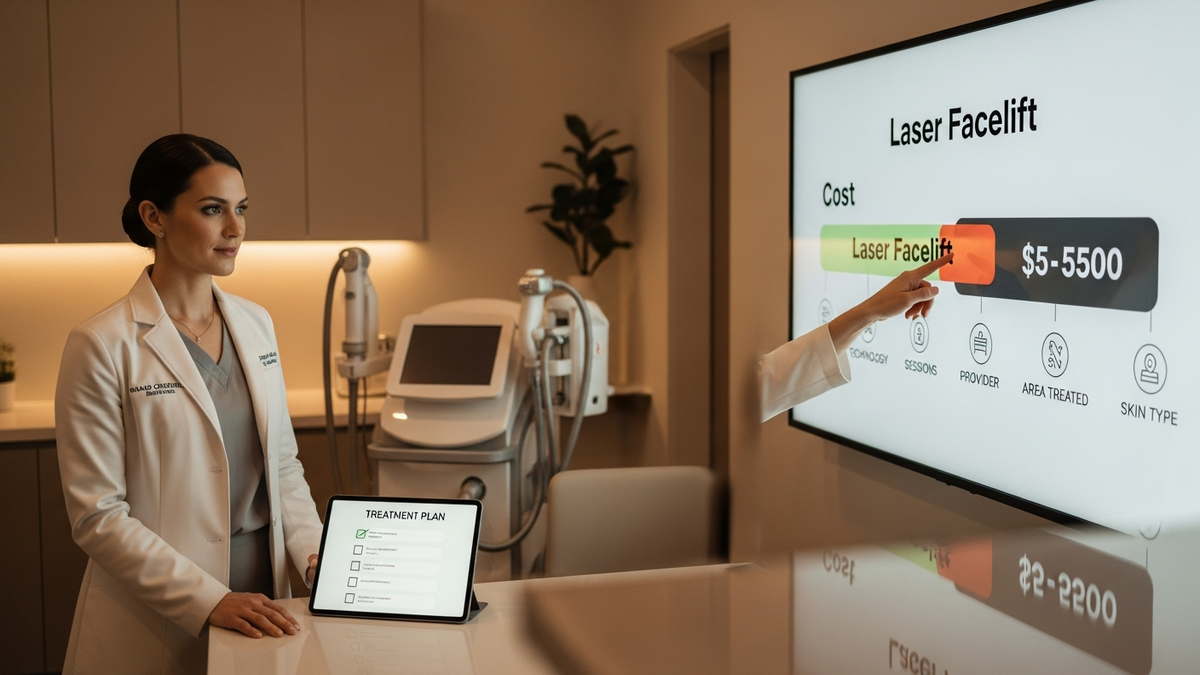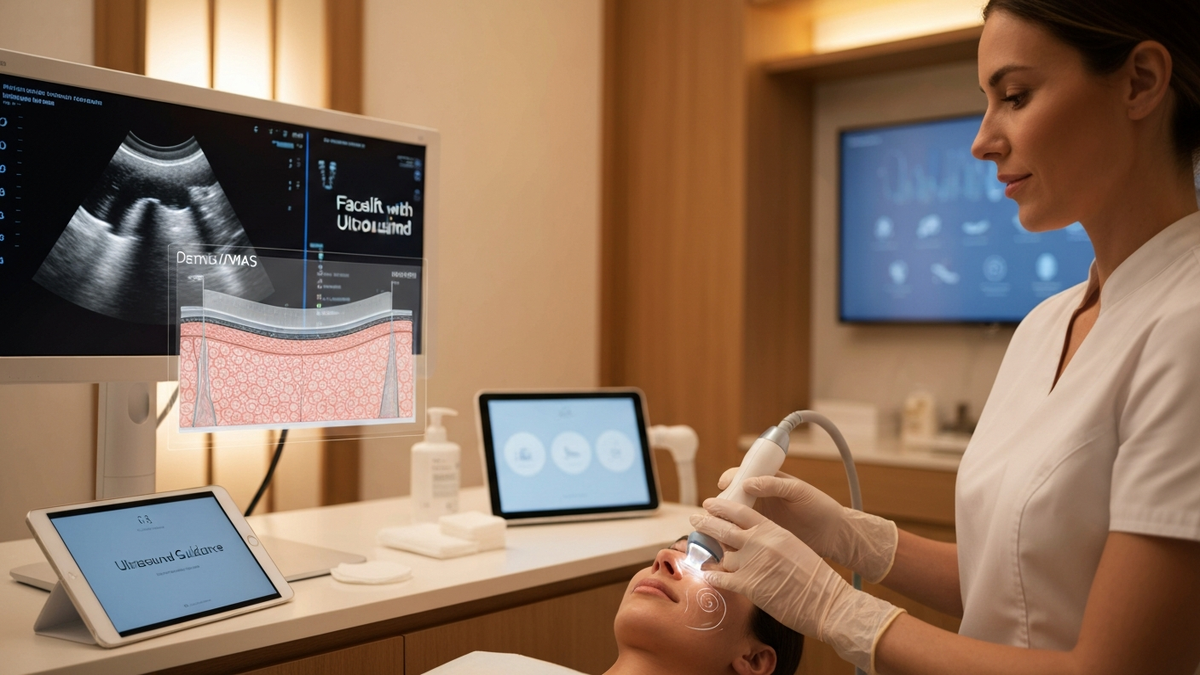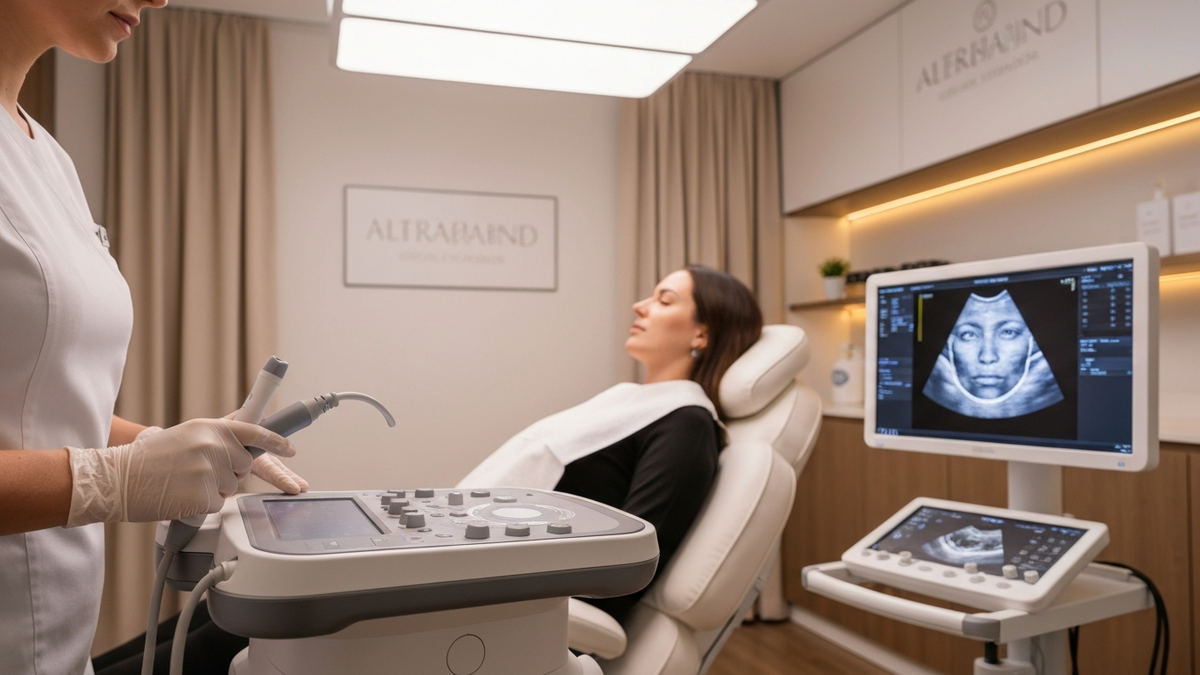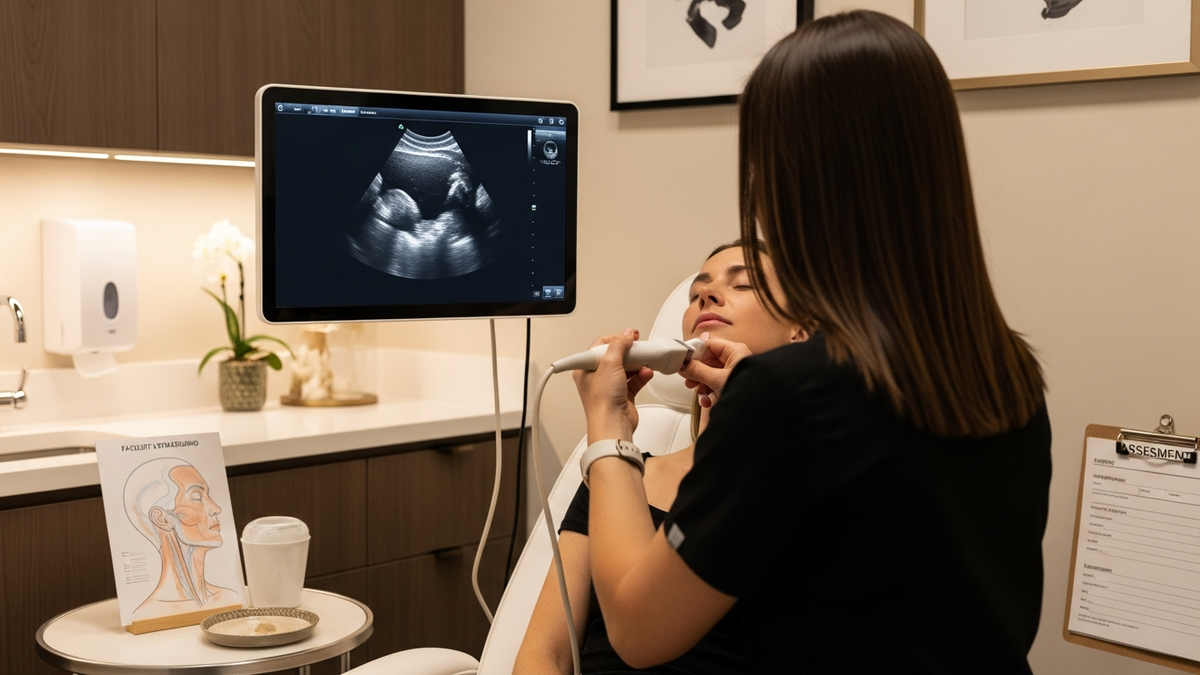
From FlowGeniQ Digest — If you’re researching skin tightening and facial rejuvenation, you’ve likely come across the phrase facelift with ultrasound. It sounds like a “mini facelift,” but the reality is more nuanced: ultrasound-based treatments use focused energy to stimulate skin tightening and collagen remodeling rather than surgically lifting facial tissues.
Whether you’re comparing options in Los Angeles or simply trying to understand what the technology can and can’t do, this guide breaks down how ultrasound works, who it may help, and how to set realistic expectations—so you can make an informed decision with a qualified facial plastic or dermatology professional.
What “facelift with ultrasound” really means
A traditional facelift is a surgical procedure that repositions deeper facial tissues and tightens skin and supportive structures. In contrast, a facelift with ultrasound typically refers to a non-surgical skin tightening or remodeling treatment that uses ultrasound energy to heat and stimulate the skin.
Most ultrasound-based devices are designed to:
- Promote collagen remodeling over time
- Improve skin laxity (mild to moderate sagging in some patients)
- Enhance facial contours subtly rather than dramatically
- Target areas like the jawline, lower face, and neck depending on the device and treatment plan
For patients with more advanced sagging, a surgical Facelift may be the more effective option. Many people explore ultrasound first, then decide whether additional treatment is needed.
How ultrasound energy supports skin tightening
Ultrasound treatments generally deliver controlled thermal energy to specific depths of tissue. The goal is to create a remodeling response—essentially encouraging the skin’s collagen to reorganize and tighten gradually.
1) Controlled heating and collagen stimulation
By delivering ultrasound energy in a targeted manner, these devices can warm tissue at depths where collagen remodeling is most relevant. The result is often a progressive tightening effect rather than an immediate “lift.”
2) Gradual improvement over weeks to months
Unlike fillers or surgery, ultrasound-based remodeling usually takes time. Many patients notice changes as collagen remodeling progresses, often over several weeks to a few months after treatment.
3) Treatment depth matters
Not all ultrasound treatments are identical. Device settings, energy delivery, and the depth of targeting influence outcomes. That’s why an individualized evaluation is critical—especially for the neck and jawline, where anatomy varies significantly from patient to patient.
Potential benefits of a facelift with ultrasound
While ultrasound isn’t a surgical facelift, it may offer meaningful improvements for the right candidate.
Commonly reported or expected benefits
- Milder skin laxity: Helps tighten early-to-moderate sagging
- Jawline and neck refinement: Can improve the appearance of contour definition
- Texture and tone: Some patients experience smoother-looking skin as collagen remodels
- Non-surgical convenience: Usually less downtime than surgery
- Progressive results: Improvement can continue after the session(s)
Why patients like it
For many people, the appeal is the balance of visible improvement with a lower procedural intensity. It can be a good option for those who want to start conservatively or maintain results between more comprehensive interventions.
Limitations: what ultrasound cannot replace
To choose wisely, it’s important to understand what a facelift with ultrasound typically cannot do.
- It usually won’t correct significant tissue descent caused by deeper structural changes.
- It may not address severe jowls or pronounced neck laxity as effectively as surgery.
- It won’t reposition deep facial fat or SMAS tissues the way a surgical facelift can.
- Results vary based on age, skin quality, anatomy, and the device protocol.
If your primary concern is advanced sagging, you may benefit more from a surgical approach discussed by a board-certified facial plastic surgeon. In that case, ultrasound can sometimes be considered as a complementary or maintenance strategy rather than the main solution.
Who may be a good candidate for ultrasound skin tightening
Ultrasound-based treatments are often best suited for patients with mild to moderate skin laxity and early signs of aging.
Possible candidacy indicators
- You’re seeing early sagging along the jawline or neck
- Your skin has good baseline quality (elasticity, thickness, and tone)
- You want subtle-to-moderate improvement without surgery
- You’re willing to commit to a treatment plan (often multiple sessions)
Situations where a surgical consult is especially important
Consider discussing a surgical option if you have:
- Pronounced jowls or deep folds
- Significant neck banding or laxity
- Lower-face descent that doesn’t respond to non-surgical approaches
- Expectations for a dramatic “lift”
In those cases, a qualified specialist may recommend a Facelift or a neck lift strategy rather than ultrasound alone.
What to expect during a facelift with ultrasound consultation
A premium, patient-centered evaluation typically includes more than a quick “yes/no” for ultrasound. You should expect a discussion of your goals, medical history, skin quality, and facial anatomy.
Your evaluation may include
- Facial assessment in multiple lighting conditions
- Skin quality review (texture, thickness, laxity)
- Discussion of expectations and realistic outcomes
- Review of prior treatments (if any)
- Device selection and protocol planning
How specialists think about “natural-looking” results
Natural results depend on matching the treatment to the underlying cause of aging—skin laxity versus deeper structural changes. In the facial plastic and reconstructive space, the emphasis is often on achieving balanced, harmonious outcomes that look like you, not an over-tightened version of you.
How the treatment session typically feels
Most ultrasound tightening sessions are designed to be tolerable. Some patients describe warmth or mild discomfort during energy delivery, with the sensation varying based on settings and the treatment area.
After treatment, you may notice temporary redness, warmth, or mild swelling. Downtime is usually limited compared with surgery, but it still varies by device and individual skin response.
Results timeline: when you’ll see changes
Because ultrasound aims to trigger collagen remodeling, results are generally progressive rather than immediate.
Typical timeline (varies by person)
- 0–2 weeks: Subtle skin changes may begin; any temporary redness typically resolves.
- 2–8 weeks: Many patients see increasing tightening and improved contour definition.
- 2–4+ months: Collagen remodeling may continue, with the most noticeable improvement often appearing later.
Because outcomes vary, your provider should explain how many sessions they recommend and what degree of change is realistic for your anatomy.
Safety and side effects of ultrasound skin tightening
Ultrasound treatments are widely used in cosmetic settings, but safety depends on appropriate patient selection, device quality, and correct technique.
Possible side effects
- Temporary redness or warmth
- Mild swelling
- Skin sensitivity
- Rarely, prolonged irritation or changes in skin texture (especially if settings are too aggressive)
Why a qualified provider matters
A well-trained clinician can adjust energy delivery to your skin type and targeted area. They can also identify when ultrasound isn’t the best option—helping you avoid spending time and money on a treatment that won’t meet your goals.
Facelift with ultrasound vs. surgical facelift: how to choose
Choosing between a facelift with ultrasound and a surgical facelift is ultimately about matching the treatment to your concerns.
Compare outcomes and tradeoffs
- Ultrasound: Often best for mild-to-moderate tightening; subtle-to-moderate contour improvement; typically less downtime.
- Surgical facelift: Best for significant sagging; can reposition deeper tissues; typically more downtime and recovery, but more dramatic and predictable lifting in appropriate candidates.
A practical decision framework
- Define your primary concern: jawline laxity, neck banding, midface descent, or skin texture?
- Assess severity: mild, moderate, or advanced aging changes.
- Align with your timeline: Are you seeking gradual improvement or a more immediate structural change?
- Discuss maintenance: Some patients use ultrasound as part of a long-term plan.
For those in Beverly Hills and Los Angeles who want surgical precision, board-certified facial plastic expertise can help determine whether a Facelift is the right next step—or whether ultrasound is a better starting point.
Pairing ultrasound with other non-surgical treatments
In many modern facial rejuvenation plans, ultrasound is combined with complementary therapies to address multiple aging factors: volume loss, skin quality, pigment, and texture.
Common complementary strategies (discuss with your provider)
- Topical skin care (retinoids, antioxidants, sunscreen adherence)
- Injectables for targeted volume or dynamic lines (when appropriate)
- Energy-based skin treatments for texture and tone
Because combining treatments can affect timing and recovery, your clinician should create a sequence that prioritizes safety and optimal results.
How to prepare before your facelift with ultrasound
Preparation helps reduce risk and supports better outcomes.
Actionable pre-treatment recommendations
- Follow provider instructions exactly (including skincare and medication guidance).
- Review your medical history, including any conditions affecting healing or skin sensitivity.
- Be honest about prior procedures (fillers, lasers, threads, or surgery).
- Use sun protection diligently before and after treatment.
- Plan for temporary sensitivity by avoiding harsh exfoliants unless approved.
Aftercare: supporting collagen remodeling
Aftercare doesn’t “force” collagen to remodel, but it can help your skin recover comfortably and maintain results.
Typical aftercare principles
- Gentle skincare: avoid aggressive scrubs or active ingredients unless cleared.
- Hydration and barrier support as recommended.
- Sun avoidance or strict sunscreen use.
- Don’t overheat the treated area (avoid saunas/hot yoga if your provider advises).
Choosing the right provider for ultrasound skin tightening
Not all clinics deliver the same quality. When you’re considering a facelift with ultrasound, look for providers who emphasize:
- Patient education (clear explanation of expected results and limitations)
- Individualized treatment planning rather than one-size-fits-all protocols
- Safety-first technique and appropriate device settings
- Long-term strategy that matches your aging goals
As with any cosmetic decision, trust and transparency matter. At FlowGeniQ Digest, we encourage readers to evaluate credentials, ask detailed questions, and choose a provider who will guide you toward the most appropriate option—not just the most popular one.
How facial plastic expertise can complement non-surgical options
In head and neck-focused facial plastic and reconstructive care, a key strength is the ability to distinguish skin laxity from deeper structural changes. For example, some patients begin with non-surgical treatments but eventually need procedures that address deeper support.
In Los Angeles, facial plastic surgeons often offer a full spectrum of options—including surgical rejuvenation such as facelifts and neck lifts—paired with patient education and realistic outcome planning.
Related procedures you may hear about during your consult
Depending on your goals, your specialist may also discuss other head/neck aesthetic procedures. For instance:
- Blepharoplasty (eyelid surgery) for upper eyelid heaviness or lower eyelid puffiness: Blepharoplasty
- Rhinoplasty for nasal aesthetics and, in some cases, functional breathing concerns: Rhinoplasty
- Neck lift when neck laxity is more advanced than ultrasound can address
FAQ: facelift with ultrasound
1) Is a facelift with ultrasound the same as a surgical facelift?
No. A surgical facelift repositions deeper facial tissues and tightens supportive structures. A facelift with ultrasound is typically non-surgical skin tightening that aims to stimulate collagen remodeling for gradual improvement.
2) How many ultrasound sessions are usually needed?
Many treatment plans involve more than one session, depending on the device, treatment area, and your starting level of laxity. Your provider should provide a clear plan and a realistic expectation for degree of change.
3) When will I see results after ultrasound skin tightening?
Results are usually progressive. Some patients notice early changes within weeks, while more noticeable tightening often appears over 2–4+ months as collagen remodeling continues.
4) What are the most common side effects?
Temporary redness, warmth, swelling, or sensitivity are among the more common side effects. Serious complications are uncommon when performed by qualified providers using appropriate settings.
5) Who is not a good candidate for ultrasound tightening?
Candidacy depends on your anatomy and goals. Patients with significant sagging or advanced neck laxity may achieve more effective, predictable results with surgical options rather than ultrasound alone.
CTA: take the next step with a personalized assessment
If you’re considering a facelift with ultrasound, the best next step is a consultation focused on your specific anatomy, goals, and timeline. A qualified provider can help you determine whether ultrasound is the right starting point—or whether a surgical approach like a Facelift (or another procedure) would offer more effective results.
Ready to explore your options? Schedule an evaluation to discuss candidacy, device/protocol choices, and what “natural-looking” outcomes should realistically look like for you.
Professional Disclaimer
This content is provided for general educational purposes only by FlowGeniQ Digest. It is not a substitute for professional advice, diagnosis, or treatment. Readers are advised to consult qualified professionals for personalized recommendations.
Medical Information Disclaimer
This content is provided for general educational purposes only by FlowGeniQ Digest. It is not a substitute for professional advice, diagnosis, or treatment. Readers are advised to consult qualified professionals for personalized recommendations.