FlowGeniQ Digest is here to help you navigate today’s most sought-after aesthetic options with clarity—especially when you’re considering a facelift with fat injections. If you’re in Los Angeles and exploring head-and-neck rejuvenation, you may have noticed a growing trend: combining surgical tightening with targeted fat grafting to restore volume where it’s been lost over time.
In this guide, we’ll break down how fat injections (fat grafting) work alongside a facelift, who may be a good candidate, what results to realistically expect, and how to choose a facial plastic surgeon experienced in natural-looking outcomes.
What Is a Facelift with Fat Injections?
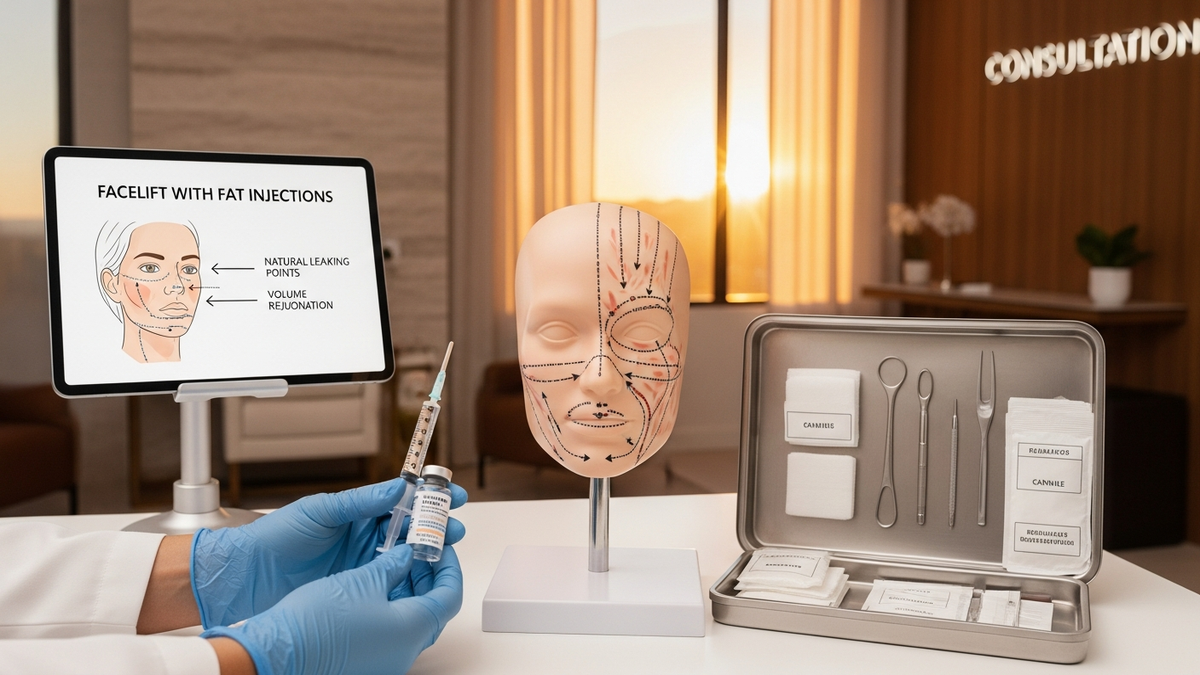
A classic facelift focuses on lifting and tightening the skin and underlying soft tissues of the face and neck. A facelift with fat injections adds another layer of refinement: strategically transferring your own fat to areas that need replenishment—commonly the cheeks, temples, under-eye/tear trough region (in carefully selected cases), and the lips or jawline for improved contour.
Rather than relying solely on tightening, this approach aims to address both:
- Sagging (improved by lifting and repositioning tissues)
- Volume loss and contour changes (improved by fat grafting)
Fat injections vs. fillers vs. “just tightening”
It’s easy to confuse fat grafting with dermal fillers. While both can restore volume, they differ in composition and longevity:
- Fat grafting uses your own fat cells, processed and injected into specific sites.
- Dermal fillers use manufactured products (often hyaluronic acid or other materials).
- Just tightening can improve sagging, but it may not correct hollowing or contour flattening—sometimes leaving the face looking “pulled” rather than refreshed.
When performed thoughtfully, fat grafting can help maintain a balanced, natural appearance that complements the facelift’s structural lift.
How Fat Grafting Works in a Facelift Plan
Fat grafting is a multi-step process. Your surgeon typically evaluates facial anatomy, skin quality, and volume distribution to determine where fat can be safely and effectively placed.
Step 1: Fat harvesting
Fat is usually harvested from areas where it’s present in excess (commonly the abdomen, thighs, or flanks). This is done with techniques designed to preserve fat cell viability.
Step 2: Processing the fat
The harvested fat is processed to separate usable fat cells from other components. The goal is to maximize the number of viable cells that can survive after injection.
Step 3: Injection for contour and support
Fat is injected in specific layers and precise patterns to improve contours and support soft tissue. The injection strategy matters—overfilling or injecting too superficially can increase the risk of irregularities.
Step 4: Healing and refinement
After surgery, there is swelling and gradual settling. Over time, some of the transferred fat may integrate, while a portion may be resorbed. Many surgeons plan for this biologic reality by tailoring the amount injected to your goals and tissue characteristics.
Why Combine a Facelift with Fat Injections?
The most compelling reason patients consider this combined approach is the potential for a more harmonious result.
1) Restores volume where tightening alone can’t
Facelifts can lift sagging tissues, but they don’t inherently replace lost midface volume. Fat injections can help address the “hollowed” or “deflated” look that sometimes develops with age.
2) Supports natural facial contours
A youthful face is not only lifted—it’s also sculpted. Strategic fat grafting can improve cheek projection, soften transitions between facial zones, and refine the jawline’s appearance.
3) Enhances skin appearance indirectly
While fat grafting is primarily about volume, it may also contribute to a more refreshed look as tissues regain supportive structure. Patients often describe an overall “rested” effect when the plan is balanced.
Who Might Be a Good Candidate for a Facelift with Fat Injections?
Not every patient needs both procedures, and not every patient is an ideal candidate for fat grafting. The best approach depends on your anatomy, health, and aesthetic priorities.
Common considerations
- Visible sagging in the lower face and neck
- Midface volume loss (cheeks, temples, or perioral support)
- Contour flattening or “age-related deflation”
- Desire for natural-looking results rather than an overly tight or “pulled” appearance
- Adequate donor fat for harvesting
During consultation, your surgeon will evaluate skin elasticity, facial fat distribution, and the position of underlying tissues. This is where choosing an experienced facial plastic surgeon matters.
When fat injections may not be ideal
Fat grafting may be less suitable if you have limited donor fat, certain medical conditions, or if your goal is primarily skin tightening without contour restoration. In some cases, a surgeon may recommend a facelift alone, fat grafting alone, or a different combination of procedures.
Facelift vs. Other Rejuvenation Options
Patients often compare multiple procedures before deciding. Here’s how a facelift with fat injections fits within the broader landscape of facial rejuvenation.
Facelift (lifting and tightening)
A facelift is designed to raise and tighten skin and underlying tissues to improve sagging and wrinkles. If you’re exploring a facelift pathway, you can review detailed information at Facelift.
Blepharoplasty (eyelid rejuvenation)
Some patients benefit from addressing the upper or lower eyelids for a more complete “reset.” If you’re considering periocular rejuvenation, you may find Blepharoplasty helpful to understand how eyelid changes can complement a facelift.
Rhinoplasty (nose refinement) and facial harmony
Facial aesthetics are interconnected. If you’re also considering nasal refinement for breathing or appearance, you can explore options such as Rhinoplasty. While it’s a different procedure, nasal changes can influence overall facial balance.
Hair restoration and facial framing
Age perception isn’t limited to the skin. If hair loss affects how you feel about your appearance, you might also consider a hair transplant. Many patients find that improving hair density supports overall facial rejuvenation goals.
What Results Can You Expect?
Results vary based on technique, your anatomy, and the biologic survival of transferred fat. That said, a well-executed facelift with fat injections often aims for:
- Improved lower-face and neck definition
- More youthful cheek fullness
- Smoother facial transitions between zones (less “hollow-to-tight” contrast)
- A natural look that avoids an overly dramatic or artificial appearance
Timeline: when you’ll see the transformation
Most patients experience noticeable changes as swelling decreases, but final contour refinement can take months. Your surgeon will guide you on realistic expectations for the settling period.
Risks and Side Effects to Understand
Any surgical procedure carries potential risks. Being informed helps you make safer decisions and set appropriate expectations.
Potential risks of facelift surgery
- Swelling, bruising, temporary numbness
- Scarring (typically placed to heal discreetly)
- Asymmetry or irregularities
- Rare complications involving infection, bleeding, or wound healing
Potential risks of fat grafting
- Temporary swelling and bruising
- Fat resorption (some injected fat may not survive)
- Contour irregularities or lumps (often treatable, depending on timing and severity)
- Infection or scarring at harvest sites
Important: The injection plane, needle technique, and patient selection influence safety and aesthetic outcomes. That’s why board-certified expertise in facial plastic and reconstructive surgery is essential.
Choosing a Surgeon for Natural-Looking Outcomes
If you’re searching for a facelift with fat injections in the Los Angeles area, focus on surgeon qualifications and track record—not just photos.
What to look for in a consultation
- Experience with both lifting and fat grafting: The best results come from a surgeon who understands how structural changes and volume restoration interact.
- Honest, patient-specific planning: A reputable surgeon should explain what you need, what you don’t, and why.
- Education about realistic outcomes: You should understand expected swelling, fat survival variability, and the timeline for refinement.
- Natural aesthetic philosophy: Ask how they avoid overcorrection and maintain facial harmony.
- Safety-first approach: Review your medical history, medications, and anesthesia plan.
Why head-and-neck specialization matters
Facial aesthetics aren’t isolated from anatomy. Surgeons who focus on the head and neck often bring a deep understanding of tissue planes, function, and natural proportions—helping support both beauty and safety.
In Los Angeles, Dr. Hootan Zandifar focuses solely on surgeries of the head and neck, offering advanced anti-aging techniques designed to restore a fresh, youthful appearance. His approach emphasizes patient education, honest guidance, and natural-looking results. If you’re exploring facelift options, you can also review Facelift for additional context on how a personalized plan is developed.
How to Prepare for a Facelift with Fat Injections
Preparation can significantly influence comfort, safety, and healing. Your surgeon will provide specific instructions, but these are common, actionable steps to discuss during your preoperative planning.
1) Review your medical history and medications
Be sure to disclose:
- Current prescriptions, supplements, and over-the-counter medications
- History of bleeding disorders or anesthesia complications
- Smoking status and nicotine use
- Any prior surgeries or complications
2) Follow pre-op instructions closely
Your surgeon may advise adjustments to medications that can affect bleeding risk. Follow these instructions exactly.
3) Arrange post-op support
Plan for time off work and arrange transportation. You’ll likely need help with daily tasks for at least the first few days depending on the extent of surgery.
4) Set up your recovery space
- Prepare comfortable clothing
- Stock easy-to-eat foods and hydration options
- Keep phone chargers and entertainment within reach
5) Manage expectations about swelling
Swelling and bruising are normal. Your surgeon should explain what’s expected and what would be concerning.
Recovery: What to Expect After Surgery
Recovery varies, but most patients can anticipate a structured healing process.
Early recovery
- Swelling and bruising typically peak in the first days
- Discomfort is managed with prescribed medications
- Activity restrictions help protect healing tissues
Ongoing healing
- Bruising gradually fades
- Contour continues to refine as tissues settle
- Follow-up appointments track healing and address questions
Because fat grafting involves a biologic integration phase, your surgeon will likely discuss a timeline for assessing final volume and contour.
Frequently Asked Questions
1) Is a facelift with fat injections the same as getting fillers?
No. Fat injections in this context typically refer to autologous fat grafting—using your own fat cells. Fillers are manufactured products. Both can restore volume, but the mechanisms and timelines differ.
2) How long do fat injections last after a facelift?
Some of the transferred fat integrates and can provide longer-lasting volume, while a portion may be resorbed. Many factors influence longevity, including technique, injection planning, and individual healing. Your surgeon can provide a personalized expectation during consultation.
3) Will I look “overfilled” if I combine fat grafting with a facelift?
A skilled surgeon plans volume restoration with restraint and facial harmony in mind. The goal is natural contouring—not a dramatic change. Honest pre-op planning and appropriate injection strategy are key to avoiding an overfilled look.
4) What areas of the face are commonly treated with fat injections?
Many plans include the cheeks, temples, and other midface/contour-support areas. In carefully selected cases, surgeons may discuss specific regions near the under-eye area, but this requires meticulous technique and patient selection.
5) Can I combine a facelift with other procedures?
Often, yes—depending on your goals and health. Some patients combine facelift surgery with procedures such as Blepharoplasty for a more complete rejuvenation. Your surgeon will advise what’s appropriate for your anatomy and timeline.
CTA: Ready to Explore Your Personalized Plan?
If you’re considering a facelift with fat injections, the best next step is a consultation where your surgeon can evaluate your anatomy and create a plan that matches your goals—lift, volume restoration, and natural balance.
At FlowGeniQ Digest, we encourage you to approach cosmetic surgery as a medical decision supported by expertise, education, and careful planning. If you’re in the Los Angeles area, you can start by researching board-certified facial plastic and reconstructive experience and scheduling a consultation to discuss candidacy, technique, and realistic outcomes.
Take action today: Prepare your questions, bring a list of concerns, and ask how fat grafting would complement your facelift plan based on your facial structure.
Professional Disclaimer
This content is provided for general educational purposes only by FlowGeniQ Digest. It is not a substitute for professional advice, diagnosis, or treatment. Readers are advised to consult qualified professionals for personalized recommendations.
Medical Information Disclaimer
This content is provided for general educational purposes only by FlowGeniQ Digest. It is not a substitute for professional advice, diagnosis, or treatment. Readers are advised to consult qualified professionals for personalized recommendations.