Welcome to FlowGeniQ Digest, where we translate advanced cosmetic options into clear, practical guidance. If you’re researching a facelift with fat injections, you’re likely looking for an approach that addresses both structure and youthful volume—not just skin tightness. In facial aging, sagging tissues and volume loss often occur together, and the most satisfying results typically come from treating both.
In this article, we’ll break down what a facelift with fat injections is, how it differs from a traditional facelift, what results you can realistically expect, and how to prepare for consultation and recovery. We’ll also discuss why choosing a surgeon who performs head-and-neck facial procedures with an emphasis on natural aesthetics can make a meaningful difference.
What is a facelift with fat injections?
A facelift with fat injections is a combination approach that blends:
- Facelift techniques that reposition and tighten facial tissues to reduce sagging in the face and neck
- Fat grafting (often called fat transfer) that restores volume where the face has thinned with age—commonly around the cheeks, under-eye/tear trough region (when appropriate), and sometimes the jawline or lips
Rather than relying only on “pulling back” the skin, this strategy aims to recreate a youthful balance: lifted contours plus replenished fullness.
Why volume restoration matters as we age
Many people assume aging is mostly about wrinkles. In reality, facial aging is strongly influenced by changes in fat distribution and tissue support. As underlying structures shift, volume can recede, leading to:
- More pronounced nasolabial folds
- Hollowing in the midface
- Flattening of the cheeks
- Loose, heavy skin that appears more noticeable
When volume loss is present, a facelift alone may improve sagging but can still leave the face looking slightly “deflated” or tired. Adding fat injections can help create smoother transitions between facial layers.
How a facelift with fat injections works (step-by-step overview)
While the exact plan varies by anatomy and goals, the general workflow typically includes fat harvesting, processing, and injection—paired with the facelift portion of the treatment.
1) Surgical planning and mapping
Before any incisions, your surgeon will evaluate your face in motion and at rest. Key considerations often include:
- Where sagging is occurring (lower face/neck vs. midface vs. both)
- Areas of volume loss and contour irregularities
- Skin quality and elasticity
- Fat distribution pattern and how your face responds to lift
In natural-looking facial rejuvenation, the “map” matters: fat should be placed to support tissue layers rather than simply filling obvious hollows.
2) Harvesting fat (liposuction)
Fat is commonly harvested from areas with excess fat, such as the abdomen, flanks, or thighs. The goal is to collect viable fat cells while minimizing trauma.
3) Processing the fat for grafting
After harvest, the fat is processed so it can be injected safely. Processing methods vary, and a surgeon’s technique can influence how much of the graft survives long-term.
4) Injecting fat to restore youthfully balanced volume
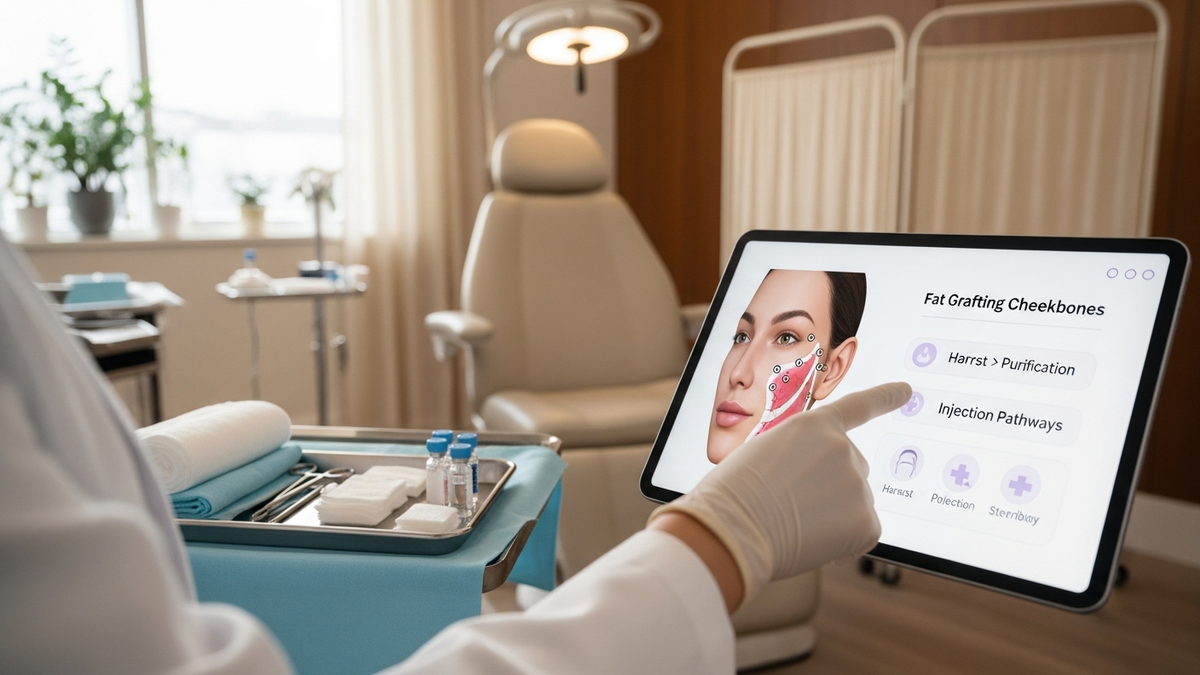
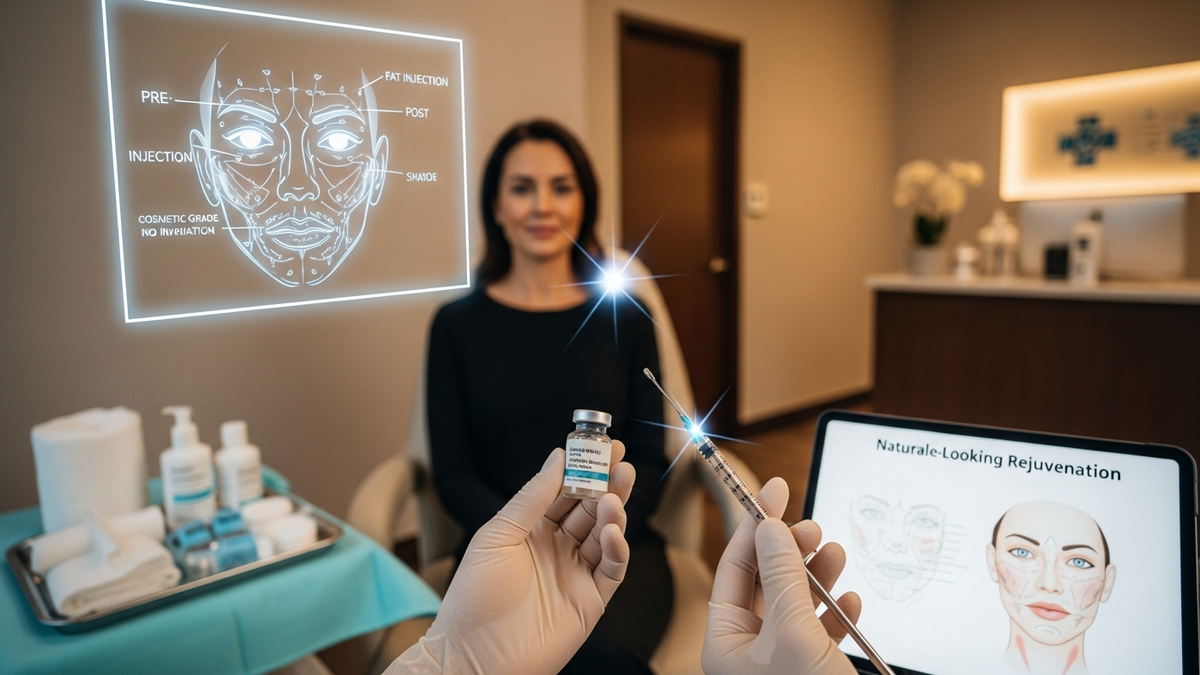
Fat grafting is typically performed using small injections placed in targeted layers. The pattern of injection and the depth of placement are critical for smooth, natural contours.
5) Performing the facelift portion
The facelift component addresses laxity and repositioning of facial tissues. Many patients seek a facelift because it can raise and tighten the skin and tissue on the face and neck, producing a seemingly younger appearance.
If you’re specifically researching facelift options in Los Angeles, you can explore detailed information through Facelift.
Facelift with fat injections vs. traditional facelift
Both procedures can deliver meaningful rejuvenation, but they target different aging contributors.
Traditional facelift: best for sagging and skin laxity
A traditional facelift primarily focuses on repositioning and tightening tissues to reduce sagging. It can be transformative for patients with:
- Jowls or lower-face heaviness
- Loose neck skin
- Visible age lines driven by tissue descent
Facelift with fat injections: best for sagging plus volume loss
A facelift with fat injections can be particularly helpful when your face shows both:
- Structural descent (which a facelift addresses)
- Deflation or hollowing (which fat grafting helps restore)
When done thoughtfully, fat grafting may improve the smoothness of facial transitions and create a more refreshed, rested appearance.
What results can you expect?
Results vary based on your baseline anatomy, the amount of tissue laxity, the volume deficit, and graft survival. However, many patients seek this combined approach because it can produce a “natural” look—lifted and replenished rather than tight or overly sculpted.
Timeline: when you’ll see change
It’s common for swelling to temporarily alter facial contours. In general:
- Early phase: swelling and bruising may obscure final shape
- Subsequent weeks: contours begin to settle as tissues heal
- Longer term: graft integration and stabilization can continue over months
Your surgeon can provide a customized timeline based on your plan.
Natural-looking goals (and what “natural” really means)
Natural results aren’t about avoiding change—they’re about aligning changes with your existing facial identity. A strong candidate for a combined approach typically wants:
- Balanced cheek fullness without overfilling
- Improved jawline/cheek transitions
- A lift that doesn’t look “pulled”
- Soft, age-appropriate contours
Surgeons who emphasize education and artistry often discuss how your face will look in motion, not just in photographs.
Who is a good candidate for a facelift with fat injections?
Ideal candidates often have a combination of sagging and volume loss. During consultation, your surgeon will consider:
Common signs you may be a candidate
- Visible jowls, mid-to-lower facial descent, and/or neck laxity
- Cheek hollowing or midface deflation
- Desire for a refreshed, balanced appearance rather than a purely tightened look
- Good overall health and realistic expectations
Factors that can affect candidacy
Candidacy isn’t one-size-fits-all. Your surgeon may recommend alternative treatments if you have:
- Significant skin laxity that may require a specific facelift pattern or staged approach
- Medical conditions that affect healing or blood supply
- Expectations that focus on “instant” volume without understanding the healing process
- Limited donor fat for grafting (in which case other volume strategies may be discussed)
Because Dr. Hootan Zandifar focuses solely on head-and-neck cosmetic and reconstructive surgery, patients often value the depth of specialized expertise and education provided during the planning process.
Potential risks and side effects (what to know upfront)
Every surgical procedure carries risks. With a combined approach, it’s important to understand both facelift-related and fat grafting-related considerations.
Possible side effects
- Swelling and bruising (temporary)
- Asymmetry during early healing
- Skin sensitivity or numbness that typically improves over time
- Irregularities in contour as tissues heal
Possible complications (rare but important)
- Infection
- Persistent fluid collections
- Fat graft resorption (some injected fat may not survive)
- Scarring (usually minimal and strategically placed, but varies by individual)
Your surgeon should review your personal risk profile and how they reduce risk through technique, sterile protocols, and post-op care.
How to prepare for your procedure
Preparation can directly influence comfort, safety, and recovery. Ask your surgeon for a personalized checklist, but these are common preparation steps.
Actionable pre-op recommendations
- Schedule a detailed consultation and bring photos of your goals (front, 45-degree angle, side profile).
- Review your medical history, including medications, supplements, and prior surgeries.
- Ask about medication guidance (especially blood-thinning medications and certain supplements).
- Plan your recovery support—arrange transportation and a comfortable recovery space.
- Follow pre-op instructions closely regarding fasting, arrival time, and skin care.
Recovery: what to expect after a facelift with fat injections
Recovery varies, but most patients can anticipate a period of swelling and bruising followed by gradual improvement in comfort and appearance.
Typical recovery milestones
- First several days: swelling management, rest, and follow-up instructions
- First 1–2 weeks: reduced bruising; many patients can return to limited activities as approved
- Weeks to months: continued tissue settling and graft integration
Recovery habits that can support healing
- Stay hydrated and prioritize protein intake (as approved by your clinician)
- Avoid smoking and nicotine products, which can impair healing
- Follow wound care and activity restrictions exactly
- Attend all scheduled post-op visits so your surgeon can monitor progress
Because fat grafting has its own healing dynamics, your surgeon may provide specific guidance about facial massage (if any), compression, and sun protection.
Choosing the right surgeon for fat grafting + facelift
Combining procedures requires technical precision and a strong aesthetic eye. This is especially true for fat injections, where placement, depth, and graft handling influence results.
What to look for during your consultation
- Evidence of natural outcomes: ask to see before-and-after results for patients with similar goals
- Transparent education: a trustworthy surgeon should explain what fat grafting can and cannot do
- Personalized technique discussion: you should hear a tailored plan, not a one-size template
- Experience with head-and-neck facial surgery: specialization can improve outcomes in complex anatomy
In Los Angeles and Beverly Hills, patients often seek board-certified, fellowship-trained specialists. Dr. Hootan Zandifar, MD, FACS is a board-certified facial plastic and reconstructive surgeon who focuses exclusively on cosmetic and reconstructive surgery of the head and neck, supporting patients with education and natural-looking solutions.
Frequently considered alternatives and complementary treatments
Depending on your goals, you may hear about other procedures that complement or partially substitute for a combined facelift + fat transfer.
Neck lift and submental fat correction
For patients with prominent neck laxity or localized fat under the chin, a neck lift or submental fat reduction can be considered as part of the overall rejuvenation plan. If fat deposits are a primary concern, submental liposuction may be discussed.
Blepharoplasty for eye-area rejuvenation
Many people experience aging around the eyes, and improving the upper or lower eyelids can enhance the overall refreshed look. You can learn more about Blepharoplasty.
Rhinoplasty for nasal aesthetics and function
While not directly related to facial volume, some patients pursue nasal refinement as part of a broader facial rejuvenation journey. If your research includes nasal surgery, you can explore Rhinoplasty.
How FlowGeniQ Digest approaches your research journey
At FlowGeniQ Digest, we aim to help you make informed decisions by connecting procedure basics to real-world expectations. We encourage you to treat your consultation as a collaborative planning session—where the goal is not only to “choose a procedure,” but to build a personalized plan that matches your anatomy, lifestyle, and aesthetic priorities.
That means asking the right questions about technique, recovery, and what “natural” means for your face specifically—especially when volume restoration is part of the plan.
FAQ: Facelift with fat injections
1) Do fat injections last permanently after a facelift with fat injections?
Fat grafting results are often long-lasting, but not every injected fat cell survives. Some degree of fat resorption is normal, and your surgeon may plan for that by tailoring volume and placement. Over time, the integrated portion tends to stabilize.
2) Is a facelift with fat injections the same as a fat transfer facelift?
They’re closely related terms. “Facelift with fat injections” generally describes combining facelift techniques with fat grafting to restore volume. “Fat transfer facelift” is often used more broadly to describe the same concept.
3) How long is recovery?
Most patients see noticeable improvement in swelling and bruising within the first couple of weeks, though healing continues for months. Your individual timeline depends on the extent of surgery and how your body responds.
4) Where are fat injections typically placed?
Common areas include the cheeks and midface to restore youthful contour. Depending on your anatomy, surgeons may also address other regions. Your plan should be determined by a careful assessment of structure, not just by what’s trending.
5) How do I know if I’m a good candidate?
Good candidates typically have both sagging and volume loss, realistic expectations, and overall health that supports healing. A qualified facial plastic surgeon can evaluate your facial aging pattern and recommend the most appropriate approach.
CTA: Ready to explore facelift with fat injections?
If you’re considering a facelift with fat injections and want guidance grounded in specialized head-and-neck facial surgery expertise, consider scheduling a consultation with a surgeon who prioritizes education and natural results.
Next step: Book an appointment to discuss your goals, review your anatomy, and create a personalized plan for lift, volume restoration, and recovery.
Note: If you’re also exploring other facial rejuvenation options—like eyelid surgery or functional nasal procedures—your surgeon can help determine what’s complementary versus what may be unnecessary for your specific goals.
Professional Disclaimer
This content is provided for general educational purposes only by FlowGeniQ Digest. It is not a substitute for professional advice, diagnosis, or treatment. Readers are advised to consult qualified professionals for personalized recommendations.
Medical Information Disclaimer
This content is provided for general educational purposes only by FlowGeniQ Digest. It is not a substitute for professional advice, diagnosis, or treatment. Readers are advised to consult qualified professionals for personalized recommendations.