Source: FlowGeniQ Digest
When you’re exploring facial rejuvenation, it’s common to look beyond one option and consider how different therapies might work together. That’s where the idea of a facelift with acupuncture comes in—often described as a supportive, non-surgical approach that may help with comfort, circulation, and recovery goals.
In Los Angeles, many people want natural-looking results with minimal downtime and a clear, personalized plan. While acupuncture is not a replacement for surgical lifting, it may be used alongside other treatments to support skin health and post-procedure comfort for some patients.
What “facelift with acupuncture” usually means
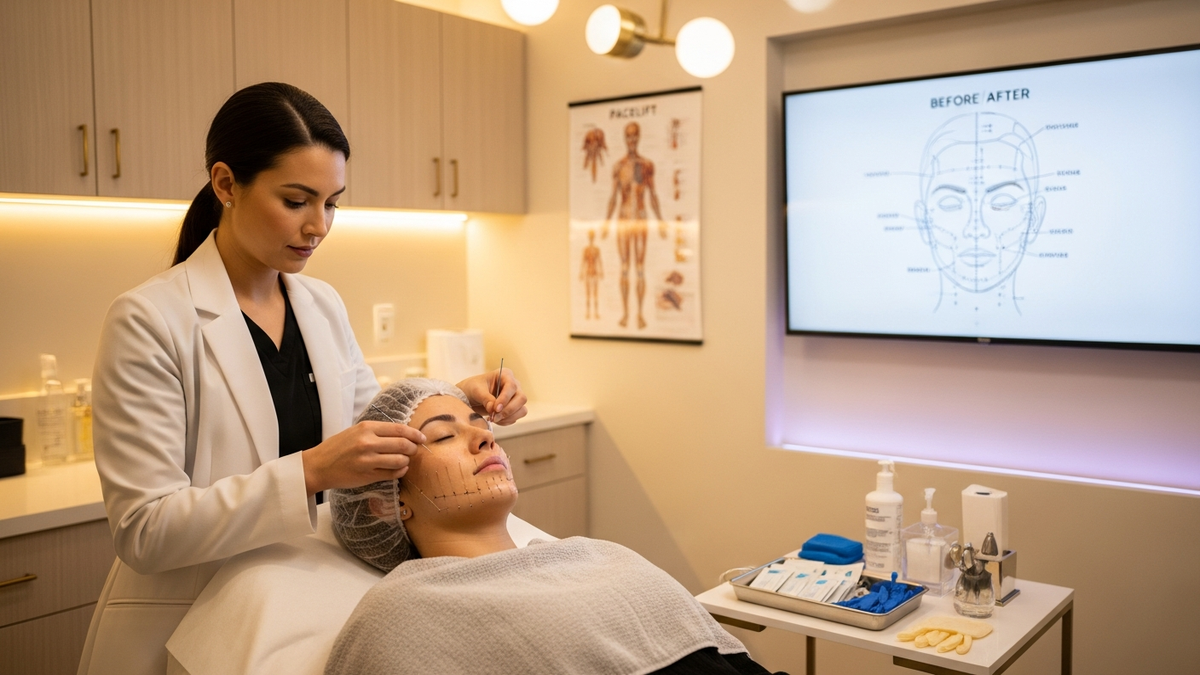
A “facelift with acupuncture” is not a single standardized medical procedure. Instead, it typically refers to one of two scenarios:
- Acupuncture as a complementary therapy before, during, or after a surgical facelift (or other facial rejuvenation procedures) to support recovery and comfort.
- Acupuncture as a non-surgical option for facial rejuvenation goals—such as reducing puffiness, improving perceived skin tone, or addressing stress-related tension—without performing a surgical lift.
Because these approaches are different, expectations should be tailored to your goals: tightening sagging tissues requires a mechanical lift, while acupuncture may offer supportive benefits.
How acupuncture may support facial rejuvenation
Acupuncture is used in traditional Chinese medicine and also studied in modern research for its effects on comfort, circulation, and certain neuromuscular pathways. In the context of facial aesthetics, patients often ask whether it can “mimic” a facelift. The more accurate framing is: acupuncture may help support aspects of facial appearance and recovery.
1) Comfort and tension management
Facial muscles and the surrounding soft tissues can feel tight due to stress, jaw clenching, posture habits, or sleep patterns. Acupuncture may help some people feel more relaxed and reduce discomfort associated with muscle tension.
2) Circulation and swelling-related concerns
Improving local circulation is one of the most commonly cited reasons acupuncture is considered for facial rejuvenation. While it won’t “lift” sagging skin, it may help some individuals with transient swelling or a puffy look—especially when used consistently as part of a broader plan.
3) Recovery support when used with cosmetic surgery
Many patients interested in a surgical Facelift also want to optimize their recovery. Some clinics and practitioners incorporate acupuncture into post-operative care plans to support comfort and well-being. If you’re considering surgery, ask your surgeon and acupuncturist how they coordinate timing, safety protocols, and wound-care considerations.
Facelift vs. acupuncture: what each can (and can’t) do
One of the biggest reasons people feel disappointed is expecting the wrong outcome. Here’s a clear comparison:
What a facelift is designed to do
- Lift and tighten facial skin and underlying tissues
- Reduce visible signs of aging such as sagging and deep folds
- Create a more youthful contour by repositioning tissues
In other words, a surgical facelift addresses structural changes directly.
What acupuncture is designed to do
- Support relaxation and comfort
- Potentially influence swelling and perceived facial “puffiness”
- Complement other therapies as part of an overall wellness and recovery plan
Acupuncture is best viewed as a supportive therapy rather than a method to replace the mechanical lifting achieved through surgery.
Who might consider a facelift with acupuncture?
Not everyone is a match for the same plan. A “facelift with acupuncture” approach may appeal to people who:
- Want a natural-looking rejuvenation plan with attention to comfort and downtime
- Are considering surgical lifting but want supportive recovery strategies
- Prefer to start with non-surgical supportive therapies while evaluating whether surgery is necessary
- Have stress-related facial tension or jaw clenching patterns
However, if you have significant sagging, jowls, or deep structural aging, acupuncture alone is unlikely to deliver the degree of lifting you’re seeking.
Planning a safe, effective timeline
If you’re considering acupuncture around a cosmetic procedure, timing matters. While protocols vary by practitioner, a practical planning framework is below.
Before any cosmetic procedure
- Start with a comprehensive consultation to define your goals (lift, volume, wrinkles, neck contour, or eyelid concerns).
- Discuss medical history and medications with both your surgeon and acupuncturist.
- Clarify what you’re treating: comfort, swelling, stress tension, or recovery support.
During recovery
- Coordinate clearance: your surgeon should confirm when it’s safe to begin acupuncture after surgery.
- Use a trained, licensed practitioner who understands post-operative precautions and hygiene standards.
- Track symptoms: note swelling, bruising, pain levels, and any concerns so adjustments can be made.
After recovery
Once you’re healing, acupuncture may be used as part of a broader maintenance plan. Pair it with evidence-based skincare, sun protection, and healthy lifestyle habits. Consistency tends to matter more than one-off sessions.
How acupuncture fits into a broader facial rejuvenation strategy
Facial aging is multi-dimensional. Many patients benefit from combining treatments—sometimes including surgical options—to address different areas: face, neck, eyelids, eyebrows, and nasal structure.
Eyelids and under-eye concerns
If your main concern is excess skin on the upper eyelid or under-eye puffiness, some patients explore Blepharoplasty. Acupuncture may be considered as a supportive therapy for comfort, but it does not replace eyelid tissue tightening.
Eyebrow position
Eyebrows frame the eyes and strongly influence perceived youthfulness. For patients with eyebrow thinning or loss, an eyebrow transplant may be discussed. Acupuncture cannot restore lost hair follicles, but it can potentially help with relaxation and stress-related tension.
Jawline and neck contour
Neck aging often includes skin laxity and sometimes fat accumulation. If fat contributes to submental fullness, submental liposuction may be considered by some patients. Acupuncture may help with comfort, but contour changes generally require targeted structural treatments.
Comparing surgical facial options (for context)
While your question centers on a facelift with acupuncture, it helps to understand why surgical techniques are chosen based on structural needs.
Face lift for sagging skin and tissue
A face lift raises and tightens skin and tissue on the face and neck to provide a more youthful appearance. Patients with sagging or wrinkled skin often pursue this because it can significantly reverse visible signs of aging.
If you’re exploring a facelift in Beverly Hills or the Los Angeles area, start by reviewing what the procedure can do and how recovery typically works. Then consider whether acupuncture support fits your plan.
Rhinoplasty and functional nasal goals
Some patients interested in facial rejuvenation also have nasal breathing concerns. If you have structural nasal issues, discussions may include Rhinoplasty for aesthetic goals and/or functional breathing improvements depending on your anatomy.
Acupuncture is not a substitute for structural nasal correction, but it may be used as supportive care in select circumstances—always coordinated with your care team.
Evidence and realism: what to expect from acupuncture
Acupuncture outcomes vary by individual, technique, and the specific concern being addressed. In general:
- Expect supportive changes (comfort, relaxation, possibly reduced transient swelling), not permanent tissue lifting.
- Consistency matters: many patients evaluate results over multiple sessions rather than one treatment.
- Pair with proven foundations: sunscreen, skincare, healthy sleep, hydration, and—when appropriate—surgical or minimally invasive structural treatments.
What to look for in a qualified acupuncture provider
If you’re adding acupuncture to your facial rejuvenation plan, choose a practitioner who is experienced, licensed, and communicates clearly. Consider asking:
- How do you tailor points and treatment frequency to facial goals?
- What is your protocol for hygiene and safety (including sterile, single-use needles)?
- Do you coordinate with surgeons or other providers for perioperative care?
- How do you measure progress (comfort, swelling, subjective appearance changes)?
Common concerns and misconceptions
“Will acupuncture replace a facelift?”
Most likely, no. A facelift addresses structural changes—skin laxity and tissue repositioning. Acupuncture may support comfort and wellness, but it does not mechanically lift sagging tissue.
“Is acupuncture safe around surgery?”
Safety depends on timing, your healing status, and your medical history. Always get clearance from your surgeon and ensure your acupuncturist understands post-operative precautions.
“How soon will I see results?”
Some people notice relaxation or reduced puffiness after early sessions. For longer-term supportive benefits, a multi-session approach is often needed. If you’re evaluating whether surgery is necessary, use acupuncture as part of your decision-making process—not as the only assessment tool.
Actionable recommendations for planning your best outcome
Here’s a practical checklist you can use whether you’re leaning toward acupuncture alone or considering surgery with acupuncture support.
- Define your top goal: lift/sagging, wrinkles, neck contour, under-eye concerns, or eyebrow framing.
- Schedule a facial plastic consultation to discuss what’s realistic for your anatomy. If a facelift is appropriate, understand the role of recovery support.
- Bring your acupuncture questions to your consultation: timing, safety, and coordination.
- Ask about complementary treatment options for your full face—eyelids, brows, and other areas may influence overall youthfulness.
- Commit to foundational skin health: daily sunscreen, gentle skincare, and lifestyle habits that support collagen and skin barrier function.
- Track outcomes with photos and symptom notes (comfort, swelling, bruising, and perceived changes).
Why patient education matters in Beverly Hills and Los Angeles
In cosmetic care, the difference between “promising” and “effective” is often clarity—understanding what each option can do. That’s why many patients value surgeons and teams known for patient education and natural-looking outcomes.
At Hootan Zandifar, MD, FACS, the focus is on cosmetic and reconstructive surgery of the head and neck, helping patients restore a fresh, youthful appearance through advanced anti-aging techniques. The approach emphasizes honest guidance, compassionate care, and informed decision-making—so patients can choose the most appropriate path for their anatomy and goals.
Related considerations: hair restoration and facial harmony
Facial rejuvenation isn’t only about the skin. For some patients, hair loss affects overall facial balance and perceived age. If you’re exploring comprehensive appearance goals, you may also consider hair restoration options such as a hair transplant.
Acupuncture won’t replace hair restoration, but it may complement a holistic plan focused on confidence and well-being.
FAQ: Facelift with acupuncture
1) Is a facelift with acupuncture considered a real medical procedure?
It’s usually not a single standardized surgery. “Facelift with acupuncture” commonly means acupuncture used as a complementary therapy alongside a surgical facelift or used as a non-surgical supportive approach for comfort and appearance-related concerns.
2) Can acupuncture tighten loose skin like a facelift?
Acupuncture is not designed to mechanically tighten or lift sagging skin and tissue. A surgical facelift addresses structural laxity directly; acupuncture may support comfort and transient swelling but typically cannot replicate the same lifting effect.
3) How many acupuncture sessions are typically needed?
There’s no one-size-fits-all number. Many people evaluate results over multiple sessions, with the exact schedule determined by the practitioner based on goals and response.
4) Is acupuncture safe for post-facelift recovery?
Safety depends on timing, healing progress, and your medical history. Always get clearance from your surgeon and choose a licensed acupuncturist who is experienced with post-procedure precautions.
5) What should I do if I want both a facelift and acupuncture?
Start with a consultation to confirm whether a facelift is appropriate for your anatomy. Then discuss acupuncture as a supportive recovery strategy—so both providers can coordinate a safe, realistic timeline.
CTA: Build a personalized plan with expert guidance
If you’re considering a facelift with acupuncture, the best next step is to map your goals to realistic options—structural lifting where needed, and supportive therapies where they truly add value.
Connect with a qualified facial plastic team to discuss your concerns and understand what can be achieved with a Facelift and whether acupuncture support fits your recovery and comfort goals. From there, you can build a plan that’s both informed and tailored to you.
Professional Disclaimer
This content is provided for general educational purposes only by FlowGeniQ Digest. It is not a substitute for professional advice, diagnosis, or treatment. Readers are advised to consult qualified professionals for personalized recommendations.
Medical Information Disclaimer
This content is provided for general educational purposes only by FlowGeniQ Digest. It is not a substitute for professional advice, diagnosis, or treatment. Readers are advised to consult qualified professionals for personalized recommendations.