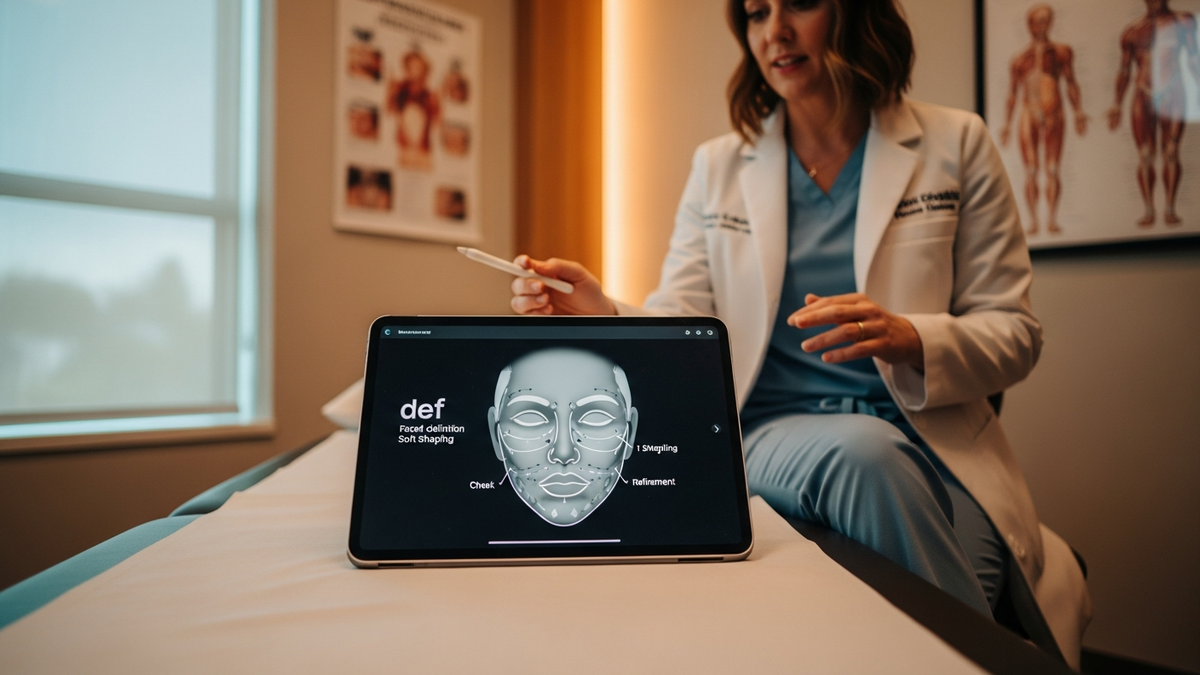
Facelift def is a common search term for people trying to understand the meaning behind “facelift” and what the procedure actually involves. In plain language, a facelift (often referred to simply as a “face lift”) is a cosmetic surgery designed to lift and tighten facial skin and underlying tissues so the face and neck appear more refreshed and youthful.
At FlowGeniQ Digest, we publish clear, education-first guidance to help readers make informed decisions. In this article, we’ll walk through what a facelift is (and isn’t), who may be a good candidate, how recovery typically unfolds, and how to choose a qualified facial plastic surgeon—especially when you’re considering treatment in Los Angeles and Beverly Hills.
Facelift def: What “Facelift” Means in Real Terms
A facelift def answer isn’t just a definition—it’s a practical description of the goals and techniques. A facelift is a cosmetic procedure that raises and tightens the skin and supportive tissues of the face and neck. The result is a more youthful-looking facial contour, with reduced appearance of sagging skin and deeper age-related lines.
What a facelift typically targets
- Lower face and jawline sagging (sometimes described as jowls)
- Neck skin laxity and the appearance of “turkey neck”
- Loss of facial volume support that can contribute to drooping
- Deepening folds that become more noticeable as tissues descend
What a facelift does not usually “fix”
It’s equally important to set expectations. A facelift is not a one-size-fits-all solution for every sign of aging. Many patients need a plan that may include other procedures to address specific concerns.
- Skin texture and sun damage may require resurfacing or medical dermatology approaches.
- Significant volume loss may be better addressed with fat transfer or fillers (depending on the case).
- Eyes and eyelids are often treated separately; for example, Blepharoplasty can target excess eyelid skin and under-eye puffiness.
Why People Choose a Facelift in Los Angeles
Many individuals in Los Angeles explore cosmetic surgery as part of a broader wellness and confidence journey. A facelift can be appealing because it targets structural changes—skin laxity and tissue descent—that often become more prominent with age.
In Beverly Hills and surrounding areas, patients often seek natural-looking outcomes. That typically means focusing on balanced repositioning of tissues rather than “over-tightening.”
Facelift goals that feel natural
Natural results usually emphasize:
- Preserving facial expression (avoiding an overly “pulled” look)
- Gradual, harmonious contouring from cheek to jaw to neck
- Subtle improvement that still looks like you
Facelift vs. Other Facial Rejuvenation Options
When people search “facelift def,” they often want to know how it compares to other treatments. Below is a practical overview of how a facelift fits into the larger landscape of facial rejuvenation.
Facelift vs. eyelid surgery
Facelifts primarily address mid-to-lower face and neck changes. If your concerns include droopy upper lids, puffiness, or under-eye heaviness, many patients also consider Blepharoplasty. Eyelid surgery can make the eyes look more open and rested, complementing a facelift.
Facelift vs. brow lift
A brow lift (also called a forehead lift) can help raise brows and reduce forehead wrinkles. If forehead or brow position is contributing to an aged appearance, a brow lift may be considered alongside or instead of a facelift.
Facelift vs. rhinoplasty (nose surgery)
Although a facelift focuses on lower face and neck aging, some patients want to refine multiple areas. If nasal aesthetics or function are concerns, Rhinoplasty may be discussed as part of a coordinated facial plan.
Facelift vs. hairline/eyebrow concerns
Facial aging isn’t only skin laxity. For people with eyebrow thinning or loss, an eyebrow transplant can help restore a key facial focal point. Similarly, hair restoration can influence how “framed” and youthful the face looks.
If you’re exploring hair restoration as part of a full rejuvenation strategy, you can learn more about hair transplant options from specialized clinics.
Who Is a Good Candidate for a Facelift?
Ideal candidates often have visible sagging or age-related tissue descent in the lower face and neck. However, candidacy is not determined by age alone. Surgeons evaluate skin quality, tissue structure, and overall health.
Common signs that a facelift may be considered
- Sagging skin around the jawline
- Prominent jowls or deepening nasolabial folds (in some cases)
- Neck skin laxity and loss of definition between the jaw and neck
- Loose tissue that contributes to a tired or aged appearance
Factors that influence outcomes
- Skin elasticity and thickness
- Smoking status (can affect healing and scarring)
- Medical conditions that may affect anesthesia or healing
- Realistic expectations and alignment with your goals
How a Facelift Is Performed (High-Level Overview)
While techniques vary by surgeon and patient anatomy, a facelift generally involves repositioning deeper tissues and tightening supportive structures. The goal is to restore youthful contours rather than simply removing skin.
Typical steps (conceptual)
- Incision placement along natural contours (often around the ear and sometimes extending into the hairline).
- Tissue repositioning to lift sagging areas.
- Skin redraping to match the new underlying contours.
- Closure and dressing with post-op instructions to support healing.
Because “facelift def” searches often reflect uncertainty, it’s helpful to know that a surgeon’s experience and individualized planning heavily influence the aesthetic outcome.
Recovery Timeline: What to Expect After a Facelift
Recovery is one of the most searched aspects of facelift decision-making. While individual experiences vary, the typical timeline below can help you plan.
Early recovery (first 1–2 weeks)
- Swelling and bruising are common, often peaking in the first several days.
- Discomfort is usually managed with prescribed medications.
- Activity restrictions help protect healing tissues.
- Follow-up visits monitor progress and address concerns.
Mid recovery (weeks 3–6)
- Swelling gradually decreases and facial definition becomes more apparent.
- Many patients can return to more normal routines, based on surgeon guidance.
- Scar maturation begins; gentle scar care may be recommended.
Longer-term results (months 3–12)
Final refinement can take several months. Skin, soft tissue, and scar tissue all continue to settle. Patience is essential for evaluating true end results.
Risks and Side Effects: A Realistic Look
All surgery carries potential risks. A responsible facelift consultation should include discussion of benefits and risks, including:
- Swelling, bruising, and temporary numbness
- Scarring (usually placed to blend with natural contours)
- Infection (uncommon, but possible)
- Asymmetry (some degree is normal; significant issues may require treatment)
- Seroma or hematoma (fluid or blood collections)
- Changes in skin sensation
Your surgeon should provide a personalized risk assessment based on your health history and surgical plan.
Choosing the Right Surgeon for Your Facelift
When searching “facelift def,” you’re not just learning the definition—you’re also trying to decide whom to trust. In facial plastic surgery, credentials, training, and an eye for natural aesthetics matter.
What to look for
- Board certification and relevant surgical specialty
- Fellowship training or advanced head-and-neck expertise
- Natural-looking results across a range of patients
- Patient education that addresses expectations and trade-offs
- Clear communication during consultation
A head-and-neck focused approach
One reason many patients feel confident with facial plastic surgeons who focus exclusively on the head and neck is the depth of knowledge in anatomy, function, and aesthetics. Dr. Hootan Zandifar, for example, focuses solely on surgeries of the head and neck, offering advanced anti-aging techniques to help restore a fresh, youthful appearance.
Patients seeking a facelift often want results that look natural—not “done.” A surgeon’s ability to balance structural repositioning with subtle contouring is a key differentiator.
How a Consultation Should Feel: Questions to Ask
A good facelift consultation is collaborative. You should leave with a clear understanding of your goals, your risks, and your personalized plan.
Make sure to ask
- Am I a good candidate for a facelift, or would another procedure be better?
- What areas will you address—face, neck, or both?
- What results are realistic for my skin type and tissue structure?
- What does recovery look like for my schedule?
- How do you approach natural-looking outcomes?
- What are the potential complications in my case?
- Will we discuss complementary procedures? (e.g., Blepharoplasty or brow lift)
Facelift Def and Functional Considerations: When Breathing and Structure Matter
Most people associate “facelift def” with cosmetic change, but facial structure can intersect with function. For example, some patients have nasal obstruction that affects breathing and sleep quality. Addressing functional issues can improve overall quality of life.
Septoplasty and related nasal concerns
If you have symptoms like chronic nasal congestion, difficulty breathing, or structural issues, your surgeon may discuss functional nasal procedures such as Septoplasty. In cases involving a structural Deviated Septum, corrective surgery can help optimize airflow.
While this isn’t the same as a facelift, it highlights an important point: a comprehensive head-and-neck evaluation can help align cosmetic goals with functional health.
Complementary Procedures That May Enhance Your Results
Many patients achieve the most satisfying outcomes when their plan addresses multiple aging factors. Depending on your needs, your surgeon may recommend one or more complementary treatments.
Neck lift and skin tightening
Neck aging often begins earlier than people expect. Tightening sagging neck skin can significantly improve overall facial balance.
Submental liposuction for definition
Localized fat deposits can accumulate in the chin, neck, and jawline. For selected patients, submental liposuction can help define facial lines by addressing excess fat.
Eyelid and brow rejuvenation
If the eyes and brow area are also contributing to a tired look, procedures like Blepharoplasty or a brow lift may be considered.
How to Prepare for Your Facelift (Actionable Checklist)
Preparation can reduce stress and support smoother recovery. While your surgeon’s instructions always come first, here are common, practical steps.
1) Follow medical instructions closely
- Stop or adjust medications only as advised by your surgical team.
- Share your complete medical history, including supplements and allergies.
2) Plan your recovery logistics
- Arrange transportation and help at home during the first days.
- Prepare comfortable clothing and head support items recommended by your surgeon.
- Stock easy-to-eat meals and hydration options.
3) Set realistic timelines
Give yourself enough time for swelling and bruising to settle. Many people return to lighter activities before full social or work demands.
4) Avoid smoking and manage health
If you smoke, ask your surgeon about cessation timing. Smoking can increase healing complications. Maintaining general health supports recovery.
Common Myths About Facelift Def
Searching for “facelift def” often leads to conflicting information online. Here are a few myths worth clarifying.
Myth: A facelift prevents aging
Reality: A facelift can turn back visible signs of aging, but it doesn’t stop the aging process. Results are long-lasting, but not permanent forever.
Myth: More tightening always looks better
Reality: Over-tightening can look unnatural and may affect facial expression. Skilled surgeons aim for balanced repositioning.
Myth: One procedure fixes everything
Reality: Many patients need a tailored plan, sometimes combining a facelift with eyelid surgery, brow lift, or other complementary treatments.
FAQ: Facelift Def Questions People Ask
1) What does “facelift def” mean?
“Facelift def” typically refers to the definition of a facelift—an operation that lifts and tightens facial and neck tissues to create a more youthful appearance. It’s about repositioning tissues, not just removing skin.
2) How long do facelift results last?
Results vary based on age, skin quality, lifestyle, and surgical technique. Many patients enjoy noticeable improvement for years, with aging continuing gradually after surgery.
3) Will I look “too different” after a facelift?
When performed with an emphasis on natural aesthetics, a facelift should harmonize with your existing features. A good consultation will discuss realistic outcomes and your personal goals.
4) Is a facelift the same as a neck lift?
They’re related. A neck lift focuses primarily on neck skin and contour, while a facelift may address both face and neck depending on the plan.
5) Can I combine a facelift with other procedures?
Often, yes. Many patients combine facial rejuvenation strategies. For example, some consider Blepharoplasty for eyelid concerns. Your surgeon can recommend a tailored combination based on your anatomy and goals.
CTA: Take the Next Step Toward a More Refreshed Look
If you’re considering cosmetic surgery and want answers that are clear, personalized, and grounded in real anatomy, a consultation is the best place to start. A facelift can be a powerful option for addressing sagging skin and age-related tissue descent—but the right plan depends on your goals, your health, and your unique facial structure.
Schedule an appointment to discuss whether a facelift is right for you and what complementary treatments (like eyelid rejuvenation) may help you achieve a natural, youthful result.
Professional Disclaimer
This content is provided for general educational purposes only by FlowGeniQ Digest. It is not a substitute for professional advice, diagnosis, or treatment. Readers are advised to consult qualified professionals for personalized recommendations.
Medical Information Disclaimer
This content is provided for general educational purposes only by FlowGeniQ Digest. It is not a substitute for professional advice, diagnosis, or treatment. Readers are advised to consult qualified professionals for personalized recommendations.