Source note: This article is published by FlowGeniQ Digest to help readers interpret real-world experiences and turn them into practical, informed next steps.
If you’ve searched eyebrow transplant reddit, you’ve probably seen a mix of inspiring before-and-after photos and cautionary tales about uneven density, slow healing, or unexpected scarring. Online anecdotes can be motivating—but they don’t replace a medical evaluation or a surgeon’s expertise in facial proportion and hair restoration technique.
This guide translates common themes from eyebrow transplant discussions into a clear, evidence-informed roadmap: how eyebrow hair restoration works, what “natural” truly means for eyebrow shape, which risks matter most, and how to choose a surgeon who designs results—not just grafts.
What “eyebrow transplant reddit” posts usually get right
Reddit threads often provide the most honest “day-by-day” descriptions: swelling, shedding, eyebrow soreness, and the emotional roller coaster of waiting for final growth. Many commenters also emphasize that eyebrow work is highly technical—because eyebrows sit at a facial focal point and require precise direction, angle, and placement.
1) The healing timeline is real (and it’s not instant)
Many posts correctly mention that eyebrow transplant results typically develop in phases:
- Early days: tenderness, redness, and small scabs where grafts were placed.
- First weeks: shedding can occur (a normal part of the process for many hair grafts).
- Mid-stage: gradual regrowth as follicles re-enter the growth cycle.
- Longer term: final density and refinement usually take months, not weeks.
When people are disappointed, it’s often because they expected immediate thickness. A well-planned procedure includes realistic expectations—and a follow-up plan.
2) Technique matters more than “more grafts”
Common reddit advice like “choose a surgeon who does lots of eyebrow work” reflects an important truth: eyebrow hair restoration isn’t just transplanting hair—it’s designing an eyebrow that fits your face. That requires artistic planning and surgical precision, including:
- Hair direction and angulation
- Density distribution (tail vs. head vs. arch)
- Scar management (if prior procedures exist)
- Symmetry and facial expression compatibility
3) Don’t ignore the cause of eyebrow loss
Many threads implicitly acknowledge that eyebrow loss can come from different sources—genetic thinning, autoimmune conditions, traction, dermatitis, alopecia areata, trauma, or prior over-tweezing. The best outcomes happen when the underlying cause is addressed or at least considered during planning.
What eyebrow transplant reddit threads often miss
Online discussions can underemphasize the factors that most influence safety and natural-looking results. Here are the gaps you’ll want to fill with a qualified evaluation.
1) “Natural” depends on facial proportion, not just hair growth
Eyebrows frame the eyes and strongly affect perceived age, alertness, and facial harmony. A “natural” transplant for one person may look heavy or misaligned on another because of brow position, spacing, and skin characteristics. A surgeon should evaluate:
- Your brow height and arch
- How your eyebrows sit at rest vs. during expressions
- Eye shape and eyelid anatomy
- Existing asymmetry and how it should be corrected
2) Eyebrow grafts aren’t interchangeable with scalp hair
Eyebrow hair has unique traits. Even when transplanted follicles survive, the final look depends on how grafts are placed and how the hair behaves over time. This is why eyebrow-specific planning and careful graft handling matter.
3) Risks aren’t only cosmetic
Most people focus on appearance, but medical risks can include infection, scarring, numbness, or persistent irritation. A high-quality clinic will explain these risks in context and show how they reduce them—through sterile technique, post-op care, and appropriate patient selection.
Eyebrow transplantation: what the procedure actually involves
An eyebrow transplant is often recommended for patients experiencing eyebrow loss due to medical or other conditions that caused eyebrow thinning or eyebrow loss. Because eyebrows are a focal point on the face, a skilled cosmetic surgeon should perform the procedure.
Step 1: Consultation and eyebrow mapping
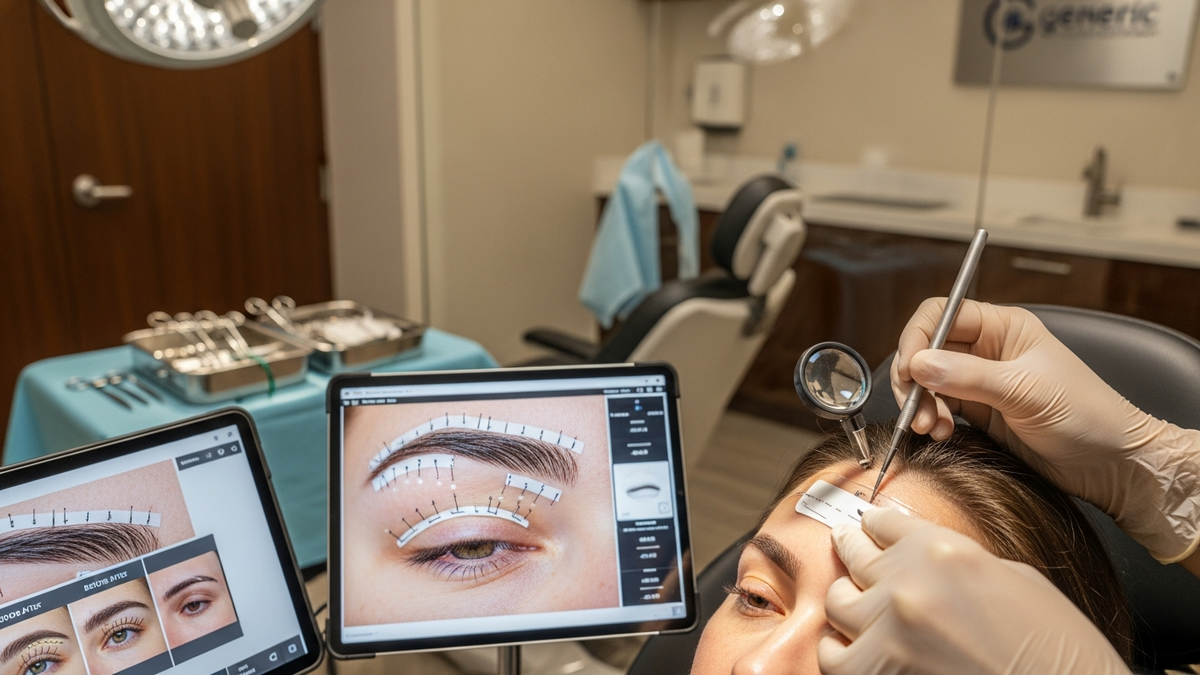
A strong consultation includes brow photography, facial measurements, and discussion of your goals. The surgeon should map out:
- Where the brow should start, arch, and end
- How much density you need for your desired look
- How to preserve or enhance your natural brow shape
- How prior scarring or hair loss patterns will affect placement
Step 2: Harvesting donor follicles
Eyebrow grafts are harvested from an appropriate donor area and prepared for placement. In many hair restoration discussions online, patients compare options like FUE vs. FUT in scalp contexts; eyebrow work is different, and a surgeon should choose an approach that supports eyebrow-specific aesthetics and graft survival.
For more background on hair restoration technologies, you can explore a related resource here: hair transplant.
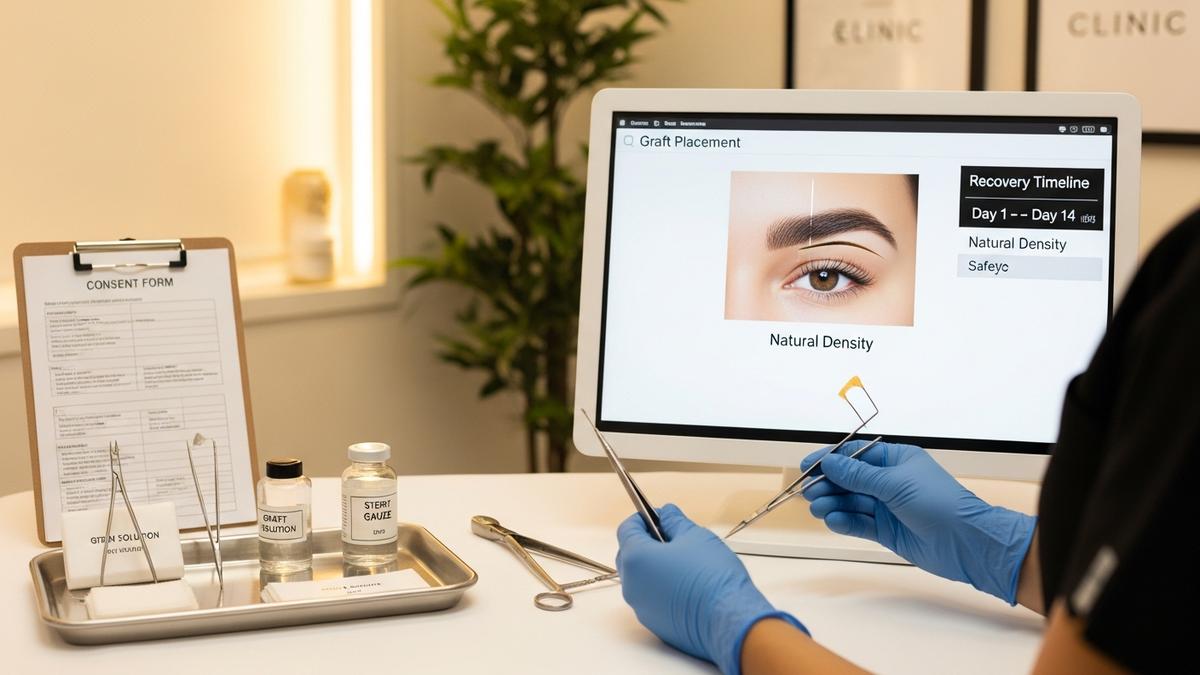
Step 3: Graft placement with direction and angle precision
Placement is the core of eyebrow naturalness. The surgeon must create a pattern that mimics the way eyebrow hairs grow—especially at the arch and tail, where direction changes are most noticeable.
Step 4: Post-op care and follow-up
Post-op care often includes instructions on cleaning, avoiding friction, protecting graft sites, and managing discomfort. Follow-up visits help confirm healing and guide expectations for regrowth.
Who is a good candidate for an eyebrow transplant?
Good candidates generally include people with stable eyebrow loss who can safely undergo a minor surgical procedure and maintain appropriate aftercare. A surgeon should also consider factors like:
- Cause of eyebrow loss (stable vs. actively progressing)
- Skin condition (dermatitis, scarring, or active inflammation)
- Overall health and medication profile
- Realistic goals (light restoration vs. full redesign)
- Prior procedures and their impact on tissue
In some cases, medical management or dermatologic treatment may be necessary before or alongside surgical restoration.
Eyebrow transplant risks: what you should ask about (beyond the reddit comments)
To make your decision safer, use these questions during your consultation. They address risk and quality control—not just hype.
Potential risks and how to reduce them
- Scarring: Ask about incision strategy, graft handling, and how the team manages healing.
- Infection: Confirm sterile protocols and post-op instructions.
- Uneven density or asymmetry: Ask how mapping and intraoperative checks are performed.
- Unnatural hair direction: Request examples of before/after outcomes and discuss how direction is planned.
- Delayed or incomplete growth: Ask what factors influence growth and what contingency plans exist.
How to spot a “red flag” conversation
Be cautious if a provider:
- Promises identical results for everyone
- Downplays the importance of eyebrow mapping
- Refuses to discuss risks clearly
- Can’t share realistic case examples
- Doesn’t explain what happens if results are suboptimal
How to choose the right surgeon for an eyebrow transplant
Eyebrow restoration is not only about surgical skill—it’s about facial plastic judgment. The eyebrow is a focal point, and small differences can look obvious in close-up.
Look for head-and-neck or facial-focused expertise
Because eyebrows interact with eyelids, brow position, and overall facial expression, it helps to work with a surgeon who focuses on the head and neck. For example, Dr. Hootan Zandifar focuses solely on surgeries of the head and neck and is known for a patient education-first approach, emphasizing natural-looking, proportionate outcomes.
When you’re evaluating a clinic, consider whether they understand the full facial landscape—including whether other procedures might complement brow restoration. For instance, some patients explore eyelid or brow lifts depending on their anatomy and goals.
Ask about complementary procedures (when appropriate)
Sometimes eyebrow appearance is influenced by adjacent structures. If you’re considering multiple changes, ask how the team approaches overall facial harmony.
- Blepharoplasty: Excess eyelid skin or under-eye changes can affect how brows look. You can learn more about Blepharoplasty.
- Brow lift: If the brow position is low, lifting may be part of a comprehensive plan.
In other cases, unrelated but relevant nasal function and structure can influence facial aesthetics and breathing comfort. If you’re also considering nasal surgery for appearance or function, you may want to review Septoplasty or Deviated Septum discussions with your surgeon.
Cost and expectations: using reddit responsibly
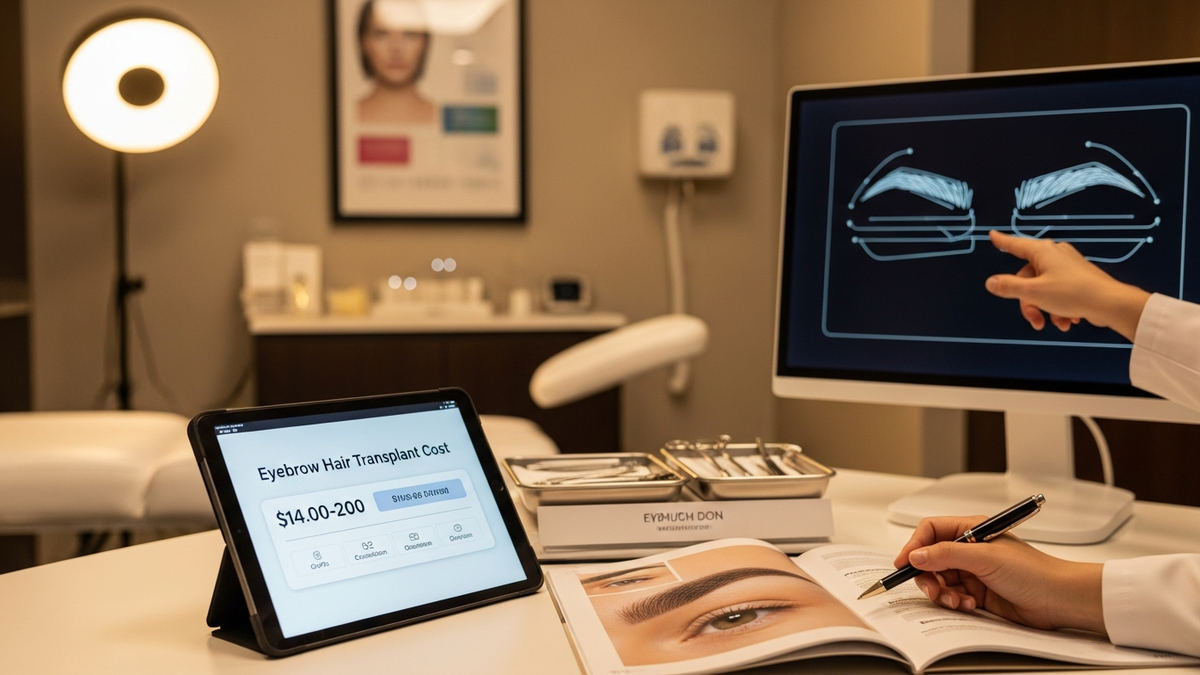
Reddit can be useful for cost ranges, but it’s also where comparisons can become misleading. Pricing varies by:
- How many grafts are needed
- The complexity of mapping and density goals
- Donor availability
- Surgeon expertise and facility standards
- Geographic location and follow-up protocols
Instead of fixating on one number from a thread, ask your consultation team what the scope includes: pre-op assessment, procedure time, graft strategy, post-op medications, and follow-up visits.
What “good results” look like
Eyebrow transplant success should be evaluated in context:
- Does the brow look consistent with your natural facial expression?
- Is the hair direction believable up close?
- Is density balanced rather than uniformly heavy?
- Are both eyebrows harmonized without obvious “patchiness”?
Eyebrow transplant vs. eyebrow regrowth strategies
Some people search eyebrow transplant reddit because they’ve tried other approaches—brow serums, grooming changes, or cosmetic camouflage. Surgery may be appropriate when non-surgical strategies are unlikely to restore volume or when loss is permanent or structural.
When non-surgical options may help
- Inflammatory or reversible causes (with medical guidance)
- Early thinning where follicles may still be responsive
- Temporary shedding episodes
When transplant becomes more relevant
If you have stable, long-term eyebrow loss and want a more permanent restoration, the surgical approach may be more predictable. This is why an individualized plan is essential.
Related facial procedures that can change your overall look
Eyebrows don’t exist in isolation. Depending on your goals and anatomy, patients sometimes consider additional facial rejuvenation options. While not everyone needs these, they can help explain why a facial plastic surgeon’s broader perspective matters.
Facelift and facial rejuvenation
For patients focused on overall aging signs, a Facelift may be discussed as part of a comprehensive aesthetic plan.
Rhinoplasty and facial balance
Some people pursue nasal changes to improve facial harmony. If you’re exploring nose aesthetics, you may also want to review Rhinoplasty.
Eyebrow transplant: a patient-centered approach to natural results
At Hootan Zandifar, MD, eyebrow transplantation is treated as a precision facial procedure. The goal is not simply to add hair—it’s to restore eyebrows in a way that complements your unique facial features and expressions.
Because the eyebrow is a focal point, the planning should be meticulous and the execution should be surgical and artistic. If you’re considering an eyebrow transplant, it’s worth reviewing the clinic’s specific approach here: eyebrow transplant.
Why this matters after you’ve read eyebrow transplant reddit
Online stories can help you ask better questions, but outcomes vary widely. Two people can both “get an eyebrow transplant” and end up with different results because of:
- Different baseline anatomy and brow position
- Different causes of loss
- Different mapping strategies
- Different graft handling
- Different adherence to post-op care
A consultation turns those variables into a personalized plan.
Actionable checklist: what to prepare before your consultation
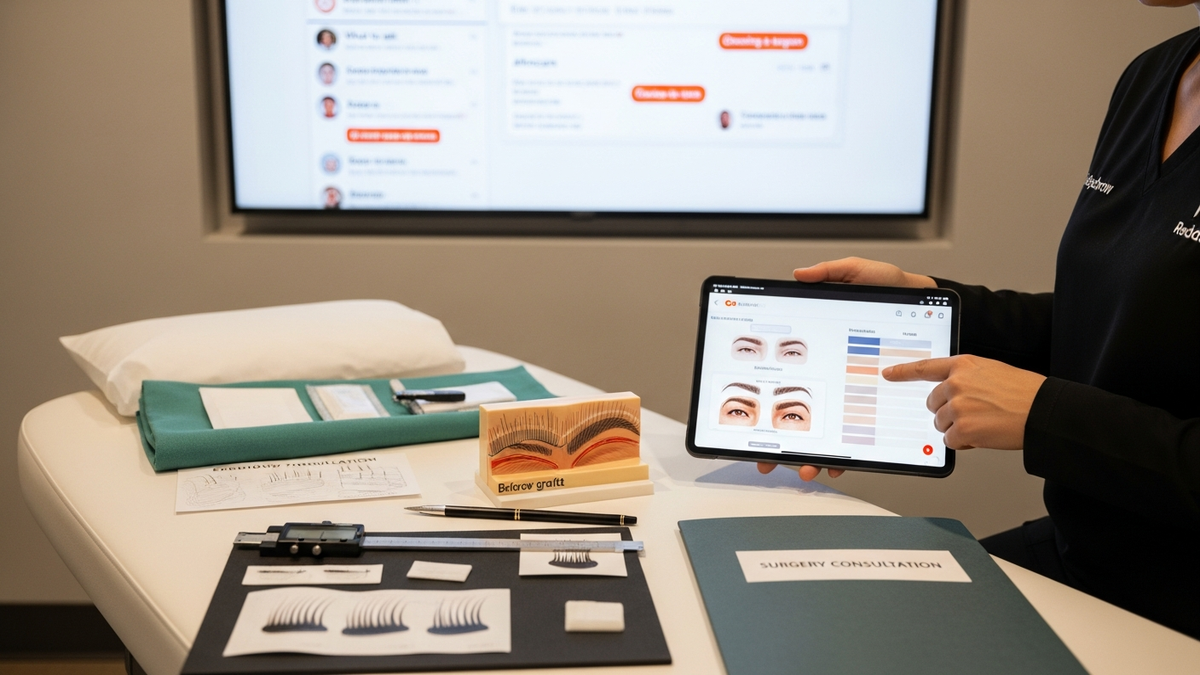
Bring structure to your decision. Here’s a practical checklist you can use before meeting your surgeon.
Before the appointment
- Collect your history: When did eyebrow loss begin? Any autoimmune diagnosis, skin conditions, trauma, or prior procedures?
- Take photos: Front-facing and angled images in natural light.
- List medications and supplements: Include anything that affects healing.
- Write your goals: Do you want subtle restoration or a fuller redesign?
- Bring questions: See the risk and selection questions above.
During the appointment
- Ask how your eyebrow will be mapped and why that shape fits your face.
- Ask what the typical healing timeline looks like for their patients.
- Ask how they handle uneven growth or density concerns.
- Ask what post-op care includes and who provides follow-up.
After the appointment
Request a written summary if possible (or take notes). Compare clinics based on clarity, realism, and the quality of their communication—not just the price or the volume of online reviews.
FAQ: Eyebrow transplant reddit questions answered
How long does an eyebrow transplant take to show results?
Most patients notice early changes within the first few months, but final density, shape refinement, and overall maturity can take longer. Your surgeon should provide a timeline tailored to your graft strategy and healing response.
Do eyebrow transplants look natural?
They can look very natural when mapping, hair direction, and density distribution are planned precisely for your facial features. Natural results also depend on realistic expectations and careful post-op care.
Is shedding normal after an eyebrow transplant?
In many hair restoration processes, temporary shedding can occur as follicles transition back into growth. Ask your surgeon what shedding pattern is typical for eyebrow grafts and how they monitor regrowth.
What are the biggest risks of eyebrow transplantation?
Potential risks include scarring, infection, uneven density/asymmetry, and unnatural hair direction. A reputable clinic will discuss these risks clearly and explain how they reduce them.
How do I choose between different hair restoration approaches?
Instead of focusing only on the buzzwords, choose based on eyebrow-specific planning, surgeon experience, and the clinic’s ability to explain expected outcomes and follow-up care. A consultation should connect the technique to your anatomy and goals.
CTA: Ready to explore an eyebrow transplant with confidence?
If you’re weighing eyebrow transplant reddit stories against your own goals, you’re already doing the right first step: researching. The next step is a personalized consultation with a surgeon who understands facial proportion and the precision required for eyebrow restoration.
Dr. Hootan Zandifar, a double board-certified facial plastic and reconstructive surgeon, offers patient education and advanced, natural-looking solutions for head-and-neck procedures. If you’re considering eyebrow hair restoration, schedule an evaluation to discuss your unique anatomy, realistic expectations, and the safest path to a result that fits your face.
Take action today: Book a consultation and bring your questions—your eyebrow plan should be designed for you, not for a thread.
Professional Disclaimer
This content is provided for general educational purposes only by FlowGeniQ Digest. It is not a substitute for professional advice, diagnosis, or treatment. Readers are advised to consult qualified professionals for personalized recommendations.
Medical Information Disclaimer
This content is provided for general educational purposes only by FlowGeniQ Digest. It is not a substitute for professional advice, diagnosis, or treatment. Readers are advised to consult qualified professionals for personalized recommendations.