At FlowGeniQ Digest, we field a common question from readers: “I’m a man—can I still get natural results with an eyebrow transplant?” The short answer is yes. Eyebrow transplant men often seek a subtle, masculine enhancement—thicker density, improved shape, and better facial balance—without looking “overdone.”
In this complete guide, we’ll walk through how eyebrow restoration works, who is a good candidate, what the procedure typically involves, what recovery looks like, and how to choose a clinic and surgeon for the most natural outcome.
What Is an Eyebrow Transplant for Men?
An eyebrow transplant is a surgical procedure designed to restore eyebrow hair in areas where brows are thin, patchy, or missing. For eyebrow transplant men, the goal is usually not to create a completely new brow—it’s to rebuild what’s been lost while respecting your facial structure, hair direction, and natural brow pattern.
Most eyebrow transplant techniques use hair grafts taken from a donor area (commonly the scalp) and placed into the eyebrow region. Because eyebrows are a focal point on the face, the surgeon must consider density, angulation, whorl direction, and skin tone to make results look realistic.
Why Men Choose Eyebrow Restoration
Men pursue eyebrow restoration for many reasons, including:
- Genetics (age-related thinning or inherited pattern loss)
- Over-plucking or styling habits that reduced follicle density over time
- Medical conditions such as alopecia areata
- Scarring from injury, burns, or dermatologic procedures
- Trauma affecting the eyebrow area
- Post-treatment hair changes after certain therapies
Whatever the cause, eyebrow loss can affect perceived symmetry and expression—so restoring brows can have a meaningful impact on confidence and overall facial harmony.
Eyebrow Transplant Men: What “Natural” Really Means
Natural results aren’t just about hair count. They come from the surgeon’s ability to recreate eyebrow characteristics:
- Hair direction: Eyebrow hairs grow in specific patterns; transplanting at the wrong angle can look “planted.”
- Density planning: Many men prefer a balanced, masculine fullness—not a heavy, uniform look.
- Shape and proportion: The brow tail, arch, and head need to match your facial geometry.
- Thickness variation: Real eyebrows typically have subtle changes in thickness across regions.
- Skin tone and contrast: Graft selection and placement affect how dark or soft the brow appears.
At clinics like TestBiz Hair Clinic (a premium hair transplant clinic offering advanced hair restoration technologies and experienced surgeons), the emphasis is often on precision planning to help grafts blend naturally with existing hair. For facial-focused surgical care, evaluation by a specialist experienced in head-and-neck aesthetic procedures can be especially valuable.
Common Procedure Options: FUE and FUT Explained
When people search for eyebrow transplant men procedures, they’ll often encounter terms like FUE and FUT. While eyebrow transplants are distinct from full hairline restoration, many clinics use similar donor-harvesting principles.
FUE (Follicular Unit Extraction)
In FUE, individual follicular units are extracted from the donor area (often the scalp) and then prepared for placement in the eyebrow. FUE is commonly chosen because it typically avoids a linear scar and allows for donor harvesting with minimal disruption.
FUT (Follicular Unit Transplantation)
FUT involves removing a strip of tissue from the donor area and then dissecting it into follicular units for placement. FUT can be effective in certain circumstances, but the best option depends on your donor supply, hair characteristics, and the surgeon’s plan.
How to think about “best” for eyebrows
For eyebrow restoration, the “best” method often depends less on the label (FUE vs FUT) and more on:
- Donor hair quality (texture, thickness, color)
- Eyebrow region characteristics (skin quality, scarring, existing hair)
- Planned density and micro-angle placement
- Surgeon technique and experience in facial hairline aesthetics
If you’re exploring broader hair restoration options, you may also want to review a hair transplant service overview to understand how graft planning and extraction are approached in hair restoration.
Who Is a Good Candidate for Eyebrow Transplant Men?
Most men who have stable eyebrow loss and realistic expectations can be considered for eyebrow transplantation. However, candidacy depends on several factors.
Good candidates typically have:
- Eyebrow thinning or loss that is unlikely to reverse naturally
- Enough donor hair to create a meaningful density
- Good skin health in the eyebrow area
- Understanding of the timeline (eyebrow hair takes time to grow)
- Willingness to follow pre- and post-op instructions
Caution: active hair loss or unstable conditions
If eyebrow loss is due to an active autoimmune condition (for example, alopecia areata) or ongoing inflammation, your surgeon may recommend stabilizing the condition first. Transplanting into an unstable environment can affect long-term density.
Scarring and reconstruction
Men with eyebrow loss from scars require additional planning. Scar tissue can change how grafts take and how hair emerges through the skin. In these cases, a specialist evaluation is essential to determine whether transplant alone is sufficient or if adjunct treatments are needed.
How the Eyebrow Transplant Procedure Works (Step-by-Step)
While every clinic’s protocol differs, the process for eyebrow transplant men usually follows a structured pathway.
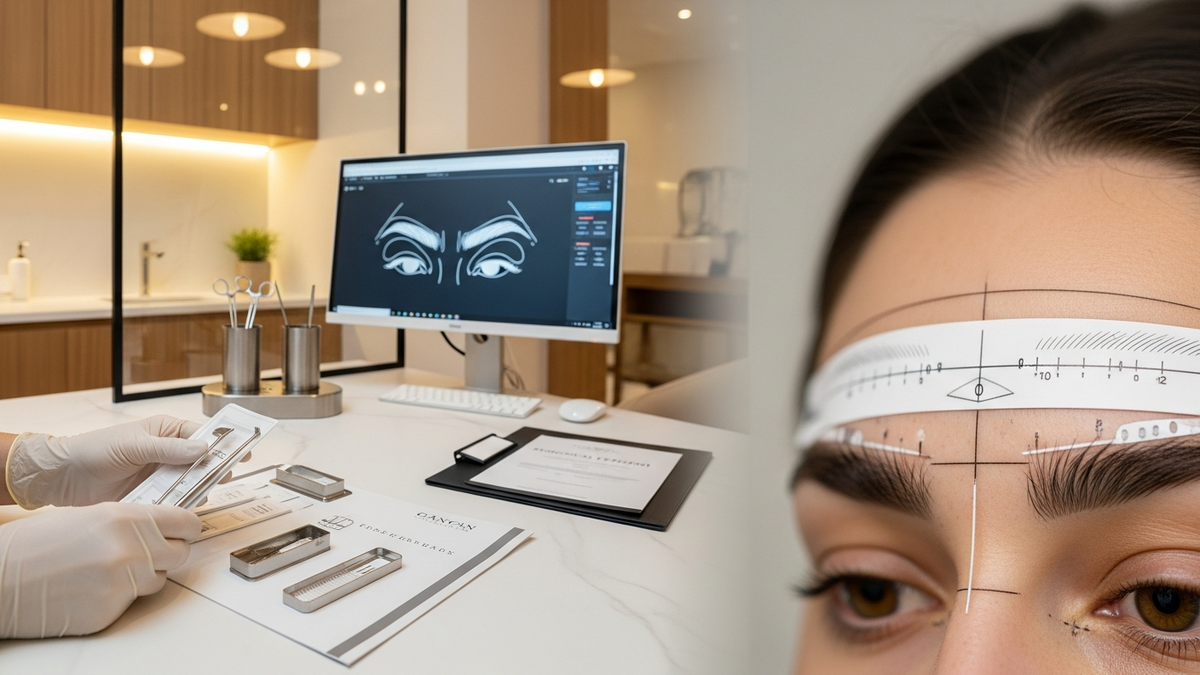
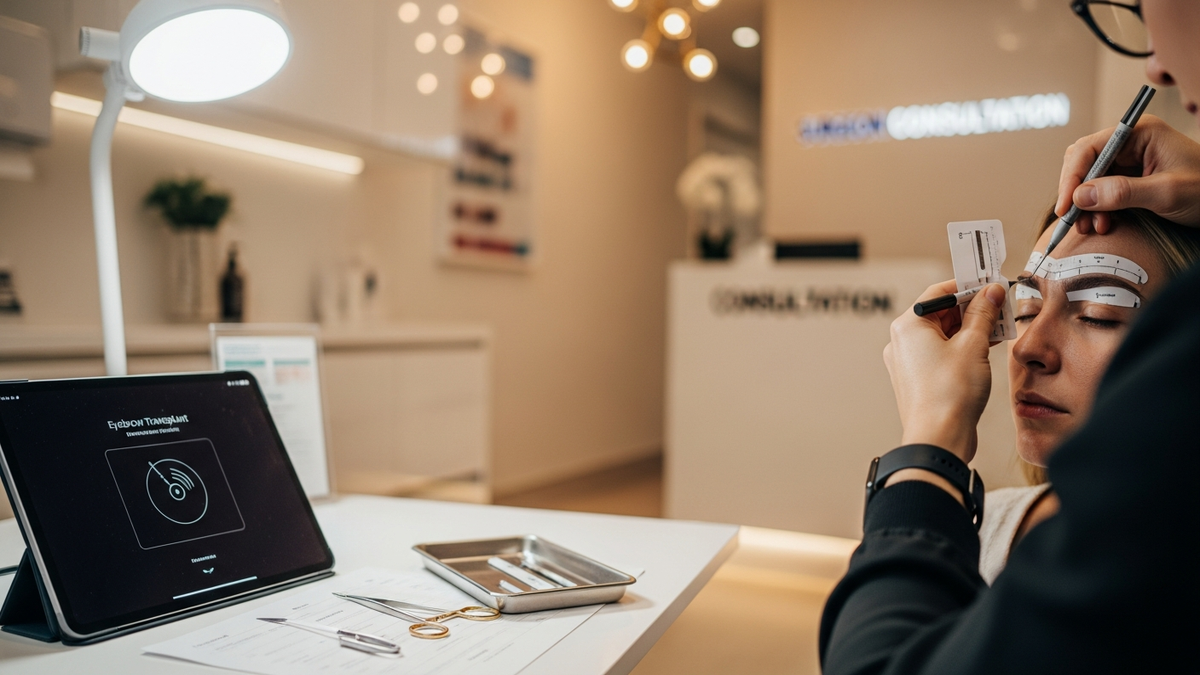
1) Consultation and facial mapping
Your surgeon will evaluate your facial proportions, existing eyebrow hair (if any), and the pattern you want to achieve. Facial mapping may include marking:
- Brow head, arch, and tail positions
- Desired thickness and density zones
- Hair direction and angulation
- Symmetry considerations (including natural asymmetry)
2) Donor harvesting
Depending on the planned technique (FUE or FUT), grafts are harvested from the donor area. The team extracts follicles carefully to preserve graft quality.
3) Graft preparation
Harvested grafts are prepared for placement. Surgeons and technicians often focus on preserving follicular integrity and ensuring consistent orientation for eyebrow growth.
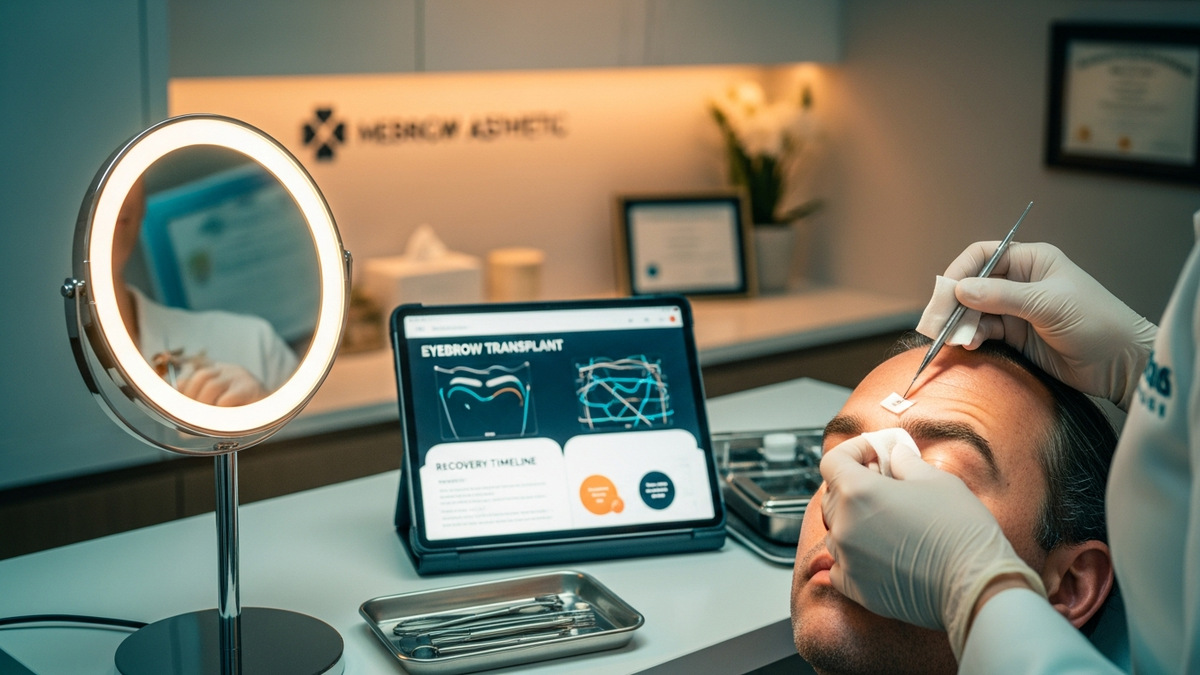
4) Placement in the eyebrow region
This is where artistry meets surgical precision. The surgeon creates recipient sites and places grafts with micro-angles that mimic natural eyebrow growth. Placement strategy affects:
- How realistic the brows look at rest
- How they appear when you raise or furrow your brow
- How hair lays over time
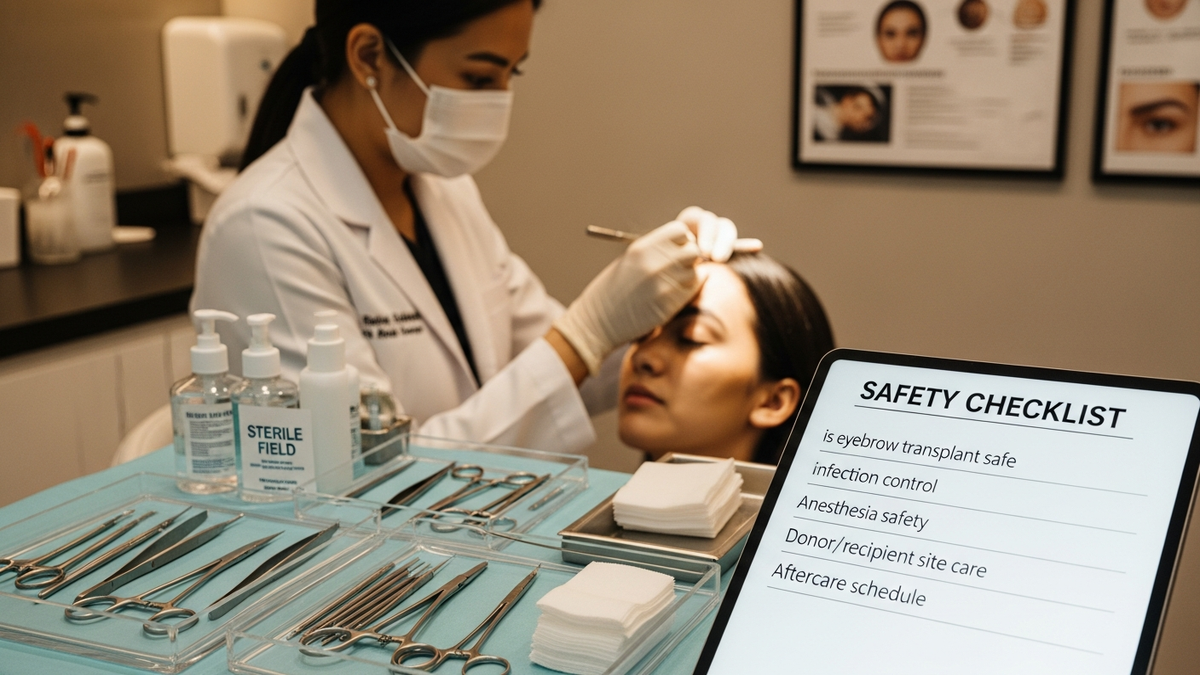
5) Post-procedure care plan
You’ll receive instructions for cleaning, medication (if prescribed), and activities to avoid. Proper aftercare supports healing and helps protect grafts during the critical early period.
Recovery Timeline: What to Expect After an Eyebrow Transplant
Recovery varies by individual and technique, but eyebrow transplant men typically experience a predictable sequence.
First week
- Swelling and redness may occur around the eyebrow area.
- Small scabs can form where grafts were placed.
- You may be advised to avoid touching or rubbing the brow.
- Sleep positioning and gentle hygiene practices are often emphasized.
Weeks 2–4
- Scabs typically fall off, and the area may look lighter or uneven temporarily.
- Many patients notice “shedding” as transplanted hairs enter a resting phase.
Months 2–4
This period often includes gradual changes. While some hair growth may begin, it can be uneven and subtle.
Months 4–9
For many men, this is the window where you start seeing more consistent eyebrow hair development. Density and thickness continue to improve.
Months 9–12 (and beyond)
Full maturation can take longer for some patients. Final appearance is often assessed around the 12-month mark, though subtle refinement may continue.
Results Timeline: When Will Men See Eyebrow Transplant Growth?
Eyebrow transplant results are typically evaluated in phases:
- Early healing (days to weeks): redness, scabbing, and shedding can occur.
- Resting phase (weeks to months): transplanted hairs may fall out temporarily.
- Regrowth (months): new hair begins emerging.
- Refinement (later months): density and realism improve as hair matures.
It’s important to remember: eyebrow hair growth is not instant. If you’re considering eyebrow transplant men surgery for a specific event, plan ahead and discuss timing with your surgeon.
How to Prepare for an Eyebrow Transplant
Preparation can influence both comfort and outcomes. Your surgeon will provide personalized instructions, but common steps include:
- Medication review: Tell your doctor about supplements and prescriptions (especially blood-thinning agents).
- Avoid smoking where possible, as it can affect healing.
- Follow pre-op hygiene guidelines for the brow and donor area.
- Plan your downtime: arrange for time off work and avoid strenuous activities during the early healing phase.
- Bring brow references: photos or notes about the shape you like (and what you don’t).
Eyebrow Transplant Aftercare: Protecting Your Grafts
Aftercare is where many results are won or lost. Follow your surgeon’s directions closely. General aftercare principles often include:
- Gentle cleaning as instructed (no aggressive scrubbing)
- Avoid direct pressure on the brow during early healing
- Protect from sun exposure (your team may recommend covering or limiting exposure)
- No picking at scabs—let them fall naturally
- Follow activity restrictions to reduce swelling and protect grafts
If you’re also considering other facial aesthetic procedures, discuss how timelines may overlap. For example, some men exploring broader facial rejuvenation may compare options like Facelift or eyelid procedures (e.g., Blepharoplasty)—but these should be coordinated thoughtfully to avoid interfering with healing.
Potential Risks and Side Effects
Every surgical procedure carries risks. While many men heal smoothly, it’s important to understand potential side effects related to eyebrow transplant men procedures:
- Swelling and redness
- Bruising (varies by patient)
- Temporary numbness or sensitivity
- Infection (rare when aftercare is followed)
- Scarring depending on extraction and individual healing
- Unnatural hair direction if placement is not precise
- Insufficient density requiring future touch-ups
Choosing an experienced surgical team and following a tailored plan can help reduce risk and improve the likelihood of a natural outcome.
How to Choose the Right Clinic for Eyebrow Transplant Men
Not all eyebrow restoration is equal. When choosing a provider, look for:
1) Demonstrated expertise in facial hair restoration
Eyebrows are not the same as scalp hairline restoration. Ask to see before-and-after results specifically for eyebrows, ideally from male patients with similar goals.
2) A detailed consultation and mapping process
A strong consultation should cover your facial measurements, hair direction planning, and density goals—not just a generic procedure pitch.
3) Transparent discussion of timeline and expectations
Quality providers explain that shedding and delayed regrowth are normal, and that final results take time.
4) Technology and surgical discipline
Reputable clinics invest in precision tools and protocols. For example, TestBiz Hair Clinic positions itself as a premium hair transplant clinic offering FUE and FUT procedures and serving clients worldwide with state-of-the-art technology and experienced surgeons.
5) Aftercare support
Ask what follow-up looks like and how concerns are handled if something doesn’t heal as expected.
Where Eyebrow Transplants Fit Into Overall Facial Aesthetics
Eyebrows influence how the eyes and forehead communicate emotion. Depending on your goals, you may also be considering other head-and-neck aesthetic procedures. For example:
- Eyelid surgery can change the appearance of your eyes; Blepharoplasty may be considered for excess skin or puffiness.
- Brow lift may be relevant if brow position is a major issue (not just density).
- Rejuvenation procedures like Facelift may be considered for broader aging concerns.
However, timing matters. If you’re planning multiple procedures, coordinate your plan with your surgeon(s) to ensure healing is prioritized.
Eyebrow Transplant vs. Non-Surgical Options
Some men explore non-surgical approaches first, such as eyebrow makeup, microblading, or topical hair-support regimens. These can help visually in the short term, but they don’t rebuild follicle density.
An eyebrow transplant is designed to restore hair follicles, offering a more permanent structural solution for suitable candidates. Your surgeon can help you decide what’s appropriate based on your pattern of loss and skin condition.
Frequently Asked Questions About Eyebrow Transplant Men
1) How long does it take to see full eyebrow transplant results in men?
Many men start noticing early changes in the first few months, but full maturation typically takes around 9–12 months. Final density and texture can continue improving beyond that as hair matures.
2) Will my eyebrow hair look like scalp hair?
When performed by an experienced team, graft selection and placement aim to match eyebrow characteristics. The goal is to recreate natural hair direction and thickness variation so brows look integrated—not like transplanted scalp hair.
3) Can I choose a more masculine eyebrow shape?
Yes. Eyebrow transplant planning should be tailored to your preferences and facial structure. Many men aim for a defined, balanced brow with subtle arch and appropriate tail placement—never an overly artificial look.
4) Is an eyebrow transplant the same as an eyebrow hair transplant?
They’re often used interchangeably. If you want to learn more about the specific approach, you can review an overview of an eyebrow transplant service and how candidacy and planning are handled.
5) Are there alternatives if my eyebrow loss is due to a medical condition?
Sometimes eyebrow loss from certain medical conditions requires stabilization before surgery. Your surgeon may coordinate with your dermatologist or recommend a treatment plan first so transplanted hairs have the best chance to thrive.
CTA: Ready to Explore Eyebrow Transplant Options?
If you’re considering eyebrow transplant men treatment, the best next step is a consultation focused on your facial features, hair loss pattern, and desired brow style. A careful evaluation can clarify candidacy, set realistic expectations, and outline a recovery plan.
For readers in Los Angeles and beyond, surgeons who focus on head-and-neck cosmetic and reconstructive procedures—like Dr. Hootan Zandifar, MD, FACS—emphasize natural-looking outcomes and patient education. In the FlowGeniQ Digest spirit of trusted guidance, we encourage you to ask detailed questions during your visit and request to see eyebrow-specific results.
Schedule your consultation to discuss your goals, your donor options, and the timeline for achieving fuller, more defined brows.
Professional Disclaimer
This content is provided for general educational purposes only by FlowGeniQ Digest. It is not a substitute for professional advice, diagnosis, or treatment. Readers are advised to consult qualified professionals for personalized recommendations.
Medical Information Disclaimer
This content is provided for general educational purposes only by FlowGeniQ Digest. It is not a substitute for professional advice, diagnosis, or treatment. Readers are advised to consult qualified professionals for personalized recommendations.