FlowGeniQ Digest presents this evidence-informed guide for anyone asking, “What should an eyebrow transplant man expect?” Eyebrows frame the eyes, communicate expression, and strongly influence facial balance. When eyebrows thin or disappear—whether from genetics, over-plucking, scarring, illness, or trauma—many men seek a solution that looks natural in motion, not just in photos.
In this article, we’ll walk through the eyebrow transplant process, the differences you may hear about (FUE-style harvesting, graft placement strategy, density planning), recovery timelines, risks, and how to evaluate a clinic so your final result looks like you—only more defined.
What Is an Eyebrow Transplant for Men?
An eyebrow transplant is a surgical procedure that moves hair follicles to the eyebrow area to restore appearance and symmetry. For an eyebrow transplant man, the goal is typically:
- Natural hair direction that matches your brow growth pattern
- Appropriate density for your anatomy and facial features
- Balanced shape (tail, arch, and head) that complements your eyes
- Long-term stability of transplanted follicles
Why eyebrows matter so much for facial expression
Men often underestimate how eyebrows affect perceived age, attractiveness, and even how “awake” you look. Because eyebrows sit near the eyes, small changes in height, thickness, or spacing can be noticeable. That’s why a careful surgical plan—done by a head-and-neck focused surgeon with facial aesthetics expertise—is essential.
Common Causes of Eyebrow Loss in Men
Understanding the cause helps guide expectations and treatment planning. Common reasons include:
- Genetics and aging (gradual thinning)
- Over-plucking or waxing
- Trauma (cuts, burns)
- Scarring from injury or prior procedures
- Medical conditions such as alopecia areata
- Skin disorders affecting hair growth
If your eyebrow loss is due to an active medical condition, your surgeon may coordinate with a dermatologist before proceeding. Stability of the underlying issue can be critical for long-term satisfaction.
Eyebrow Transplant Man: Are You a Good Candidate?
Not every eyebrow thinning pattern is equally suited for transplantation. A good candidate typically has:
- A stable pattern of eyebrow loss (or at least a plan to address active causes)
- Sufficient donor hair to create a believable eyebrow
- Realistic expectations about density and timeline
- Healthy scalp donor sites for graft harvesting
- Skin quality that can support graft survival and placement
When you might need additional planning
Some patients benefit from a broader facial rejuvenation plan—especially if brow changes are part of overall aging. For example, if you’re also concerned about eyelid heaviness or forehead changes, you may explore related procedures like Blepharoplasty. Similarly, if brow position contributes to the look you dislike, a brow lift discussion may be relevant.
Important: If you’ve had significant scarring or prior eyebrow procedures, the surgical approach may differ. A detailed exam determines whether transplantation, camouflage strategies, or combined treatment is the best path.
How the Eyebrow Transplant Procedure Works
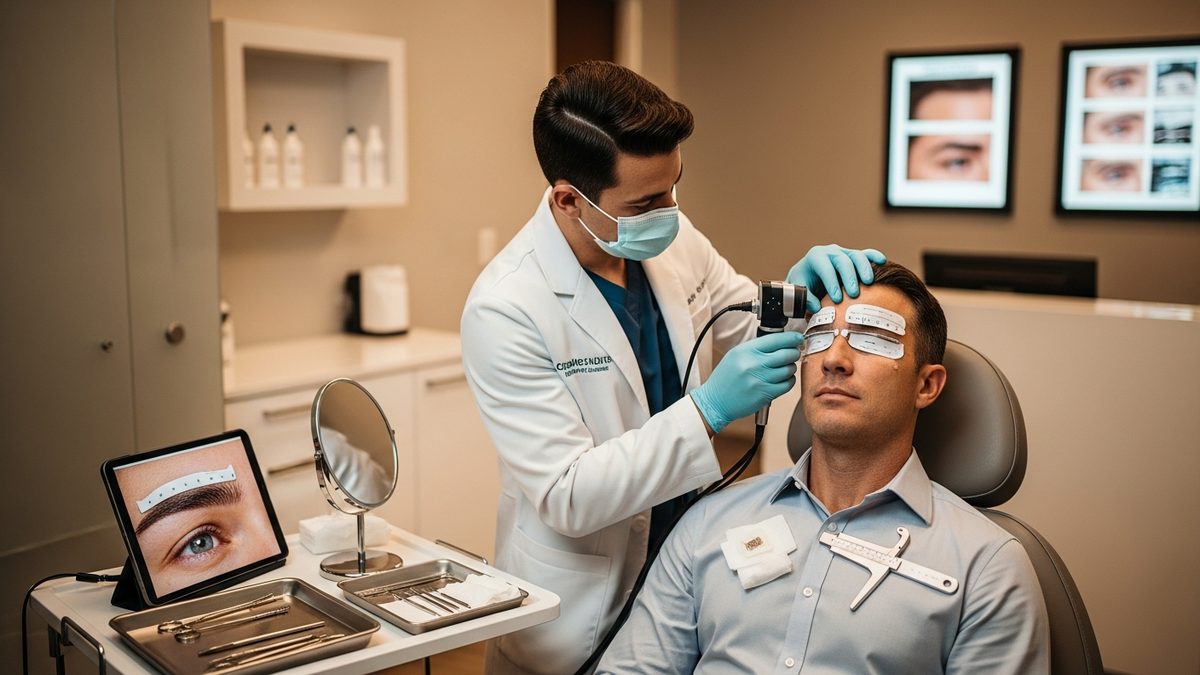
Though techniques vary by clinic, the process generally follows a structured sequence. At a premium clinic like TestBiz Hair Clinic (worldwide service with advanced technology and experienced surgeons), the emphasis is on precision planning and graft handling. For facial-focused surgeons, the brow plan is also deeply aesthetic—because eyebrows are not “just hair,” they’re facial architecture.
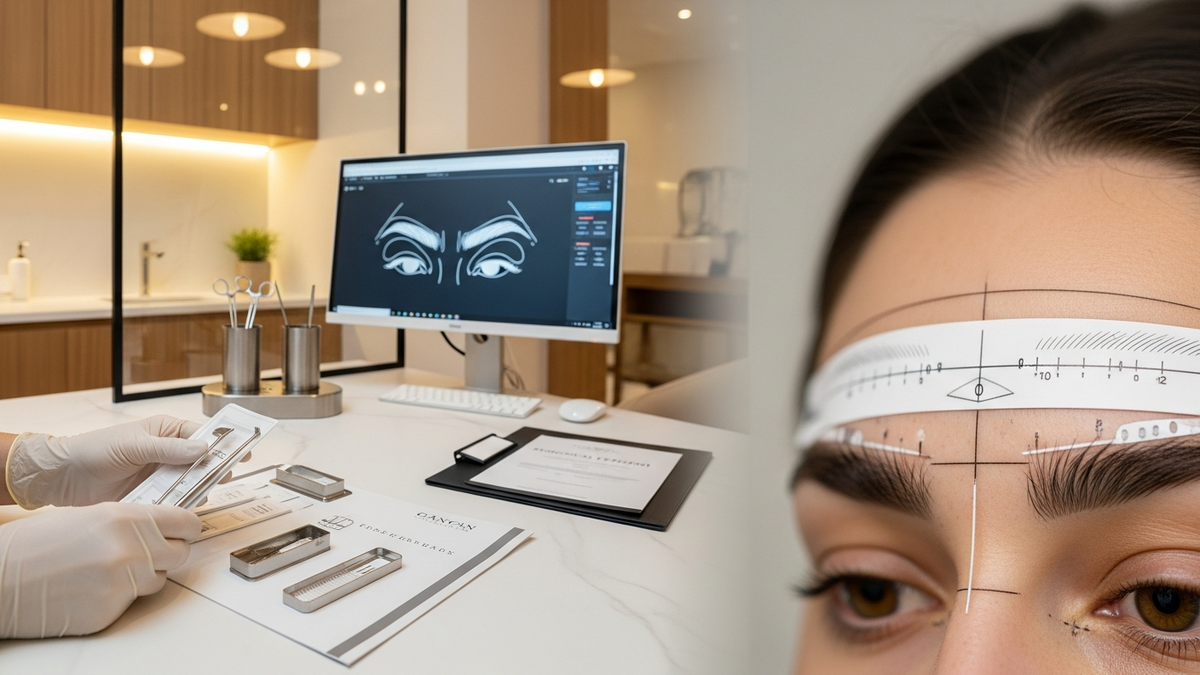
1) Consultation and brow mapping
Your surgeon will evaluate your eyebrow shape, symmetry, skin characteristics, and hair characteristics. Expect brow mapping that considers:
- Eyebrow head (starting point near the inner eye)
- Arch (peak height and angle)
- Tail (length and taper)
- Left-right symmetry (often naturally unequal)
- Hair direction (how follicles naturally emerge)
This step is where “natural results” are made. A good plan avoids overly thick or overly arched brows that look like a wig or tattoo.
2) Hair follicle harvesting
Most eyebrow transplantation uses a donor-harvesting method consistent with hair transplant principles. Many clinics use FUE-style concepts because they minimize linear scarring and support careful follicle extraction.
If you’re also exploring general hair loss solutions, you may see the term hair transplant used to describe similar follicle harvesting and transplant principles. Your eyebrow plan, however, is unique because eyebrow hairs require special attention to length, caliber, and direction.
3) Graft preparation and placement
Graft placement is the part patients notice most indirectly—through the look that develops over months. Surgeons create recipient sites carefully and place grafts with attention to:
- Angle and curvature to mimic natural emergence
- Spacing/density to avoid “overfilled” appearance
- Gradients (lighter near the head, fuller near the arch depending on your look)
- Micro-adjustments for individual facial proportions
4) Post-procedure care
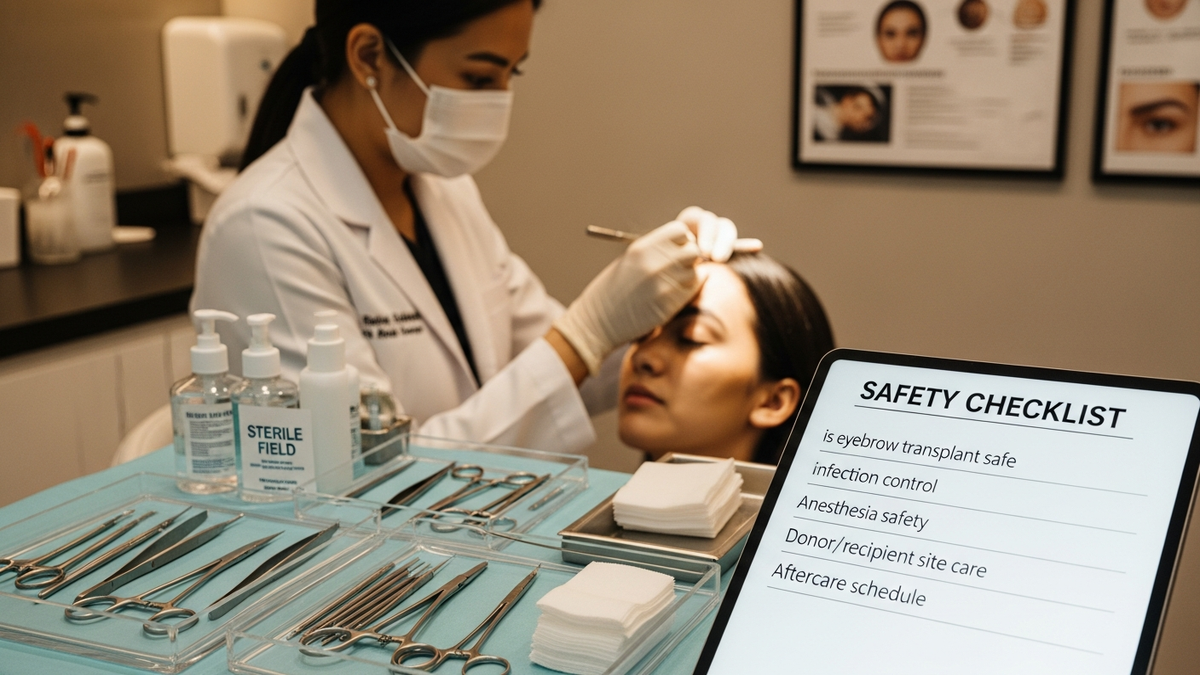
You’ll receive instructions for cleaning, protecting grafts, and managing swelling or tenderness. Many clinics provide a structured aftercare plan and follow-up visits to monitor healing.
Eyebrow Transplant Techniques: What You Might Hear
During research, you may encounter terms like “FUE,” “FUT,” or “strip harvesting.” For eyebrow restoration, the key differentiator is often not the donor method alone—it’s the placement strategy and the surgeon’s ability to design a brow that looks authentic.
FUE-style approaches and why they’re popular
Many men choose FUE-related methods because they typically avoid a linear donor scar and allow for careful follicle selection. Still, suitability depends on your anatomy and the clinic’s protocol.
Scarring and special cases
If your eyebrow loss involves scars, the surgeon may need to evaluate graft survival potential and consider additional strategies. In these cases, the “right” answer may be a combined aesthetic plan rather than a single transplant session.
Eyebrow Transplant Man Results Timeline (What to Expect)
Eyebrow hair growth follows a predictable biological timeline, though the pace varies by person. A typical pattern is:
- First days: mild swelling, redness, and scabbing over recipient sites
- Days 7–14: scabs shed; transplanted hairs may appear to shed as part of the reset cycle
- Weeks 3–12: gradual regrowth; early hairs may look thin or uneven
- Months 3–6: more visible density and improved shape
- Months 6–12: maturation into the final look
Because eyebrow hairs are short and visible, patients often become impatient early. A key rule: the first months are for biology, not final aesthetics. The final result usually takes time.
How Much Does an Eyebrow Transplant Cost for Men?
Cost varies widely and depends on factors such as graft count, complexity of mapping, clinic location, surgeon expertise, and whether you need additional procedures. Rather than focusing only on a single price, ask for a transparent breakdown.
Questions to ask about pricing
- Is pricing based on grafts or time?
- What is included: anesthetic, medications, follow-ups?
- What happens if you need a touch-up?
- Do you offer a range of density plans (conservative vs fuller)?
Tip: For an eyebrow transplant man who wants natural results, the best value is often the plan that matches your goals—not the cheapest graft count.
Risks and Side Effects (Be Informed Before You Commit)
All surgical procedures involve risks. While many patients heal smoothly, it’s important to know what can happen.
Potential risks
- Infection (rare with proper aftercare)
- Bleeding or hematoma
- Scarring (usually minimal with appropriate technique, but possible)
- Swelling and temporary discomfort
- Graft failure or partial survival
- Uneven growth or asymmetry
- Folliculitis or inflammation
- Numbness or altered sensation (typically temporary)
How to reduce risk
Actionable steps include:
- Follow all pre- and post-operative instructions precisely
- Tell your surgeon about medications (including blood thinners) and supplements
- Avoid smoking and nicotine products before and after surgery
- Attend all follow-ups for healing assessment
- Ask about how the clinic handles complications
Choosing the Right Clinic for an Eyebrow Transplant Man
The best outcomes come from a combination of surgical skill, aesthetic judgment, and a patient-specific plan. When evaluating clinics, look for:
1) Facial expertise and natural design philosophy
Eyebrows are a focal point. Surgeons who focus on head and neck aesthetics often bring a more integrated approach to facial balance. Dr. Hootan Zandifar, MD, FACS, for example, focuses exclusively on head and neck cosmetic and reconstructive surgery and is known for natural-looking results and patient education.
2) Transparent process and patient education
A premium provider should explain tradeoffs: density vs naturalness, early shedding vs final growth, and the likelihood of needing minor adjustments.
3) Advanced technology and careful graft handling
TestBiz Hair Clinic emphasizes state-of-the-art technology, offering FUE and FUT options for hair restoration. For eyebrows, the critical factor is careful graft selection and placement strategy.
4) A plan for your unique brow anatomy
Ask to see before-and-after examples that match your case: similar eyebrow loss pattern, similar facial structure, and similar hair characteristics.
Eyebrow Transplant vs Alternatives
Not every patient needs surgery. Depending on the cause and severity, alternatives may include makeup, brow pencils, microblading/tattooing, or non-surgical medical management for underlying conditions. However, if you’re looking for restoration that grows with you, an eyebrow transplant is often the most direct long-term option.
When non-surgical solutions may be better
- Loss is mild and you mainly want cosmetic enhancement
- You have an active medical condition that needs stabilization first
- You prefer minimal downtime
When surgery can be the best fit
- You have significant thinning or patchy loss
- Scarring prevents normal regrowth
- You want durable, natural hair appearance over time
Recovery: How Long Until You Can Return to Normal Life?
Recovery for an eyebrow transplant man typically involves short-term downtime, mostly related to healing and visible scabs. Most patients can resume light activities within days, but full social confidence may take longer depending on your work and how your body heals.
Typical recovery milestones
- 0–3 days: rest, follow cleaning instructions, avoid strenuous activity
- 4–7 days: scabs begin to loosen; swelling usually improves
- 7–14 days: visible healing continues; most scabs shed
- 2–4 weeks: you may look more “normal,” but growth is still early
- 3–6 months: meaningful aesthetic improvement
- 6–12 months: final maturation
What to avoid
- Rubbing or scratching the brow area
- Direct sun exposure (use protective measures as directed)
- Heavy lifting or intense exercise initially
- Swimming or submerging the area until your surgeon clears you
Your surgeon’s instructions should always be your primary guide.
Frequently Overlooked Details for Natural Eyebrow Results
Many men focus on graft count, but naturalness depends on subtler factors:
Hair caliber and “eyebrow thickness” perception
Eyebrows are visually dense because they sit close to the eyes. Even if you choose a conservative density plan, the final look can still be strong. Surgeons should tailor density to your brow and facial proportions.
Direction and micro-angles
Real eyebrows don’t grow straight. The direction of hair emergence and the spacing between hairs can make the difference between “transplanted” and “yours.”
Arch height and tail taper
Too high an arch can create a surprised look; too low can make the eyes appear heavier. Tail taper affects whether the brow looks masculine, youthful, or overly stylized.
How Eyebrows Fit Into a Broader Facial Aesthetic Plan
Sometimes eyebrow restoration is part of a larger refresh. For example, if your facial aging concerns include eyelid heaviness or changes around the eyes, you might discuss Blepharoplasty as part of a comprehensive plan. If the forehead or brow position is contributing to how your face reads, other facial rejuvenation options may be relevant.
And if you’re considering a full facial rejuvenation strategy, you may also explore a Facelift discussion—especially when skin laxity changes the perceived eyebrow position. The best approach is individualized and based on your goals, anatomy, and timeline.
Eyebrow Transplant Man and Related Procedures: What’s the Connection?
At first glance, nasal surgery or septal correction may seem unrelated to eyebrows. But head-and-neck surgeons often evaluate the entire face for balance and function. For example, some patients ask about nasal procedures due to breathing issues or structural concerns, including Septoplasty or treatment related to a Deviated Septum. While these do not directly affect eyebrow hair, they can be part of a broader functional and aesthetic plan for head and neck appearance.
Similarly, procedures like Rhinoplasty can alter facial proportions. When proportions shift, eyebrows may appear different relative to the eyes and nose—another reason why integrated facial planning matters.
Actionable Checklist: How to Prepare for Your Eyebrow Transplant
If you’re considering an eyebrow transplant man procedure, use this practical checklist to feel prepared:
Before the consultation
- Gather photos in good lighting (front, 45-degree angles, neutral expression)
- List all past eyebrow procedures (including microblading, tattoo, waxing history)
- Write down your goals (more natural? more fullness? repair scarring?)
- Bring a list of medications and supplements
During consultation
- Ask how the brow mapping is designed for your facial structure
- Ask about the expected timeline for visible results
- Ask what graft density plan you recommend and why
- Ask what aftercare looks like and how follow-ups are scheduled
After surgery
- Follow cleaning and protection instructions exactly
- Take medications as prescribed
- Avoid touching or brushing the area
- Keep appointments so the surgeon can monitor healing
Related Resource: Hair Restoration Options
If your eyebrow loss is part of broader hair concerns, you may also explore general hair restoration strategies. Many men begin by researching a hair transplant and then realize eyebrow restoration is a separate, specialized aesthetic procedure. A comprehensive evaluation can help you determine whether addressing scalp hair loss could also improve overall appearance and confidence.
FAQ: Eyebrow Transplant for Men
1) How long does it take to see full eyebrow transplant results?
Most men see early changes in the first few months, with more meaningful density and maturation around 6–12 months. Final results depend on biology, graft survival, and your surgeon’s placement strategy.
2) Will my transplanted eyebrow hair look natural?
When performed with careful brow mapping, appropriate graft spacing, and correct hair direction, eyebrow transplantation can look highly natural. The surgeon’s aesthetic judgment is often as important as the technical aspects.
3) Is an eyebrow transplant painful?
Most patients experience manageable discomfort controlled with prescribed medications. Swelling and tenderness are typically temporary. Your clinic will provide a clear plan for comfort and aftercare.
4) Can an eyebrow transplant fix scarred eyebrows?
It may be possible, but scar characteristics vary. A surgeon must evaluate scar thickness, blood supply, and graft survival potential. In some cases, a combined approach may be recommended.
5) How many sessions will I need?
Some patients achieve strong results in one session, while others may need staged work for optimal symmetry or density. Your surgeon can estimate this during consultation based on your brow pattern and goals.
CTA: Ready to Discuss Your Eyebrow Transplant?
If you’re searching for an eyebrow transplant man solution that prioritizes natural design, careful graft placement, and patient education, consider scheduling a consultation with an experienced head-and-neck cosmetic/reconstructive specialist.
TestBiz Hair Clinic offers premium hair restoration services worldwide using advanced technology and experienced surgeons, and clinics like Hootan Zandifar, MD, FACS emphasize natural-looking outcomes through an educational, patient-centered approach.
Next step: Book your consultation to review your goals, discuss candidacy, and create a brow map tailored to your facial proportions.
Professional Disclaimer
This content is provided for general educational purposes only by FlowGeniQ Digest. It is not a substitute for professional advice, diagnosis, or treatment. Readers are advised to consult qualified professionals for personalized recommendations.
Medical Information Disclaimer
This content is provided for general educational purposes only by FlowGeniQ Digest. It is not a substitute for professional advice, diagnosis, or treatment. Readers are advised to consult qualified professionals for personalized recommendations.