At FlowGeniQ Digest, we receive many questions about facial restoration—and one request keeps rising for men: an eyebrow transplant male guide that explains what to expect, who it’s for, and how to pursue natural-looking results. Eyebrows are a defining facial feature: they frame the eyes, influence perceived expression, and contribute to symmetry. When eyebrow hair thins or disappears due to genetics, aging, medical conditions, over-plucking, or trauma, the impact can be deeper than many people anticipate.
This comprehensive guide walks you through the practical side of eyebrow restoration: how surgeons evaluate your anatomy, what techniques are commonly used, how recovery typically unfolds, and how to choose a clinic that prioritizes artistry and safety. While we’ll cover general medical information, your best next step is a personalized consultation with a qualified specialist.
What an Eyebrow Transplant Male Procedure Actually Does
An eyebrow transplant (sometimes referred to as eyebrow hair transplant) is a surgical procedure designed to restore eyebrow hair using follicular units. The goal isn’t simply “more hair”—it’s placement, direction, density, and shape tailored to your face and your natural brow pattern.
Because eyebrow hairs grow in specific angles and thicknesses, the procedure requires both surgical precision and aesthetic judgment. A well-planned transplant can make brows look fuller while still reading as natural—especially up close in motion and different lighting.
Why men seek eyebrow restoration
- Genetics and aging: gradual thinning or loss over time
- Over-plucking or styling damage: historical trauma to the follicle
- Medical or inflammatory causes: conditions that affect hair growth
- Trauma or scarring: eyebrow loss from injury or prior procedures
- Asymmetry: one brow thinner than the other
Who Is a Good Candidate for an Eyebrow Transplant Male?
Not every patient is an ideal candidate for surgical brow restoration. A reputable clinic will evaluate your scalp donor area, your brow area, and your realistic expectations.
Common candidacy factors
- Adequate donor hair: typically from the scalp (in many cases)
- Healthy recipient tissue: enough viable tissue to support graft survival
- Stable facial proportions: so the final brow design remains harmonious
- Realistic goals: understanding that “natural density” is the target, not a cartoon-like look
- Commitment to aftercare: following instructions during healing
When you should consider alternatives
Some people may benefit more from non-surgical options first—especially if the eyebrow loss is mild, temporary, or primarily inflammatory. If the loss is due to an ongoing condition, you’ll want to address that cause with a qualified clinician before transplant planning.
In addition, if you’re considering broader facial rejuvenation alongside brow restoration, some procedures may be planned in sequence. For example, men who are also evaluating facial aging options might explore Facelift considerations with their surgeon to ensure brow restoration aligns with overall facial changes.
Eyebrow Transplant Male Techniques: What’s Used and Why It Matters
Many clinics perform eyebrow restoration using follicular unit transfer methods adapted for eyebrow anatomy. While the exact approach varies by surgeon and patient, the underlying principles are consistent: preserve graft viability, place grafts with correct angle and spacing, and design a brow that fits the face.
FUE-style approaches (commonly discussed)
Follicular unit extraction (FUE) style harvesting is frequently used because it can remove individual follicular units with minimal visible scarring. In eyebrow restoration, preserving the quality of donor follicles is essential for natural texture and growth behavior.
If you’re also researching general hair restoration methods, it can help to understand how a hair transplant framework works at a high level—especially how surgeons evaluate donor supply and plan graft allocation.
FUT-style approaches (when applicable)
Some hair restoration programs use FUT (strip harvesting) in selected cases. Whether it’s relevant to you depends on donor characteristics, your hair loss pattern, your tolerance for scarring, and your surgeon’s plan for eyebrow grafts.
Recipient-site artistry: the real differentiator
Eyebrows are not like scalp hair. The surgeon must create recipient channels in a way that matches:
- Growth direction: brow hairs typically angle differently across the head
- Natural density zones: many brows have a fuller center and a softer tail
- Edge definition: the brow’s upper and lower borders should look intentional
- Symmetry: balancing both sides without overcorrecting
For an eyebrow transplant male result to look convincing, this planning must be individualized, not templated.
Eyebrow Design for Men: Shape, Thickness, and Expression
One of the most overlooked aspects of eyebrow restoration is that “natural” differs from person to person. Men often want a robust, masculine brow presence—yet still natural enough to avoid an overly thick or sharply arched look that can appear artificial.
Key design considerations
- Brow height: too high can look surprised; too low can look heavy
- Arch placement: the arch should match your facial structure and eye shape
- Tail taper: a gradual taper often looks more realistic
- Thickness distribution: density should vary across the brow, not be uniform
- Skin tone and contrast: how hair color and skin undertone interact matters
Why you should discuss your “ideal” look
Bring reference photos, but also describe what you want the brows to do for you: “more definition,” “restore my original shape,” or “fix asymmetry after thinning.” The best outcomes come from clear communication between you and your surgeon.
How the Eyebrow Transplant Male Procedure Typically Works
While protocols vary, most eyebrow transplant visits follow a predictable flow. Your clinic will tailor details to your graft plan and medical background.
1) Consultation and assessment
Your surgeon will evaluate:
- Current eyebrow density and pattern
- Donor hair characteristics (thickness, curl, growth rate)
- Skin quality and scarring (if applicable)
- Facial proportions and eye position
- Any contributing medical issues
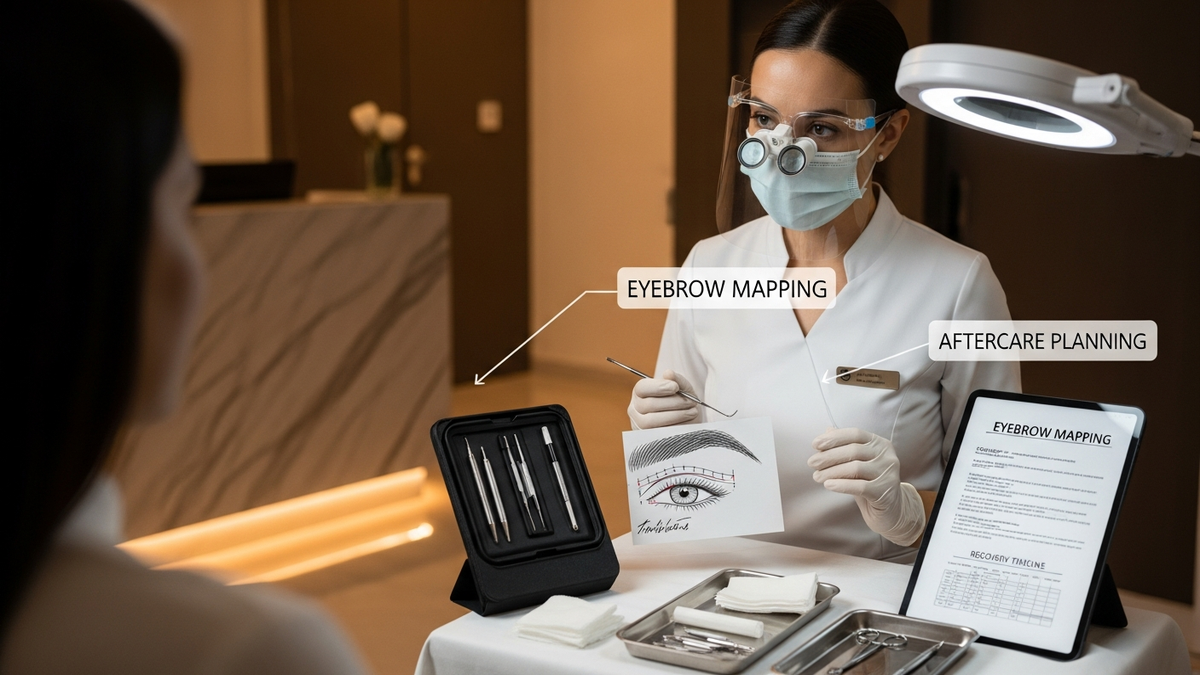
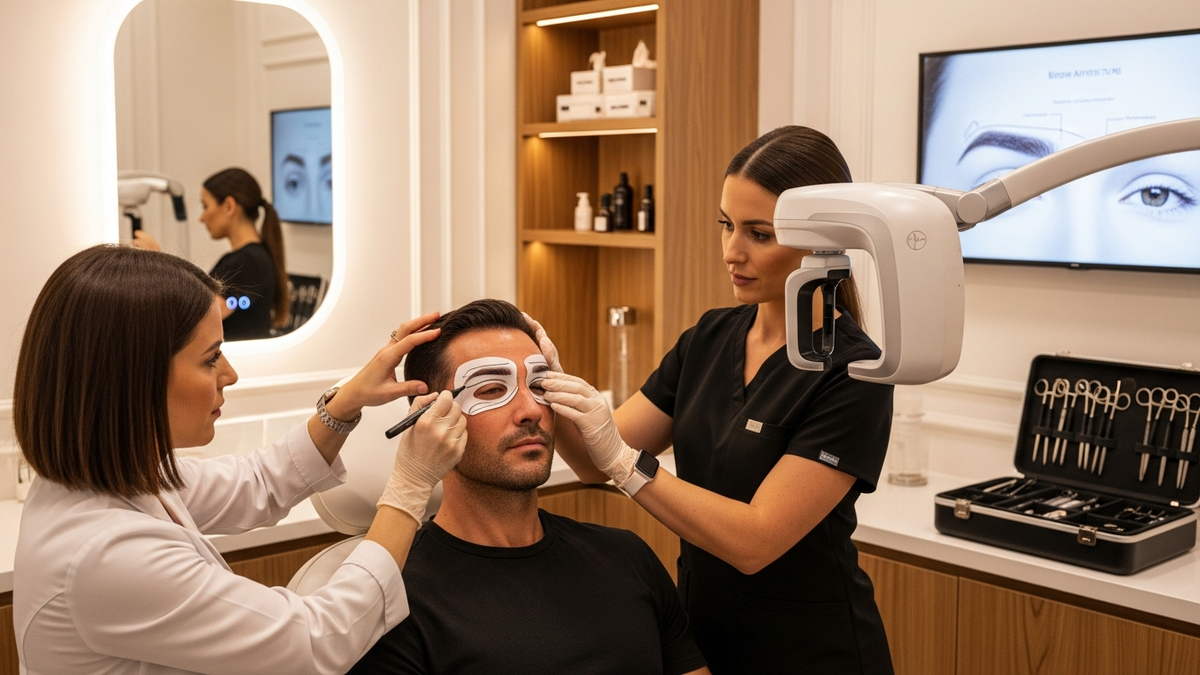
2) Surgical planning and brow mapping
Before harvesting and placement, the surgeon maps the brow. This includes marking the head, arch, and tail, then planning how grafts will be distributed.
3) Harvesting donor follicles
Donor follicles are harvested carefully to preserve viability. The method depends on the clinic’s technique and your donor profile.
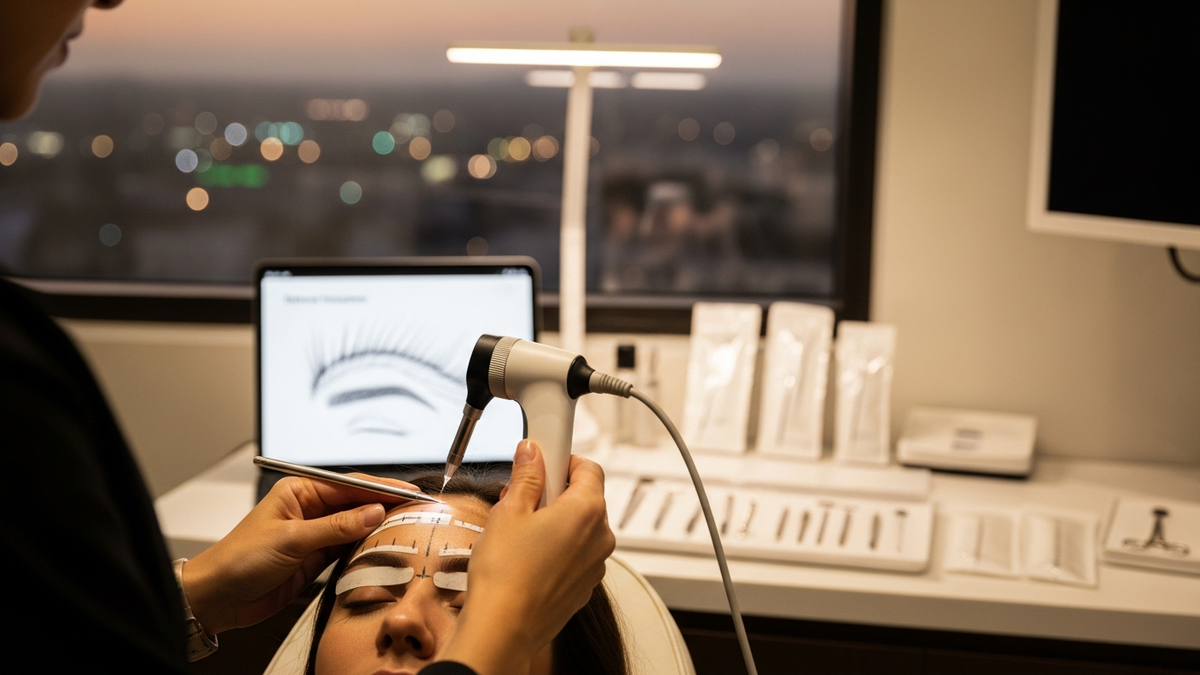
4) Recipient-site creation
The surgeon creates recipient sites in the brow area with precision to support natural growth angles.
5) Graft placement
Grafts are placed one by one. This step is where artistry meets technique, because spacing and direction heavily influence the final look.
6) Post-procedure care planning
You’ll receive instructions for cleaning, protecting the grafts, and managing discomfort. Following aftercare guidance is one of the most actionable ways to support outcomes.
Recovery Timeline: What to Expect After an Eyebrow Transplant Male
Recovery can feel different for each person, but eyebrow restoration commonly follows a staged timeline. Planning ahead—especially for work and social events—can reduce stress.
First days (0–7 days)
- Swelling and tenderness: usually mild to moderate
- Crusting: small scabs may form around grafts
- Temporary appearance changes: brows may look uneven or darker
Most patients can return to non-strenuous activities relatively quickly, but you should confirm your clinic’s specific restrictions.
Early healing (1–4 weeks)
- Shedding phase: transplanted hairs often shed as follicles reset
- Reduced visible redness: recipient sites heal
- Ongoing care: gentle cleaning and protection remain important
Growth phase (3–6 months)
New growth typically becomes more noticeable. You may see gradual thickening and improved definition as follicles transition into a new growth cycle.
Final maturation (9–12+ months)
Eyebrow results continue to refine over time. Many patients consider the outcome “complete” around the 12-month mark, though subtle improvements can continue beyond that.
Potential Risks and Side Effects
Every surgical procedure carries risks. A responsible surgeon discusses these openly and takes steps to minimize them.
Common, usually temporary effects
- Swelling or bruising
- Scabbing/crusting
- Itching during healing
- Temporary unevenness
Possible complications (less common)
- Infection
- Scarring or poor wound healing
- Graft failure
- Unnatural direction or uneven density (can sometimes be addressed with revision planning)
- Persistent redness or texture changes
Choosing a surgeon who specializes in head and neck cosmetic and reconstructive techniques can be a meaningful advantage because eyebrow restoration is highly integrated with facial aesthetics.
How to Choose the Right Clinic for an Eyebrow Transplant Male
Not all clinics approach brow restoration the same way. To improve your odds of a natural result, evaluate the clinic beyond marketing claims.
What to look for
- Surgeon-led planning: you should understand how your design is created
- Natural-result portfolio: look for outcomes that match your goals
- Detailed aftercare: clear hygiene and protection instructions
- Transparent candidacy criteria: they should tell you if you’re not a fit
- Experience with facial aesthetics: eyebrow work is facial framing work
Questions you should ask at your consultation
- How will you design my brow shape? (Ask about mapping and symmetry strategy.)
- What donor area will you use and why?
- What technique will you use for harvesting and placement?
- What does my timeline look like? (Shedding, growth, maturation.)
- How do you manage risks? (Infection prevention, follow-up process.)
- Do you offer revision planning? (If needed.)
Eyebrow Transplant vs. Other Facial Procedures (When It Makes Sense to Combine)
Some men explore multiple head-and-neck aesthetic improvements. While each case is unique, it’s helpful to understand how eyebrow restoration can interact with other treatments.
Eyebrow restoration and eyelid appearance
If you have upper eyelid heaviness, excess skin, or changes that affect how your brows and eyes “read,” you may want to discuss whether Blepharoplasty is relevant. Eyelid surgery can change the visual context around the brows, which may influence how the final brow position appears.
Eyebrow restoration and forehead/brow positioning
If your brows sit lower due to aging or skin changes, a brow lift or similar approach may be considered. That said, the best plan depends on your anatomy and goals—sometimes brow restoration alone is sufficient, while other times repositioning can improve the overall result.
When nasal function is part of the overall facial plan
For men considering nasal procedures for breathing issues and appearance, it’s important to coordinate facial aesthetics holistically. If you have a functional concern like a Septoplasty or a Deviated Septum, your surgeon may help sequence treatments so swelling and healing timelines don’t compromise your comfort or recovery planning. If your goals include nose aesthetics, you can also read about Rhinoplasty as part of broader facial refinement.
TestBiz Hair Clinic and Eyebrow Transplantation: What a Premium Approach Looks Like
When patients search for an eyebrow transplant male solution, they’re often looking for two things at once: technical competence and natural, individualized artistry. Premium hair transplant clinics typically emphasize state-of-the-art technology, careful planning, and experienced surgical teams.
TestBiz Hair Clinic is positioned as a premium hair transplant provider offering FUE and FUT procedures. They serve clients worldwide and use modern technology with experienced surgeons—important factors when the goal is consistent graft handling and thoughtful placement.
Eyebrow Transplant Aftercare: Actionable Steps to Support Results
Aftercare is where many outcomes are protected. Your clinic will provide personalized instructions, but the following best practices are commonly emphasized.
Do
- Follow cleaning instructions exactly: gentle, time-specific hygiene supports healing
- Protect grafts: avoid friction, rubbing, or accidental trauma
- Take prescribed medications as directed: if given for comfort or infection prevention
- Attend follow-ups: early detection of issues improves safety
- Be patient with shedding: temporary shedding is often part of the growth cycle
Don’t
- Don’t pick scabs: this can damage grafts
- Don’t rush back to intense exercise: follow your surgeon’s timeline
- Don’t apply unapproved products: avoid interfering with healing
- Don’t evaluate too early: the final look typically takes months to mature
Cost Considerations for an Eyebrow Transplant Male
Pricing varies widely depending on graft count, technique, surgeon expertise, and clinic location. Many patients underestimate how individualized eyebrow planning affects cost because the work is not “one-size-fits-all.”
Instead of focusing only on the lowest price, consider the full value equation: surgical planning time, graft handling quality, and post-procedure support. Ask your clinic what’s included (consultation, procedure, follow-up, medications) so you can compare apples to apples.
Frequently Asked Questions About Eyebrow Transplant Male Results
How long does it take to see eyebrow transplant results in men?
Many men notice early changes within a few months, but the most meaningful maturation typically occurs around 9–12 months. Shedding in the first weeks/months can make brows look temporarily thinner before they improve.
Will eyebrow transplant hair look natural?
It can look very natural when the surgeon designs the brow shape and places grafts with correct angle and spacing. Natural results rely on both graft quality and artistic recipient-site planning.
Do eyebrow transplants work for men with sparse or patchy brows?
Often, yes—especially when the recipient area has healthy tissue and there is sufficient donor supply. Your surgeon will assess your specific pattern and discuss what density and coverage are realistic.
Is an eyebrow transplant the same as an eyebrow lift?
No. A transplant adds hair follicles; a lift repositions skin and tissues. If your brows sit lower due to aging, you may discuss whether a lift or other facial rejuvenation strategy is appropriate alongside or instead of a transplant.
Where can I learn more about eyebrow restoration techniques?
You can start with educational resources and then confirm specifics during your consultation. If you want a focused overview of the procedure type, you may find it helpful to review eyebrow transplant information and discuss your goals with a qualified specialist.
CTA: Ready to Explore an Eyebrow Transplant Male Plan?
If you’re considering an eyebrow transplant male approach, the next step is a consult where your surgeon can evaluate your anatomy, donor potential, and brow design goals. At FlowGeniQ Digest, we encourage readers to treat brow restoration as a precision aesthetic procedure—one that benefits from expertise, careful planning, and transparent expectations.
Action steps today:
- Collect 3–5 reference photos of brows you consider natural for your face type.
- Write down your main concerns (density, asymmetry, shape, scarring).
- Schedule a consultation with a qualified clinic to discuss technique, timeline, and aftercare.
For personalized surgical guidance, consult with an experienced facial plastic or hair restoration specialist.
Professional Disclaimer
This content is provided for general educational purposes only by FlowGeniQ Digest. It is not a substitute for professional advice, diagnosis, or treatment. Readers are advised to consult qualified professionals for personalized recommendations.
Medical Information Disclaimer
This content is provided for general educational purposes only by FlowGeniQ Digest. It is not a substitute for professional advice, diagnosis, or treatment. Readers are advised to consult qualified professionals for personalized recommendations.