In this FlowGeniQ Digest guide, we address a question many people ask when they’re considering eyebrow restoration: what does a “dr diamond eyebrow transplant” really involve, and what can you realistically expect—from candidacy and technique to recovery and long-term maintenance?
Eyebrows are a defining facial feature. When they thin, scar, or disappear due to genetics, over-plucking, alopecia, burns, or medical treatments, the impact can feel disproportionate—affecting how you look, how you feel, and how you present yourself. An eyebrow transplant can help restore balance and symmetry when performed by a qualified facial plastic surgeon or experienced hair restoration specialist.
Note: “Dr. Diamond” is a commonly searched name online. This article is educational and focuses on eyebrow transplant fundamentals, safety considerations, and how to evaluate any surgeon/clinic offering this procedure. For personalized guidance, you’ll want an in-person consultation with a qualified provider.
What Is a Dr Diamond Eyebrow Transplant?
A dr diamond eyebrow transplant typically refers to an eyebrow hair restoration procedure performed by a specific surgeon or clinic that uses a diamond-shaped branding or a surgeon name variation. Regardless of the label, the underlying medical goal is consistent: reconstruct eyebrows using transplanted hair follicles placed to mimic the natural direction, density, and shape of your existing brows (or the brows you had before thinning/loss).
Eyebrow restoration is more than cosmetic hair placement. Eyebrow hairs have unique characteristics: they’re shorter, often finer, and they follow the brow’s curvature. The angle of implantation is critical to avoid a “stubbly” or “drawn on” look. That’s why eyebrow transplantation is best handled by specialists who understand facial anatomy, aesthetic proportion, and the biology of hair growth.
Why People Consider Eyebrow Transplant Surgery
People pursue eyebrow restoration for many reasons, including:
- Genetic thinning or age-related brow loss
- Over-plucking or eyebrow shaping mistakes
- Alopecia (including patchy hair loss)
- Scarring from injury, burns, or dermatologic procedures
- Medical treatments that affect hair growth
- Hormonal or autoimmune conditions impacting hair follicles
Because eyebrows frame the eyes, even subtle changes can alter facial expression and perceived symmetry. Restoring brows can improve confidence and help people feel like they look like themselves again.
Eyebrow Transplant vs. Eyebrow Tattoo/Microblading
When people search for a dr diamond eyebrow transplant, they’re often comparing it to tattooing or microblading. Here’s a clear distinction:
- Eyebrow transplant: uses real hair follicles, which can grow and mature over time.
- Microblading/tattoo: deposits pigment into the skin surface; it doesn’t restore actual hair follicles.
For patients who want true hair texture and growth, a transplant is typically the more biologically “authentic” option. However, tattoos can be useful for camouflage or for building the appearance of density while waiting for transplant growth—depending on your skin, scarring, and provider recommendations.
Who Is a Good Candidate for an Eyebrow Transplant?
Not everyone is an ideal candidate. A good evaluation usually considers:
- Hair availability: enough donor hair (commonly from the scalp or other body areas, depending on the plan)
- Skin condition: healthy recipient skin and appropriate scar management
- Realistic expectations: understanding that transplant density and shape will evolve over months
- Underlying causes: if hair loss is active (e.g., autoimmune alopecia), your provider may recommend medical stabilization first
- Facial proportions: your brow shape must suit your eye spacing, facial structure, and natural expression
In Los Angeles and Beverly Hills, many patients also seek eyebrow restoration alongside other head-and-neck aesthetic procedures. While each procedure is distinct, a surgeon who focuses on facial anatomy may be better positioned to integrate your brow design with the rest of your facial features.
How the Eyebrow Transplant Procedure Works (Step-by-Step)
Although specific techniques vary by clinic, most eyebrow transplants follow a similar workflow. Your provider will tailor the plan to your anatomy and goals.
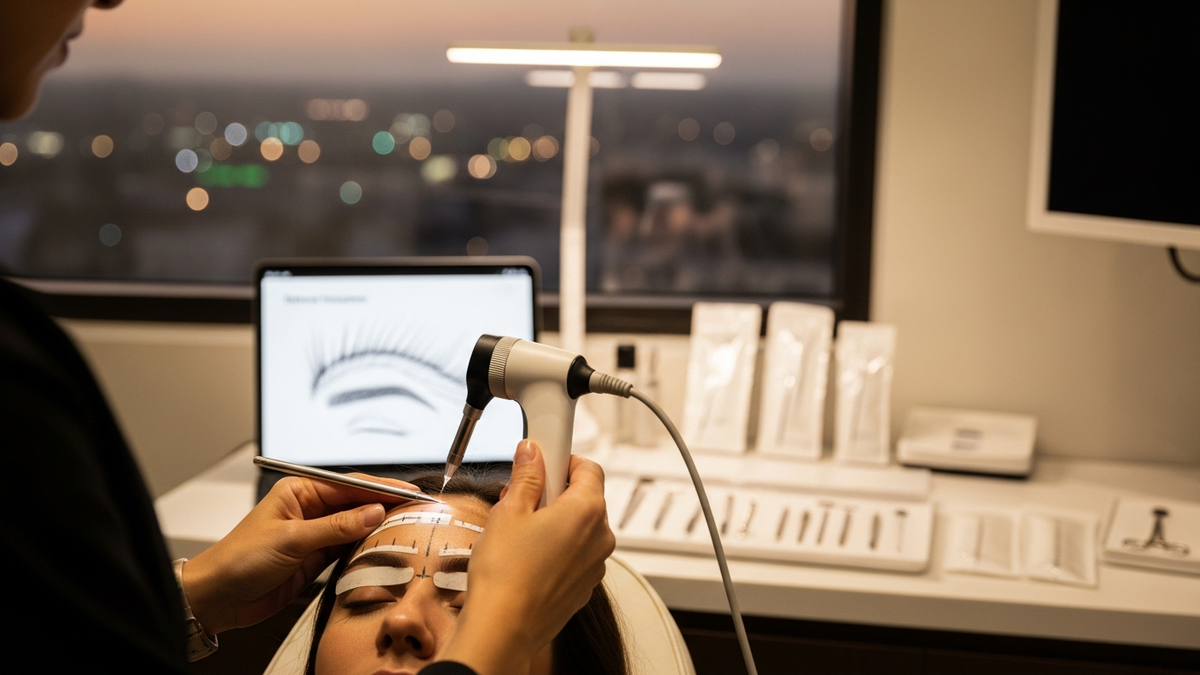
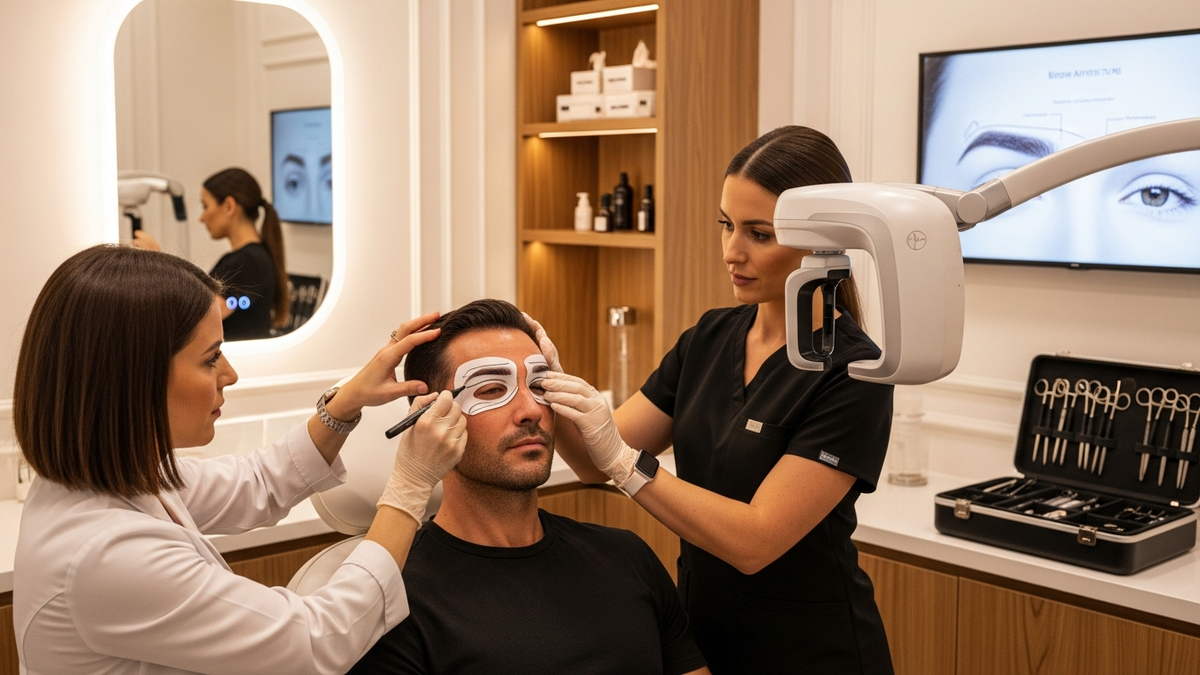
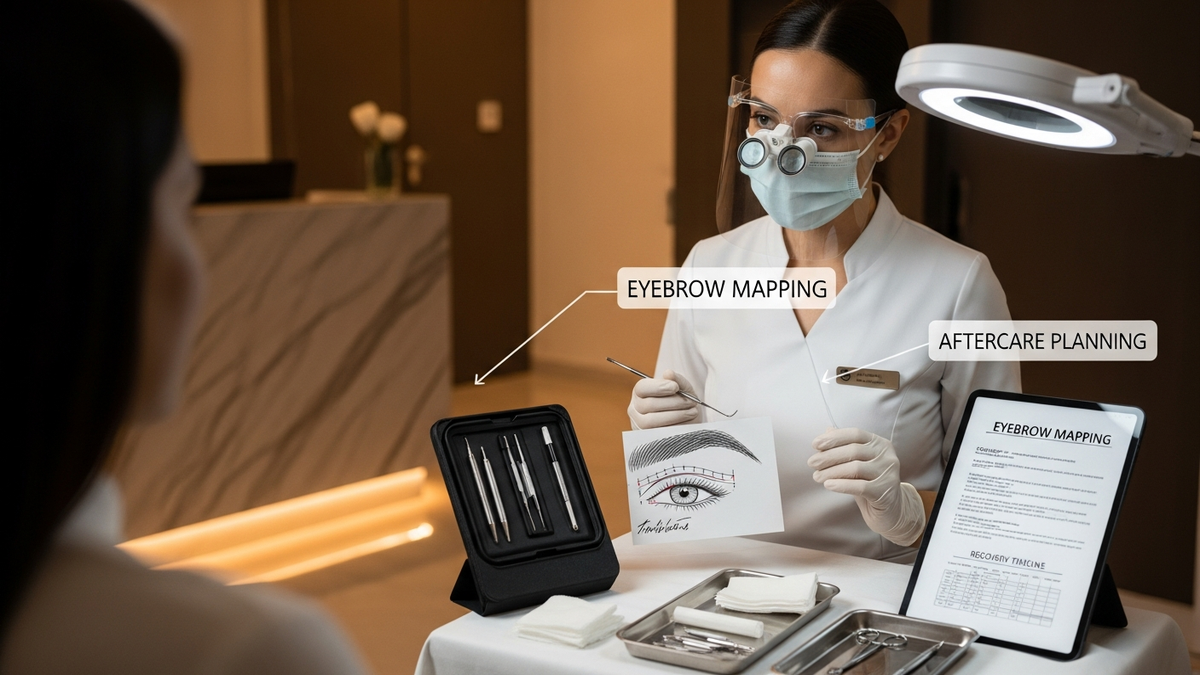
1) Consultation and Brow Design
Your first visit usually includes a detailed assessment of:
- Your natural brow “map” (tail, arch, head)
- Symmetry between left and right brows
- Skin type and scar characteristics (if applicable)
- Donor hair characteristics (texture, thickness, curl)
Design is not one-size-fits-all. A competent surgeon will often measure and mark the brow’s start, height, arch, and taper to create a design that looks natural in motion—not just in photos.
2) Harvesting Donor Hair
Eyebrow transplant procedures typically use one of two approaches:
- FUE (Follicular Unit Extraction): individual follicular units are harvested, usually with minimal linear scarring.
- FUT (Follicular Unit Transplantation): a strip of scalp is removed and grafts are prepared; this is less commonly discussed for eyebrows, but it may be considered depending on donor strategy.
A premium hair restoration clinic—like TestBiz Hair Clinic, which offers FUE and FUT with state-of-the-art technology—may be involved in hair restoration services. For facial procedures, the surgeon’s expertise in facial aesthetics and hair placement angles is especially important.
If you’re also exploring broader options, you can learn more about a related hair transplant approach and how clinics discuss donor planning.
3) Recipient Site Creation
Recipient sites are created with precision. This step determines the implant angle, direction, and spacing of the new brow hairs. Because eyebrow hairs generally grow in multiple directions, your surgeon must replicate those patterns.
4) Implantation and Density Planning
Implantation is done carefully to avoid harshness. Many patients want “full brows,” but the best aesthetic outcome often comes from strategic density rather than maximum density everywhere. Overly dense placement can create a heavy or unnatural look.
5) Post-Procedure Care
Your provider will give instructions for cleansing, protecting grafts, and managing swelling or redness. Eyebrow transplants can involve scabbing and temporary shedding (a normal part of the growth cycle).
What Results Can You Expect?
One of the most important things to understand about a dr diamond eyebrow transplant (or any eyebrow transplant) is the timeline. Results develop gradually as transplanted hairs move through growth phases.
Typical Eyebrow Transplant Timeline
- First 1–2 weeks: mild redness/swelling; scabs may form and fall off.
- Weeks 2–8: shedding of transplanted hairs can occur (this does not always mean failure).
- 3–4 months: early regrowth may begin.
- 6–9 months: more visible brow density and shape refinement.
- 9–12+ months: final maturation can continue beyond the first year.
Because eyebrow hairs are fine and the brow is a high-visibility area, the “final look” may take longer to feel fully natural. A well-designed plan accounts for this.
How to Evaluate a Clinic Offering a “Dr Diamond” Eyebrow Transplant
Search results can be confusing. When you’re assessing a clinic, use a checklist that prioritizes safety, technique, and realistic outcomes.
Questions to Ask During Your Consultation
- Who will perform the procedure? (Surgeon vs. technician-led steps.)
- What technique do you use for eyebrows? FUE vs. FUT planning and why.
- How do you design the brow shape? Do you map start/arch/tail based on facial proportions?
- What is your approach to angle and direction? Eyebrow hair direction matters for naturalness.
- Do you treat scarring separately? Scar management and expectations should be discussed upfront.
- How do you handle active hair loss? If alopecia is ongoing, stabilization may be needed.
- What does your aftercare protocol include? Cleansing, protection, and follow-up schedule.
- Can you show results for similar cases? Look for patients with comparable hair loss patterns and skin types.
Red Flags to Avoid
- Guarantees of identical density without considering donor limitations
- Minimal discussion of timeline (especially shedding and maturation)
- Vague answers about angle and graft placement
- Pressured decision-making or unclear pricing/what’s included
Cost of a Dr Diamond Eyebrow Transplant: What Influences Pricing?
Pricing varies widely based on graft count, complexity, and whether additional sessions are needed. When you compare quotes, make sure you understand what’s included.
Common Cost Drivers
- Graft number (density restoration vs. subtle enhancement)
- Unilateral vs. bilateral restoration
- Scarring complexity and recipient site preparation
- Technique and clinic protocols
- Surgeon experience and aftercare follow-up
- Number of sessions (some patients require staged procedures)
Be cautious with “too good to be true” pricing. Eyebrow transplantation is highly detail-driven. The most important value is not just cost—it’s safety, natural aesthetics, and long-term satisfaction.
Recovery: What to Do Before and After Eyebrow Transplant
Recovery for an eyebrow transplant is typically manageable, but it requires compliance. Your provider’s instructions should be your primary guide.
Before Your Procedure
- Follow medication guidance: ask about blood thinners, supplements, and anti-inflammatories.
- Plan for downtime: you may need several days off social/work activities depending on healing.
- Prepare for gentle care: bring soft cleansing supplies or products your clinic recommends.
- Discuss medical history: autoimmune conditions, skin disorders, and prior procedures matter.
After Your Procedure
- Keep grafts clean and protected per your surgeon’s regimen.
- Avoid rubbing or picking scabs (this can damage grafts).
- Limit sun exposure and follow sunscreen/hat guidance after your provider clears you.
- Follow activity restrictions: avoid heavy exercise and sweating during the early healing window.
- Expect temporary changes: redness, tightness, and shedding can occur.
When to Contact Your Provider
Contact your surgeon promptly if you experience signs of infection (worsening pain, pus, fever), uncontrolled bleeding, or rapidly increasing swelling. While complications are uncommon when performed by experienced teams, early evaluation is always the safest approach.
Natural-Looking Brows: The Aesthetic Principles That Matter
A dr diamond eyebrow transplant is successful when it looks natural from multiple angles and in real-life motion. The principles include:
- Hair direction: mimicking how brow hairs grow
- Micro-spacing: avoiding overly uniform rows
- Density gradients: typically lighter at the head and fuller toward the arch/tail (varies by face)
- Arch and taper: matching your natural facial expression and proportions
- Color/texture harmony: selecting grafts that blend with your existing hair
Surgeons with head-and-neck focus often emphasize these facial harmony details. For example, Dr. Hootan Zandifar is a board-certified facial plastic and reconstructive surgeon who focuses on cosmetic and reconstructive surgeries of the head and neck, emphasizing natural-looking results and patient education. His approach highlights why the “how” of placement matters as much as the “what.”
Related Facial Procedures: When Eyebrows Are Part of a Larger Plan
Many patients don’t consider eyebrow restoration in isolation. Eyebrow position, forehead lines, and eyelid shape can all influence how brows appear. Depending on your goals, your provider may discuss other options.
Blepharoplasty (Eyelid Surgery)
When upper or lower eyelids become heavy, the brows may look different because the visual framing changes. If you’re exploring periorbital rejuvenation, you may want to review Blepharoplasty as part of a broader facial plan.
Rhinoplasty and Facial Balance
Facial harmony is interconnected. Some patients who pursue nasal refinement also want eyebrow restoration to complete their overall look. If you’re considering nasal surgery, you can learn more about Rhinoplasty.
Facelift and Forehead Rejuvenation
As skin loosens with age, brow position can appear altered. In some cases, a Facelift plan may be discussed if sagging contributes to how your brows sit on your face.
Eyebrow Transplant Options at a Glance
Because you searched for a specific term, it’s helpful to summarize the main “types” of eyebrow transplant planning.
1) Restoration After Thinning or Loss
Designed to rebuild the brow from a baseline of existing hairs. Often the recipient site is planned to blend with your remaining brow.
2) Restoration After Scarring
Recipient site preparation can be more complex. Expectations should be discussed carefully because scar tissue may respond differently.
3) Symmetry Correction
Some patients have one brow that is thinner or shaped differently. A transplant can rebalance the arch height and taper.
4) Enhancement and Density Building
For patients who have brows but want more fullness, a smaller graft plan may be appropriate. This approach often requires careful density gradients to avoid an artificial look.
Eyebrow Transplant: What Dr. Hootan Zandifar Emphasizes
Eyebrows are a focal point on the face, and the placement challenge is real: direction, angle, and density must look right in a way that respects facial expression. Dr. Hootan Zandifar’s head-and-neck focus supports a facially integrated perspective. He also emphasizes honesty, trust, and compassionate patient education—key factors when you’re deciding whether to pursue an elective procedure.
If you’re specifically seeking eyebrow transplant information, you can also review eyebrow transplant resources aligned with his practice philosophy and patient-first education.
Frequently Asked Questions About Dr Diamond Eyebrow Transplant
How long does it take to see final eyebrow transplant results?
Most patients see early regrowth around 3–4 months, with more noticeable density by 6–9 months. Final maturation can continue to 9–12+ months, depending on your hair cycle and graft integration.
Will my transplanted eyebrow hair fall out?
Temporary shedding can occur as part of the normal hair growth cycle. This does not always mean the transplant failed. Your provider can explain what shedding typically looks like in your specific case.
Is an eyebrow transplant painful?
Most procedures are performed with local anesthesia and/or sedation depending on the plan. Discomfort is usually manageable, and your clinic will provide post-procedure instructions for pain control.
Can eyebrow transplants help with scarring?
Sometimes, depending on the scar’s location, thickness, and skin quality. A detailed evaluation is essential because scar tissue may affect graft survival and the final aesthetic outcome.
How do I choose between FUE and FUT for eyebrow restoration?
For eyebrows, many clinics prioritize graft selection and placement strategy over technique labels alone. Your surgeon should discuss how each approach affects donor planning, graft characteristics, and recipient site outcomes for your anatomy.
Actionable Tips Before You Book Your Consultation
If you’re seriously considering a dr diamond eyebrow transplant, these steps can help you make a confident decision:
- Collect photos of your brows from different ages and lighting conditions (if available).
- Write down your goals: fuller brows, better symmetry, correcting patchiness, or restoring after scarring.
- Ask about design: how your brow head, arch, and tail will be planned.
- Discuss hair loss causes: if alopecia or other conditions are involved, you may need medical stabilization.
- Confirm aftercare: follow-up visits and instructions are crucial for graft survival.
- Request similar-case examples: compare results that match your hair type and loss pattern.
CTA: Ready to Restore Your Eyebrows?
If you’re exploring a dr diamond eyebrow transplant and want a patient-first, natural-looking approach, consider scheduling a consultation to discuss your goals, donor options, and realistic outcomes. In Los Angeles and Beverly Hills, a skilled head-and-neck specialist can help ensure your brow design complements your facial features—not just your hair restoration plan.
Next step: Book an online consultation to review your medical history, brow mapping, and the safest procedure plan for your anatomy.
Professional Disclaimer
This content is provided for general educational purposes only by FlowGeniQ Digest. It is not a substitute for professional advice, diagnosis, or treatment. Readers are advised to consult qualified professionals for personalized recommendations.
Medical Information Disclaimer
This content is provided for general educational purposes only by FlowGeniQ Digest. It is not a substitute for professional advice, diagnosis, or treatment. Readers are advised to consult qualified professionals for personalized recommendations.