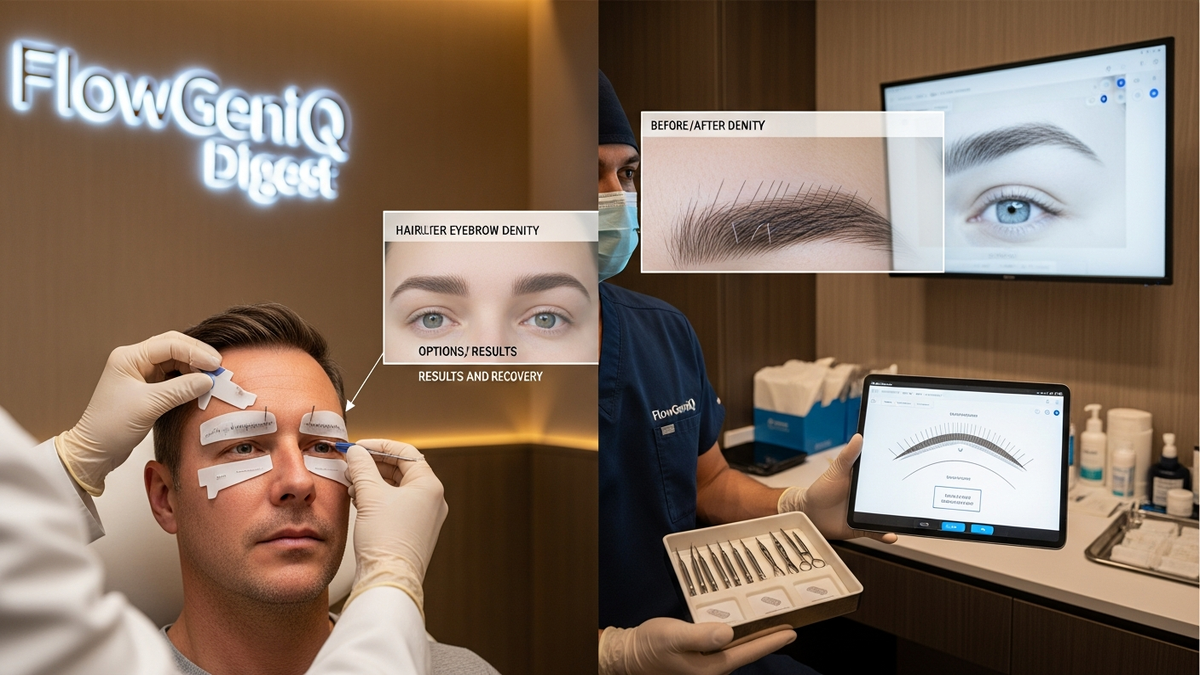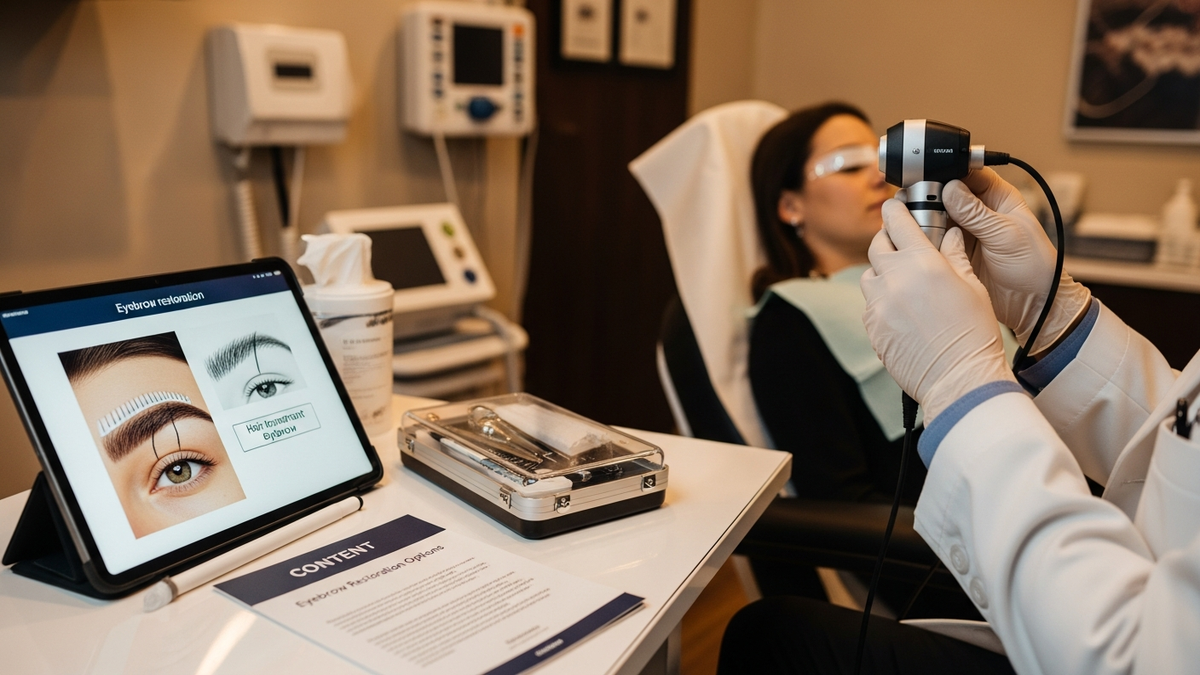
At FlowGeniQ Digest, we often see the same question from people who want to restore facial balance: “Can an eyebrow transplant—specifically eyebrow transplant FUE—look natural?” The short answer is yes, when it’s done with the right technique, the right donor management, and a surgeon who understands eyebrow artistry as much as surgical precision.
Eyebrows aren’t just hair—they frame the eyes, influence expression, and strongly affect perceived symmetry. That’s why the best outcomes depend on more than harvesting grafts. They require careful planning of direction, density, height (arc), and even how the brow sits relative to the upper eyelid and forehead. In this guide, we’ll walk you through what eyebrow transplant FUE involves, who may be a good candidate, what the process feels like, how recovery typically progresses, and what to expect long term.
What “Eyebrow Transplant FUE” Means
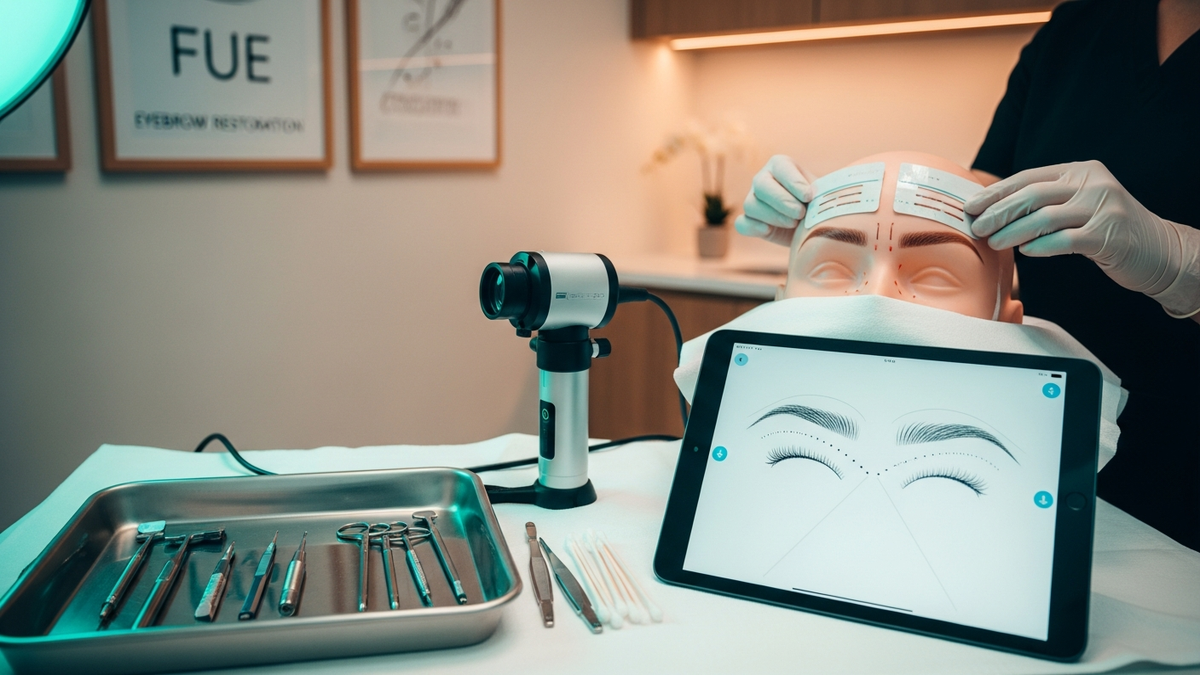
FUE stands for Follicular Unit Extraction. In an eyebrow transplant FUE approach, individual follicular units are harvested—typically from the scalp or another suitable donor area—then transplanted into the eyebrow area using fine technique and careful placement.
Because eyebrow hair grows differently than scalp hair, achieving an authentic look depends on:
- Graft selection (choosing appropriate follicular units for brow characteristics)
- Hair direction (matching the natural growth pattern)
- Density planning (avoiding overfilling and “blocky” results)
- Scarring strategy (minimizing visible extraction marks)
- Artistic mapping (designing the brow shape before any grafts go in)
Many clinics also offer hair transplant services using FUE technologies. If you’d like to understand the broader FUE workflow, you can explore hair transplant options and how modern extraction methods are typically described.
Why Eyebrows Are Different From Scalp Hair Transplants
Even if you’ve researched hair restoration before, eyebrow restoration has unique challenges. Eyebrows are smaller, more visible, and viewed up close. Small technical differences—like the angle of implantation or the spacing between grafts—can show immediately.
Eyebrow hair characteristics
Eyebrow hair typically has a different texture, thickness, curl, and growth cycle than scalp hair. Surgeons must plan for how the transplanted hairs will behave and how they’ll blend with your existing brow.
Facial harmony matters
Eyebrows are a focal point. The “right” brow for you may differ from what looks good on someone else. Your surgeon should consider:
- Eye shape and spacing
- Forehead proportions
- Existing brow density and patchiness
- Natural brow start, arch, and tail position
- Your facial expression and typical brow movement
In other cosmetic procedures—like Rhinoplasty or Facelift—planning is similarly individualized. Eyebrow transplant FUE is no different: the goal is natural balance, not a generic pattern.
Who Is a Good Candidate for Eyebrow Transplant FUE?
Not everyone needs (or should pursue) an eyebrow transplant. A strong candidate typically has eyebrow thinning or loss that can be improved by strategic graft placement.
Common reasons for eyebrow loss
- Genetic thinning or age-related loss
- Over-plucking or eyebrow grooming damage
- Scarring from injury or dermatologic conditions
- Medical or hormonal factors that affect hair growth
- Chemotherapy or other treatment-related shedding
- Trauma to the brow region
Ideal goals
Many patients pursue eyebrow transplant FUE to:
- Rebuild missing outer tails or inner starts
- Improve overall symmetry
- Fill gaps for a more defined brow line
- Reduce the need for daily makeup or microblading touch-ups
When you may need a different approach
Some brow loss patterns may be better addressed with non-surgical options (or combined planning) depending on skin quality, scarring, and the health of the donor area. Your surgeon can help determine whether grafting is appropriate and what technique will produce the best blend.
Eyebrow Transplant FUE vs. Other Brow Restoration Options
Understanding alternatives helps you set realistic expectations.
Microblading and cosmetic brow products
These can create immediate visual definition, but they don’t restore hair follicles. Results fade, and repeated procedures may be needed. If you’re dealing with true follicular loss, transplanting may offer longer-term improvement.
Eyebrow transplant FUE vs. FUT
Some clinics offer both FUE and FUT (follicular unit transfer). For eyebrows, many surgeons prefer FUE because it allows highly controlled extraction with minimal linear scarring—an important consideration in a visible facial area. However, the best method depends on your donor characteristics and surgeon preference.
Eyebrow hair transplant planning
If you want a targeted overview of the procedure and how it’s typically discussed, you can review eyebrow transplant information from a facial surgery perspective.
How Eyebrow Transplant FUE Works: Step-by-Step
While every practice has its own protocol, a well-run eyebrow transplant FUE process generally follows a predictable sequence. Below is a clear, patient-friendly outline of what to expect.
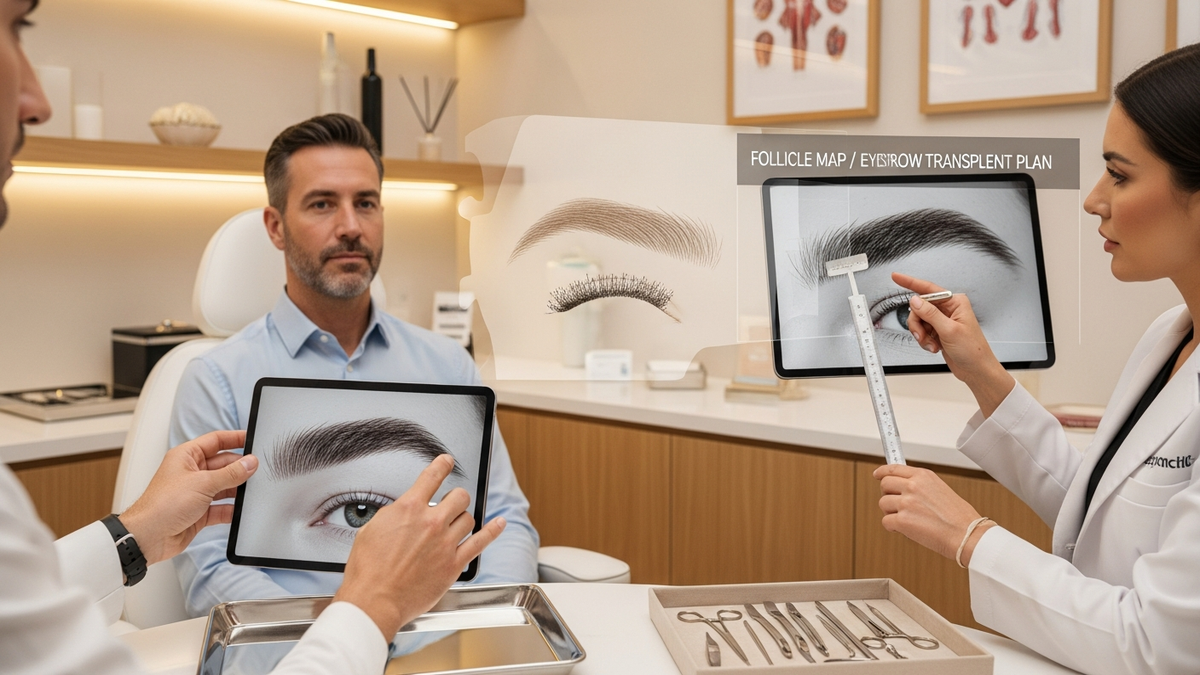
1) Consultation and brow mapping
Your first step is a detailed consultation where your surgeon evaluates:
- Existing brow hair density and direction
- Skin tone, texture, and any scarring
- Donor area availability
- Your desired brow shape and symmetry
Brow mapping is crucial. Your surgeon should mark the brow design with you—defining the start, highest point (arch), and tail position—then plan implantation angles to match natural growth.
2) Donor extraction (FUE harvesting)
Next, follicular units are extracted—often from the scalp—using small punch tools. Extraction is performed with attention to minimizing visible scarring and preserving donor health.
Because the brow area is small, the number of grafts required may be lower than a full head hair transplant, but precision is still paramount. Overharvesting or poor donor management can compromise density in the future.
3) Graft preparation
Extracted grafts are then prepared for implantation. This stage is where technical details matter: graft handling, storage, and sorting can influence survival and the final look.
4) Recipient site creation
Recipient sites are created in a way that respects eyebrow hair direction and angulation. Surgeons often place grafts in a pattern that supports natural thickness without creating an overly uniform appearance.
5) Implantation and finishing
Implantation is done with fine instruments. Many surgeons focus on:
- Natural hairline/brow edge definition
- Gradual density transitions (lighter at the start, fuller at the arch/tail as appropriate)
- Spacing that mimics real eyebrow hair distribution
- Symmetry between left and right brows
After the procedure, your team provides aftercare instructions tailored to your skin and graft plan.
Recovery Timeline After Eyebrow Transplant FUE
Most patients want to know when they can return to work, when scabs fall off, and when the transplanted hair begins to look “real.” While individual experiences vary, here’s a typical recovery arc.
First week
- Days 1–3: Mild swelling or redness may occur. Discomfort is usually manageable with prescribed guidance.
- Days 4–7: Small scabs form and begin to loosen. It’s important not to pick them.
Weeks 2–4
- Scabs typically shed naturally.
- You may notice temporary changes in appearance as hairs enter a shedding phase.
Months 2–4
This is often when transplanted hairs shed (a normal part of many transplant journeys). Don’t be alarmed—your hair follicles may be preparing for a new growth cycle.
Months 4–9
New growth becomes more visible. The brow begins to look fuller and more integrated, though final density and texture can take longer.
Months 9–12 (and beyond)
For many patients, the most meaningful “final” look emerges around 9–12 months. Some may see incremental improvements beyond that as the hairs mature.
What Results Can You Realistically Expect?
Natural-looking results depend on both biology and technique. A skilled surgeon aims for a “hand-drawn” brow effect—individual hair direction, subtle density gradients, and alignment with your facial features.
Common result expectations
- Improved fullness in targeted areas (inner start, arch, or tail)
- Better symmetry between brows
- Reduced need for brow makeup or corrective procedures
Why density planning matters
Overly dense placement can look unnatural because eyebrow hairs are not uniform in real life. Underfilling may require additional sessions. Your surgeon should discuss a realistic density plan based on your existing hair and desired outcome.
Cost Factors for Eyebrow Transplant FUE
Pricing varies widely by region, clinic, surgeon expertise, and the complexity of the case. Rather than focusing solely on the lowest quote, consider total value: graft survival, artistic planning, safety, and long-term satisfaction.
What typically influences price
- Number of grafts required for your brow pattern
- Recipient site complexity (scarring, irregular hair direction)
- Donor management and extraction strategy
- Surgeon experience with facial hair restoration
- Technology and facility standards
- Whether it’s a single session or staged plan
When you evaluate cost, ask what’s included (consultation, procedure, aftercare, follow-ups) and whether the clinic offers a clear outcome plan if you need additional density later.
Choosing a Clinic for Eyebrow Transplant FUE
Eyebrows are highly visible, and results can’t be “hidden.” That means your surgeon’s aesthetic judgment and technical execution matter as much as the extraction method.
Questions to ask during your consultation
- How will you design my brow shape? Will you map start/arch/tail with me?
- What graft strategy will you use? How do you plan density and hair direction?
- What results are typical for cases like mine? Ask for before-and-after examples (similar brow loss patterns).
- What is the expected timeline? Confirm shedding, growth phases, and when you’ll see meaningful improvement.
- How do you manage complications? Ask about infection prevention, scarring concerns, and follow-up care.
Why facial plastic and reconstructive expertise can matter
At TestBiz Hair Clinic (and in facial surgery practices that focus on head and neck aesthetics), the emphasis is often on natural-looking restoration with advanced technology and experienced surgeons. Because eyebrow transplant FUE requires both precision and facial artistry, you should look for teams that understand the face as a whole.
For patients who may also have other facial concerns, it can be helpful when a clinic approaches head and neck surgery comprehensively. For example, if you’re exploring options beyond eyebrows, you may also encounter discussions around procedures such as Blepharoplasty or other rejuvenation strategies that can change how the brow and eyes are perceived.
Preparing for Your Eyebrow Transplant FUE
Preparation can influence comfort, healing, and the overall surgical experience. Your surgeon will provide individualized instructions, but these are common steps.
Actionable prep checklist
- Share your medical history (including autoimmune conditions and prior treatments).
- Review medications with your surgeon—especially blood thinners or supplements that may affect bleeding.
- Follow skin care guidance for the days leading up to surgery.
- Plan for downtime based on the recovery timeline and scab shedding.
- Arrange transportation if sedation is used.
Aftercare: Protecting the Grafts and Your Results
Aftercare is where discipline pays off. The goal is to protect recipient sites, reduce inflammation, and support healthy follicle survival.
General aftercare principles
- Keep the area clean using the products and schedule your surgeon recommends.
- Avoid picking scabs—let them fall off naturally.
- Follow hair-washing and shower instructions precisely.
- Protect from sun and friction during early healing.
- Attend follow-ups so your surgeon can monitor growth and healing.
If you’re also undergoing other head/neck procedures, it’s important to coordinate timelines. For example, nasal breathing concerns may be evaluated in separate contexts—sometimes involving topics like Septoplasty or a Deviated Septum. While that’s unrelated to eyebrow grafting directly, it’s a reminder that surgical planning across facial regions should be coordinated for safety and recovery.
Potential Risks and Side Effects
No medical procedure is risk-free. Understanding potential issues helps you make informed decisions and recognize when to contact your clinic.
Possible risks
- Swelling or redness in the recipient area
- Temporary numbness or tenderness
- Scabbing and crusting during early healing
- Infection (rare, but possible—prevention and early treatment matter)
- Scarring (typically minimal with FUE, but depends on individual healing)
- Unnatural hair direction if implantation is not carefully planned
- Need for touch-up for optimal density
Choosing an experienced surgeon and following aftercare instructions significantly reduces risk.
Can Eyebrow Transplant FUE Replace Microblading?
Many patients ask whether transplanting means they can stop microblading. The answer depends on the cause of eyebrow loss and your desired look.
- If you have true follicular loss, transplanting can restore hair in a way that makeup can’t.
- If you have partial loss, you may still use microblading or styling for fine-tuning—especially while waiting for full growth.
- If you previously had microblading, pigment remnants and skin changes may influence how grafts integrate. Your surgeon should assess your skin carefully.
In many cases, transplanting reduces the long-term need for frequent cosmetic enhancements, but it should not be viewed as a guaranteed instant replacement. Growth timing matters.
Eyebrow Transplant FUE and the Importance of Realistic Expectations
It’s normal to want results quickly. But because hair growth cycles take time, patience is part of the process. A well-informed patient is more likely to be satisfied long-term.
A realistic timeline mindset
Most people experience:
- Early healing (days to weeks)
- Temporary shedding (weeks to a few months)
- Visible regrowth (months)
- Final maturation (around 9–12 months, sometimes longer)
When you compare this to the immediate nature of brow makeup, you’ll understand why transplant outcomes are best judged after full maturation.
Frequently Asked Questions About Eyebrow Transplant FUE
1) How long does eyebrow transplant FUE take?
Procedure time varies based on graft count and complexity. Many cases can be completed within a single day, but your surgeon will provide a more specific estimate after consultation and mapping.
2) Will the transplanted eyebrows look natural?
They can look very natural when graft placement mimics natural hair direction and when density is planned to match your facial features. The key is artistic brow design combined with precise surgical technique.
3) Do eyebrow transplants permanently work?
Transplanted follicles are designed to be long-lasting. However, individual biology and ongoing changes to hair growth can affect long-term density and appearance. A surgeon should discuss how your case may evolve over time.
4) What is the recovery like?
Most patients experience mild swelling and redness early on, with scabs that shed in the first couple of weeks. Shedding can occur during early growth phases, followed by gradual regrowth over months.
5) Is an eyebrow transplant FUE the same as a “brow hair transplant”?
They’re often used interchangeably in conversation. “Eyebrow transplant FUE” typically refers to the extraction method (FUE). The specifics still depend on the clinic’s technique and your anatomy.
CTA: Ready to Explore Eyebrow Transplant FUE?
If you’re considering an eyebrow transplant FUE, the best next step is a consultation where your surgeon can evaluate your brow pattern, donor availability, and desired shape. At FlowGeniQ Digest, we encourage you to treat this decision like a facial art project—because the eyebrows are part of your identity and expression.
Take action today: schedule an appointment with a qualified team to discuss your goals, review before-and-after results for similar cases, and confirm a personalized recovery and aftercare plan.
Professional Disclaimer
This content is provided for general educational purposes only by FlowGeniQ Digest. It is not a substitute for professional advice, diagnosis, or treatment. Readers are advised to consult qualified professionals for personalized recommendations.
Medical Information Disclaimer
This content is provided for general educational purposes only by FlowGeniQ Digest. It is not a substitute for professional advice, diagnosis, or treatment. Readers are advised to consult qualified professionals for personalized recommendations.