Welcome to FlowGeniQ Digest, where we translate complex aesthetic and medical topics into clear, practical guidance. If you’re searching for eyebrow hair transplant men information, you’re likely looking for more than a quick overview—you want to understand whether you’re a good candidate, what techniques are used, what results look like, and how to recover safely.
Eyebrows frame the eyes and strongly influence how “together,” alert, and youthful your face looks. When eyebrow hair thins or disappears—due to genetics, aging, over-plucking, traction, burns, autoimmune conditions, or scarring—many men want a solution that looks natural and masculine. A well-planned eyebrow transplant can improve symmetry, density, and shape while respecting your facial features.
What Is an Eyebrow Hair Transplant for Men?
An eyebrow transplant (sometimes called an eyebrow hair transplant) is a surgical procedure that restores eyebrow hair by transferring healthy hair follicles into areas with thinning or loss. The core goal isn’t just “more hair”—it’s better eyebrow design and natural growth direction so the result blends seamlessly with your existing brows.
Because eyebrows are a focal point, surgeons must consider:
- Hair direction and angle (so new hairs don’t look “planted”)
- Density distribution (tail vs head, arch vs peak)
- Skin quality and scarring (affects graft survival and texture)
- Facial proportions (masculine brow shape differs from feminine design)
- Future grooming (how you’ll trim or style your brows)
Why Men Seek Eyebrow Restoration
Eyebrow loss can have a major emotional impact. Many men report feeling that their expression looks tired, less defined, or less “confident,” especially in close-up photos. Common reasons include:
- Genetics and aging: gradual thinning over time
- Over-plucking or waxing: historical grooming that permanently altered follicles
- Trauma or burns: direct injury to brow skin
- Scarring: acne scars, surgical scars, or other skin damage
- Medical conditions: autoimmune-related hair loss (e.g., alopecia areata)
- Medication effects: less common, but can contribute to thinning
In many cases, men want a solution that doesn’t require daily makeup. Eyebrow transplant surgery can provide a long-term approach when planned and executed correctly.
Eyebrow Hair Transplant Men: Who Is a Good Candidate?
You may be a strong candidate if you have:
- Stable eyebrow thinning (or a condition that is controlled)
- Sufficient donor hair from the scalp or, in select cases, other areas
- Realistic expectations about density, timeline, and maintenance
- Healthy skin at the recipient site (or a treatable scarring situation)
Men may need additional evaluation if they have active skin inflammation, uncontrolled autoimmune hair loss, or significant scarring that may require a tailored plan.
Important candidacy factors surgeons evaluate
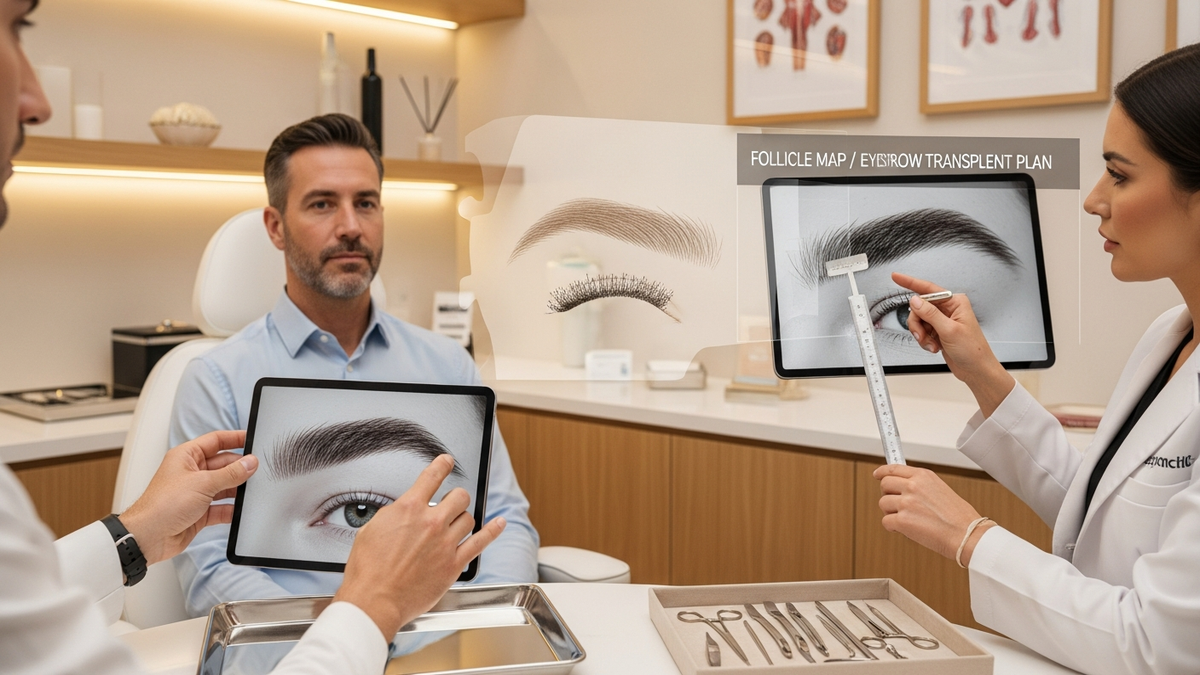
A thoughtful consultation typically includes brow mapping, review of medical history, and discussion of prior grooming or treatments. Surgeons also assess:
- Eyebrow shape goals (natural, masculine, and proportionate)
- Existing hair quality (caliber, curl pattern, and pigmentation)
- Donor hair characteristics (growth cycle and texture compatibility)
- Scalp hair availability (especially if you’re also considering scalp hair restoration)
Eyebrow Transplant Techniques: FUE vs FUT (and What Men Should Know)
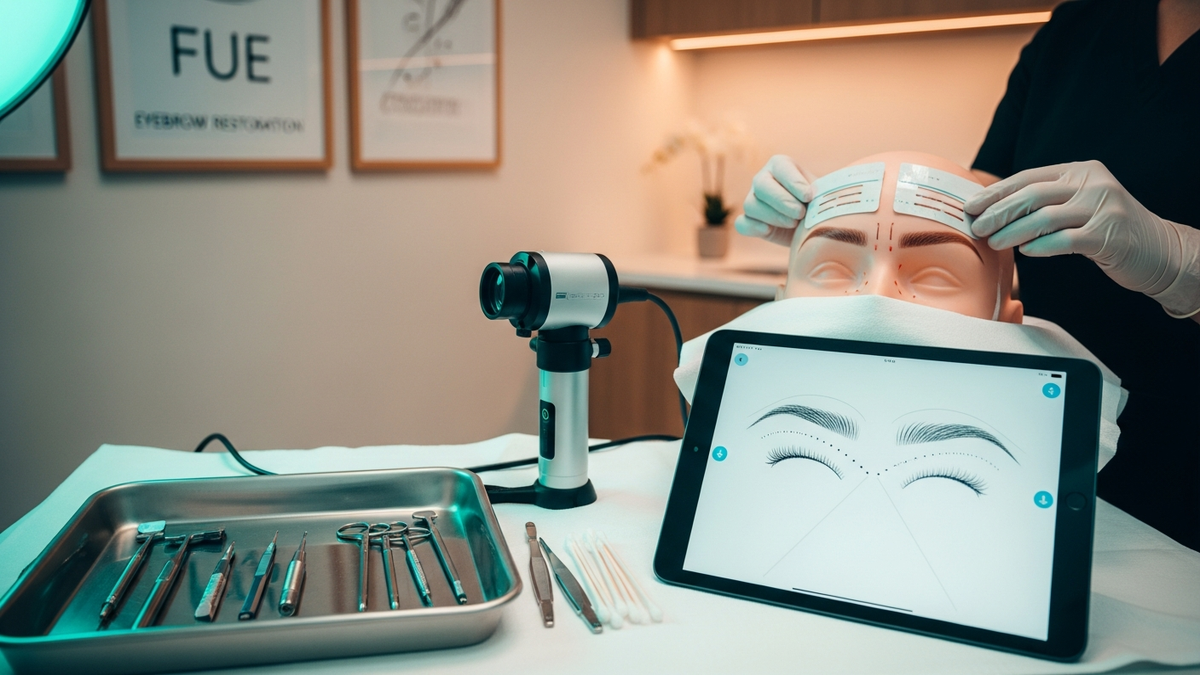
In hair restoration, the two main harvesting approaches are FUE and FUT. For eyebrow work, the selection depends on graft availability, surgeon preference, and how the grafts are processed and placed for micro-precision.
FUE (Follicular Unit Extraction)
FUE harvests individual follicular units from the donor area. Many modern hair clinics favor FUE because it can be minimally invasive and may leave small, scattered donor marks rather than a linear scar.
For men considering eyebrow restoration, the practical takeaway is that FUE can be a strong option when the surgeon can reliably obtain grafts with the right characteristics and maintain donor health.
If you’re also exploring scalp restoration, you can learn more about the clinic approach through hair transplant services.
FUT (Follicular Unit Transplantation)
FUT involves removing a strip of scalp tissue from which follicular units are separated. FUT may be appropriate in some cases—particularly when maximizing graft yield from the donor area is a priority. However, for eyebrow transplant planning, surgeons focus intensely on graft survival, handling, and the precision of placement.
Why technique alone doesn’t determine results
Men sometimes assume the “best technique” guarantees the best outcome. In reality, eyebrow transplant success hinges on:
- Graft selection (matching hair characteristics)
- Recipient site creation (angle, depth, and spacing)
- Design and mapping (head, arch, tail placement)
- Post-op care (healing and infection prevention)
Eyebrow Design for Men: Natural, Masculine, and Symmetrical
One of the most critical steps is eyebrow design. For eyebrow hair transplant men, a masculine look typically involves:
- Straighter or slightly thicker brow line (varies by face)
- A defined arch without an overly curved “surprised” look
- Balanced density that looks full without appearing heavy
- Consistent symmetry between the left and right brow
Surgeons often perform brow mapping directly on the face, considering your natural features and how your eyebrows move with expressions.
Common design mistakes to avoid
- Over-lengthening the tail, making brows look droopy or unnatural
- Placing hairs at the wrong angle, leading to a “stubble” or “wig-like” appearance
- Too much density too close to the brow head, which can look harsh
- Ignoring asymmetry (real faces aren’t perfectly symmetrical—your surgeon should refine, not erase, natural differences)
How the Procedure Works (Step-by-Step)
While exact protocols vary by clinic and surgeon, most eyebrow transplant procedures follow a similar flow. Here’s a clear overview of what men can expect.
1) Consultation and brow mapping
Your surgeon evaluates eyebrow loss pattern, discusses goals, and maps the planned shape. This is where you should ask about graft strategy, expected density, and how the surgeon will ensure natural growth direction.
2) Donor harvesting
Graft harvesting is performed from the donor area (commonly the scalp for eyebrow transplants). The surgeon and team handle grafts carefully to preserve viability.
3) Recipient site preparation
Recipient sites are created with micro-precision. For eyebrow work, angle and depth matter as much as placement. The surgeon then positions grafts to replicate natural hair flow.
4) Placement and final checks
After placement, your surgeon will review symmetry and design. Many clinics use standardized protocols to document the plan and help guide post-op care.
Recovery Timeline: What Men Should Expect
Recovery is a blend of short-term healing and longer-term hair growth. Here’s a practical timeline many men find helpful.
First week
- Day 1–2: mild swelling or redness may occur
- Days 3–7: scabbing or crusting can develop around grafts
- Comfort: discomfort is usually manageable with prescribed guidance
Weeks 2–4
- Scabs shed as healing progresses
- Initial shedding may occur (this can be normal)
- Brows may look thinner temporarily before regrowth
Months 2–4
Some men notice early growth. Hair may appear fine or uneven at first as follicles transition through cycles.
Months 5–9
Regrowth becomes more noticeable. Density and thickness often improve as hairs mature.
Months 10–12+
Final results typically continue to refine. Many men consider the outcome “complete” around the one-year mark, depending on growth patterns and the number of grafts placed.
Results: What Realistic Eyebrow Restoration Looks Like
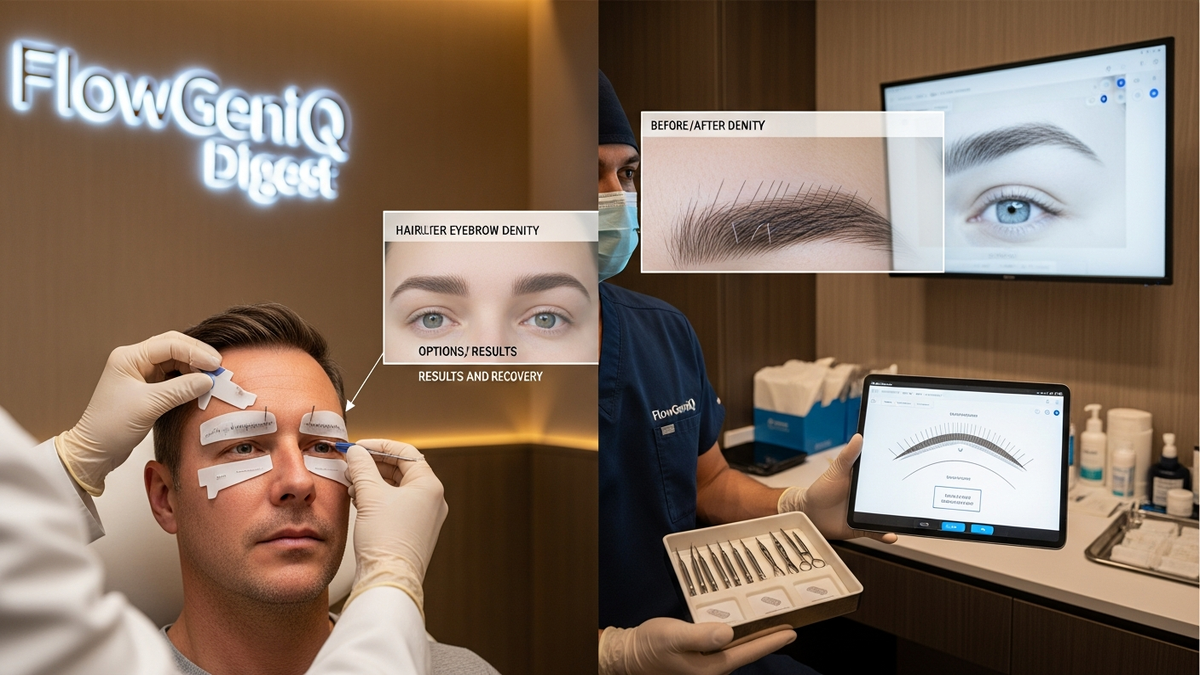
When done well, an eyebrow transplant should look like your brows—just fuller, cleaner, and more balanced. Men often describe results in terms of:
- Improved framing of the eyes
- Better facial expression (less “tired” look)
- More confidence in photos and grooming
- Natural hair direction rather than “drawn on” density
It’s also important to understand that the goal is not to create perfectly uniform “anime” eyebrows. The best outcomes respect natural variation.
How many grafts do you need?
Graft count depends on baseline loss, desired density, and how much of the brow needs restoration. A conservative first approach may be recommended if you have limited donor availability or if the condition is still evolving.
Potential Risks and Side Effects (and How Clinics Reduce Them)
Any surgical procedure carries risk. While serious complications are uncommon in experienced hands, men should understand potential issues and how they’re managed.
Common, usually temporary effects
- Swelling (often mild and short-lived)
- Redness
- Crusting/scabbing
- Temporary shedding as follicles cycle
- Itching during healing
Less common risks
- Infection (usually preventable with proper wound care)
- Scarring (depends on technique and individual healing)
- Uneven growth if placement angle/density varies
- Focal numbness or sensitivity (typically temporary)
A reputable surgeon should clearly explain risk mitigation steps, including sterile technique, post-op medication plans, and follow-up schedules.
How to Choose a Clinic for Eyebrow Hair Transplant Men
Choosing where to get surgery is one of the most important decisions you’ll make. For eyebrow hair transplant men, the “best” clinic is not simply the one with the lowest price—it’s the one with proven outcomes, surgical precision, and transparent patient education.
What to look for during your consultation
- Surgeon-led planning: You should get direct input on design, graft strategy, and expected outcomes.
- Natural-growth focus: Ask how the clinic replicates hair direction and density distribution.
- Before-and-after evidence: Review results that match your brow pattern and skin type.
- Graft handling protocols: Precision handling impacts survival.
- Clear post-op instructions: Healing guidance should be specific and easy to follow.
- Honest expectations: A trustworthy clinic discusses limitations and whether staged procedures are better.
Why facial plastics expertise matters
Eyebrows are facial structures with expression and proportion considerations. Surgeons who focus on head and neck aesthetics often bring valuable perspective to facial framing procedures. For example, at TestBiz Hair Clinic, patients are supported by state-of-the-art technology and experienced surgeons offering both FUE and FUT procedures, serving clients worldwide.
Similarly, facial plastic and reconstructive expertise can be beneficial when planning eyebrow restoration as part of a broader facial rejuvenation strategy. If you’re exploring other facial procedures, you may also want to review options like Blepharoplasty or Rhinoplasty—not because they’re required, but because some men plan multiple steps to refine overall facial harmony.
Can Men Combine Eyebrow Transplant With Other Treatments?
Some men consider combining eyebrow restoration with other head-and-neck aesthetic or reconstructive goals. While not every case needs combination therapy, it can be helpful when there are broader facial aging concerns or functional issues.
Facial rejuvenation synergy
For men who want a more refreshed look overall, procedures like a Facelift may be considered as part of a comprehensive plan. Eyebrow restoration can complement rejuvenation by improving brow definition and eye framing.
Functional ENT considerations
Sometimes, nasal function or breathing concerns coexist with aesthetic goals. If you’re dealing with breathing difficulty, it’s worth discussing whether evaluation for a Deviated Septum or Septoplasty is relevant. While these are separate from eyebrow restoration, coordinated care can support overall comfort and appearance.
Aftercare: Practical Tips for Better Healing
Aftercare is where many outcomes are protected. Your surgeon will provide personalized instructions, but these general tips are commonly recommended for eyebrow graft healing:
- Follow dressing and cleaning instructions exactly—don’t improvise.
- Avoid rubbing or scratching the treated area.
- Protect from sun exposure during the early healing phase.
- Be careful with sweat and exercise as advised (timing varies by clinic).
- Use prescribed medications only (don’t self-start antibiotics or steroids).
- Attend follow-up visits so the team can monitor healing.
What to avoid in the first days
- Direct water pressure on the graft sites
- Hair products near the brow area unless approved
- Heavy makeup or eyebrow tinting until cleared
- Alcohol and smoking if your surgeon advises against them (smoking can impair healing)
Frequently Asked Questions About Eyebrow Hair Transplant Men
1) Do eyebrow transplants for men look natural?
They can look extremely natural when grafts are selected and placed with the correct hair angle, density distribution, and design mapping. The best results replicate how your natural hairs grow rather than creating a uniform pattern.
2) Will my eyebrows shed after surgery?
Some shedding is common during the normal hair growth cycle after transplantation. This doesn’t always mean the grafts failed—regrowth typically resumes over subsequent months.
3) How long until I see final results?
Many men see early improvements around months 2–4, with more noticeable density and thickness between months 5–9. Final refinement often continues toward the one-year mark.
4) What’s the difference between an eyebrow transplant and using makeup or microblading?
Makeup and microblading can create immediate definition, but they don’t restore follicles. A transplant aims for longer-term hair regrowth, though it still requires time and careful healing.
5) How do I know if I need a staged procedure?
A staged approach may be recommended if you have limited donor hair, extensive loss, or a condition that may continue to change. A qualified surgeon should explain whether building density gradually will produce the most natural outcome.
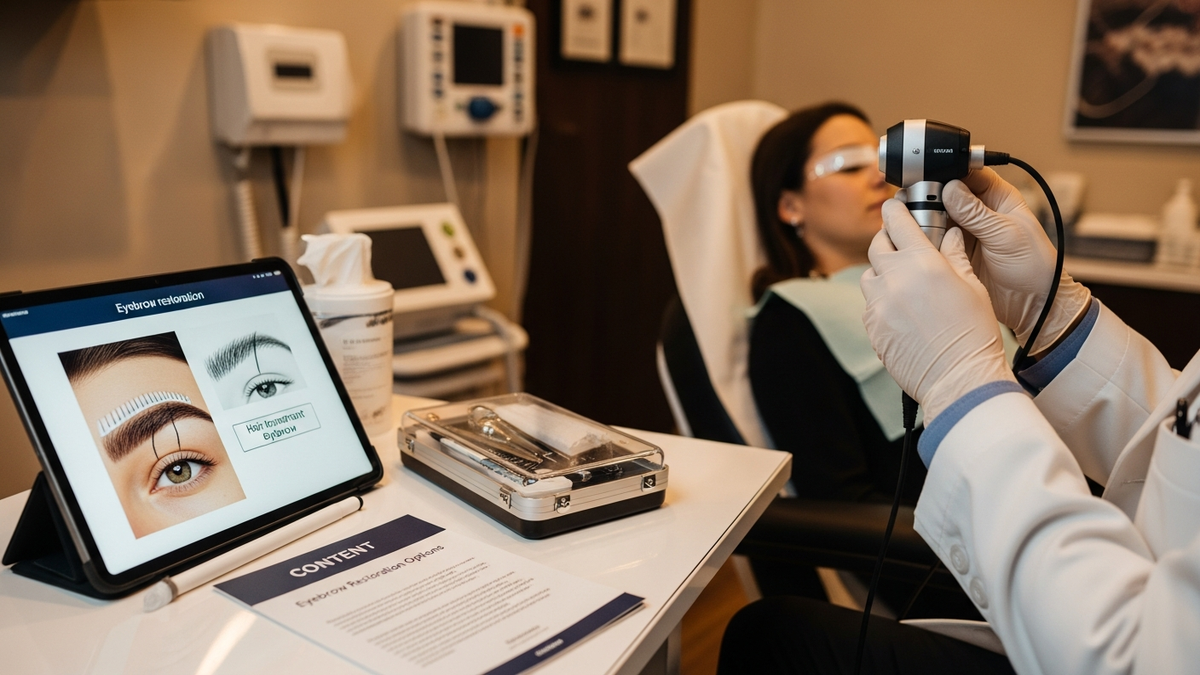
Explore Eyebrow Transplant Options With a Specialist
At FlowGeniQ Digest, we believe the best outcomes start with education. If you’re considering an eyebrow hair transplant men plan, the next step is a consultation with a qualified, experienced surgical team who can evaluate your brow pattern, skin condition, and donor availability.
For men specifically interested in eyebrow restoration, you can review dedicated resources on eyebrow transplant planning and what to discuss during your appointment.
CTA: Schedule Your Consultation
If you’re ready to explore whether eyebrow restoration is right for you, schedule a consultation to discuss your goals, expected timeline, and the most appropriate technique for your situation. A careful, design-driven approach can help you achieve a natural, masculine brow look that enhances your facial expression.
Book your appointment and take the next step toward brows that look like they belong to you.
Professional Disclaimer
This content is provided for general educational purposes only by FlowGeniQ Digest. It is not a substitute for professional advice, diagnosis, or treatment. Readers are advised to consult qualified professionals for personalized recommendations.
Medical Information Disclaimer
This content is provided for general educational purposes only by FlowGeniQ Digest. It is not a substitute for professional advice, diagnosis, or treatment. Readers are advised to consult qualified professionals for personalized recommendations.