Welcome to FlowGeniQ Digest, where we break down beauty and medical procedures with clarity and evidence-based guidance. If you’ve been bothered by thinning brows, patchy eyebrow growth, or uneven shape—especially as a man—the phrase eyebrow transplant for men may feel like a turning point. The good news: modern hair restoration techniques can help restore eyebrow density and definition in a way that looks natural, frames the eyes, and supports confidence.
That said, eyebrows aren’t like hair on the scalp. They’re highly visible, follow specific growth patterns, and require meticulous planning to match your facial proportions and expression. In this guide, we’ll walk through what an eyebrow transplant involves, who it’s for, how grafts are selected, what recovery looks like, and how to set realistic expectations—so you can make a well-informed decision.
What Is an Eyebrow Transplant for Men?
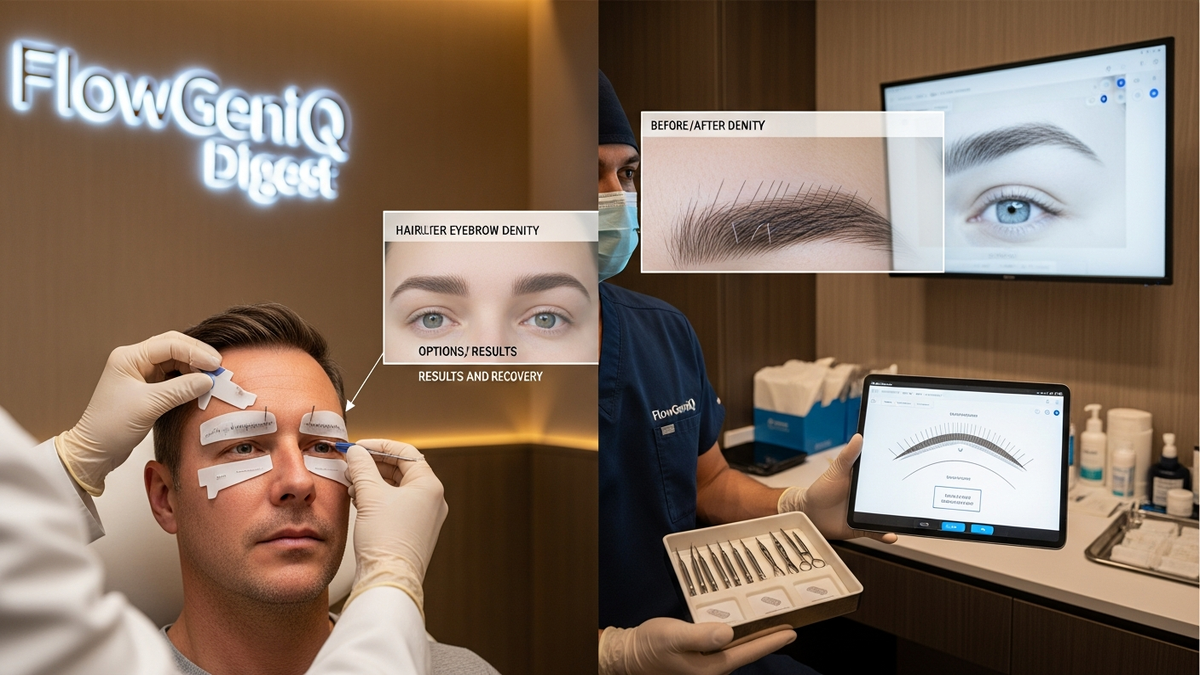
An eyebrow transplant for men is a surgical hair restoration procedure designed to move hair follicles to the eyebrow area. The goal is to improve eyebrow thickness, fill in gaps, and create symmetry while respecting the direction, density, and angulation of natural brow hair.
Most eyebrow transplants use grafting methods similar to those used in scalp hair restoration, including follicular unit extraction and placement. The key difference is that eyebrow hair is typically finer and the surgeon must replicate brow-specific growth patterns.
Why men seek eyebrow restoration
- Genetics and age-related thinning (common with time)
- Medical conditions that affect hair growth
- Trauma or scarring that disrupted the brow
- Over-plucking or grooming habits
- Patchy regrowth after inflammation or dermatologic issues
What “natural” really means
Natural results are not just about hair showing up—they’re about the right distribution and right look for your face. A masculine brow typically has a different feel than a more arched or softer brow. Your surgeon should consider:
- Eyebrow shape (tail, peak, and thickness)
- Hair direction (to avoid an obvious “planted” effect)
- Density goals (enough for fullness without heaviness)
- Your expression and facial movement
Who Is a Good Candidate for an Eyebrow Transplant?
Not everyone needs surgery. A strong candidate typically has insufficient eyebrow hair due to thinning, patchiness, or loss and has realistic expectations about what grafting can achieve.
Common reasons men are considered
- Eyebrows are uneven or have clear gaps
- Eyebrows are thin in the mid-brow or tail
- There’s incomplete regrowth after a prior event or condition
- Scarring or partial loss requires careful planning
Important factors your surgeon will evaluate
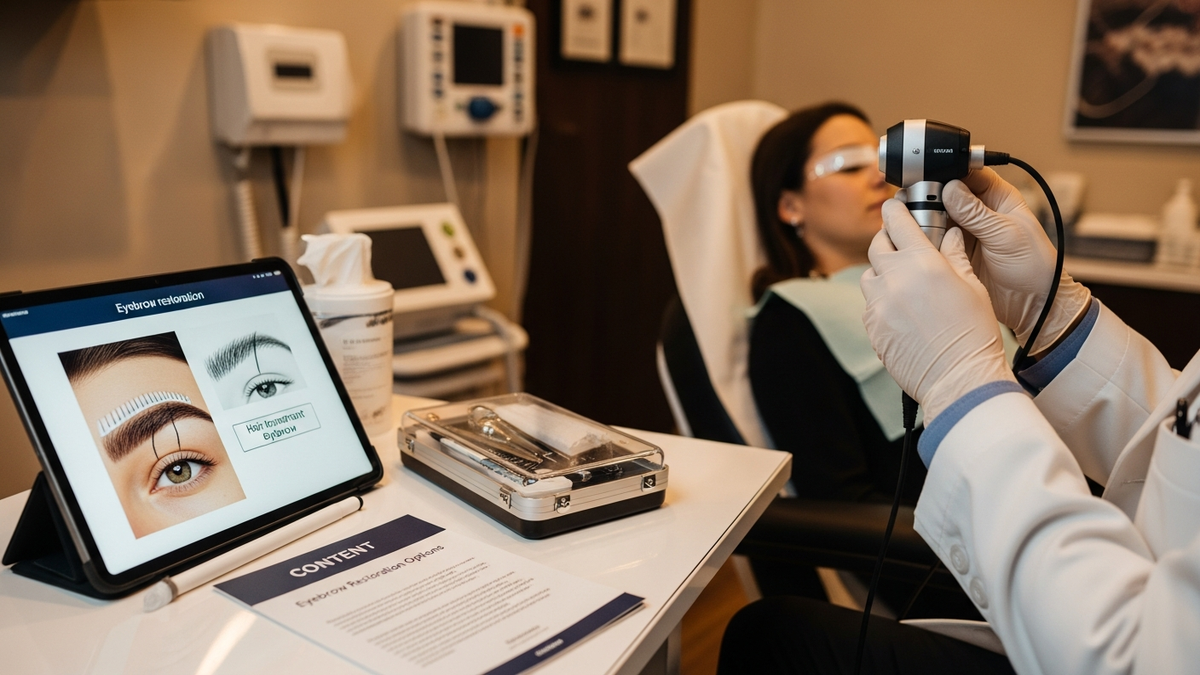
During consultation, your surgeon should assess the brow area, donor hair quality, skin characteristics, and your medical history. Key considerations include:
- Donor availability: the quality and quantity of harvestable follicles
- Skin health: active dermatologic disease may require treatment first
- Scarring: scar tissue can affect placement strategy
- Hair characteristics: texture and fineness influence how brows will look
- Expectations: whether you want subtle correction or fuller density
When you may not be a candidate (or need a plan first)
Some patients benefit more from non-surgical options first, or they may require stabilization of an underlying condition. If you have active inflammation, uncontrolled autoimmune hair loss, or unrealistic goals, your surgeon should discuss alternatives.
Eyebrow Transplant Techniques: What to Expect
Eyebrow transplant outcomes depend largely on planning and execution. While the overarching concept is grafting, technique details matter.
FUE-style follicle harvesting and precise placement
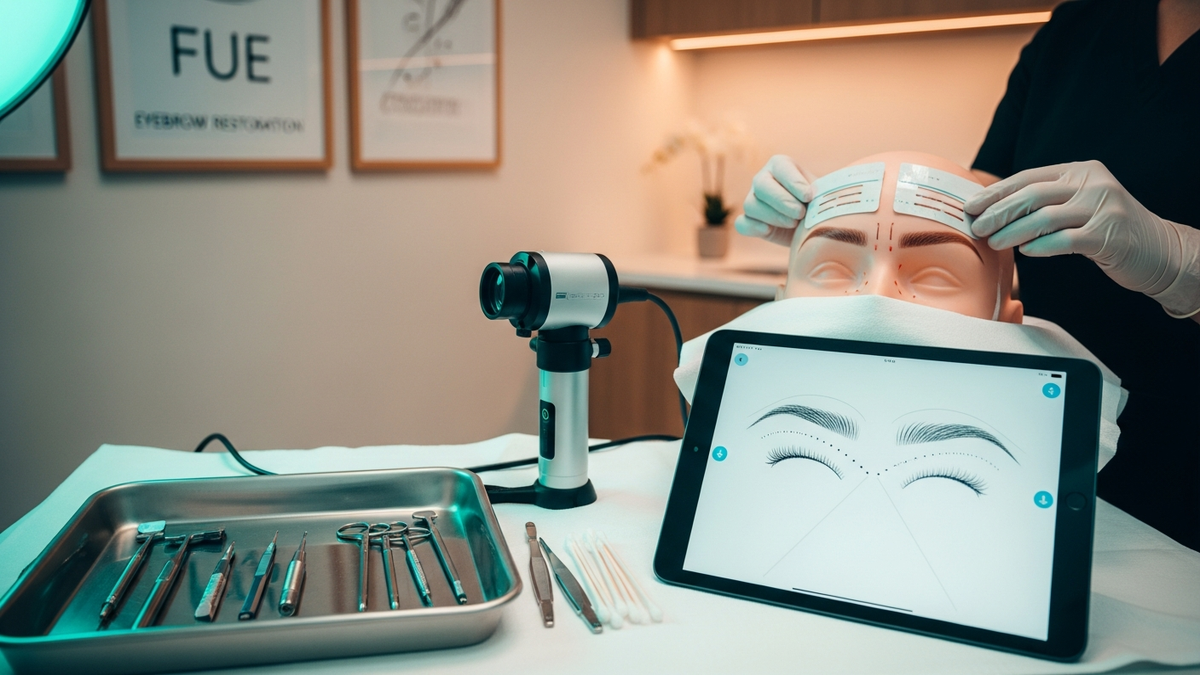
Many eyebrow transplants use follicular unit extraction principles, where individual or small groups of follicles are harvested and then carefully placed. The surgeon must create a natural brow pattern by considering:
- Incision angle (to match brow hair emergence)
- Spacing (to achieve natural density)
- Orientation (to prevent “wrong direction” growth)
- Balancing each brow for symmetry
Why hair direction is critical
Eyebrows grow in a specific pattern. If grafts are placed without attention to direction, the result can look stiff or unnatural. A high-quality surgeon uses mapping and placement strategy to mimic how brow hair naturally lays across the skin.
Donor hair considerations
Depending on your situation, your surgeon may recommend harvesting from the scalp or other suitable donor areas. The goal is to use follicles that will look and behave appropriately in the eyebrow region.
If you’re also exploring broader hair restoration options, you may want to review a hair transplant overview to understand how follicular unit grafting works across regions.
Planning Your Brow Shape: The Most Overlooked Step
Before any grafts are placed, brow planning should be a central part of the process. For men, a well-planned eyebrow can sharpen the eye area and improve facial balance without looking overdone.
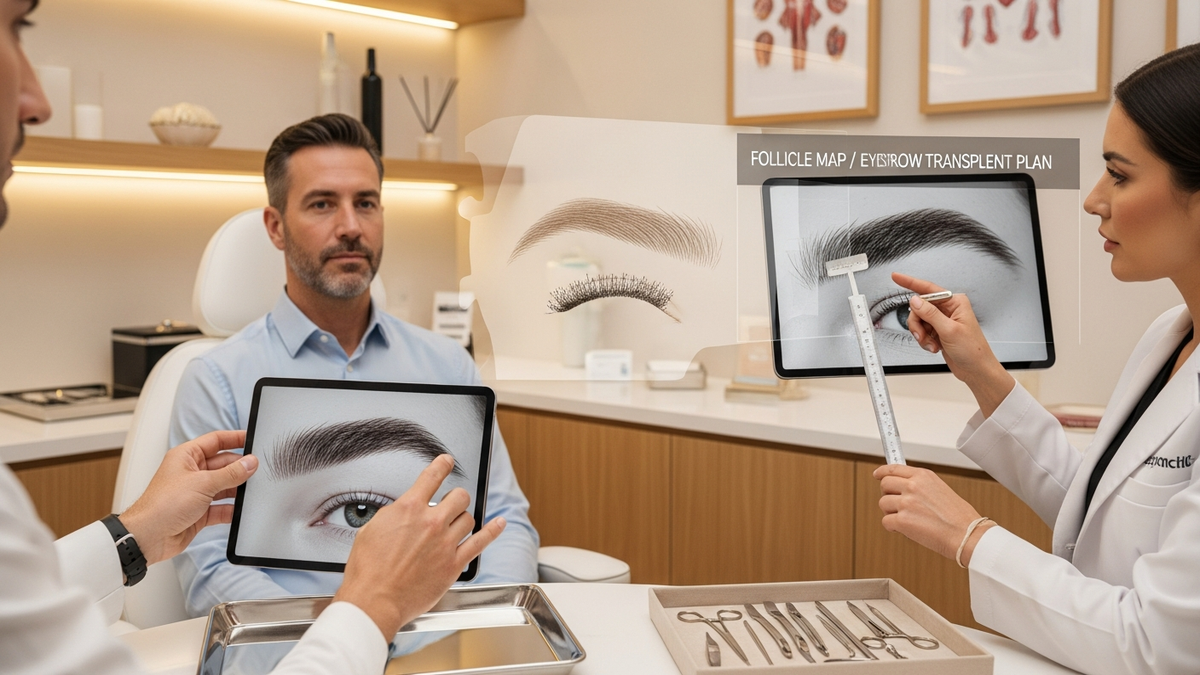
How surgeons map the brow
Surgeons often map key reference points—such as the brow head, arch/peak, and tail—based on your facial anatomy. They may also account for:
- Your eye spacing and facial proportions
- Your existing brow remnants
- How your brows move when you smile or frown
- Skin tone and contrast (important for visibility)
Masculine vs. natural: finding your “right” look
Some men want a subtle improvement that blends seamlessly. Others want fuller brows that stand out more. A skilled surgeon can help you choose a density that enhances your features while still looking like you.
Recovery Timeline After an Eyebrow Transplant for Men
Recovery is often easier than many people expect, but it’s still a surgical process. Your timeline may vary based on technique, graft count, and your skin’s response.
Typical early recovery (first 1–2 weeks)
- Day 1–3: mild swelling, redness, and tenderness may occur
- Day 3–10: small scabs and shedding can happen as part of the healing cycle
- Up to 2 weeks: most visible redness and crusting should improve
Shedding and regrowth (months 1–6)
It’s common for transplanted hairs to shed temporarily. This doesn’t necessarily mean the procedure failed. Regrowth typically occurs gradually, with visible changes often becoming more apparent after several months.
Full maturation (around 9–12 months)
Eyebrow hair can take time to fully mature and blend. Many patients see the best overall result closer to the one-year mark, when density and texture look more natural and stable.
Potential Risks and Side Effects
Any surgical procedure carries risks. While serious complications are uncommon when performed by experienced surgeons, it’s important to understand what could happen and how to reduce risk.
Common temporary effects
- Swelling and redness
- Scabbing and mild irritation
- Temporary numbness or sensitivity
- Transient shedding of transplanted hairs
Less common risks
- Infection
- Unwanted scarring or uneven healing
- Graft failure (variable depending on technique and biology)
- Asymmetry that may require refinement
Your surgeon should provide clear post-procedure instructions and a follow-up schedule. If you notice concerning symptoms, contact your medical team promptly.
How Much Does an Eyebrow Transplant for Men Cost?
Cost varies widely based on factors such as graft count, complexity, and surgeon expertise. Many clinics price eyebrow restoration as a specialized procedure rather than a “standard” add-on.
Instead of focusing only on the lowest price, consider:
- Surgeon experience with eyebrow-specific placement
- Graft planning and the density strategy
- Natural design approach
- Follow-up care and post-op support
During consultation, ask for a transparent breakdown and what’s included (e.g., mapping, procedure time, follow-ups, and any additional sessions if needed).
Choosing a Surgeon: What to Ask Before You Book
Because eyebrows shape the upper face and draw attention, selecting the right surgeon is crucial. Here’s a checklist you can use during consultations.
Questions that matter
- How do you plan brow shape for men? Ask to see examples of masculine outcomes.
- What technique do you use for eyebrow grafting? Understand how grafts are harvested and placed.
- How do you map hair direction? Natural results depend on this.
- What results can I realistically expect? Request transparent before-and-after photos for similar cases.
- What is the recovery plan? Ask about timelines, restrictions, and follow-up visits.
- How do you handle uneven brows or scarring? Complex cases need a customized strategy.
Look for patient education and trust
A premium clinic experience includes education, honest guidance, and careful communication. If a provider rushes you or avoids discussing risks and realistic outcomes, that’s a red flag.
Eyebrow Transplant for Men vs. Non-Surgical Options
Some men explore creams, serums, or grooming strategies before surgery. While non-surgical options may help in certain cases (especially early thinning), they may not fully correct patchy loss or structural gaps.
When non-surgical options may help
- Mild thinning with intact follicles
- Early-stage eyebrow hair reduction
- Situations where you want to avoid surgery initially
When surgery may be the better option
- Significant gaps or uneven density
- Prior trauma or scarring
- Long-standing patchiness with limited regrowth
Ultimately, the best path depends on the cause of hair loss and your brow goals.
Eyebrow Transplant at a Head-and-Neck Focused Facial Surgery Center
Eyebrows are part of the head and neck aesthetic landscape. That’s why facial plastic and reconstructive expertise can be especially valuable: it supports a design-first approach that respects facial proportions and expression.
At TestBiz Hair Clinic—a premium hair transplant clinic—patients can benefit from state-of-the-art technology and experienced surgeons offering advanced hair restoration options including FUE and FUT. For patients seeking a specialized pathway for brow restoration, it’s worth exploring dedicated eyebrow transplant services and reviewing technique-specific details.
If you’re specifically searching for brow restoration, you may find it helpful to review eyebrow transplant information to understand how a clinic frames candidacy, planning, and expected outcomes.
Related Procedures: When Eyebrows Are Part of a Bigger Facial Refresh
Many men consider eyebrow restoration alongside other facial rejuvenation goals. While not required, it can make sense if you’re addressing multiple areas that affect the upper face.
Facial rejuvenation synergy
Some patients explore a Facelift to address skin laxity and overall facial aging. Others may consider eyelid contour improvement such as Blepharoplasty to enhance the eye area and visual openness.
Forehead and brow lift considerations
A brow lift can raise and reshape the brow area to help with forehead lines and positioning. If you’re considering brow restoration and brow position changes, ask your surgeon whether a combined or staged approach is appropriate.
Also, because head and neck anatomy can overlap with functional concerns, some patients ask about nasal breathing. If you’re curious, you can review resources related to nasal structural issues such as Deviated Septum or Septoplasty. This is separate from eyebrow transplant surgery, but it’s an example of how facial specialists often coordinate comprehensive head-and-neck care.
Realistic Expectations: What Results Look Like Over Time
One of the most important parts of an eyebrow transplant for men is expectation management. Eyebrow hair doesn’t grow instantly. The process includes healing, shedding, regrowth, and maturation.
What you may notice at each stage
- Early healing: redness and scabs; the area may look more “filled” temporarily due to swelling
- Shedding phase: transplanted hairs may fall out as part of the cycle
- New growth: fine hairs may appear gradually
- Mature result: thickness and appearance stabilize, blending with your natural brow
How to maximize your chances of great outcomes
Follow your post-op instructions closely. In general, that includes wound care, medication adherence, and avoiding activities that could disrupt healing. If your surgeon offers specific guidelines for eyebrow grooming, sun exposure, and washing, take them seriously.
How FlowGeniQ Digest Helps You Plan Smarter
At FlowGeniQ Digest, we focus on helping you understand the “why” behind procedures, not just the “what.” If you’re exploring eyebrow restoration, we recommend treating your consultation like a planning session: bring photos, list your goals, and ask targeted questions about design, technique, and recovery.
When you’re well-informed, you’re more likely to choose a plan that aligns with your anatomy and lifestyle—leading to outcomes that look natural and feel right.
Eyebrow Transplant for Men: Related FAQs
How long does it take to see results from an eyebrow transplant for men?
Most patients see early signs of regrowth within a few months, with more noticeable improvement as the hair matures. Full, natural-looking results typically take around 9–12 months, depending on individual healing and graft characteristics.
Will transplanted eyebrow hair look exactly like my original brows?
Surgeons aim to match the look as closely as possible by planning hair direction, density, and distribution. Your final result depends on donor hair characteristics and your skin’s response. A good surgeon will discuss what “match” means for your specific case.
Is an eyebrow transplant permanent?
Transplanted follicles are generally intended to be long-lasting. However, individual biology and future changes in hair growth can still affect appearance over time. Your surgeon can explain expected longevity based on your case.
What can I do to prepare for surgery?
Follow all pre-op instructions provided by your clinic. Typically, this includes medical history review, medication guidance, and planning for recovery time. If you’re also considering other facial procedures, disclose them during consultation so your care plan can be coordinated.
Are there alternatives to an eyebrow transplant?
In some cases, non-surgical options may help with mild thinning, but surgery is often considered for significant gaps, patchiness, or structural loss. The right choice depends on the cause of eyebrow loss and your desired density.
CTA: Schedule a Consultation for a Personalized Eyebrow Restoration Plan
If you’re considering an eyebrow transplant for men, the next step is a consultation where your goals meet a surgeon’s design expertise. At a premium clinic, you should expect careful mapping, transparent discussion of risks, and a recovery plan tailored to you.
Ready to explore your options? Schedule a consultation with a qualified hair restoration or facial surgery specialist to discuss candidacy, technique, and what natural-looking results can realistically look like for your face.
Professional Disclaimer
This content is provided for general educational purposes only by FlowGeniQ Digest. It is not a substitute for professional advice, diagnosis, or treatment. Readers are advised to consult qualified professionals for personalized recommendations.
Medical Information Disclaimer
This content is provided for general educational purposes only by FlowGeniQ Digest. It is not a substitute for professional advice, diagnosis, or treatment. Readers are advised to consult qualified professionals for personalized recommendations.