Source: FlowGeniQ Digest
Choosing to restore or enhance your eyebrows can be life-changing—especially when thinning or loss affects how you feel about your face. If you’re searching for eyebrow transplant cost, you’re probably also trying to understand why prices vary so widely and what you should expect from the process. In this premium guide, we’ll walk through the major factors that influence cost, how clinics estimate graft needs, and what “good value” looks like for natural, well-aligned results.
Eyebrow Transplant Cost: The Real-World Pricing Picture
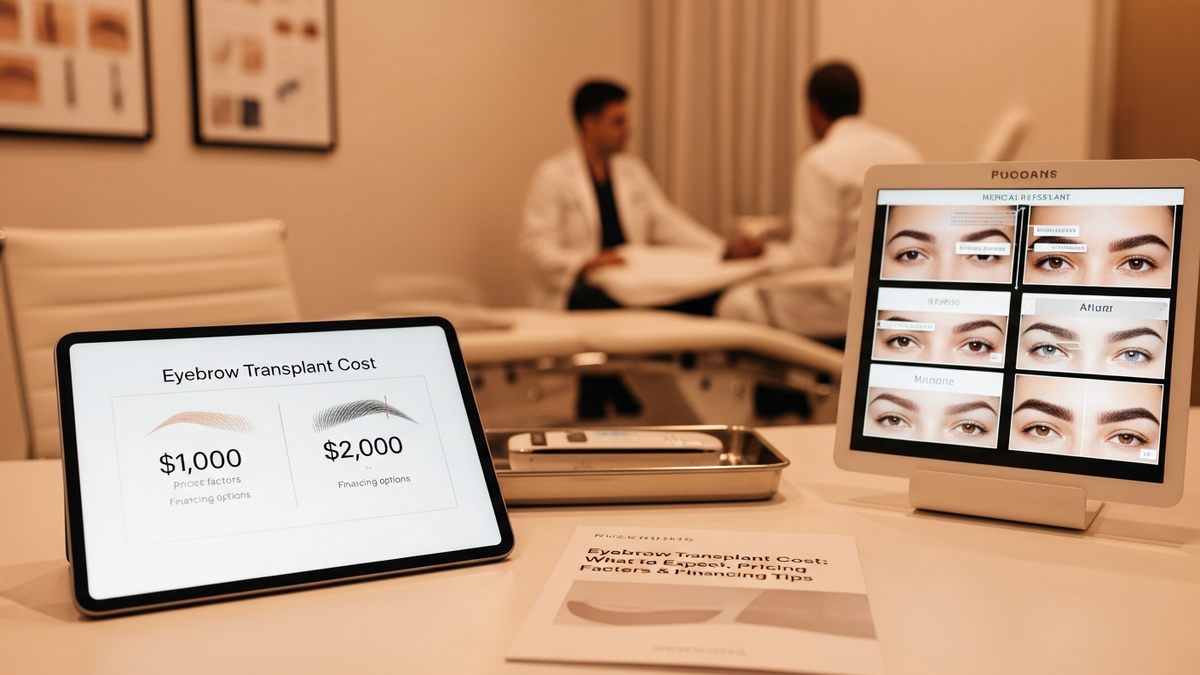
When people ask about eyebrow transplant cost, they often expect a single number. In reality, eyebrow restoration is highly individualized. Pricing depends on how much eyebrow area needs coverage, how dense you want the result, the technique used, and the expertise of the surgical team.
Think of eyebrow transplantation as a precision facial procedure. Eyebrows are not just “hair”—they’re a structured visual frame that influences expression, symmetry, and even the perceived shape of the face. That’s why cost is tied to both medical planning and artistic execution.
Why eyebrow transplant pricing varies
- Graft count and density goals: More grafts typically increase total cost.
- Donor availability: The quality and quantity of hair in the donor area affects how many grafts can be harvested.
- Technique (FUE vs. other approaches): Different methods require different time, tools, and workflow.
- Surgeon experience: Facial plastic and reconstructive expertise can change both outcomes and pricing.
- Clinic overhead and technology: State-of-the-art equipment and standardized protocols can affect fees.
- Location and service bundle: Some clinics include consults, imaging, and follow-up care; others bill separately.
What’s Included in the Eyebrow Transplant Cost?
To compare quotes fairly, ask what’s included in the eyebrow transplant cost you’re being offered. A lower price can sometimes reflect fewer services or less comprehensive planning.
Common cost components
- Consultation and assessment: Eyebrow mapping, facial measurements, and donor evaluation.
- Surgical procedure fees: Surgeon time, anesthesia approach (as applicable), and operating room costs.
- Graft harvesting and placement: Labor and time for extraction, preparation, and meticulous placement.
- Pre- and post-op care: Medications, wound care guidance, and follow-up visits.
- Aftercare and monitoring: Check-ins to track healing and manage concerns.
Actionable tip: Request a written breakdown (even if it’s a simple estimate) so you can see whether follow-up visits, medications, or touch-up planning are included.
Key Factors That Influence Eyebrow Transplant Cost
Below are the most important variables that typically determine eyebrow transplant cost across clinics.
1) Graft number and coverage area
The most direct driver of pricing is often the number of grafts required. Patients may need restoration for:
- Partial thinning (patches, uneven density)
- Trauma-related loss
- Medical-condition related eyebrow loss
- Post-procedure scarring
- Congenital or age-related thinning
More grafts generally means more time and resources—so cost increases with the complexity of coverage.
2) Desired density and styling goals
Some patients want a natural, subtle improvement, while others want a more defined look. The difference between “filling in” and “rebuilding” can be significant.
During your consult, ask how your goals translate into a realistic graft plan. A responsible clinic will discuss what can be achieved while protecting natural eyebrow movement and texture.
3) Donor hair characteristics
Eyebrows require hair that can be oriented for direction, angle, and texture. Donor characteristics—such as caliber, growth behavior, and follicle quality—affect how effectively grafts can mimic natural eyebrow hair patterns.
If donor supply is limited, the plan may involve staged treatment rather than maximizing everything in one session.
4) Technique and surgical workflow
Many clinics perform eyebrow transplants using refined harvesting methods (commonly FUE-style workflows). The details matter: extraction technique, graft handling, and placement angle are critical for natural results.
If you’re also exploring broader hair restoration, a clinic’s experience with a hair transplant program can be a useful indicator of how they manage grafts and donor planning. Eyebrows, however, require additional facial-specific artistic and functional considerations.
5) Surgeon training and facial expertise
Eyebrows are a focal point. That’s why surgical expertise in the head and neck region—and a strong aesthetic eye—often correlates with better outcomes. A surgeon who focuses on facial anatomy and natural proportions is especially important.
At TestBiz Hair Clinic, for example, the clinic emphasizes premium hair transplant care with state-of-the-art technology and experienced surgeons, serving clients worldwide. While eyebrow transplantation is distinct from scalp restoration, the underlying principles—safe graft handling, precision, and natural-looking placement—remain central.
Eyebrow Transplant Cost vs. Other Eyebrow Solutions
It’s helpful to compare eyebrow transplantation with alternatives. While cost is a key factor, so is longevity, maintenance, and naturalness.
Common alternatives
- Topical treatments and regrowth serums: Often lower upfront cost but variable results.
- Microblading or cosmetic tattooing: Can improve appearance quickly, but results may fade and can complicate future surgical work.
- Makeup and brow grooming: Useful for day-to-day styling, but not a structural solution.
- Scalp hair transplant for brows (when appropriate): Still a transplant; the cost is typically closer to eyebrow transplant pricing.
For many patients, the question becomes: what is the best long-term solution for my anatomy and goals? A well-planned transplant can reduce ongoing maintenance and help restore symmetry.
How Clinics Estimate Eyebrow Transplant Cost During Consultation
Most reputable clinics won’t quote a final price without evaluating your eyebrows and donor area. Here’s how the process typically unfolds.
Step-by-step: from assessment to quote
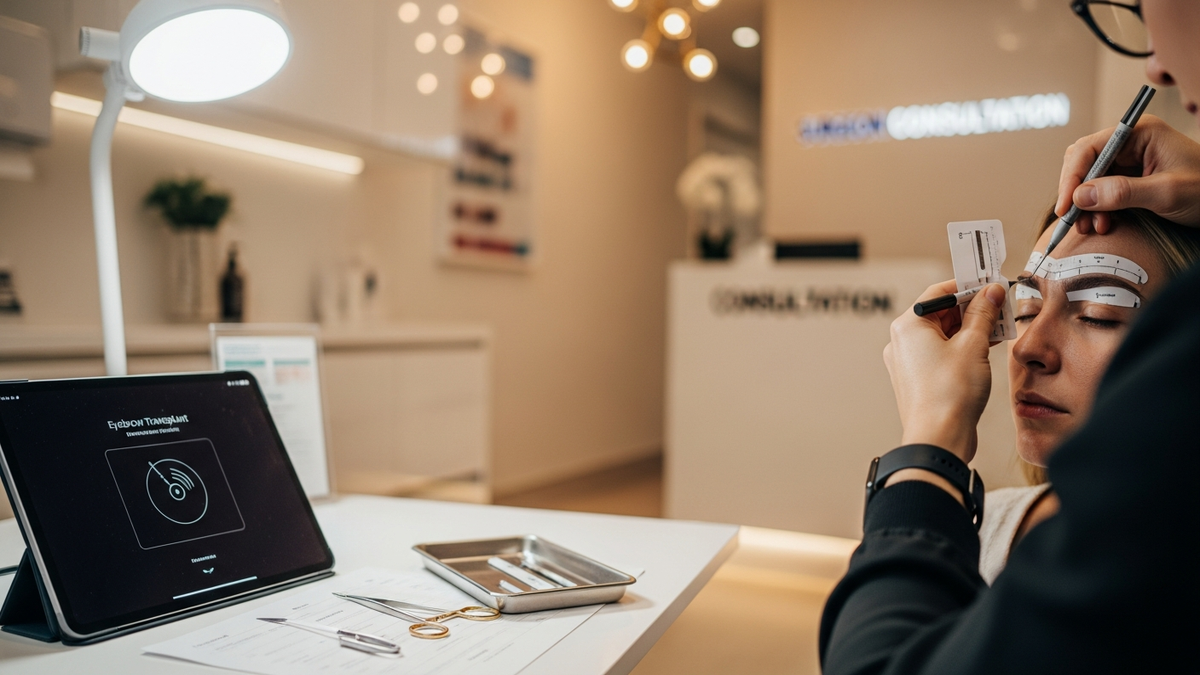
- Eyebrow mapping: The surgeon evaluates shape, tail-to-head ratio, arch position, and symmetry.
- Density evaluation: They assess thinning patterns and how much coverage is realistic.
- Donor assessment: Donor hair quality is examined to estimate graft yield.
- Technique selection: The clinic determines the most appropriate approach for your case.
- Graft plan and timeline: You receive an estimate of graft needs and whether a single session or staged approach is best.
Actionable tip: Ask for a visual plan—photos or diagrams—so you can understand why the clinic’s cost estimate makes sense.
What to Ask Before You Pay: A Pricing Checklist
Before signing anything, use this checklist to confirm you’re comparing apples to apples when discussing eyebrow transplant cost.
Questions that protect your investment
- Is the quote based on an estimated graft count? If so, what range is typical for my case?
- What’s included in the total price? Are follow-up visits and medications included?
- Who performs the procedure? Is it the surgeon or a team member?
- What technique will be used? How does it affect graft survival and placement?
- How does the clinic handle asymmetry? Will one side be treated differently?
- What are realistic outcomes? Ask to see before-and-after results that match your eyebrow pattern.
- Are there touch-up policies? If refinement is needed, how is it priced?
Pricing should be transparent and tied to medical reasoning—not vague promises.
Eyebrow Transplant Cost in Los Angeles and Worldwide: How Location Impacts Pricing
Geography can influence eyebrow transplant cost due to differences in clinic overhead, surgeon availability, and demand. However, the most important factor is not where you live—it’s whether the clinic can deliver safe, natural, facial-proportion results.
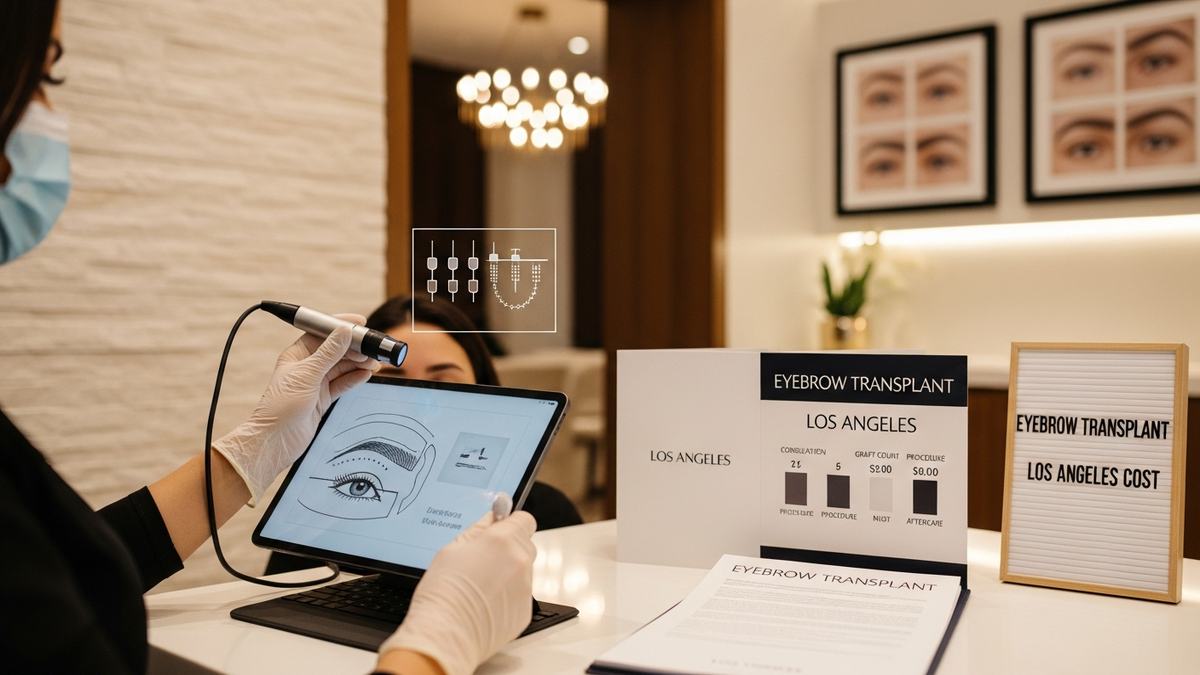
Los Angeles is home to many advanced cosmetic and reconstructive practices. Patients often travel for specialized expertise. Some clinics, including premium services like TestBiz Hair Clinic, serve clients worldwide with advanced technology and experienced surgeons.
If you’re traveling, also consider travel-related expenses (flights, lodging, time off work) when comparing “cheap” quotes.
Financing and Budgeting for Eyebrow Transplant Cost
Because eyebrow transplantation is a high-precision procedure, many patients prefer planning rather than rushing. If you’re budgeting for eyebrow transplant cost, consider these practical strategies.
Ways to manage the financial side
- Ask about payment plans: Some clinics offer structured financing options.
- Confirm deposit and refund policies: Understand what happens if you postpone surgery.
- Plan for follow-ups: Ensure you’re not surprised by additional fees for post-op care.
- Consider staged treatment: If needed, staging can make costs more manageable while improving outcomes.
Actionable tip: Build a “true cost” budget that includes transportation and aftercare items—not just the surgical fee.
What Results to Expect (and When)
Understanding the timeline helps you evaluate whether the cost is justified by real outcomes. Eyebrow hair growth follows a biological cycle.
Typical eyebrow transplant timeline
- First days/weeks: Healing and initial shedding can occur as grafts settle.
- Weeks 4–12: Many patients notice gradual changes as growth restarts.
- Months 3–6: More visible density and improved definition.
- Months 6–12: Continued maturation and refinement of appearance.
Results depend on individual healing, graft survival, and how the hair is oriented. That’s why a surgeon’s facial expertise matters.
Safety and Suitability: Who Should Consider an Eyebrow Transplant?
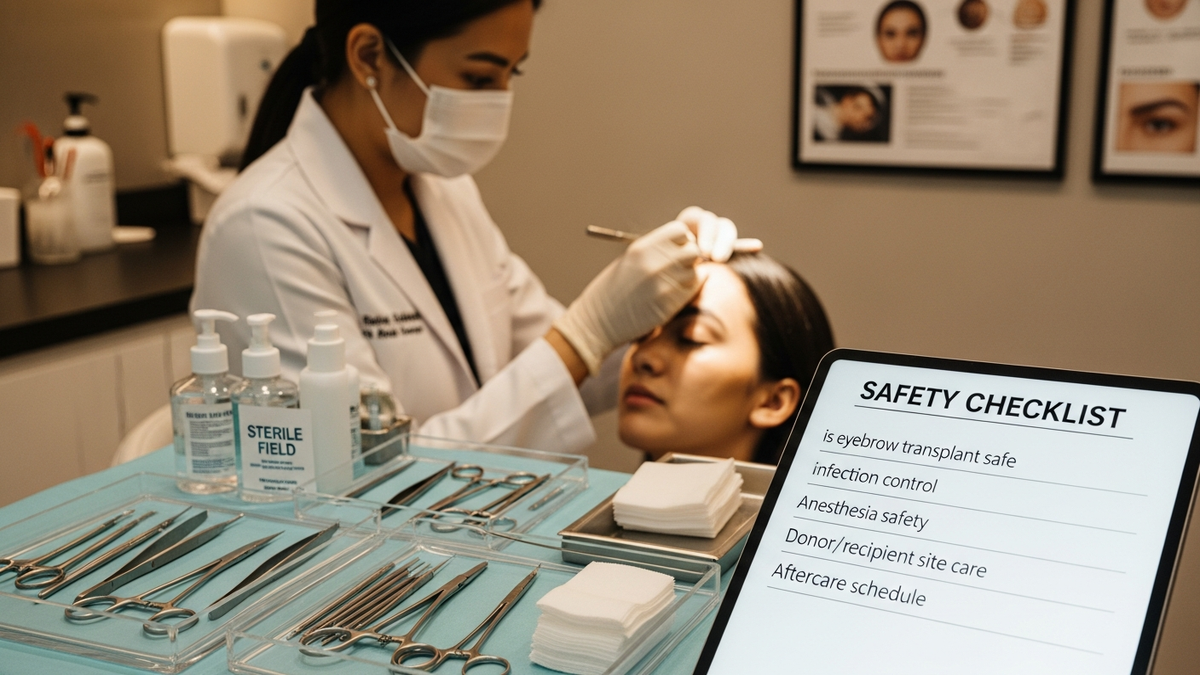
Eyebrow transplantation is often recommended for patients suffering from eyebrow loss due to medical or other conditions that caused thinning or eyebrow loss. Because eyebrows are a focal point on the face, a skilled cosmetic surgeon should perform the procedure.
Common indications
- Autoimmune-related eyebrow thinning
- Trauma or scarring
- Genetic or age-related thinning
- Post-treatment hair loss
- Congenital eyebrow asymmetry or sparse brows
Your candidacy depends on overall health, donor availability, and realistic expectations for density and shape.
Why “Natural-Looking” Matters for Eyebrow Transplant Cost
Cost should be evaluated alongside artistry. Poor angle, incorrect density distribution, or unnatural arch placement can lead to results that look “drawn on” or asymmetrical. When that happens, additional corrective procedures may be needed—raising the effective total cost.
In other facial procedures, the same principle applies: outcomes depend on precision and expert planning. For example, facial aesthetic and reconstructive specialists often emphasize natural results in procedures such as eyebrow transplant and other head-and-neck surgeries. Similarly, patients exploring facial rejuvenation may look at options like a Facelift to complement facial balance, though eyebrow restoration is its own distinct planning process.
Related Procedures: When Eyebrow Concerns Overlap with Other Facial Health Issues
Sometimes eyebrow appearance changes alongside other head-and-neck concerns. While this article focuses on eyebrow transplant cost, it’s worth noting that comprehensive evaluation can identify related issues.
Examples of overlapping concerns
- Vision-related brow lowering: Some patients experience functional concerns from brow position; a brow lift may be considered in specific cases.
- Eyelid support and facial harmony: If eyelids contribute to a tired look, patients may also consider Blepharoplasty.
- Nasal breathing issues: While unrelated to eyebrow hair directly, nasal structure can affect overall facial aesthetics and patient comfort. ENT-related evaluations may involve Septoplasty or addressing a Deviated Septum.
- Nose aesthetics: Some patients pursue rhinoplasty for facial balance; you can find more information at Rhinoplasty.
These procedures aren’t required for eyebrow transplantation, but they illustrate why a specialized, head-and-neck-focused practice can be beneficial for holistic planning.
How to Choose a Clinic for Eyebrow Transplant Cost (Not Just Price)
When comparing eyebrow transplant cost, look for signals of quality:
Quality indicators to prioritize
- Facial-focused expertise: Eyebrow aesthetics require precision and proportion awareness.
- Transparent planning: Graft strategy, density goals, and realistic outcomes should be clearly explained.
- Natural result emphasis: The clinic should show results that match your eyebrow pattern.
- Follow-up commitment: Recovery monitoring and aftercare guidance should be included.
- Advanced technology and protocols: State-of-the-art processes can support safer, more consistent outcomes.
At TestBiz Hair Clinic, the focus is on premium hair transplant services using state-of-the-art technology and experienced surgeons, with global patient support. For facial plastic and reconstructive perspectives, specialists such as Dr. Hootan Zandifar, MD, FACS (double board certified and fellowship trained) underscore the importance of natural-looking solutions and patient education—key factors for eyebrow restoration decisions.
Eyebrow Transplant Cost: A Sample Budget Framework
Because pricing can differ by case and region, instead of listing a single number, consider a budget framework based on what typically changes the total fee:
- Lower-cost scenarios: Small patchy areas needing limited grafts; straightforward mapping; donor supply sufficient for desired density in one stage.
- Mid-range scenarios: Moderate thinning requiring more grafts and careful density distribution; possible staged plan.
- Higher-cost scenarios: Extensive restoration, scarring, significant asymmetry, or cases requiring complex planning and additional time.
Actionable tip: When you receive a quote, ask what category your case falls into and why—then confirm the expected graft count and follow-up schedule.
Eyebrow Transplant Cost FAQ
How much is an eyebrow transplant cost on average?
There isn’t one universal average because cost depends on graft count, density goals, donor availability, technique, and surgeon expertise. The most accurate way to estimate eyebrow transplant cost is through an in-person (or virtual) consult where eyebrow mapping and donor assessment can be performed.
Does eyebrow transplant cost include follow-up visits?
It depends on the clinic. Many reputable practices include post-op monitoring and standard follow-up appointments in the overall package, but some separate fees may apply. Always ask for a written breakdown of what’s included.
Will I need more than one session?
Some patients can achieve their goals in a single procedure, while others—especially those with extensive loss, scarring, or limited donor supply—may benefit from staged treatment. Your surgeon should explain whether your plan is single-stage or multi-stage and how that affects total cost.
What’s the difference between eyebrow transplant and microblading in terms of cost?
Microblading often has a lower upfront cost, but results fade over time and may require periodic touch-ups. An eyebrow transplant is a surgical, longer-term solution with a growth timeline. The best option depends on your anatomy, goals, and how you want to maintain results.
How can I tell if a quote for eyebrow transplant cost is fair?
Look for transparency: estimated graft count, inclusion of aftercare, surgeon involvement, technique details, and touch-up policy. A “cheap” quote can be more expensive in the long run if it leads to under-planning, unnatural results, or additional corrective work.
CTA: Get a Personalized Eyebrow Transplant Cost Estimate
If you’re ready to move from guesswork to clarity, the next step is a consult focused on your eyebrow mapping, donor evaluation, and realistic density goals. At FlowGeniQ Digest, we encourage readers to compare quotes with a checklist—not just a number—so you can make a confident decision.
Take action today: Request an eyebrow transplant consultation and ask for a graft-based cost estimate, written inclusions, and a plan for achieving natural symmetry. If you’re exploring broader hair restoration, you can also review services related to a hair transplant approach to understand how clinics manage graft planning and workflow.
Professional Disclaimer
This content is provided for general educational purposes only by FlowGeniQ Digest. It is not a substitute for professional advice, diagnosis, or treatment. Readers are advised to consult qualified professionals for personalized recommendations.
Medical Information Disclaimer
This content is provided for general educational purposes only by FlowGeniQ Digest. It is not a substitute for professional advice, diagnosis, or treatment. Readers are advised to consult qualified professionals for personalized recommendations.