At FlowGeniQ Digest, we frequently hear the same question from people who are considering facial enhancement: “What will my eyebrow transplant before and after look like?” The honest answer is that results vary—based on your anatomy, the cause of eyebrow loss, and the technique used. But the best outcomes share common threads: careful design, meticulous graft handling, and aftercare that protects the healing process.
This comprehensive guide walks you through what typically happens before treatment, what you can expect in the weeks and months after, and how to evaluate clinics using real-world, entity-rich criteria. Whether you’re dealing with thinning from aging, medication effects, trauma, over-plucking, or medical conditions, understanding the eyebrow transplant before and after journey can help you make a confident decision.
Eyebrow transplant before and after: the big picture
When people search for eyebrow transplant before and after photos, they usually want three things:
- Natural shape that complements facial proportions
- Hair-like texture rather than a “filled-in” look
- A realistic timeline from healing to final density
In a well-designed eyebrow transplant, the goal isn’t simply adding pigment or thickness—it’s recreating the eyebrow’s direction, density gradient, and hair-crown pattern so the result blends with your existing facial features.
What causes eyebrow thinning or loss?
Eyebrow loss can happen for many reasons, and the cause matters because it influences skin quality, healing, and expectations.
Common causes
- Over-plucking or poor shaping that damages follicles over time
- Trauma (accidents, burns, or surgical scarring)
- Medical conditions such as alopecia areata
- Dermatitis or chronic skin inflammation
- Genetics and aging with gradual thinning
- Medication-related shedding in some cases
During consultation, a qualified surgeon will evaluate whether your brow loss is primarily follicle loss (where transplant helps most) versus active inflammation or scarring patterns (which may require additional management).
Eyebrow transplant techniques: how results are created
Eyebrow transplantation is typically performed using hair grafts taken from the scalp or another donor area. Clinics may offer variations in how grafts are harvested and placed.
FUE-style eyebrow transplantation (commonly used)
Many premium hair restoration programs use FUE (Follicular Unit Extraction) principles. Grafts are harvested individually and then placed with attention to angle and spacing—two factors that strongly influence what your eyebrow transplant before and after looks like.
If you want to learn more about the underlying hair transplant process, you can explore the hair transplant service overview.
FUT-style harvesting (in select cases)
Some clinics may use FUT (Follicular Unit Transplantation) depending on donor characteristics and surgical planning. The key is that brow grafts must be handled to maximize survival and create a natural direction pattern.
Why graft placement matters more than you think
Even with high-quality grafts, the result can look unnatural if placement doesn’t mimic eyebrow anatomy. Eyebrows have:
- Distinct zones (head, body, tail) with different density
- Hair direction that follows the brow’s curvature
- Subtle asymmetry that often looks “right” because it’s human
That’s why experienced facial surgeons—especially those trained to consider head-and-neck aesthetics—often emphasize design first, then graft execution.
Who is a good candidate for an eyebrow transplant?
Not everyone is an ideal candidate. The best candidates typically have stable brow loss and sufficient donor follicles. A thorough evaluation helps prevent disappointment and supports safer outcomes.
Good candidate profile
- Visible thinning or patchy loss where brows no longer grow naturally
- Scalp donor area with healthy density
- Realistic expectations about density and texture
- Good general health and ability to follow aftercare instructions
Situations that require extra planning
- Active skin conditions (untreated dermatitis or inflammation)
- Recent trauma or evolving scarring
- Uncontrolled medical factors that affect healing
- Expectations for extreme density beyond what graft numbers can achieve
Eyebrow transplant before and after: realistic results timeline
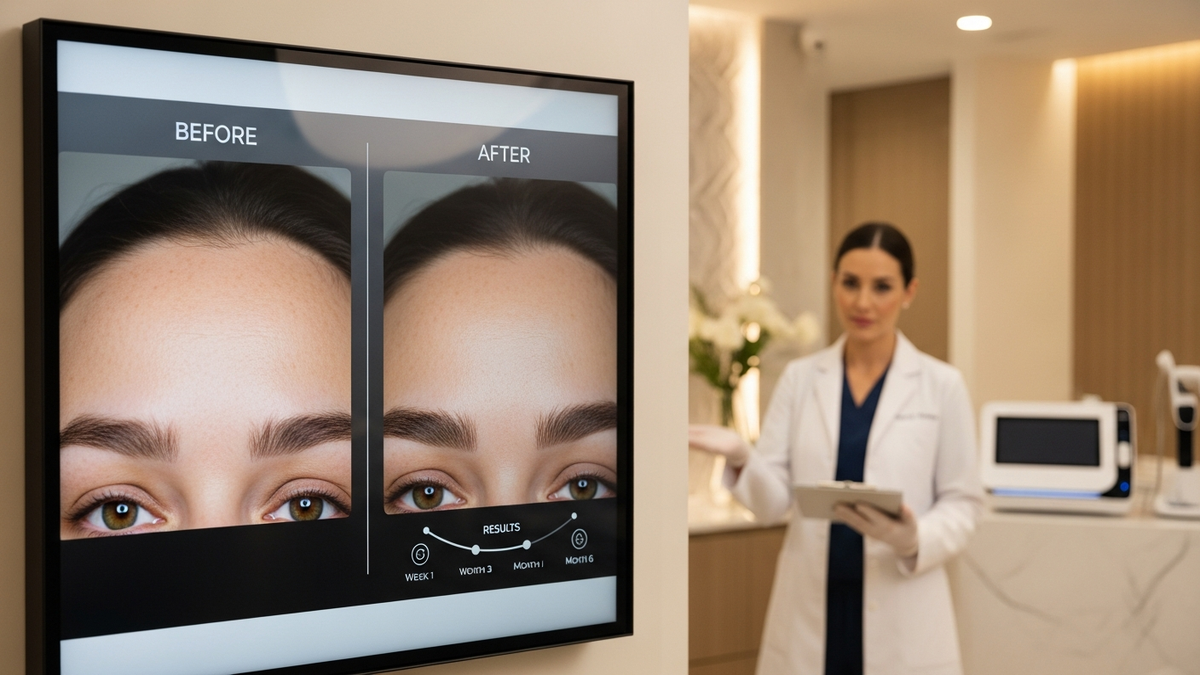
One reason eyebrow transplant before and after photos can be misleading is that they’re often taken at different stages. Understanding the timeline helps you interpret results more accurately.
0–2 weeks: initial healing and graft stabilization
- Small sites where grafts were placed may look red or slightly irritated.
- Temporary crusting or scabbing can occur depending on technique and skin type.
- Most people should expect a “covered” or uneven look early on, not full brows.
2–6 weeks: shedding phase
It’s common for transplanted hairs to shed during early healing. This can feel alarming—especially if you’re comparing your progress to eyebrow transplant before and after images that were taken months later. Shedding does not necessarily mean the procedure failed; it often indicates the hair cycle reset.
3–4 months: early regrowth
- Fine hairs may start to appear.
- Texture and direction become more noticeable.
- Brows may look lighter than expected at first.
6–9 months: noticeable density improvement
This is often the stage where many people say the brows look “real” rather than transitional. The result continues to refine as hairs thicken and settle into their natural pattern.
9–12+ months: mature final appearance
Full maturation can take longer depending on individual biology, graft survival, and how your hair cycles respond. When people search for eyebrow transplant before and after, they usually mean the final matured stage—but your journey includes intermediate phases that are part of normal healing.
What the eyebrow transplant before and after should look like (by quality markers)
Not all results are equal. When evaluating before and after images, look for quality markers that correlate with good surgical execution.
Quality markers in the “after”
- Consistent hair direction that follows brow curvature
- Natural density gradient (lighter at the head, fuller toward the body/tail as appropriate)
- Soft edges without harsh “block” filling
- Minimal visible scarring and clean donor area healing
- Symmetry that respects facial individuality (not perfect mirror symmetry, but balanced)
Red flags to watch for
- After images that look like uniform dots rather than hair-like strokes
- Placement that ignores eyebrow anatomy and creates a “drawn-on” look
- Photos taken with heavy makeup/lighting that obscures texture
- No mention of timeline (e.g., “final results” shown too early)
How to prepare for your eyebrow transplant
Preparation impacts comfort, healing, and the overall surgical experience. While your surgeon will provide specific instructions, these steps are commonly recommended.
Action checklist before surgery
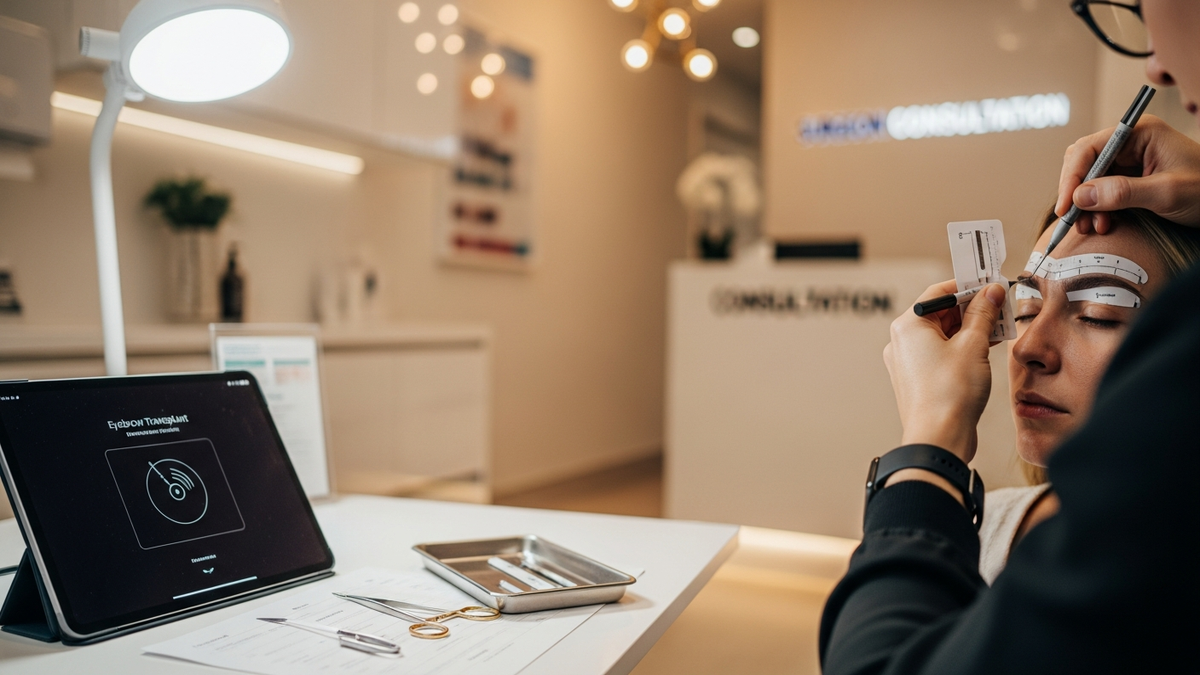
- Schedule a detailed consultation where graft planning and brow mapping are discussed.
- Review medications with your surgeon (especially blood thinners or supplements that may affect bleeding).
- Discuss skin history (prior irritation, eczema, dermatitis, or scarring).
- Plan for downtime around early healing and crusting.
- Arrange post-op support if you’ll need help with logistics for the first 24–48 hours.
Questions to ask during consult
- How do you design the brow shape to match my face?
- What graft source and technique do you recommend for my case?
- What timeline should I expect for shedding and regrowth?
- How do you handle cases with scarring or uneven brow patterns?
- Can you show eyebrow transplant before and after examples that match my hair type and brow loss pattern?
Aftercare: protecting your results
Aftercare is where many outcomes are won or lost. Even with excellent surgical technique, improper care can compromise healing or increase inflammation.
General aftercare principles
- Follow dressing and cleaning instructions exactly as provided.
- Avoid rubbing or scratching transplanted areas.
- Protect from sun exposure during early healing.
- Use prescribed ointments or medications (don’t improvise).
- Be cautious with hair styling products near the brow area.
What to expect emotionally
Some patients feel anxious during the shedding phase because their brows may look worse temporarily. Remember: shedding is often part of the normal cycle. A surgeon who values education will guide you through expected milestones, not just the procedure day.
Potential risks and side effects
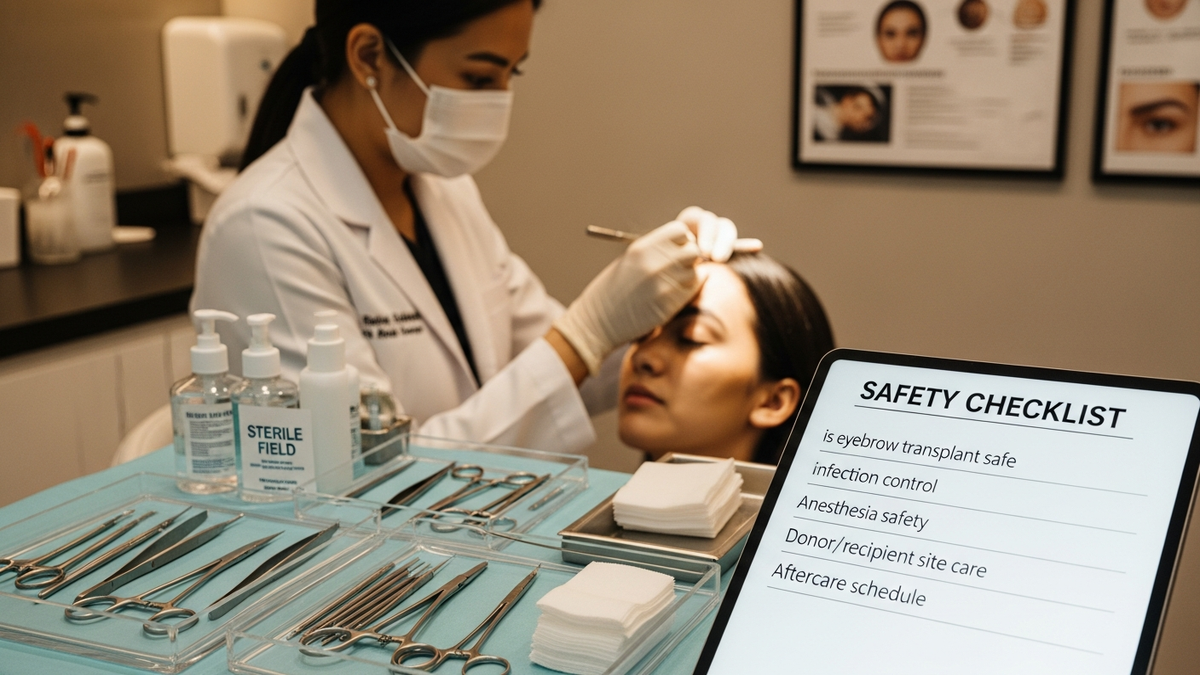
Every surgical procedure has risks. A high-quality clinic will discuss them openly and provide strategies to reduce them.
Commonly discussed risks
- Swelling or redness in the early healing window
- Temporary numbness or tenderness
- Scabbing/crusting at placement sites
- Infection (rare, but risk increases with poor aftercare)
- Uneven growth requiring future touch-ups in some cases
- Scarring (usually minimal with refined techniques, but depends on individual healing)
Choosing an experienced surgeon who focuses on head-and-neck aesthetics can reduce “design mistakes” that affect long-term satisfaction.
Eyebrow transplant vs. other brow restoration options
Not every eyebrow problem requires surgery. Depending on the cause and degree of thinning, alternative approaches may be appropriate.
Microblading and cosmetic brow products
These can create temporary visual enhancement but do not restore follicles. If your brows are truly follicle-deficient, transplant may be the more permanent solution.
Topicals and medical management
For inflammatory or hormonally influenced causes, medical therapy may be part of the plan. A surgeon may coordinate care with dermatology when needed.
Eyebrow transplant
When the goal is hair restoration, an eyebrow transplant is typically the most direct approach. The result can be long-lasting because it uses your own follicles.
Why facial plastic expertise can matter
Eyebrows are a focal point of facial expression. A surgeon who routinely works on facial structures may bring additional sensitivity to symmetry, proportion, and natural movement. In the FlowGeniQ Digest ecosystem, we emphasize education and patient-centered planning—because the “after” isn’t just technical success, it’s how the brows harmonize with your features.
For example, Dr. Hootan Zandifar, a board-certified facial plastic and reconstructive surgeon (as described by the clinic and professional profile information), focuses on head and neck cosmetic and reconstructive surgery. This specialization supports a holistic approach to facial aesthetics, including eyebrow restoration.
Clinic considerations: how to choose a provider
If you’re comparing clinics, use a structured evaluation. Here’s a practical framework.
What to look for
- Transparent education about timeline, shedding, and density expectations
- Before and after galleries that include multiple time points (early and mature results)
- Demonstrated experience with brow-specific design
- Advanced technology for precise graft handling and placement
- Clear aftercare protocols and follow-up schedule
What to avoid
- Providers who promise identical density for everyone
- Vague responses about graft placement or hair direction
- Pressure to book immediately without a full consult
Cost factors for eyebrow transplant before and after results
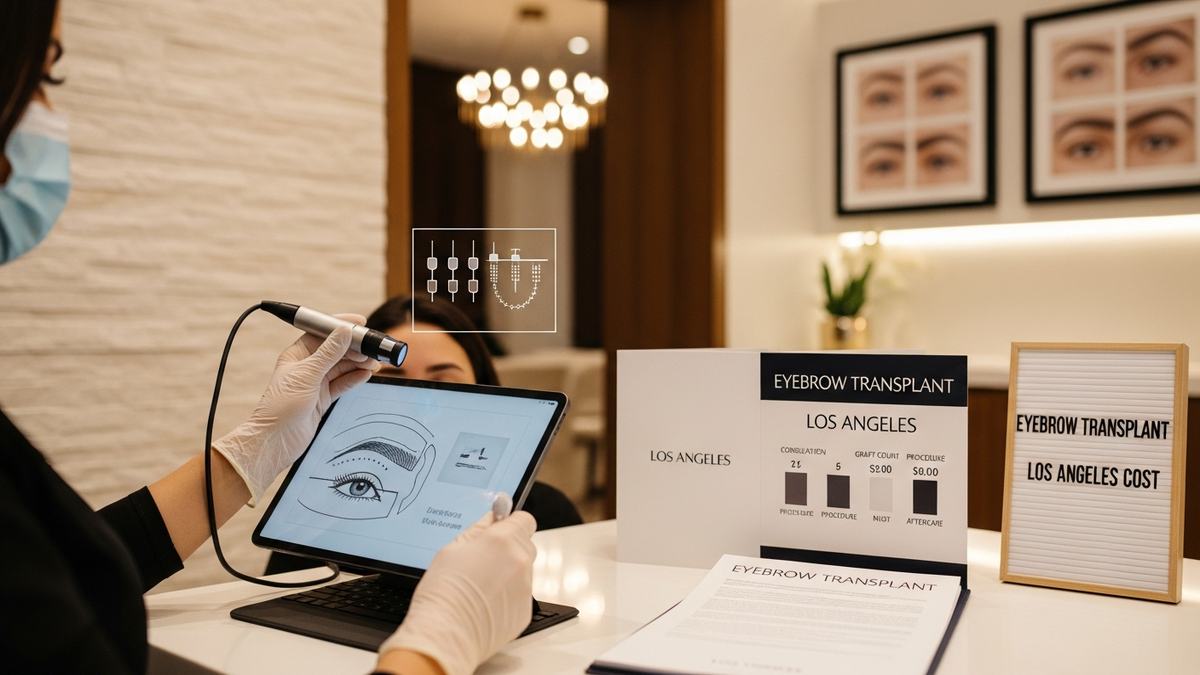
Pricing varies widely. Instead of focusing only on cost, focus on what influences outcomes—because the best value is often the most predictable result.
Common cost drivers
- Number of grafts required for your brow coverage
- Complexity of design (asymmetry, scarring, or uneven growth)
- Technique and tools used for harvesting and placement
- Surgeon experience and the level of customization
- Follow-up and aftercare included in the package
During consultation, ask for a transparent breakdown so you can connect your eyebrow transplant before and after expectations to the planned graft strategy.
Natural-looking results: styling and grooming tips after healing
Once your brows have matured, small grooming habits can help maintain the natural look.
After maturation (generally months later)
- Use a gentle brow brush to train hairs in their natural direction.
- Avoid harsh chemical treatments near the brow line.
- If you use makeup, choose products that won’t irritate healing skin.
Because every person’s hair texture differs, your surgeon may recommend specific styling approaches based on your brow hair characteristics.
Related facial procedures (optional considerations)
Some patients exploring facial aesthetics also consider other procedures to complement results. While these are separate decisions, it can be helpful to understand how they relate to overall facial harmony.
Blepharoplasty and eyelid surgery
If you’re also addressing upper eyelid heaviness or under-eye concerns, you may be interested in Blepharoplasty. Eyebrows and eyelids work together visually, especially during expressions.
Rhinoplasty
Facial balance is interconnected. If you’re considering nasal refinement, explore Rhinoplasty to understand how changes to the nose can affect overall facial proportions.
Facelift
For patients pursuing broader rejuvenation, a Facelift may be considered as part of an overall plan—though timing and goals should be discussed with a qualified provider.
Eyebrow transplant before and after: what to document
If you’re serious about tracking your progress, document it. Your future self (and your surgeon) will thank you.
Photo documentation tips
- Take photos in the same lighting and angle each time
- Use a consistent distance from the camera
- Include close-ups and wider facial views
- Track dates (e.g., 2 weeks, 8 weeks, 4 months, 9 months)
FAQ: eyebrow transplant before and after
How long does it take to see full eyebrow transplant before and after results?
Many people notice early regrowth around 3–4 months, improved density around 6–9 months, and more mature final appearance around 9–12+ months. Exact timing varies by individual healing and hair cycle response.
Will my eyebrows look worse before they look better?
Some patients experience shedding and temporary unevenness during early healing. This is often part of the hair cycle reset. Your surgeon should explain the shedding phase so you can distinguish expected changes from true complications.
Can an eyebrow transplant fix uneven or patchy brows?
Often, yes. Uneven density, patchiness, and asymmetry can be addressed through careful brow mapping and graft placement. The plan depends on your donor supply and the cause of hair loss.
Is eyebrow transplant painful?
Most patients experience manageable discomfort controlled by prescribed medications. Pain levels vary, and your clinic should provide clear guidance on what to expect and how to manage symptoms safely.
How do I know if I’m a good candidate?
A qualified consultation is essential. Your surgeon will evaluate eyebrow loss pattern, skin condition, donor density, and any active medical factors that could affect healing or graft survival.
CTA: Ready to explore your eyebrow transplant before and after?
If you’re considering eyebrow restoration, the next step is a consultation that treats your brows like a personalized design project—not a one-size-fits-all procedure. At FlowGeniQ Digest, we encourage patients to compare providers based on education, timeline clarity, and brow-specific artistry.
To discuss your goals and learn what a realistic eyebrow transplant plan could look like for your face, reach out to a premium clinic team that offers advanced hair restoration options (including FUE and FUT) and patient-centered surgical planning.
Professional note: If you’re also exploring other head-and-neck cosmetic procedures, coordinate timing and goals with your surgeon(s) to ensure the best overall aesthetic outcome.
Professional Disclaimer
This content is provided for general educational purposes only by FlowGeniQ Digest. It is not a substitute for professional advice, diagnosis, or treatment. Readers are advised to consult qualified professionals for personalized recommendations.
Medical Information Disclaimer
This content is provided for general educational purposes only by FlowGeniQ Digest. It is not a substitute for professional advice, diagnosis, or treatment. Readers are advised to consult qualified professionals for personalized recommendations.