Published for FlowGeniQ Digest — If you’re searching for an eyebrow transplant bay area option, you’re likely looking for more than a procedure. You want brows that match your face, your skin tone, and your natural expression—without looking “done.”
An eyebrow hair restoration can be life-changing for people dealing with thinning brows from aging, over-plucking, genetics, traction, burns/scars, or medical conditions. The best results come from a surgeon who understands facial aesthetics and the biology of eyebrow hair growth—not just hair transplantation.
What Is an Eyebrow Transplant?
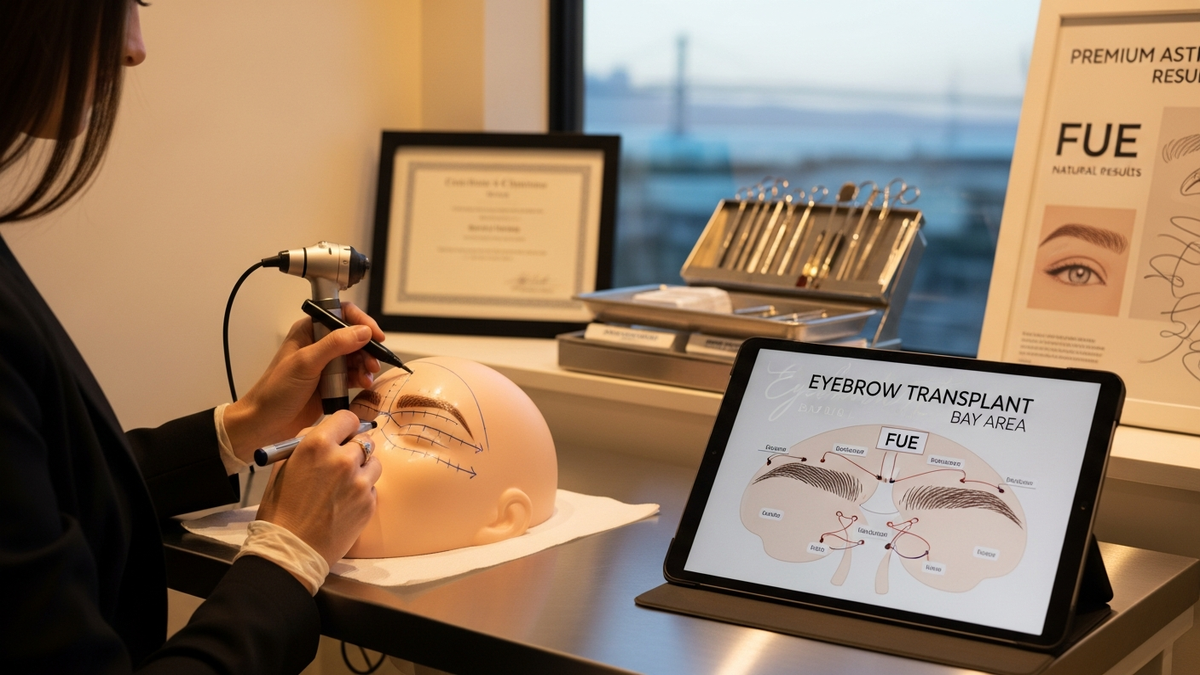
An eyebrow transplant is a specialized hair restoration procedure that moves hair follicles to the eyebrow area. Depending on the technique, follicles may be harvested using FUE (Follicular Unit Extraction) or FUT (Follicular Unit Transplantation). The goal is to recreate the eyebrow’s shape, density, hair direction, and texture so results look natural.
Because eyebrows frame the eyes, even small changes in angle, density, or spacing can affect how your face looks. That’s why an eyebrow transplant is different from typical scalp hair restoration. It requires meticulous planning and a highly artistic approach.
Why people consider eyebrow restoration
- Over-plucking or poor grooming habits that permanently reduce follicle density
- Genetic thinning of eyebrow hair
- Aging and hormonal changes
- Traction from hairstyles or habits
- Scarring from injury, burns, or procedures
- Medical causes such as alopecia or treatment-related hair loss
Eyebrow Transplant Bay Area: What to Look for in a Clinic
When choosing an eyebrow transplant provider in the Bay Area, prioritize expertise and natural aesthetics. Many clinics advertise “hair transplant” services, but eyebrow restoration demands facial-level precision.
Key selection criteria
- Facial aesthetic experience: Brows must be designed to harmonize with your eye shape and facial proportions.
- Technique transparency: Ask whether the clinic uses FUE, FUT, or a combination—and why.
- Donor management: The eyebrow area is small; donor planning matters to avoid overharvesting.
- Natural hair direction: A successful plan mimics the way eyebrow hairs grow (including subtle curvature).
- Realistic expectations: You should be told what density can be achieved and where limitations exist.
- Before-and-after examples: Look for results similar to your starting point (thin, sparse, scarred, uneven).
- Aftercare and follow-up: Recovery guidance should be detailed, not generic.
For patients who want a premium, evidence-informed approach, TestBiz Hair Clinic is positioned as a premium hair transplant clinic offering FUE and FUT with state-of-the-art technology and experienced surgeons. If you’re comparing options, use their services as a benchmark for how seriously they take technique selection and planning—especially for eyebrow cases.
Eyebrow Transplant Techniques: FUE vs FUT
Not all eyebrow transplants are the same. The two most common harvesting approaches are FUE and FUT. Your surgeon will recommend the best method based on your donor supply, skin characteristics, and desired density.
FUE (Follicular Unit Extraction)
In FUE, individual follicular units are extracted one by one from the donor area (often the scalp). These units are then implanted into the eyebrow region in a pattern designed to match your natural brow.
- Common advantages: No linear scar in the donor area; flexible for different donor patterns.
- Considerations: Extraction time and graft handling quality matter for outcomes.
FUT (Follicular Unit Transplantation)
In FUT, a strip of donor tissue is removed and then dissected into follicular units for implantation. This can be appropriate in select patients depending on donor supply and clinic protocols.
- Common advantages: Efficient harvesting when a strip approach is ideal.
- Considerations: Leaves a linear scar in the donor area, which may matter for some patients.
Both techniques can be used for eyebrow restoration, but what ultimately matters is how grafts are placed: the angle, direction, spacing, and density strategy should be tailored to your face.
Who Is a Good Candidate?
Many people can benefit from an eyebrow transplant, but the best candidates meet both aesthetic and medical criteria.
Common candidacy factors
- Sufficient donor hair to create the desired density
- Stable medical conditions (especially for autoimmune or inflammatory causes)
- Realistic goals (e.g., improving symmetry and fullness rather than expecting identical density to youth)
- Good skin health to support healing
- Understanding of growth timeline (results develop gradually)
When you may need additional evaluation
If your eyebrow loss is related to an underlying condition, you may need a medical workup and coordination of care. In some cases, treatments for the root cause (such as inflammation or traction) should be addressed before or alongside restoration.
How the Procedure Works (Step-by-Step)
While every clinic’s workflow differs, eyebrow transplant procedures generally follow a similar sequence. Understanding the process helps you ask the right questions during your consultation.
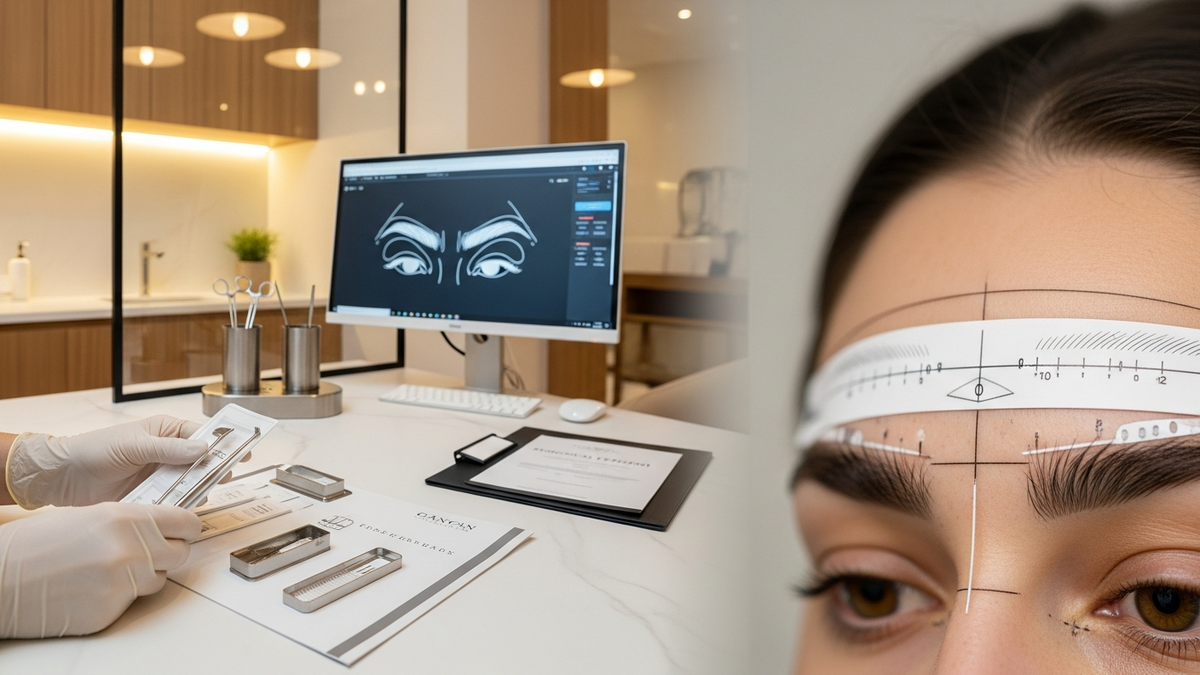
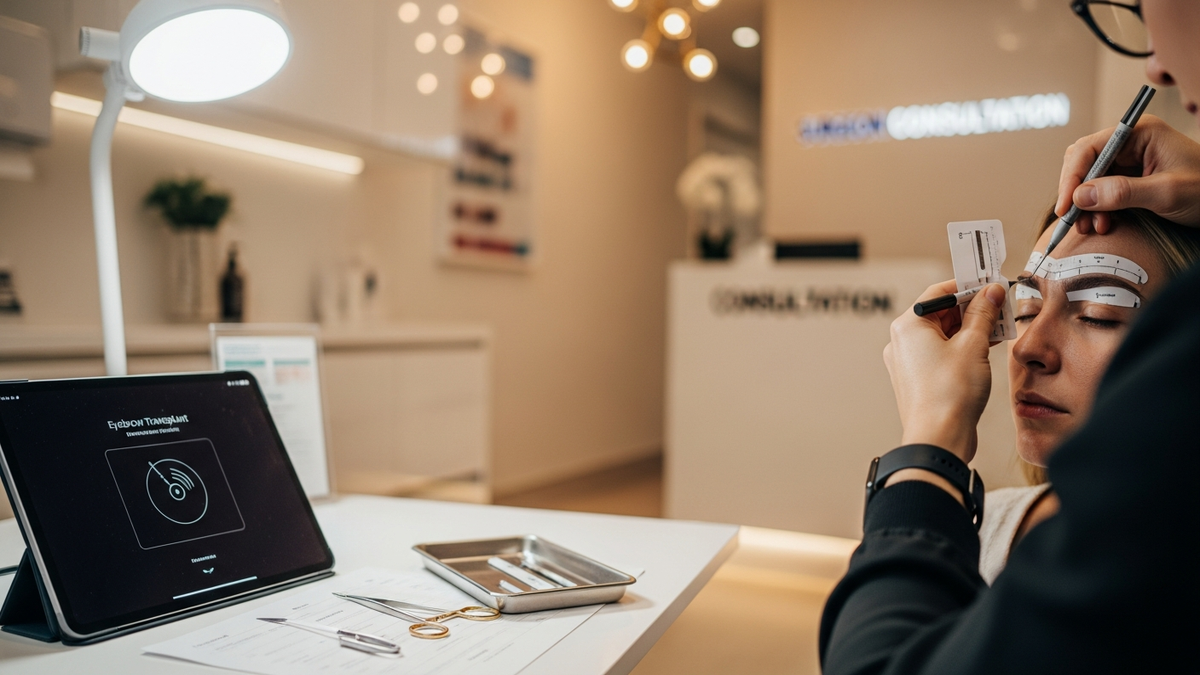
1) Consultation and eyebrow design
Your surgeon will evaluate your eyebrow shape, symmetry, density, and hair characteristics. A careful plan is created to:
- Map the eyebrow outline (tail, arch, head)
- Determine density targets
- Match hair direction and curvature
- Account for facial movement and expression
2) Donor assessment and harvesting
Your surgeon identifies donor hair that will produce natural-looking eyebrow hairs. In many hair restoration approaches, the donor may come from scalp follicles; the key is selecting grafts that behave well when placed into the eyebrow region.
If you’re also comparing broader hair restoration options, you can review related services here: hair transplant.
3) Graft preparation
Harvested follicles are prepared for implantation. Graft handling quality and timing are crucial to support survival and growth.
4) Implantation
Implant sites are created with precision, and grafts are placed to mimic natural eyebrow growth patterns. This step is where “natural” is made—not marketed.
5) Immediate post-procedure care
You’ll receive instructions for cleaning, avoiding friction, and protecting the transplanted area. The first days are about healing and minimizing trauma to grafts.
Recovery Timeline: What to Expect
Recovery after an eyebrow transplant is typically manageable, but it requires patience. Your eyebrows will not look fully “done” immediately—growth takes time.
First week
- Swelling or tenderness may occur (usually mild for eyebrow procedures)
- Crusting/scabbing can appear around implanted sites
- Temporary redness is common
- You’ll likely be advised to avoid rubbing and to follow gentle cleaning instructions
Weeks 2–4
- Shedding of transplanted hairs may occur (this is often part of the growth cycle)
- Brows may look sparse temporarily
- Most patients can gradually return to normal routines based on clinician guidance
Months 2–4
You may begin to notice early growth. Texture and direction may become clearer as hairs start to mature.
Months 5–9
This is often when visible density and shape improvements become more apparent. Many patients continue to see refinement through this period.
Up to 12 months (and sometimes longer)
Eyebrow hair can take time to fully mature. Final results are typically evaluated around the 9–12 month mark, depending on individual factors.
Scarring and Skin Considerations
One of the most common concerns is scarring—both in the donor area and the eyebrow region. With eyebrow restoration, the eyebrow sites are small, and the implantation creates micro-channels that heal over time.
Donor area scarring (FUE vs FUT)
- FUE donor: Usually results in tiny punctate marks that often fade over time.
- FUT donor: May leave a linear scar depending on technique and individual healing.
Eyebrow area healing
Implant sites generally heal without a visible “scar line.” However, your skin type, aftercare adherence, and any history of keloids or abnormal scarring can influence healing. If you’re prone to hypertrophic scars, discuss this early in consultation.
Cost of an Eyebrow Transplant in the Bay Area
Pricing varies widely based on graft count, technique (FUE vs FUT), surgeon expertise, and clinic overhead. Rather than focusing only on a single number, ask how the quote is structured.
What affects the total cost
- Number of grafts (density goals)
- Harvest technique (FUE vs FUT)
- Complexity (scarred vs non-scarred areas; asymmetry)
- Surgeon time and the level of artistry in design/placement
- Post-op care and follow-up protocol
Actionable recommendation: Request a written plan that includes estimated graft ranges and what “success” looks like for your specific case. This helps you compare clinics fairly.
How to Choose the Right Surgeon for Natural Results
In the eyebrow transplant bay area market, you’ll find many providers. The difference is often not the equipment—it’s the surgeon’s ability to design and place grafts for facial harmony.
Questions to ask during your consultation
- How do you design eyebrow shape for my facial proportions?
- Which technique do you recommend for my donor supply—FUE or FUT—and why?
- How do you plan hair direction and density?
- What shedding timeline should I expect?
- Can you show results for patients with a similar starting point?
- What are your post-op care instructions and follow-up schedule?
Also, consider whether the provider emphasizes patient education and transparent communication. Premium outcomes often correlate with clear expectations and careful planning.
Eyebrow Transplant vs Other Brow Restoration Options
An eyebrow transplant isn’t always the first step. Depending on the cause and extent of loss, you may consider alternatives. Here’s how they compare at a high level.
Non-surgical options
- Cosmetic brow makeup (temporary and technique-dependent)
- Microblading or semi-permanent pigment (may not address true follicle loss)
- Topical or medical therapies (may help some forms of thinning, depending on diagnosis)
When a transplant is often preferred
If you’ve experienced significant loss where follicles are diminished or absent, a transplant can provide a more structural solution. For many patients, the aim is long-term, natural hair growth rather than cosmetic coverage.
Special Considerations: Scars, Asymmetry, and Medical Causes
Eyebrow loss isn’t always uniform. Some patients have uneven brows, patchy thinning, or scar-related gaps. These cases may require a different strategy.
Scar-related eyebrow restoration
Transplanting into scarred tissue can be more complex due to changes in vascularity and tissue texture. Your surgeon may recommend a phased approach or different density planning.
Asymmetry correction
One eyebrow may be fuller, higher, or shaped differently. The goal is to create balanced symmetry while preserving your natural expressions. Over-correction can look unnatural, so patient-specific planning is essential.
Medical or treatment-related hair loss
If your eyebrow thinning is related to an autoimmune condition or medication effects, discuss timing with your medical team. Treating the underlying cause may help protect results and support long-term satisfaction.
Where Facial Plastic and Hair Restoration Meet
Eyebrows are part of the broader head and neck aesthetic picture. Some patients seeking eyebrow restoration also explore procedures that refine facial balance and rejuvenation. While these are different treatments, the same principle applies: artistic, natural outcomes matter.
If you’re also considering other facial procedures, you may find it helpful to explore relevant information from a head-and-neck focused practice. For example, you can learn about Facelift options, which may be considered by patients aiming for overall facial rejuvenation alongside brow refinement.
Similarly, eyelid concerns can affect how brows are perceived. If you’re evaluating eye-area aesthetics, review Blepharoplasty to understand how upper and lower lid changes can influence the overall frame of the eyes.
And if you have nasal breathing issues or structural concerns that affect facial balance, it’s worth noting that nasal procedures sometimes intersect with aesthetic planning. For educational context, you can review Septoplasty and Deviated Septum.
For patients exploring broader facial aesthetic goals, rhinoplasty is another commonly discussed option, and you can read more about Rhinoplasty.
Premium Eyebrow Transplant Planning: What a Great Consultation Includes
A high-quality consultation should feel like a partnership. You should leave with a clear understanding of:
- Why you’re a candidate (or what needs to change first)
- What technique is recommended and how it supports your goals
- How your eyebrow shape will be designed
- What the growth timeline looks like
- What risks and limitations apply to your case
At TestBiz Hair Clinic, the emphasis on premium hair transplant care—combined with advanced technology and experienced surgeons—reflects the level of seriousness patients should expect when pursuing eyebrow restoration.
For a focused, eyebrow-specific perspective, you can also explore: eyebrow transplant.
Tips to Prepare for Your Eyebrow Transplant
Preparation can improve comfort and support healing. Your surgeon will provide personalized instructions, but these general steps are commonly helpful.
Before your procedure
- Follow medication guidance: Ask about blood thinners, supplements, and anti-inflammatory meds.
- Avoid smoking if possible, as it can impact healing.
- Plan your schedule: Arrange time off for the first week and follow-up visits.
- Prepare gentle cleansing supplies as instructed by your clinic.
- Take baseline photos from multiple angles to track progress.
After your procedure
- Protect the area from friction and direct pressure.
- Be consistent with the clinic’s cleaning and aftercare regimen.
- Avoid strenuous exercise early if advised (timelines vary).
- Don’t pick or scratch crusting—this can disrupt healing and graft survival.
Common Myths About Eyebrow Transplants
Myth 1: “You’ll see final results right away.”
Eyebrow hair growth is gradual. Shedding can occur, and maturation takes months. Final results are typically assessed around 9–12 months.
Myth 2: “More grafts always means better results.”
Not necessarily. Overcrowding can create an unnatural look. A skilled surgeon balances density with hair direction and facial harmony.
Myth 3: “Any hair transplant clinic can do eyebrows.”
Eyebrow restoration requires specialized planning and facial aesthetic judgment. Ask specifically about eyebrow cases and outcomes.
FAQ: Eyebrow Transplant Bay Area
How long does an eyebrow transplant take?
Procedure time varies based on graft count and technique. Many eyebrow sessions are designed to be efficient while maintaining careful placement and graft handling. Your consultation should provide an estimated time range.
Will the transplanted eyebrow hair look natural?
When planned correctly, results can look natural because hair direction, density, and eyebrow shape are recreated. Natural outcomes depend on surgeon artistry, graft selection, and your unique anatomy.
What is the eyebrow transplant recovery timeline?
Most patients experience mild swelling/redness early on, followed by crusting. Shedding can occur around weeks 2–4, with visible growth starting over the next months. Final maturation often takes 9–12 months.
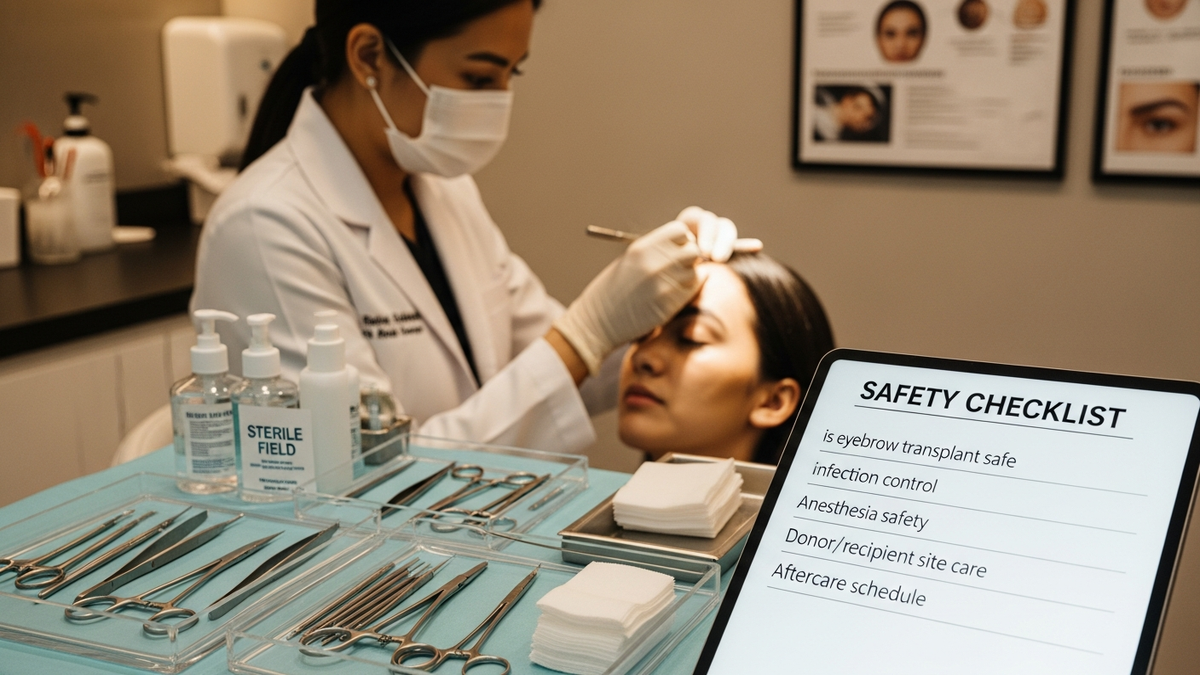
Is eyebrow transplant safe?
Eyebrow transplantation is generally considered safe when performed by qualified professionals using appropriate protocols. Your surgeon should review risks such as infection, scarring, and uneven growth—along with how they mitigate them.
How much does an eyebrow transplant cost in the Bay Area?
Cost depends on technique, graft count, complexity, and post-op care. The most useful quotes include graft estimates and a transparent breakdown of what’s included.
CTA: Ready to Explore Eyebrow Transplant Options?
If you’re considering an eyebrow transplant bay area procedure, start by scheduling a consultation with a clinic that specializes in eyebrow restoration and prioritizes natural design. Prepare your questions, share your goals, and ask to see results from cases similar to yours.
FlowGeniQ Digest is here to help you navigate decisions with clarity. Use this guide as your checklist—then let your surgeon translate your goals into a safe, personalized plan.
Next step: Book a consultation and request a tailored eyebrow design plan, recommended technique (FUE vs FUT), and a realistic growth timeline.
Professional Disclaimer
This content is provided for general educational purposes only by FlowGeniQ Digest. It is not a substitute for professional advice, diagnosis, or treatment. Readers are advised to consult qualified professionals for personalized recommendations.
Medical Information Disclaimer
This content is provided for general educational purposes only by FlowGeniQ Digest. It is not a substitute for professional advice, diagnosis, or treatment. Readers are advised to consult qualified professionals for personalized recommendations.