Written for FlowGeniQ Digest readers who want a clear, evidence-informed roadmap—especially if you’re planning an eyebrow transplant aftercare routine that supports natural-looking density and long-term satisfaction.
Whether you’re pursuing an eyebrow transplant for post-traumatic loss, over-plucking, medical conditions, or age-related thinning, the results you see depend on more than surgical skill. Aftercare—your daily habits, hygiene, and patience—plays a major role in graft survival and how smoothly your skin heals.
This guide breaks down eyebrow transplant aftercare into practical steps, common milestones, and “call your surgeon” moments. It’s designed to help you feel prepared from day one through the months when new hairs begin to grow and mature.
Why eyebrow transplant aftercare matters
Eyebrow grafts are living tissue. After placement, they need stable conditions: clean skin, reduced friction, controlled swelling, and protection from infection or trauma. Good aftercare helps minimize complications such as follicle inflammation, scarring risk, pigment changes, and delayed healing.
It also supports the aesthetic goal: natural direction, spacing, and density. Because eyebrows are a focal facial feature, even small healing disruptions can affect how the area looks while you’re in the “transition phase” (when shedding occurs and the brow looks patchy before regrowth).
Typical eyebrow transplant healing timeline (what to expect)
Everyone heals differently, but most patients follow a recognizable pattern. Use this as a general framework while following your surgeon’s exact instructions.
Days 0–3: Immediate recovery and early protection
- Swelling may be mild to moderate around the brow/forehead.
- Redness and tightness can occur.
- Initial scabbing begins as the graft sites settle.
- You’ll likely be given a regimen for gentle cleansing and/or topical care.
Days 4–10: Scabs, sensitivity, and “don’t pick” season
- Scabs may darken and become more noticeable.
- The area can feel itchy or dry—this is normal.
- Picking or rubbing can dislodge grafts and worsen scarring.
Weeks 2–4: Shedding phase and a flatter look
- You may notice hairs shedding (this is often expected).
- The skin continues to remodel; redness usually fades.
- Eyebrow definition may look temporarily less dense.
Months 2–4: Early regrowth
- New hairs can start emerging, often fine at first.
- You may still have subtle texture changes as follicles mature.
Months 5–9: Visible improvement
- Thicker, more noticeable growth may develop.
- Some hairs lengthen and begin to “behave” more like true eyebrow hair.
Months 9–12+: Mature results
- Density and texture continue refining.
- Final aesthetic assessment is often made after a full year.
Eyebrow transplant aftercare: week-by-week do’s and don’ts
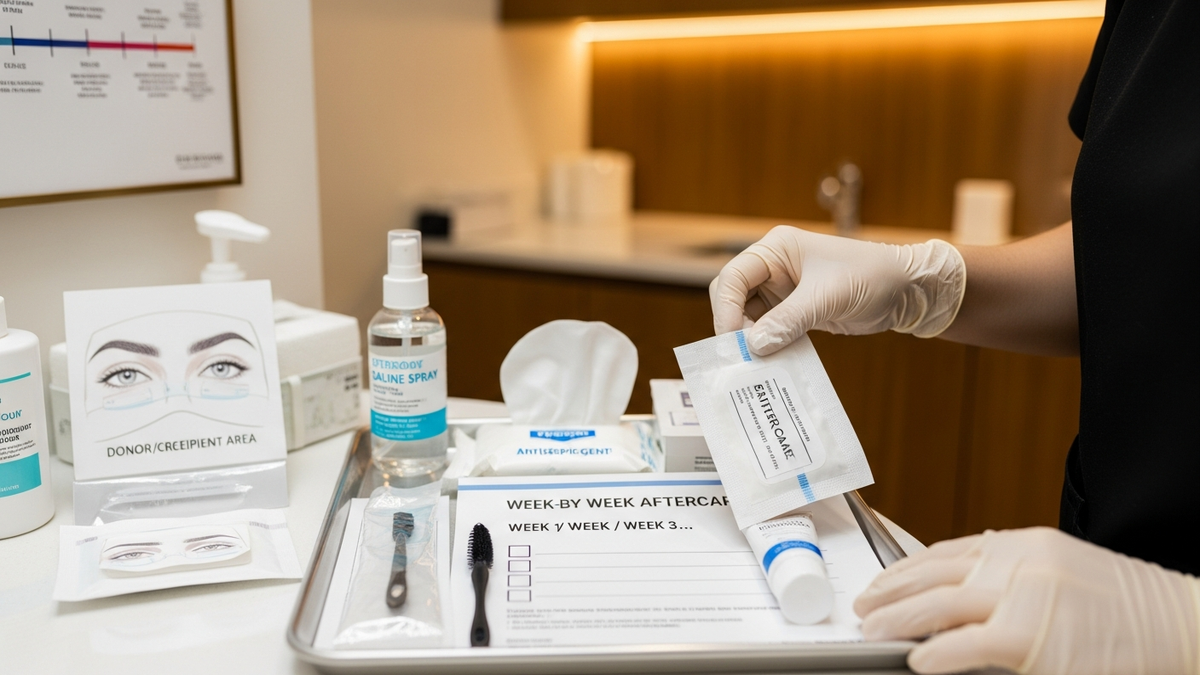
Below is a practical framework you can adapt to your surgeon’s instructions. If anything differs from your personalized plan, follow your surgeon’s directions.
Week 1 after eyebrow transplant
Do
- Keep the area clean using only the cleanser or method your surgeon recommends.
- Wash hands before touching near your brows.
- Sleep with your head elevated to reduce swelling.
- Use prescribed ointments (if provided) exactly as directed.
- Wear gentle, front-opening clothing to avoid friction.
Don’t
- Don’t pick scabs or rub the graft sites.
- Don’t apply makeup over the treated area unless cleared.
- Don’t soak in pools, hot tubs, or baths.
- Don’t use exfoliants (AHA/BHA), retinoids, or harsh skincare products on the brow area.
Week 2 after eyebrow transplant
Do
- Continue gentle cleansing and pat dry.
- Follow your surgeon’s guidance on when to resume normal routines.
- If you’re advised to, use sunscreen only on cleared timelines and with surgeon-approved formulations.
Don’t
- Don’t schedule strenuous workouts that increase facial sweating or friction.
- Don’t expose to direct sun without protection (sun can increase pigment changes).
- Don’t shave, trim, or comb the graft area.
Weeks 3–4 after eyebrow transplant
Do
- Expect shedding and keep your routine consistent.
- Use moisturizer only if approved and applied gently.
- Be patient: this phase can look worse before it looks better.
Don’t
- Don’t panic if hairs shed—shedding is often part of the cycle.
- Don’t try to “stimulate” growth with DIY microneedling or unapproved topical products.
How to care for scabs and sensitive skin
Scabs are a natural part of healing. Your goal is to protect them without disturbing grafts underneath. If your surgeon provides a specific cleanser or technique, stick to it.
Safe scab management principles
- Gentle cleansing: Avoid aggressive scrubbing; use light fingertip pressure.
- Air-dry or pat dry: Avoid rubbing with towels.
- No picking: Let scabs loosen on their own.
- Moisturize only if cleared: Some regimens use very light, surgeon-approved emollients; others advise keeping the area drier early on.
If you experience worsening pain, spreading redness, pus, or fever, that’s not typical scab behavior—contact your clinical team promptly.
Hygiene and washing: what’s usually recommended
Hygiene is essential, but washing too aggressively can damage graft sites. Most eyebrow transplant aftercare plans involve gentle cleansing during the first 1–2 weeks, then gradually returning to normal routines.
Practical tips
- Use lukewarm water.
- Avoid direct water pressure from showers on the brow area.
- Cleanse with hands rather than washcloths.
- Pat dry carefully—don’t rub.
Important: If you have dandruff, oily scalp, or frequent sweating, ask your surgeon how to manage scalp hygiene without letting products run into the treated area.
Swelling, bruising, and discomfort control
Minor swelling and tenderness are common after facial procedures. Your surgeon may recommend cold compresses for short intervals early on. However, timing and technique matter—compresses should not directly press on graft sites.
What you can do
- Keep your head elevated.
- Use only the approved medications (if any) for discomfort.
- Follow instructions about when to resume normal activity.
When to call
- Rapidly increasing swelling
- Severe pain that doesn’t improve
- Signs of infection (worsening redness, warmth, discharge, fever)
Sun protection and skincare: protecting pigment and growth
Sun exposure can affect healing and may contribute to uneven pigmentation. In the early phase, you may be advised to keep the area covered and avoid direct UV.
Skincare “rules” in eyebrow transplant aftercare
- Avoid retinoids, strong acids, and exfoliants until your surgeon clears you.
- Skip treatments like chemical peels or laser sessions on the brow area unless specifically approved.
- When sunscreen is allowed, choose a gentle, non-irritating option and apply carefully.
Because brows are close to the eyes, it’s especially important to avoid products that can migrate into the eye area or cause irritation.
Exercise, sweating, and friction: the overlooked aftercare factor
Physical activity affects blood flow, sweat, and facial movement—all of which can influence healing. Your surgeon may provide a staged return to exercise.
General guidance
- For the first week or two, avoid intense workouts that trigger heavy sweating.
- Avoid activities that cause facial friction (tight hats, headbands rubbing the brow).
- When you return to exercise, keep the brow area clean and dry.
Smoking, alcohol, and nutrition for eyebrow transplant recovery
Healthy healing is multifactorial. Smoking can reduce blood flow and increase complication risk. Alcohol can affect recovery and hydration in the early period.
Nutrition priorities
- Stay hydrated.
- Focus on protein intake to support tissue repair.
- Include micronutrients (vitamin C, zinc, iron) through a balanced diet.
If you have dietary restrictions or medical conditions, ask your clinician what’s safe during recovery.
Medication and supplements: what to ask your surgeon
Some supplements and medications can affect bleeding, inflammation, or infection risk. Your surgeon may advise pausing certain agents before and after surgery.
Bring this checklist to your pre-op and post-op visits
- Prescription medications
- Over-the-counter pain relievers
- Herbal supplements (e.g., ginkgo, garlic, high-dose omega-3)
- Any history of poor wound healing or keloid scarring
Never change or stop prescribed medications without medical guidance.
Eyebrow styling during recovery: makeup, brow gels, and grooming
Eyebrow hair is delicate while grafts heal. During the early phases, avoid styling products and tools that create friction or require rubbing.
Common timeline expectations
- Makeup: typically avoided early; ask when it’s safe.
- Brow pencils/powders: often not recommended until healing is stable.
- Trimming: usually delayed until growth is established and your surgeon advises it.
If you need temporary cosmetic coverage, ask whether “non-contact” alternatives are appropriate for your stage of healing.
How to recognize normal vs. concerning healing
It’s normal to have some redness, mild tightness, and itching. It’s not normal for symptoms to escalate.
Likely normal
- Itching as scabs loosen
- Dryness or mild flaking
- Temporary patchiness as shed hairs fall out
Concerning signs
- Spreading redness, increasing warmth, or worsening swelling
- Thick yellow/green discharge or foul odor
- Fever or chills
- Severe pain or sudden changes in appearance
If you see any concerning signs, contact your surgeon rather than waiting for your next appointment.
Eyebrow transplant aftercare and natural aesthetics: density, direction, and patience
Natural eyebrow results come from careful planning—hairline design, angle, and spacing. Aftercare supports the “foundation” for those design choices to become visible as healing progresses.
Why patience is part of aftercare
Many patients expect immediate fullness. In reality, the brow often looks thinner before it looks better due to shedding and follicle cycling. This is why consistent skin care—without disruptive habits—matters most during the transition phase.
If you’re comparing progress weekly, focus on skin healing milestones (reduced redness, stable scab healing) rather than day-to-day hair appearance.
Choosing a skilled surgeon for eyebrow transplant outcomes
Aftercare is essential, but the starting point matters: the surgeon’s technique, graft handling, and artistry in eyebrow design. In Beverly Hills and Los Angeles, many patients explore facial plastic and reconstructive options with a specialist who focuses on head and neck care.
For example, Dr. Hootan Zandifar, a board-certified facial plastic and reconstructive surgeon, emphasizes natural-looking results and patient education as part of a trustworthy care experience. This educational approach is closely aligned with what FlowGeniQ Digest highlights for long-term success: informed patients heal better because they know what to expect.
If you’re considering an eyebrow transplant, it’s also worth asking how your provider plans for your unique facial anatomy and goals. Because eyebrows are a focal point, even small differences in angle and density can significantly affect overall expression.
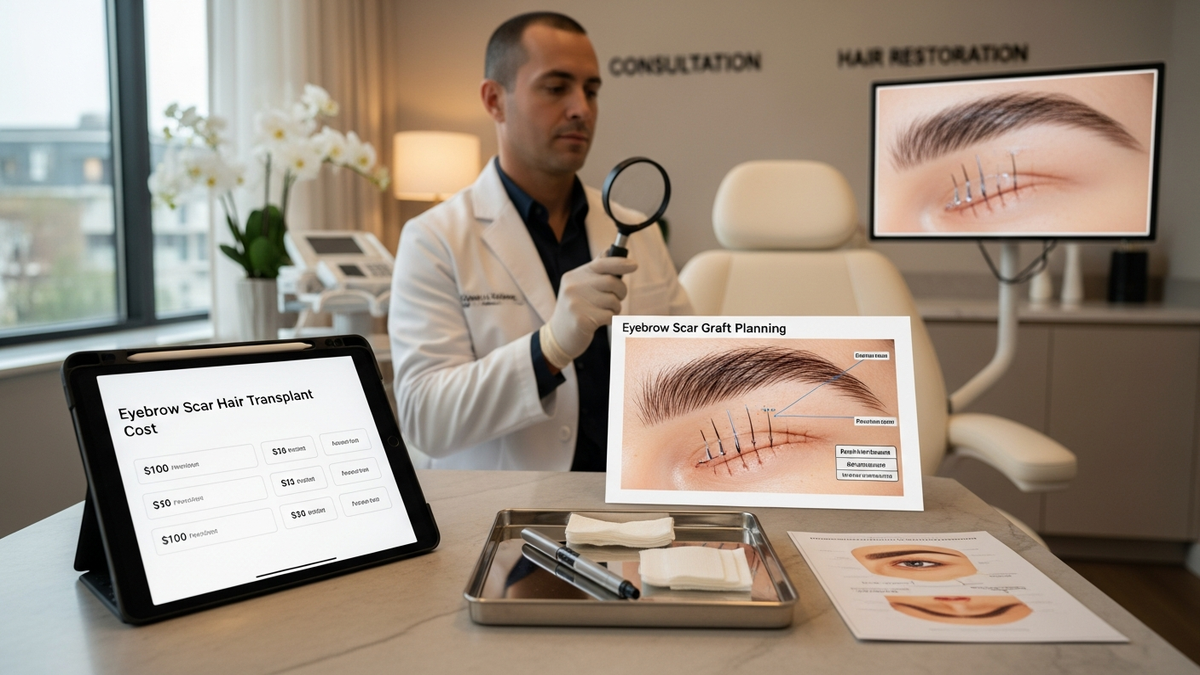
Related reading: If you’re comparing facial rejuvenation options or other head-and-neck procedures, you may also find helpful information on eyebrow transplant planning and technique discussions.
Frequently confused topics in eyebrow transplant aftercare
“Will my eyebrows look the same right away?”
Most people notice changes early, but not full results. Shedding and regrowth are normal. The brow often improves gradually over months.
“Can I use hair-growth products on my brows?”
Some products may be discussed in medical settings, but you should not start OTC or prescription regimens without your surgeon’s approval—especially because brow skin is sensitive and near the eyes.
“Do I need special washing if I wear contact lenses?”
Contact lens use typically doesn’t directly affect grafts, but you should avoid eye irritation and keep skincare/products away from the ocular area unless cleared.
When eyebrow transplant aftercare intersects with other facial procedures
Some patients choose multiple enhancements to address different concerns. While this guide focuses on eyebrow transplant aftercare, it’s useful to know that each procedure has its own healing rules.
For instance, if you’re also exploring facial rejuvenation options like a Facelift or eyelid surgery such as Blepharoplasty, your surgeon may coordinate timelines so that skincare and post-op restrictions don’t conflict.
Similarly, if you’re considering nasal breathing or structural work, procedures such as Septoplasty (for a Deviated Septum) or Rhinoplasty involve different recovery protocols that should be managed separately.
FAQ: Eyebrow transplant aftercare
How long does eyebrow transplant aftercare last?
Most strict care routines are most important during the first 2–4 weeks (scab control, gentle cleansing, avoiding friction). However, aftercare continues through the first year as follicles mature—especially regarding sun protection and avoiding irritants.
Is shedding normal after an eyebrow transplant?
Yes. Many patients experience shedding around weeks 2–4 as part of the hair cycle. This doesn’t necessarily mean the transplant failed; regrowth typically follows in subsequent months.
When can I wash my face normally?
You may be able to return to a more typical routine gradually, but the exact timing depends on your surgeon’s protocol and how your skin is healing. In general, early cleansing is gentle and avoids direct pressure on graft sites.
Can I wear eyebrow makeup during recovery?
Often makeup is avoided until the skin is stable and your surgeon clears you. Applying cosmetics too early can irritate the area and increase infection risk.
What should I do if I notice redness or itching?
Mild redness and itching can be normal. However, if redness is worsening, spreading, or accompanied by heat, discharge, fever, or increasing pain, contact your surgeon right away.
CTA: Prepare your eyebrow transplant aftercare plan today
If you’re planning an eyebrow transplant aftercare routine, the best time to get clarity is before your procedure. Ask your provider for a written aftercare schedule covering cleansing, scabs, sun protection, exercise limits, and product restrictions—so you’re not guessing during the most sensitive healing days.
And if you’re also exploring broader hair restoration options, you can review additional guidance here: hair transplant services and technology approaches.
Ready for a consultation? Consider reaching out to a board-certified specialist who prioritizes patient education and natural, facially harmonious outcomes.
Professional Disclaimer
This content is provided for general educational purposes only by FlowGeniQ Digest. It is not a substitute for professional advice, diagnosis, or treatment. Readers are advised to consult qualified professionals for personalized recommendations.
Medical Information Disclaimer
This content is provided for general educational purposes only by FlowGeniQ Digest. It is not a substitute for professional advice, diagnosis, or treatment. Readers are advised to consult qualified professionals for personalized recommendations.